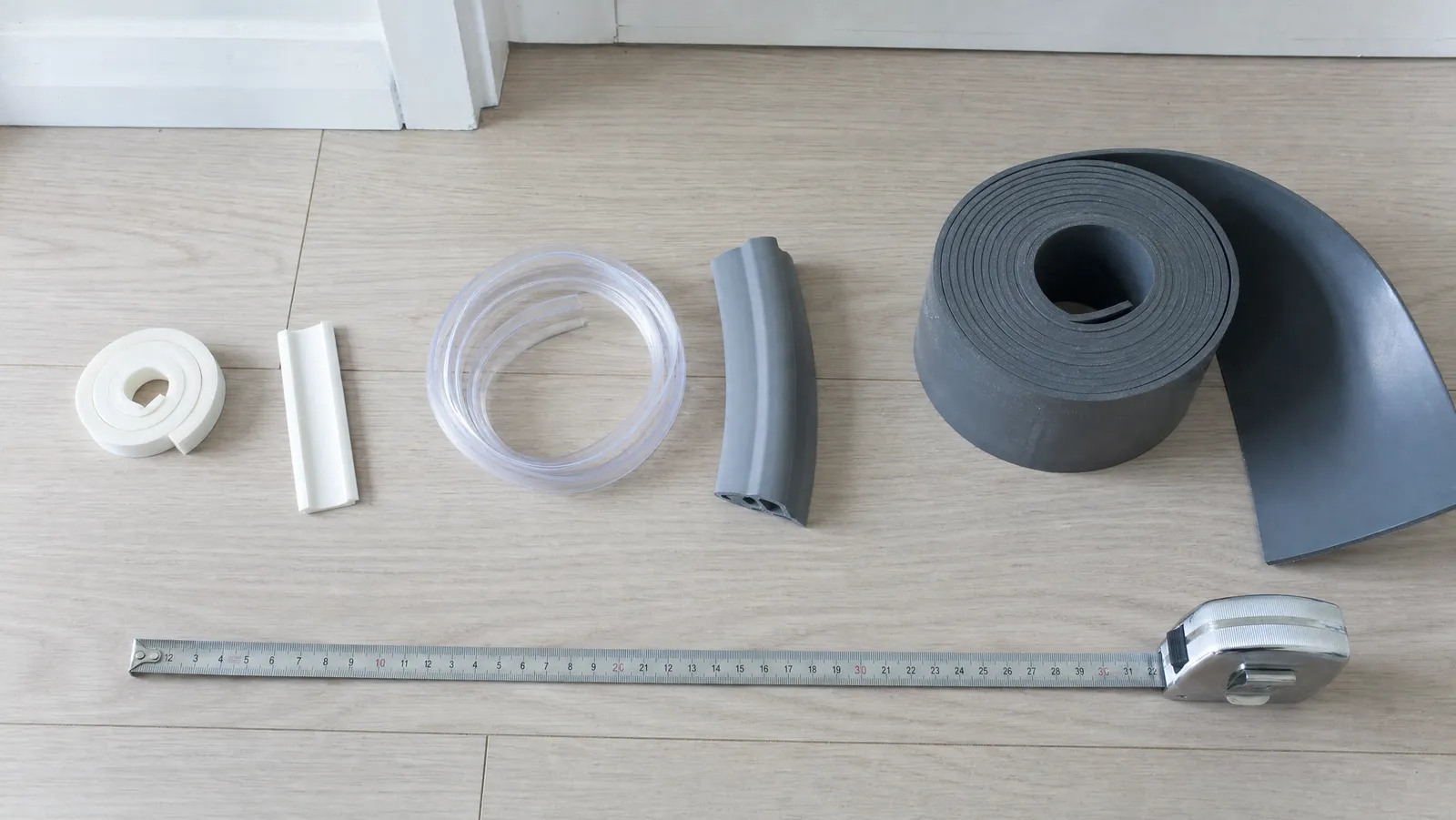
The honest soundproof door cost is about $19. A $9.99 roll of foam weatherstrip plus an $8.99 silicone sweep, both as of October 2026, closes the two air paths every apartment door has, and buys most of the result available to a renter. That is the answer. We earn a commission on purchases made through the links below, which does not change what we recommend.
Everything past that first $19 buys progressively less. That diminishing return is unusual enough in soundproofing to count as good news, and it is the thesis of this page. Below we price four tiers - $19, about $50, about $120 and $525 - with the arithmetic behind each, so you can pick a budget rather than a product. For the method in order rather than the price list, our guide to how to soundproof your apartment door walks the sequence, and does soundproofing a door actually work sets expectations before you spend anything.
Why the cheap tier is not the compromise tier
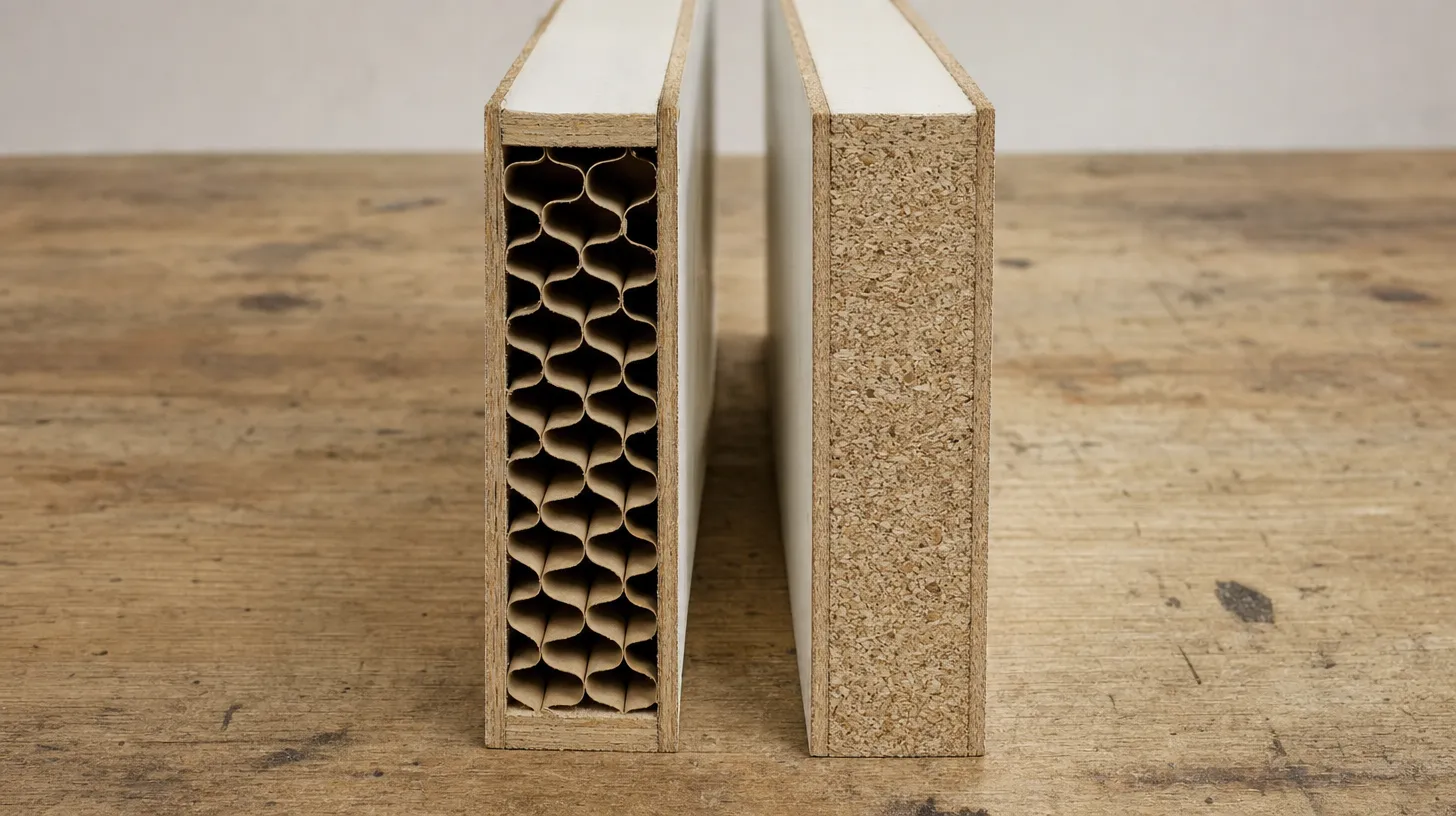
A door fails at two jobs, and only one of them is expensive to fix. The first failure is mass: a hollow-core slab is a light panel, and light panels pass airborne sound. The second is air, because a door hangs in a hole with a gap all the way around it, and sound crosses an open gap with almost no loss. The gap is the cheaper problem by two orders of magnitude, and it is also the one that caps everything else.
Writing in The Construction Specifier, Jerry Heid puts a number on how small a leak has to be to matter: "a gap of less than 3 mm (1/8 in.) may only allow a small amount of air to pass through," but "it is still large enough to completely cancel out any noise-reduction benefits of an acoustic door." Heid's byline carries the AHC hardware-consultant credential and the piece runs in a trade journal written for door and hardware specifiers, so read him as an industry voice rather than an independent one.
Allegion's gasketing guidance goes further, claiming that "one-eighth-inch clearances around the edges reduce the effective rating of an STC-52 door to 21." The seal vendor Acoustical Solutions publishes the same example. Both sources sell seals and neither figure comes from an independent test standard, so treat 52-to-21 as a vendor illustration, not a measurement. The direction is not in dispute, though: a leak sets the ceiling, and nothing you buy afterwards raises it. That is why the $19 tier is not a budget compromise - it is the tier that addresses the binding constraint.
The $19 tier, and the cheapest way to soundproof a door
Two items. Foam tape for the perimeter, a sweep for the bottom gap.
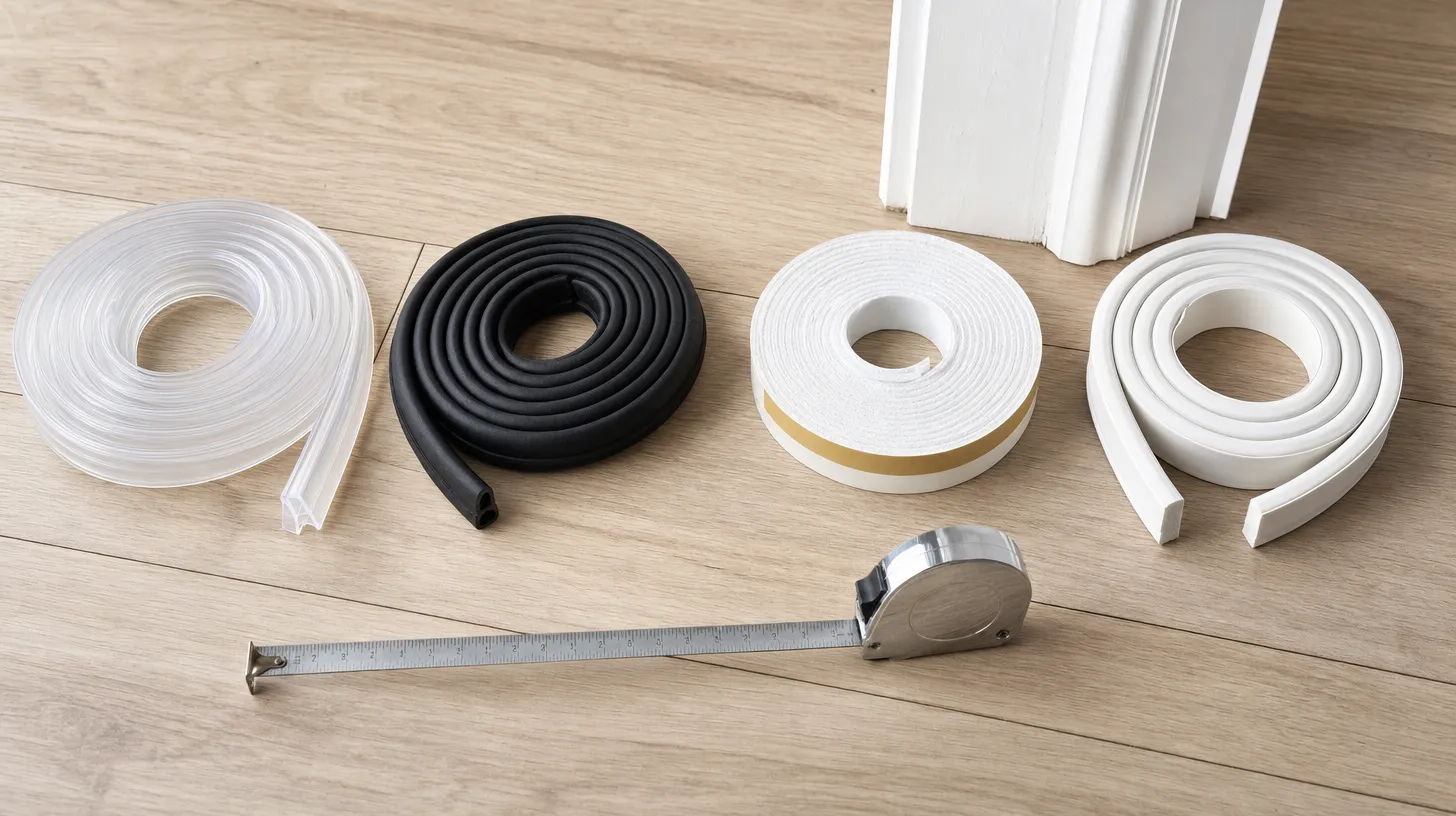
The Bantie EVA Foam Weatherstrip Tape is $9.99 as of October 2026 for 33 ft. Do the perimeter arithmetic before you buy. A standard 32 by 80 inch door needs tape along the top and both sides, which is 32 plus 80 plus 80, or 192 inches, or about 16 ft, so one 33 ft roll covers it with spare for the second attempt after your first pass goes crooked. Bantie states the tape is 100 percent EVA with an adhesive the maker says leaves no traces behind - a maker claim, not a tested one, but the right claim to care about on a door you do not own.
The OXRQ Door Draft Stopper is $8.99 as of October 2026 for a 39 inch silicone strip that OXRQ rates for gaps up to 1.5 inches. The gap under a door is usually the single largest opening in the room, so this is the nine dollars doing the most work on the page. The whole category, including mechanisms for uneven floors and carpet, is in our roundup of the best door sweeps and draft stoppers.
One caveat worth more than the price difference between tiers: OXRQ notes the sweep may not work well on rough or textured doors, asks for a clean dry surface, says the bond is firm after 24 hours, and recommends warming the adhesive with a hair dryer in cold weather. A sweep that peels off in week two seals nothing, which makes surface prep the highest-return unpaid labor in this project.
Total: $18.98 as of October 2026. Round it to $19 and both of a door's air paths are closed.
The $0 tier you should spend first
Before any of that, three line items cost nothing.
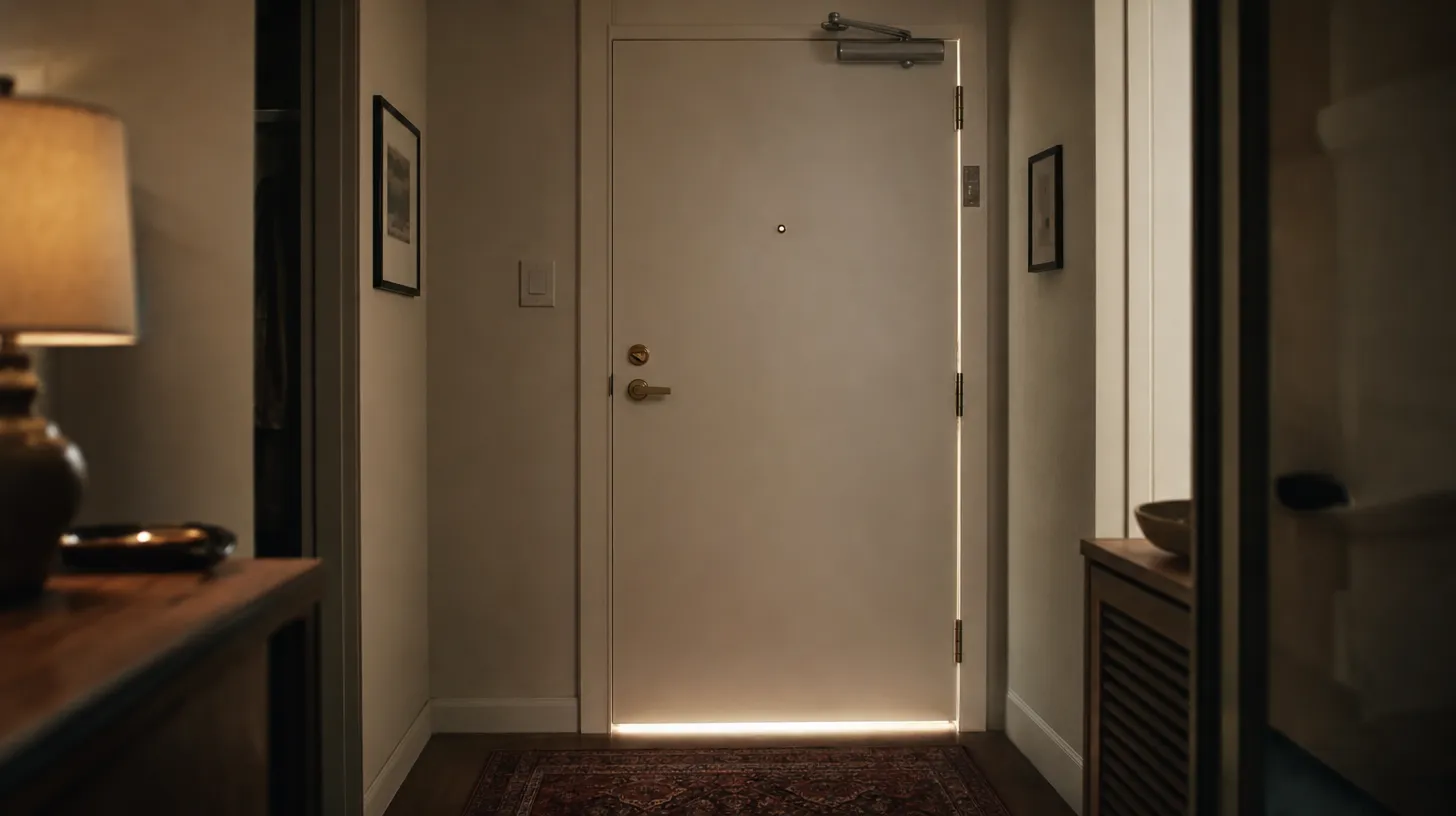
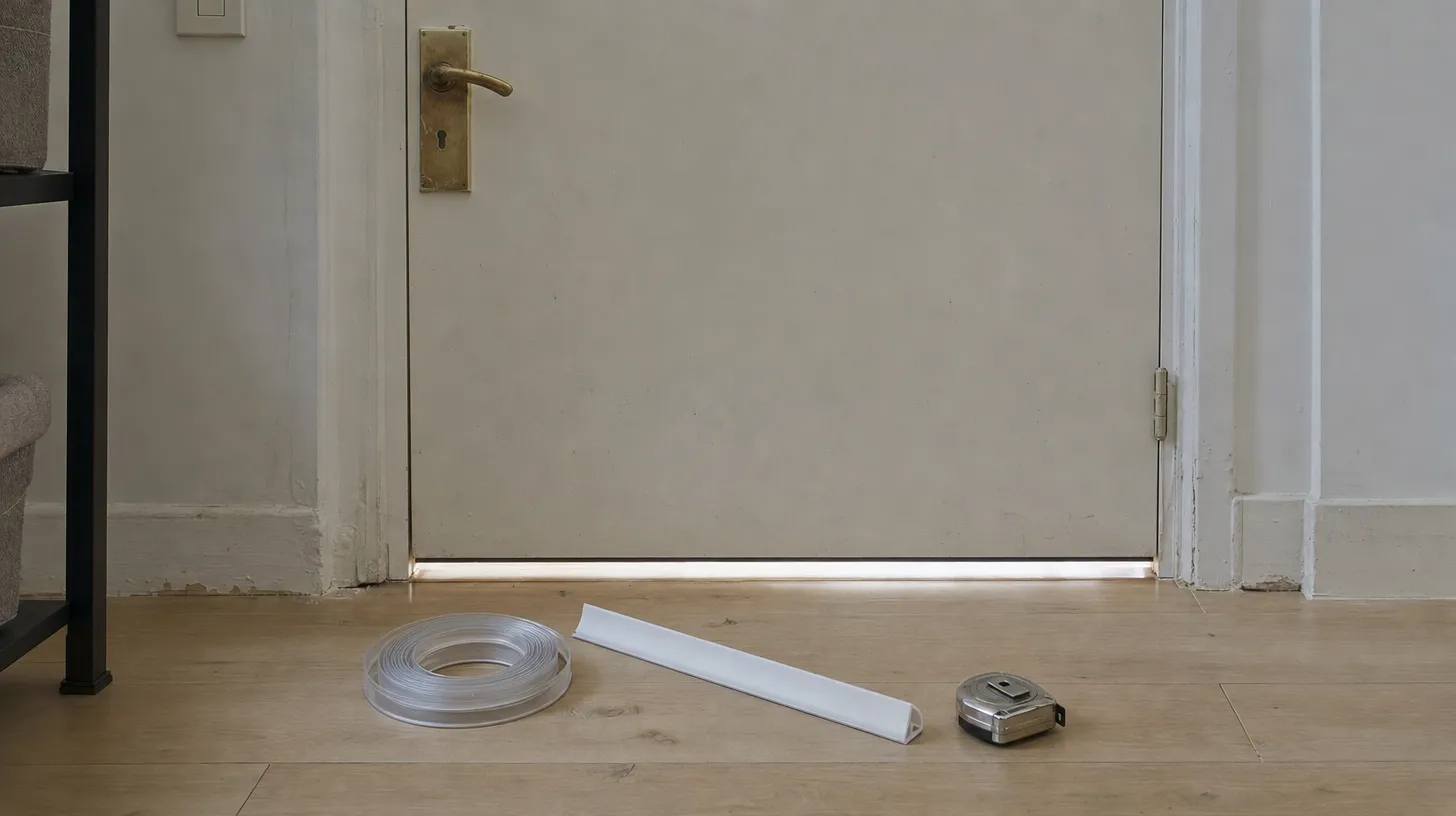
First, find the leaks instead of guessing at them. At night, kill the lights in your room, leave the hallway lit, and look at the closed door. Every line of light is an open air path, and the pattern tells you where the tape goes. For the bottom gap, the Energy Education encyclopedia at energyeducation.ca describes the paper test used for weatherstripping: close the door on a sheet of paper, and "if you need to put some effort to pull the paper out, the weatherstripping is likely providing a good seal," while "if you can pull the paper out very easily, the weatherstripping is likely not tight enough or in good shape."
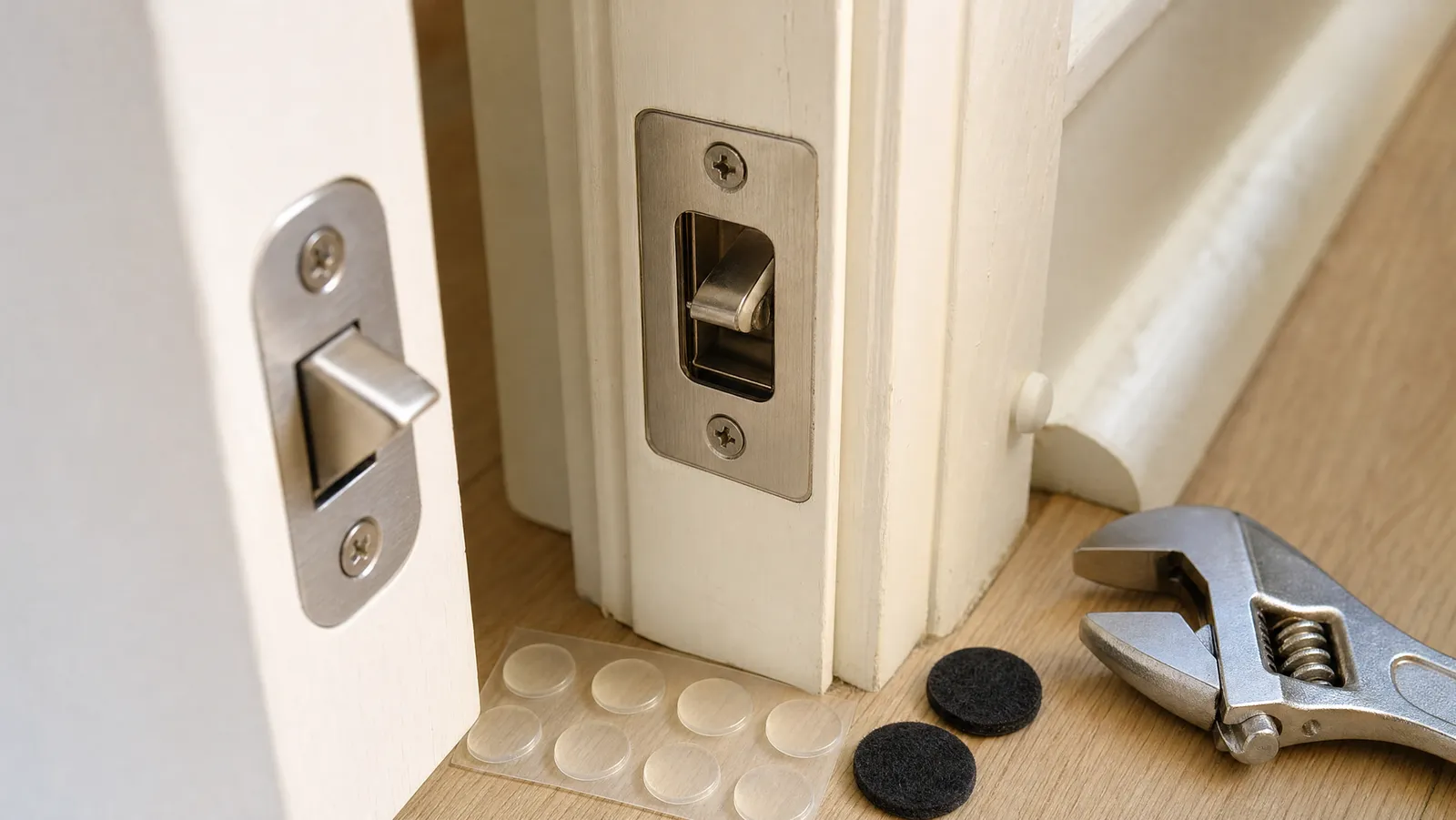
Second, check whether the noise is the door rather than through the door. A latch that sits slack in its strike plate, or a slab that bangs into its stop, gives you a door that rattles and slams, and both of those are impact noises made at your door, not neighbor noise arriving through it. Bending a strike plate tab costs nothing and sometimes removes the complaint entirely.
Third, move furniture. A bookshelf beside the door and a rug in front of it do not block sound, but they absorb some room energy, and absorption is free when you already own the objects. Our free soundproofing calculators run the same equations used below if you want to check the arithmetic.
The $50 tier, and what the extra thirty dollars actually buys
Two upgrades exist at this level. One is worth it and one is not.
The Elvone T-Shaped Silicone Door Seal is $19.99 as of October 2026 for 20 ft, stated by Elvone at 2 inches wide and 0.07 inches thick, rated for gaps of 0 to 1 inch. The design difference is mechanical rather than acoustic: the T pushes into the gap between door and frame, and the far side carries no adhesive. Since adhesive failure is how cheap perimeter seals die, ten dollars to remove the single point of failure is the best value upgrade in this range. Note the 20 ft roll against your 16 ft of perimeter - less margin for error than the 33 ft foam.
The Vellure Premium Door Sweep is $29.90 as of October 2026, more than three times the OXRQ sweep for the same job on the same gap. We include it to mark where the sweep category stops paying you back. The chambered silicone profile is a real design difference, but Vellure itself calls noise reduction an added bonus of the design rather than its purpose, which is more honest than most of this category manages. Thirty dollars on a sweep while your perimeter is still open is the wrong order of spending, however good the sweep is.
Two baskets exist here. T-profile seal plus the $8.99 sweep is $28.98, and that is the one we would buy. Both upgrade parts together is $49.89, both figures as of October 2026, and the second half of that buys comfort rather than quiet. More on choosing a mechanism in our sweep and draft stopper roundup.
Where the soundproof door cost curve turns ugly: the $120 mass tier
This is the first tier where you are buying physics instead of plumbing, and the arithmetic deserves doing before you commit.
The Focusound Mass Loaded Vinyl Sheet is $39.99 as of October 2026 for a 12 inch by 96 inch sheet, stated by Focusound at 1.1 lb per square foot and about 1/8 inch thick, which is roughly 8 square feet and about 9 lb per roll. A 32 by 80 inch door face is 2,560 square inches, or about 17.8 square feet. So you need three sheets: $119.97 as of October 2026, 24 square feet of material to cover 17.8, and about 27 lb of vinyl.
Compare that to the door. The manufacturer data sheet for the Cendura molded panel door lists a hollow-core 1-3/8 inch slab at about 1.3 lbs per square foot, which across 17.8 square feet is roughly 23 lb of door. Twenty-seven pounds of vinyl on a twenty-three pound slab is slightly more than a doubling of mass.
That number matters because of the rule that governs single-layer barriers. In Canadian Building Digest 239, "Factors Affecting Sound Transmission Loss," published by the National Research Council of Canada in July 1985, A.C.C. Warnock gives the mass law as TL = 20 log10 (ms f) - 48 and writes that it "predicts that each time the frequency of measurement or the mass per unit area of a single layer wall is doubled, the transmission loss increases by about 6 dB." He also notes what the next step costs: "to increase the sound transmission loss of a partition by 12 dB at all frequencies, therefore, the mass per unit area must be increased by a factor of 4."
So three rolls is roughly the doubling the mass law needs to pay its theoretical 6 dB. This tier is not pointless - it is simply six times the price of sealing the door for a smaller and far less certain result. Warnock's 6 dB is a ceiling for a single layer in certain frequency ranges, not a figure measured on your door, and Focusound publishes no STC rating for the sheet. Add the renter problem: Focusound lists adhesive, screws or nails as the install methods, and a lease that forbids drilling leaves you hanging 27 lb from glue on a veneer you do not own. That is why mass is the third lever on a door and not the first - the construction argument is in hollow-core vs solid-core doors.
The $525 ceiling, and what honest acoustic data costs
The Audimute Acoustic Pro Sound Kit is $525.00 as of October 2026, and we use it as the price ceiling for one reason: it is the only listing in this tower publishing measured figures for everything in the box. Audimute lists four 96 by 48 inch absorption sheets at 0.85 NRC, one 82 by 34.5 inch isole barrier sheet at 0.75 NRC and 20 STC built around a 1/16 inch layer of mass loaded vinyl, plus a 25 ft door seal and a 4 ft door sweep.
Read those two acronyms carefully, because almost nothing else in this category distinguishes them. NRC is an absorption rating, measured per ASTM C423 in a reverberation room by the rate at which sound energy decays and reported as the average of the 250, 500, 1000 and 2000 Hz coefficients rounded to the nearest 0.05. STC is a blocking rating, calculated per ASTM E413 from one-third octave band transmission loss values measured per ASTM E90. A high NRC makes a room less echoey; only an STC figure describes sound getting through. Audimute states plainly that its absorption sheets are not designed to block sound and that only the isole is, which is more candor than this category manages.
One caveat on any door STC number, including this one. The Construction Specifier notes that sealed-in-place STC ratings are tested differently from operable-door ratings, and that "some manufacturers will advertise their sealed-in-place STC ratings rather than this more-realistic operable rating." A 20 STC barrier sheet is a lab figure for the sheet, not a prediction for your doorway.
For a renter treating one apartment door, $525 is the wrong trade by a wide margin. It is nearly twenty-eight times the $19 tier, and part of it is the seal and sweep you could have bought for nineteen dollars. Buy it if you need a number on paper for a studio or a home office. Buy the $19 tier if you need a quieter bedroom.
What a replacement door costs, and why you will not be hanging one
Readers ask, so here is the figure. Homewyse's fair cost estimate for solid core interior doors, updated for January 2026, gives a range of $368.27 to $520.00 for one 32 inch by 80 inch door, excluding sales tax and fees. Slab only, Home Depot's listing for a 36 by 80 inch primed 5-panel solid core wood slab has been seen between $203 and $286 across captures as of October 2026, so call the bare slab $200 to $300 and check the live page first.
Even at the low end that is a landlord decision. You do not own the slab, you have to store the original for the length of your lease, and the hinges, strike plate and latch all have to line up afterwards. The case for a heavier slab is real and we make it in our hollow-core and solid-core comparison, but put it to a building manager rather than in your own budget.
How much to soundproof a door, by budget
| Budget | What you buy | What it closes | Our view |
|---|---|---|---|
| $0 | Light test, paper test, strike plate, furniture | Diagnosis, rattle, some absorption | Do this first, always |
| $19 | Foam tape plus silicone sweep | Both air paths | The tier with the best return per dollar |
| $29 | T-profile seal plus the $8.99 sweep | Both air paths, mechanically seated | What we would actually buy |
| $50 | Both upgrade parts | Same two paths, nicer parts | The sweep half is optional |
| $120 | Three MLV sheets | Roughly doubles slab mass | Only after sealing, only if your lease allows fixings |
| $525 | Full kit with published ratings | Absorption plus one 20 STC barrier layer | The honest version of a bad trade for one door |
| $370+ | New solid core door, installed | The mass problem, properly | Your landlord's budget, not yours |
The order to spend in
- Run the light test and the paper test. Free, and it tells you where the money goes.
- Fix the latch and strike plate if the door moves in its frame. Free.
- Buy the sweep. The bottom gap is usually the biggest single opening.
- Buy the perimeter seal. Foam tape at $9.99 for the cheapest, the T-profile at $19.99 to survive a summer.
- Stop and listen for a week. Most renters stop here, and they are not wrong to.
- Only then consider mass, only if the seals held, and only if your lease permits the fixings.
Our view
The cost curve here is front-loaded in the renter's favor, which is rare in this field. The binding constraint is air, air is cheap to close, and the first $19 addresses it directly. The $120 tier buys a theoretical 6 dB that Warnock's own digest frames as a ceiling rather than a result, and the $525 tier buys measured data you cannot fully use on a door you do not own.
Spend $19 to $29, prep the surfaces properly, and judge the result before spending more. For the full sequence with the levers ranked rather than priced, read our complete apartment door guide.

A 33 ft roll of self-adhesive foam tape that Bantie states is 100 percent EVA, cut freely to fit, with an upgraded mesh adhesive the maker says leaves no traces behind. 33 ft covers a standard door perimeter roughly one and a half times over.
This is the cheapest line item in the whole project and the one with the best return per dollar, which is why it is first in every budget below. A standard 32 by 80 inch door has about 16 ft of perimeter to seal across the top and two sides, so one roll does the job with spare. Ten dollars, no tools, and it comes off again when you move, which is the whole renter calculus.
*Price shown on Amazon and subject to change.

A 39 inch self-adhesive silicone sweep, 1.96 inches wide, which OXRQ rates for gaps up to 1.5 inches. The maker asks for a clean dry surface, says it bonds firmly after 24 hours, and recommends warming the adhesive with a hair dryer in cold weather. OXRQ notes it may not work well on rough or textured doors.
The other half of the nineteen dollar tier, and together with a roll of foam tape it closes both of a door's air paths. The gap under a door is usually the largest single opening in the room, so this nine dollar strip is doing more work than anything above it in price. OXRQ's own caveat about textured doors is the one to read twice, because a peeling sweep seals nothing at all.
*Price shown on Amazon and subject to change.

Clear silicone in a T-shaped profile, stated by Elvone at 2 in (50 mm) wide and 0.07 in (1.8 mm) thick, 20 ft to a roll, rated for gaps of 0 to 1 in (0 to 25 mm). The T pushes into the gap between door and frame and the far side carries no adhesive, so half the seal holds position mechanically.
Double the price of foam tape and the step up that actually buys something, because the T-profile seats inside the gap rather than relying entirely on adhesive. Adhesive failure is how perimeter seals die, so paying ten dollars more to remove the single point of failure is the best value upgrade in the middle tier. The 0 to 1 inch gap range is also the widest published figure among the cheap perimeter strips.
*Price shown on Amazon and subject to change.

A 39 inch industry-grade silicone sweep, 2 in high, which Vellure builds with what it calls thick 3D chambers and backs with a strong adhesive it says removes without damaging the door. Vellure describes noise reduction as an added bonus of the chambered design rather than its purpose.
Three times the price of the OXRQ sweep for the same job, and we are including it to mark where the sweep category stops paying you back. The chambered profile is a real design difference, but thirty dollars on a sweep while your perimeter is still open is the wrong order of spending. Note that Vellure is refreshingly modest about the acoustics, calling it a bonus, which is more accurate than most of this category manages.
*Price shown on Amazon and subject to change.

A 12 inch by 96 inch sheet of mass loaded vinyl, stated by Focusound at 1.1 lb per square foot, about 1/8 in thick, covering approximately 8 square feet at about 9 lb per roll. Cuts with a utility knife and installs with adhesive, screws or nails. Focusound lists doors among the intended surfaces. No STC figure is published for the sheet.
This is where the cost curve turns ugly, and the arithmetic is worth doing before you buy one. A 32 by 80 inch door face is about 17.8 square feet, so covering it takes three of these 8 square foot sheets, which is $119.97 as of October 2026 and about 27 lb of vinyl hanging on a slab that started at roughly 23 lb. Doubling a door's mass is what the mass law needs to pay out its theoretical 6 dB, and three rolls is roughly that much material, so this tier is not pointless. It is simply six times the price of sealing the door for a smaller and far less certain result, and it needs fasteners a lease may not permit.
*Price shown on Amazon and subject to change.

Audimute lists four 96 by 48 in sound absorption sheets at 0.85 NRC, one 82 by 34.5 in isole barrier sheet at 0.75 NRC and 20 STC built around a 1/16 in layer of mass loaded vinyl, a 3/16 by 1/2 by 25 ft door seal and a 1/2 by 1.5 by 4 ft door sweep. Made in the USA. Audimute states plainly that the absorption sheets are not designed to block sound and that only the isole is.
The top of the market and the only listing in this entire tower that publishes measured figures for everything in the box, which is exactly why we use it as the price ceiling. At $525 as of October 2026 it is nearly twenty-eight times the nineteen dollar tier, and it is the honest version of what that money buys, a published 20 STC barrier layer plus real absorption plus the seal and sweep you could have bought for nineteen dollars. For a renter treating one apartment door this is the wrong trade by a wide margin. Buy it if you need a number on paper for a studio or a home office, and buy the nineteen dollar tier if you need a quieter bedroom.
*Price shown on Amazon and subject to change.
| Pick | Product | Link | |
|---|---|---|---|
| The First $10 | Bantie — Bantie EVA Foam Weatherstrip Tape (33 ft) | $9.99 | Check → |
| The Second $9 | OXRQ — OXRQ Door Draft Stopper / Door Sweep (39 in, silicone) | $8.99 | Check → |
| The $20 Upgrade | Elvone — Elvone T-Shaped Silicone Door Seal (20 ft) | $19.99 | Check → |
| The Sweep Upgrade | Vellure — Vellure Premium Door Sweep / Door Seal Strip (39 in) | $29.90 | Check → |
| The Mass Tier (3 Sheets) | Focusound — Focusound Mass Loaded Vinyl Sheet (1 x 8 ft, 1.1 lb/sq ft) | $39.99 | Check → |
| The Ceiling | Audimute — Audimute Acoustic Pro Sound Kit with Door Seal Kit and Sheets | $525.00 | Check → |

Lillie Metayer
Lillie Metayer is the founder of a local program that helps apartment-dwellers take action against noise pollution. Involved in environmental activism since high school, Lillie is passionate about raising awareness of the harms of noise exposure and helping people reduce noise in their communities. In her free time, Lillie enjoys playing the violin and spending time outdoors.