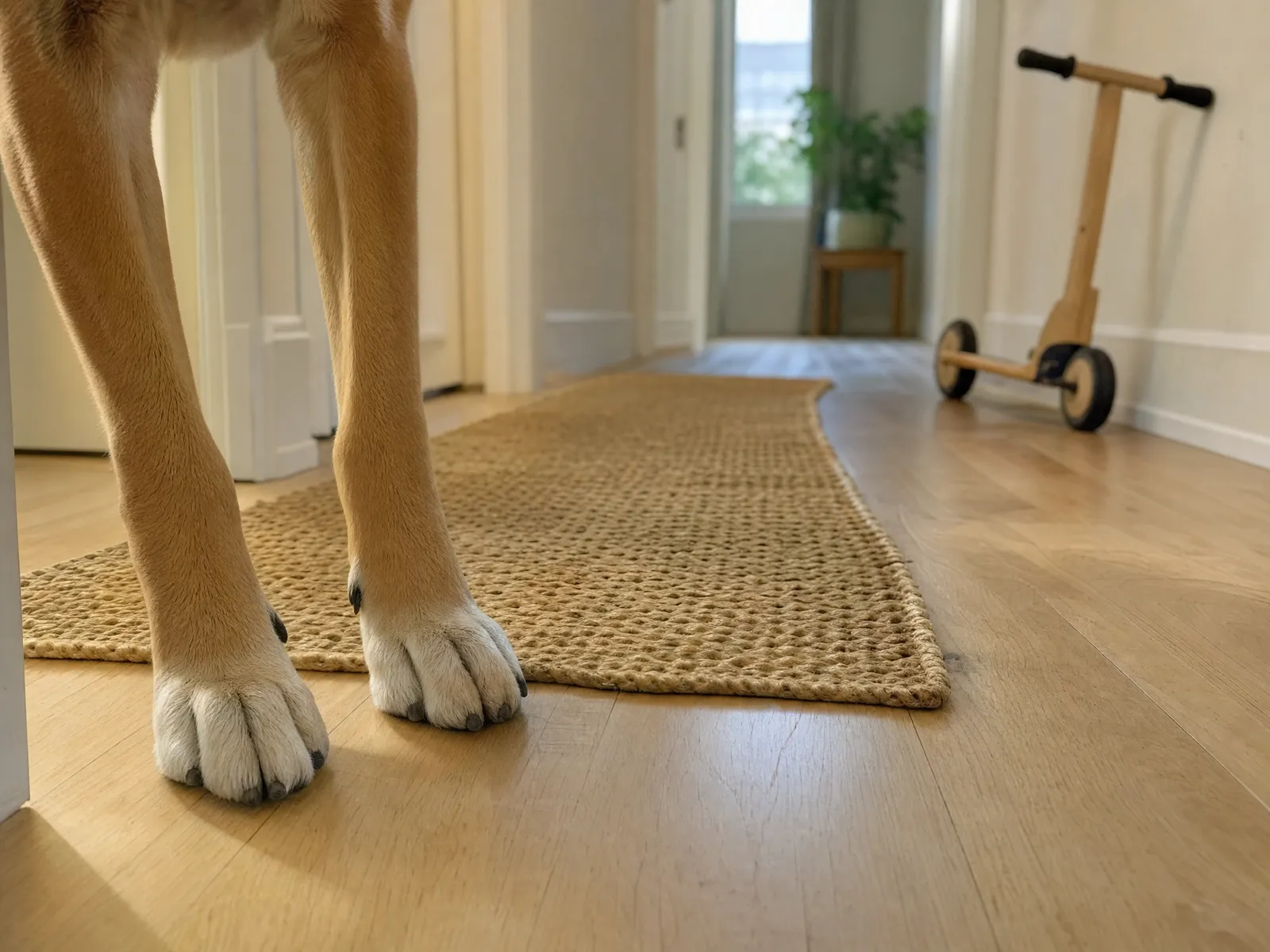
To reduce dog nail noise on hard floors, cover the lines the dog actually walks - the hallway, the route to the window, the landing spot beside the sofa - with runners laid over dense pads. Running children need the same treatment on their loop. Both are impact noise, both travel through the building structure, and targeted coverage beats a thin mat in every room.
That works because pets and children are not random. They move along habitual paths that barely change from week to week. Treat the path, not the room. It costs less and puts the material where the impacts land.
The order of operations for the rest of the floor lives in how to soundproof an apartment floor. Before buying anything, watch where the traffic goes and move the rugs you already own onto it.
A dog makes two noises on a hard floor, and the click is the one you stop hearing
Dogs generate two separate sounds on hardwood or tile, and they want different treatment.
The first is the click of nails - a sharp, high-frequency, repetitive impact. Owners often stop noticing it within a week or two of moving in. Busy Pet Parent, writing about soundproofing apartments for pets, calls claws on hard flooring "the top complaint from downstairs neighbors," and says hardwood and tile amplify impact sound so that "every footstep, claw click, and toy knock resonates to the apartment below."
The second is the thud of a dog running, or landing after a jump off the sofa - a heavier, lower event, and the one that makes the ceiling below flex rather than tick.
The click needs a surface that is simply not hard. The thud needs a layer with real thickness and some give. A flat-weave rug takes most of the sharpness out of nails and does little for a sixty-pound dog coming off furniture, because there is nothing there to compress.
A 2025 systematic review of child-related noise measurement in apartments, published in Building and Environment, reports that impact sounds reaching neighboring households from children running and jumping, and from adults walking indoors, carry relatively high energy in the low-frequency bands. It measured people rather than dogs, but a dog landing off a sofa is the same class of event, and low-frequency energy is the hardest thing here to stop with anything loose-laid.
Nail length works at the source, and here is where we stop
The one fix that reduces clicking without covering any floor is nail length. The mechanism is plain acoustics: a nail long enough to reach the floor ahead of the pad is a small hard object striking a hard surface on every step. A nail that does not reach it is not.
How short, how often and how to do it are grooming and veterinary questions, and we are not going to answer them. Whole Dog Journal's guide to nail length treats audible clicking on a hard floor as a signal that a trim is due, not a normal feature of a dog crossing a room. North Jersey Animal Hospital suggests trimming every two to four weeks, with some dogs needing more frequent trims and others able to go longer, and says a veterinarian or professional groomer can help determine the right length for an individual dog.
Take it to your vet or groomer, and treat the quieter floor as a side effect of routine care.
Two adjacent options deserve hedging. Trimming the fur between the paw pads is normal groomer maintenance, worth asking about at an appointment you had planned anyway. Non-slip dog socks are the other: Vetstreet describes them as helping dogs keep their footing on smooth indoor floors, with grip on the soles reducing sliding on hardwood, tile and laminate, while Dogster frames them as an indoor traction product and says fit is the deciding factor, with mixed reports on whether a pair stays on. Neither is sold as an acoustic product, and tolerance varies enormously between animals, so treat any noise benefit as a bonus and stop if your dog dislikes them.
Map the dog's route before you buy a single rug
This is the practical core, and it is free: watch the dog for a day and note the lines it uses.
Most dogs patrol a few fixed routes. Door to window. Bed to water bowl. The strip by the entry where they stand and listen to the hallway. The landing zone where they come off the sofa. Those lines carry nearly all of the nail clicking in a typical apartment, and they add up to a small area.
So buy for the lines:
- A runner down the hallway, usually the noisiest strip in a rental.
- A rug with a thick pad at the landing zone by the sofa or bed, where the thuds happen.
- A mat at the door where the dog turns and scrabbles, and at the window if that is the pacing spot.
A runner in the hall plus a pad at the landing zone does more for the neighbor below than a large rug centered in a room the dog crosses twice a day.
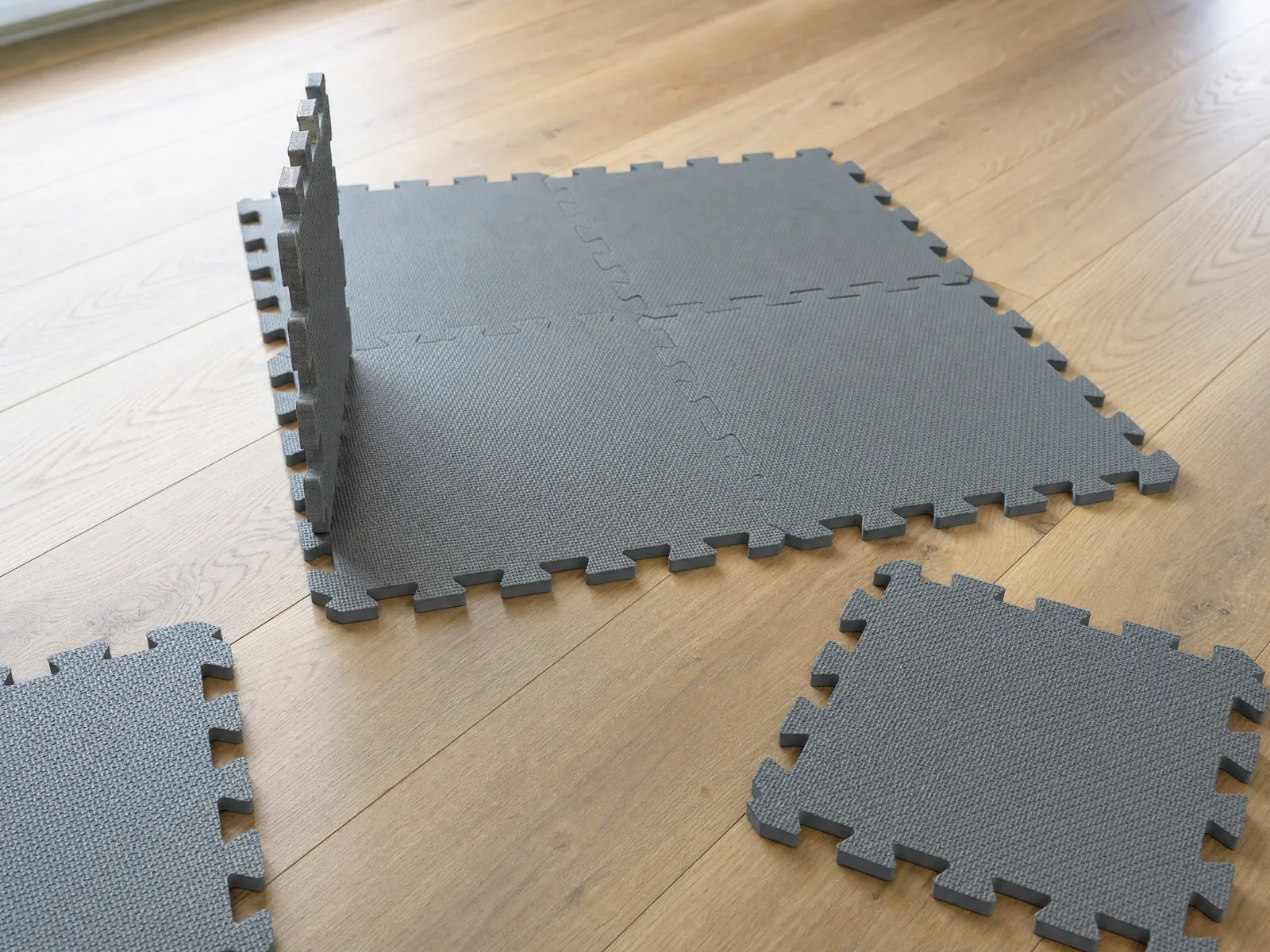
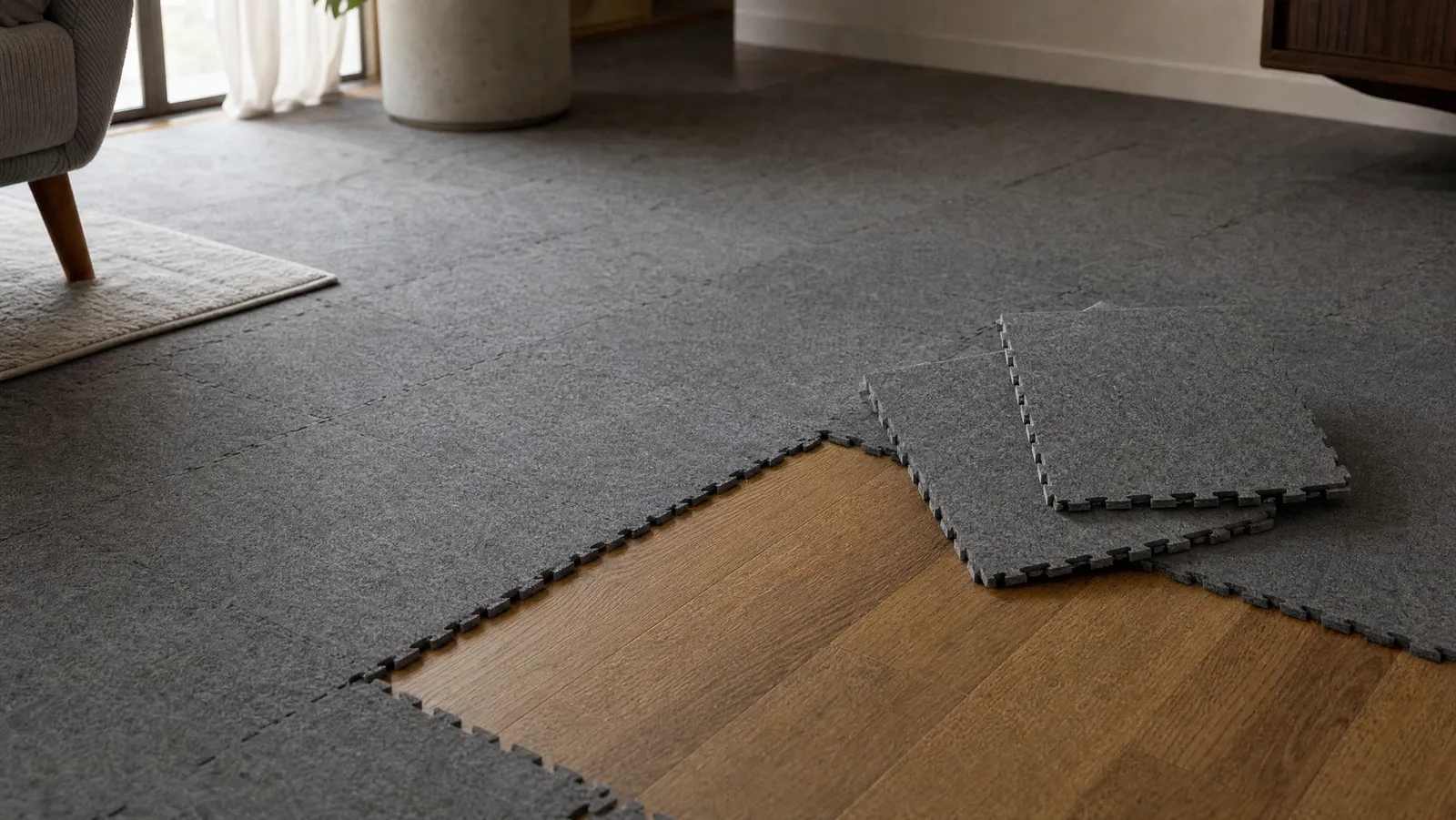
For a defined patch like that landing zone, dense interlocking felt or rubber tiles beat a rug, since you cover exactly the area taking the impact - our picks are in the best soundproof floor mats.
On total coverage, Busy Pet Parent suggests covering 70 to 80 percent of the floor area in rooms where pets are active. That is a pet-care publication's recommendation rather than a measured requirement, so read it as a target rather than a threshold. Your lease may set its own figure - StreetEasy describes an 80 percent floor-covering requirement as something of a standard in New York leases and co-op house rules, with area rugs usually counting toward it.
Kids run in loops, and apartment floor noise follows the loop
Children are even more predictable than dogs. Bedroom to sofa, sofa to kitchen, and back. Cover the loop.
That same Building and Environment review reports that floor impact noises produced by running and jumping are among the most commonly recorded noises in apartments and carry high levels of annoyance and complaint, and that children jumping was among the sources producing the highest maximum sound levels in the studies it collected. That is a measured peak level, not a ranking of how severe neighbors judge each source to be. Jumping is the loud event; running is the frequent one.
So treat them separately. A large rug over a dense pad in the main play area, plus a runner along the corridor, beats a mat in every room. Then handle the loud events on their own terms:
- Jumping off furniture. A thick rug or a stack of floor cushions where the landing already happens is more achievable than a household rule against jumping, and it works whether or not anyone remembers the rule.
- Dropped toys. Hard plastic on a bare floor is a small impact every few minutes all evening. The play-area rug handles most of it.
- Scooters and ride-ons indoors. Hard wheels on hard floor are continuous impact. Keeping them to the carpeted loop, or outdoors, removes it entirely.
Worth saying plainly: the adults generate impact noise too, usually more than they think, and the free fixes in stop your footsteps bothering the downstairs neighbors apply to the whole household rather than just its small fast members.
The rug pad is doing most of the work
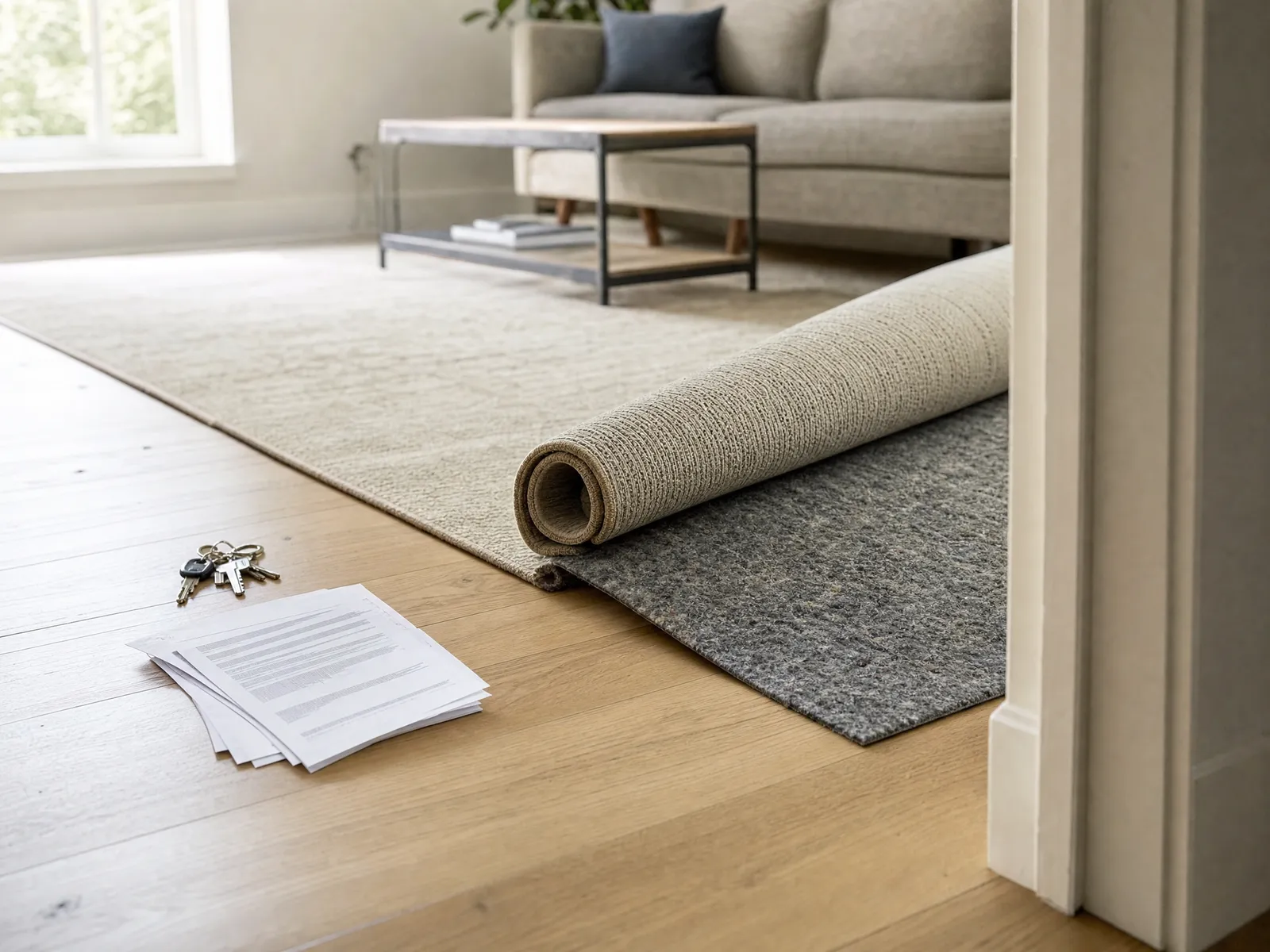
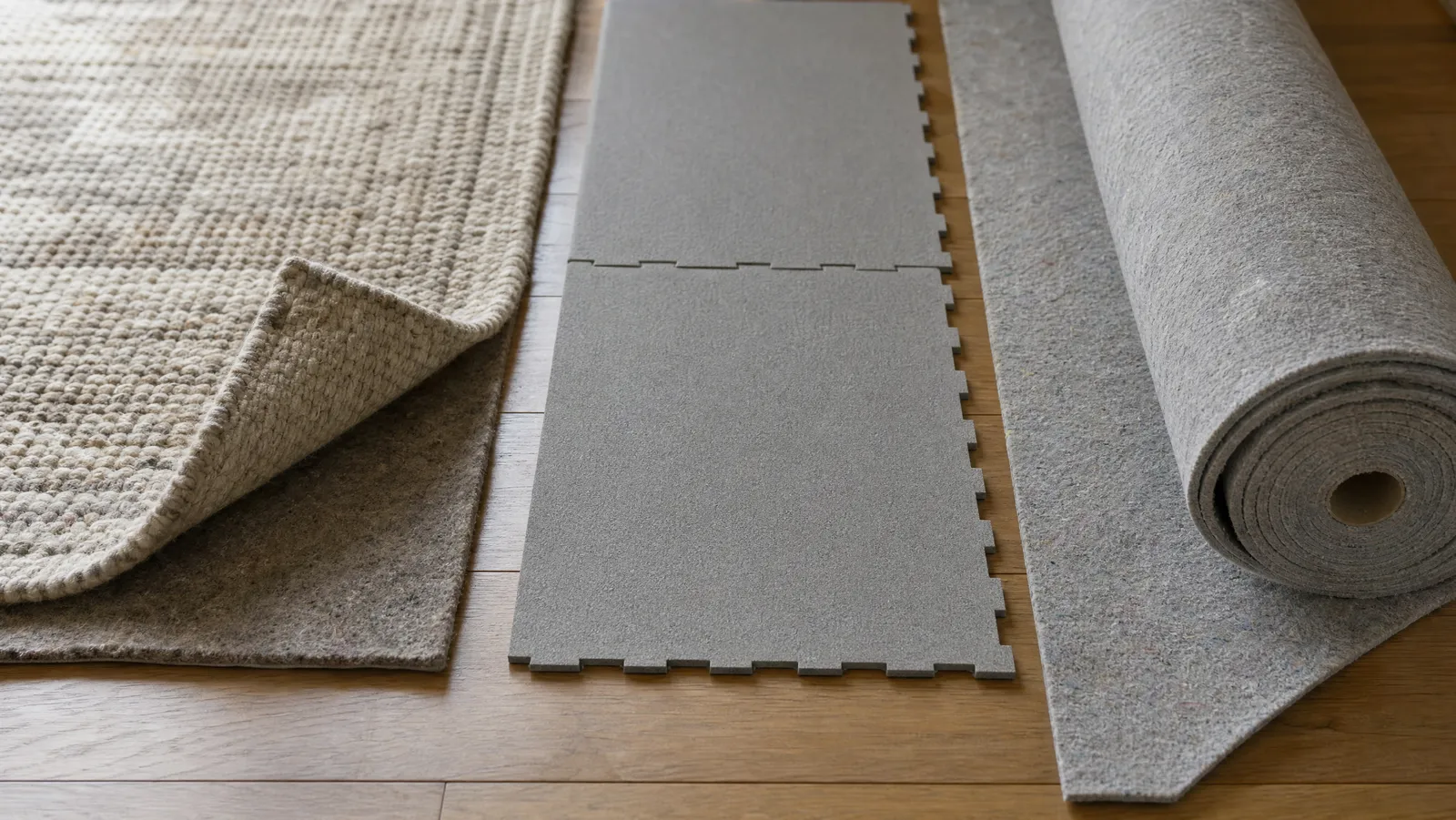
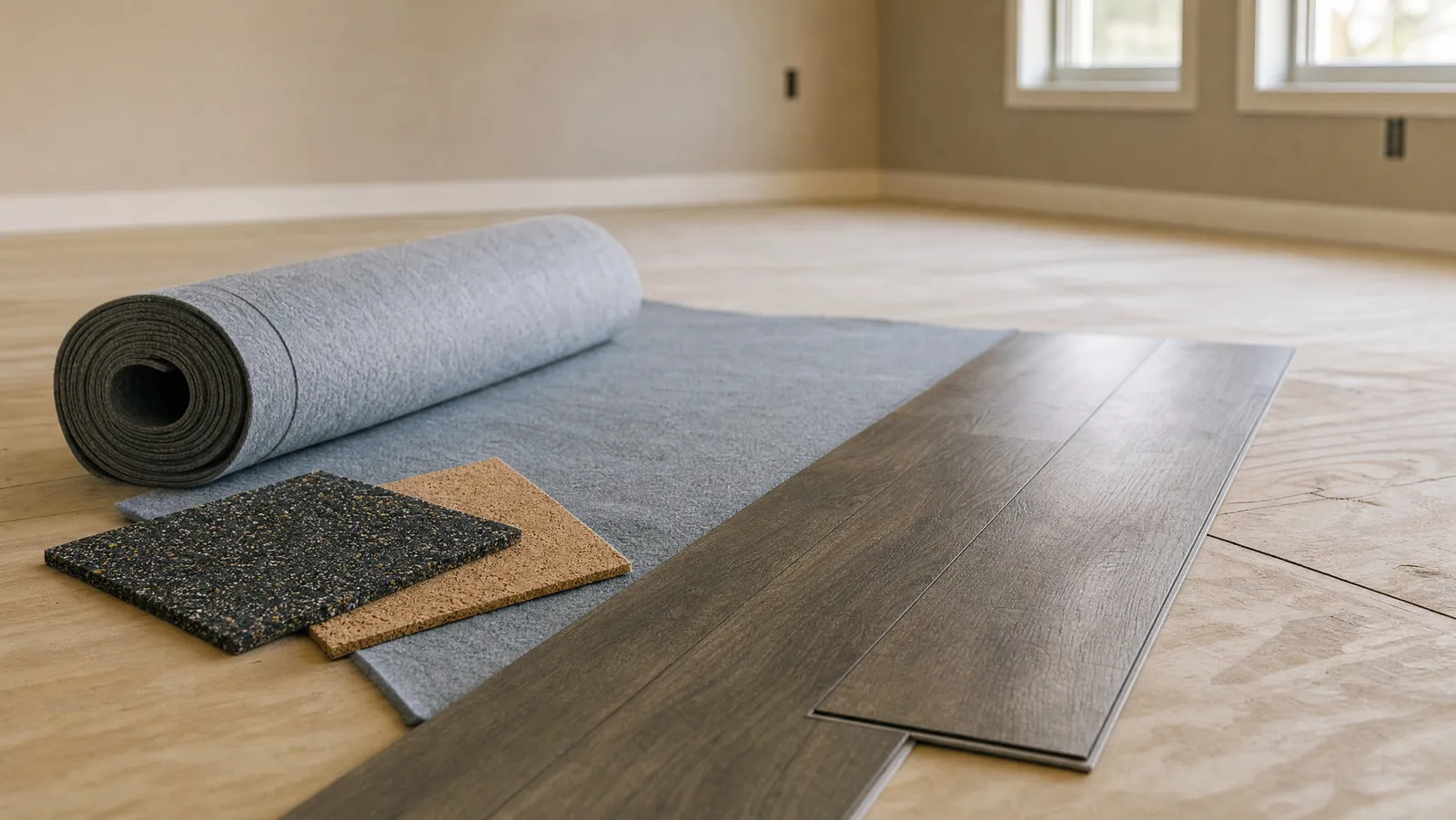
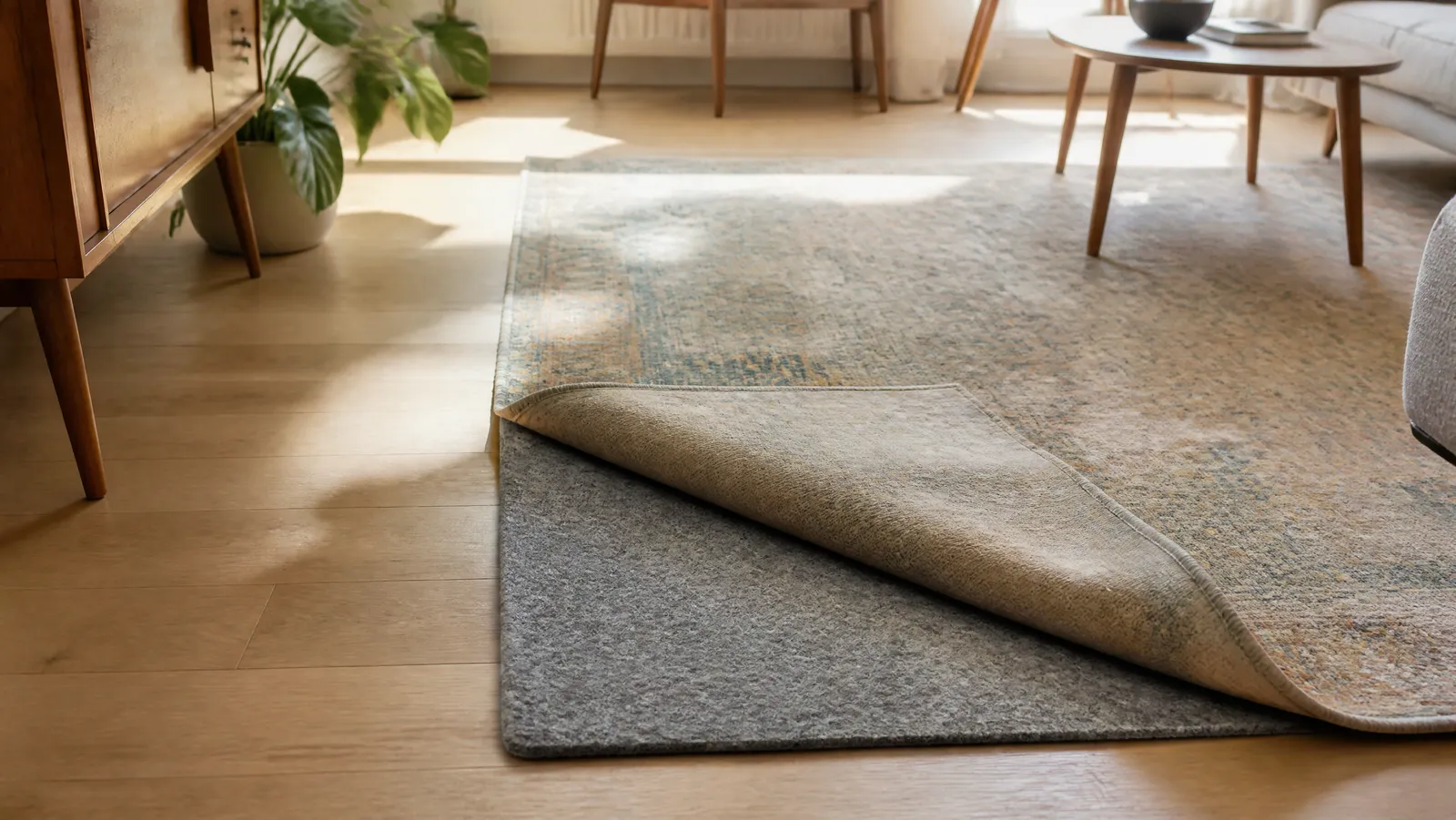
A rug laid straight onto a hard floor is a surface change. It softens the strike, which fixes some of the clicking. A rug over a dense pad is a resilient layer - something that compresses under an impact and gives the energy somewhere to go before it reaches the structure. The pad, not the rug, is doing most of the impact work.
Density matters more than plushness. A dense felt or felt-and-rubber pad has mass to absorb energy; a lightweight foam pad of the same thickness mostly has air in it.
Treat the numbers sellers publish here carefully. Acousart, which sells rug pads, publishes a thickness table claiming roughly 20 to 25 percent impact reduction at 4 mm, about 30 percent at 6 mm and 35 to 40 percent at 8 mm and above, and elsewhere says rubber and jute-rubber blends absorb thuds "up to 40%." The page names no test standard and no assembly those figures were measured on, so we treat them as vendor claims rather than ratings. The directional point - thicker and denser does more - is the usable part.
It is worth knowing what the best version looks like, because you probably cannot have it. Floor Boys, a flooring retailer, says luxury vinyl paired with an acoustic underlayment cuts the impact noise pets make on a floor, with the underlayment acting as a shock absorber - a retailer describing what it installs, and a floor installation rather than a purchase. Nailed-down carpet and tack-strip runners also outperform anything loose-laid, and both are normally out in a rental - a lease question rather than an acoustics question, and part of what renters are actually allowed to do to a floor.
Felt pads and soft casters delete a whole category of noise
Scraping is the noise renters least often realize they are making, and the cheapest one to remove.
Put felt pads under every chair leg and every table leg. All Glides, which sells them, calls felt pads the easiest way to protect floors from scratches and says they let furniture and chairs glide smoothly and quietly across hard surfaces - a seller describing its own category, though the mechanism is plain enough to repeat. A dining chair pushed back on bare tile is a long scrape into the ceiling below, and four adhesive pads end it.
Then the rest of the hard contacts:
- Soft rubber casters in place of hard plastic on a desk chair, which otherwise rolls out hours of continuous impact noise across a workday.
- A rug or mat under a high chair, which catches the scraping and everything dropped from it.
- Felt under anything that gets dragged - a laundry basket, a toy chest, a crate.
This tier costs a few dollars and needs nobody's permission.
Bowls, toys and crates are small impacts all evening
The remaining noises are knocks rather than footsteps, easy to miss because they are brief.
A stainless steel bowl on tile is a hard object on a hard surface, moved repeatedly by a determined animal. Set it on a silicone or rubber feeding mat, or use a raised stand with pads under the feet, and the clatter stops.
Busy Pet Parent makes the same point about everything else the animal touches, advising that crate feet, food bowl holders and any hard furniture a pet interacts with should have felt pads on the bottom, because that eliminates the scraping and dragging sounds that travel easily through floors. A mat under the crate or bed does the same for the thump of an animal dropping into it.
The broader principle from that source is the right one for this whole page: address the source before the transmission, because reducing noise where it is made is cheaper than stopping it in the floor.
What to say to the neighbor below
If a complaint has already arrived, respond in writing and say specifically what you are changing. We advise this consistently for one reason: a documented good-faith effort matters if the dispute escalates to a manager, a board or a court. "We have put a runner in the hall, a pad under the play-area rug, and felt pads on the dining chairs" is a different message from "sorry."
Be honest about the goal. Families and pets in apartments make noise, and normal living noise is not something you can promise to eliminate. According to LegalClarity's explainer on the Fair Housing Act and child noise, familial status is a protected class, so a landlord cannot treat child noise differently from adult noise when enforcing lease rules, and a landlord who threatens eviction because a baby cries at night or a toddler runs across the floor during the day is edging into federal discrimination territory. The same explainer notes that genuinely disruptive behavior can still be enforced against. The Hanford Sentinel's guide for tenants with children makes a similar point about hours, noting that children running, laughing and making some noise indoors during the day is ordinarily fine.
None of that is legal advice, and tenant law varies by state and city, so the authority on your situation is your lease and your local rules. But it is the right frame: you are offering a real reduction rather than silence, and documenting it.
Start with the route, not the rug
The order we would work in:
- Watch and map the dog's routes and the children's loop. Free.
- Felt pads and soft casters on every chair, table and crate. A few dollars.
- Move the rugs you already own onto the mapped lines before buying new ones.
- Buy the pad first, then the runner or rug that goes over it.
- Ask the vet or groomer about nail care at the next appointment.
- Write to the neighbor and tell them what you changed.
Done in that order, most of the reduction arrives before any money does - the same conclusion we reach everywhere else in soundproofing your floor. The noise your neighbor is complaining about is almost certainly happening along four or five lines you can point at.

Lillie Metayer
Lillie Metayer is the founder of a local program that helps apartment-dwellers take action against noise pollution. Involved in environmental activism since high school, Lillie is passionate about raising awareness of the harms of noise exposure and helping people reduce noise in their communities. In her free time, Lillie enjoys playing the violin and spending time outdoors.