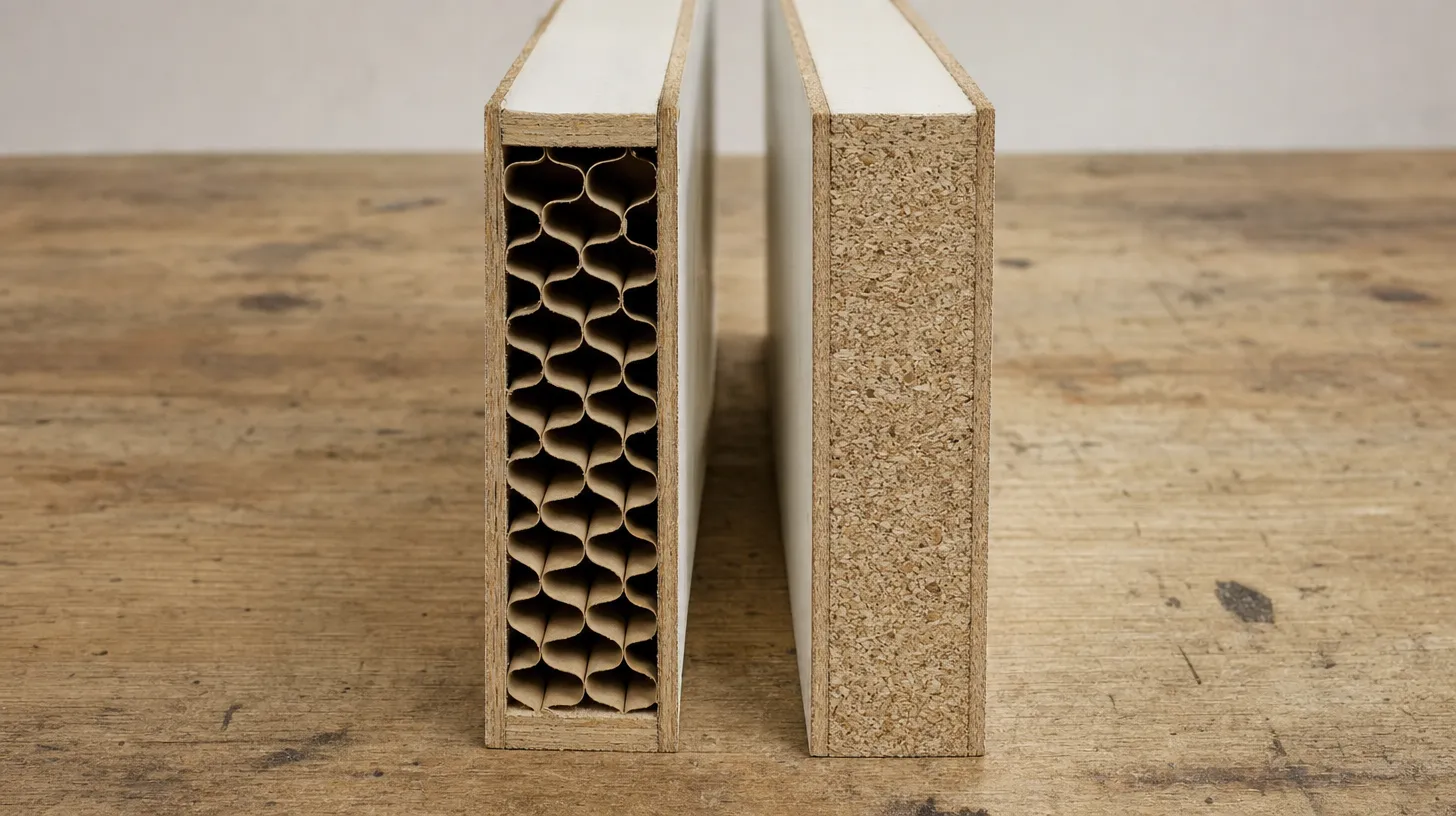
A hollow-core door leaks sound because it is mostly air. Two thin skins over a cardboard honeycomb give it almost no mass, and mass is what stops airborne noise. A solid-core door the same size can weigh nearly twice as much and blocks measurably more. Most renters cannot swap the slab, so seal the perimeter first and add mass second.
That is the whole hollow core vs solid core door soundproofing question, compressed. If you want the playbook rather than the physics, start with how to soundproof an apartment door and come back here the next time a product page quotes you a number you do not trust.
A door is not a wall with a handle on it. It is a removable panel hung in a hole with air all the way around it. Hollow-core construction is a mass problem. The gap around the door is a sealing problem. They fail in different ways and they need different money.
How to tell which door you have in ten seconds
Three tests, no tools.
- Knock in the middle of the panel, then two inches from the latch edge. A hollow-core door is drum-like in the center and dull near the edges, because the edges are where the solid frame is. A solid-core door sounds the same everywhere, a flat thud with no ring behind it.
- Swing it with one finger. A hollow-core door drifts on its own in a draft. A solid-core door has momentum, pulls on its hinges, and closes with weight rather than a clack.
- Look along the latch edge. On a hollow-core door you can usually see two thin skins meeting a narrow strip of wood, with nothing between them. That strip is the entire structure of the edge.
Published weights make it concrete. According to Science Insights, a standard 32 inch by 80 inch hollow-core slab weighs roughly 35 to 45 pounds, while the same size in solid core "weighs 60 to 70 pounds or more." Read those as typical published figures for a size, not a measurement of your door.
Are apartment doors hollow? The interior ones usually are - bedrooms, bathrooms, closets. The front door to the hallway usually is not, and that distinction changes what you should buy.
What is actually inside a hollow-core door
Almost nothing, which is both the honest answer and the useful one.
According to This Old House, hollow-core doors "have a frame covered by MDF or wood veneer skins," and "the interior is either empty or filled with a cardboard honeycomb structure to prevent flexing." Tom Silva, in the same piece, is blunter: "This veneer is actually all you have between each side of the door, except for some strips of cardboard or some other filler to hold the veneers together."
The honeycomb is paper. JELD-WEN, which manufactures doors, describes its honeycomb core as a "hexagonal cellular structure, composed of cardboard or layers of paper," made "from 100% recycled paper." Vertical stiles and horizontal rails carry the hinges and the latch, and everything between them is air and a paper grid.
Note what that grid is for. It is there "to prevent flexing" - a structural job, not an acoustic one. JELD-WEN does also call the core a "fantastic noise buffer," but that is a manufacturer describing its own material in marketing copy rather than a lab result, so we treat it as a claim and not a number.
What is inside a solid-core door, and why it weighs so much
The same sandwich, with the air replaced by something dense. According to This Old House, solid-core doors "typically consist of a wood or medium-density fiberboard (MDF) frame filled with a solid core material made of particleboard, wood fiber, or other composite materials," with molded MDF skins on both faces.
Beacon Commercial Door and Lock, which supplies architectural wood doors, describes the common cores this way: particleboard is "ground up raw wood that is glued together"; structural composite lumber is "strands of different species of wood" bonded "with special resins"; stave lumber core uses "blocks or strips of wood that are from the same species" and is "lighter in weight than particleboard"; and mineral core is a "mixture of noncombustible minerals" used where 45, 60 or 90 minute fire ratings are required.
That last one catches people out. Beacon notes mineral core doors are "very lightweight" and "do not hold screws well." A mineral-core fire door is engineered to survive a fire, not to stop a conversation. Fire performance and sound performance are different specifications that happen to arrive in the same slab.
What makes a door soundproof is mass, not material
Airborne sound crossing a single-layer barrier obeys what acousticians call the mass law. In Canadian Building Digest 239, published by the National Research Council of Canada, A.C.C. Warnock states it plainly: "The most important physical property controlling the airborne sound transmission loss through an assembly is the mass per unit area of its component layers."
The digest gives the working rule too - "the mass law equation predicts that each time the frequency of measurement or the mass per unit area of a single layer wall is doubled, the transmission loss increases by about 6 dB." Warnock spells out the rest of the curve as well: 12 dB of extra transmission loss requires four times the mass per unit area, and 18 dB requires eight times.
So a 6 dB improvement costs you double the weight per square foot. Mass is not a nice-to-have in a barrier; it is the barrier.
Two consequences, and they are what renters most often mix up:
- Soft material does not block sound. Foam and acoustic fabric are light by design, which is why they tame reflections inside your room instead of stopping transmission through the panel. That is a real job, just a different one, and we cover it in absorption on a door. Blocking is mass. Deadening is absorption.
- Air has no mass worth counting, which is why a gap beats a slab upgrade every time. Whether your complaint is even airborne is worth settling first, and impact noise vs airborne noise sorts that out.
What an STC number does and does not tell you
Sound Transmission Class is a lab rating, and the lab part is load-bearing. Writing in The Construction Specifier, Jerry Heid explains that "the TL of a door is measured over 16 different frequencies, and the average of those values is used to determine the sound transmission class (STC) rating of the door," and that sound doors "are tested under optimal conditions." He describes two test phases, one with the door sealed in place and one with it operable and the sealants removed, and warns that manufacturers sometimes advertise the sealed-in-place figure rather than the operable one.
So read any STC figure as a lab-measured rating of a complete assembly - slab, frame, seals, threshold - under favorable conditions, not a property of the slab on its own.
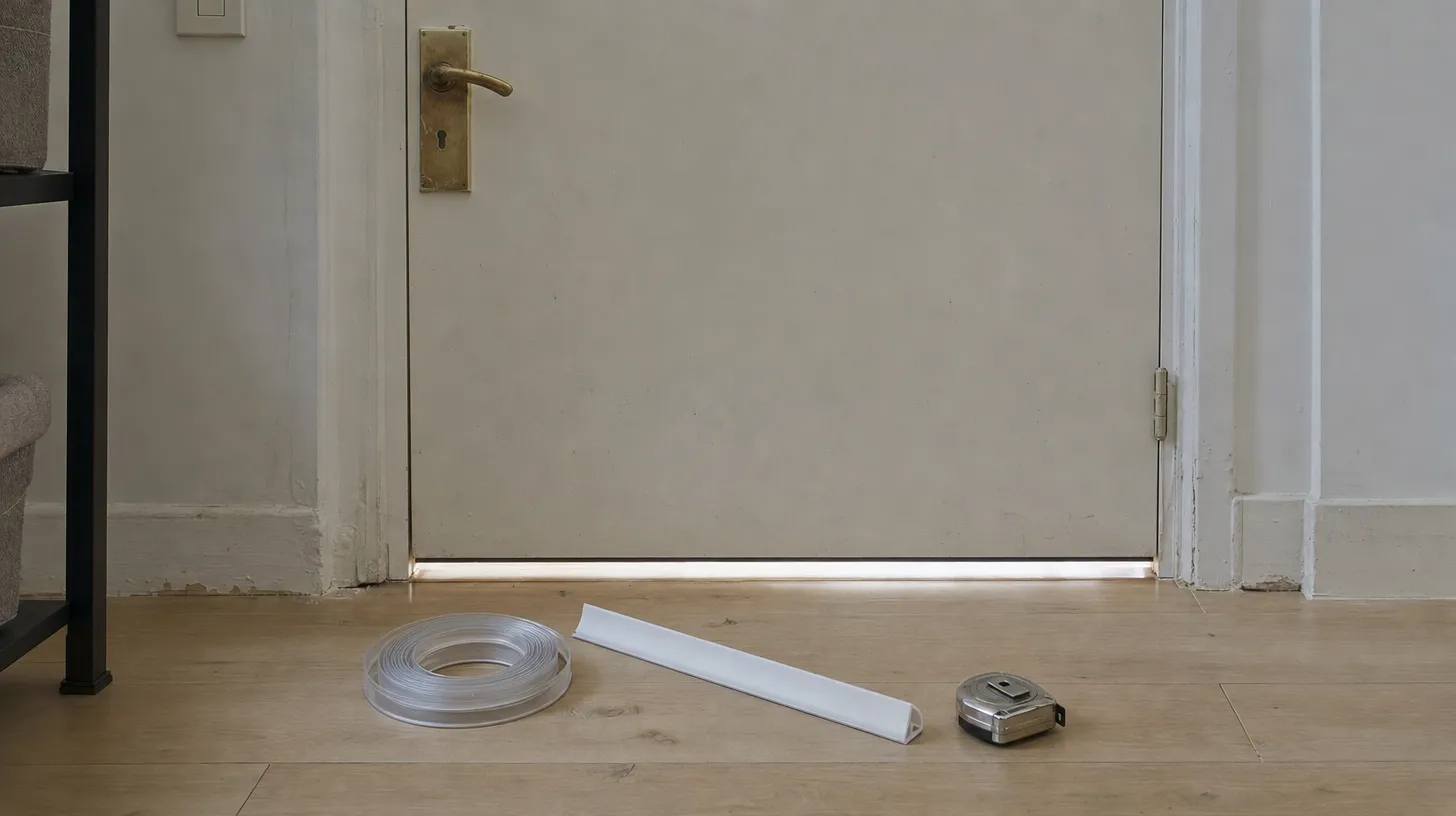
Then there is the gap. Heid is unambiguous: "a gap of less than 3 mm (1/8 in.) may only allow a small amount of air to pass through, but it is still large enough to completely cancel out any noise-reduction benefits of an acoustic door." An eighth of an inch. Plenty of apartment doors have several times that much daylight under them.
The number on a door does not survive a one-inch gap underneath it, and no slab upgrade fixes a leak. If you want to run the mass-law arithmetic yourself rather than trust a marketing page, our free soundproofing calculators will do it.
Solid-core door sound reduction, by the published numbers
Typical ranges exist and they are useful, as long as you hold them loosely. Commercial Acoustics, which manufactures soundproofing membranes and also runs acoustic consulting and field testing, publishes a table of typical figures: STC 24 to 32 for a standard interior hollow-core door, STC 32 to 36 for a heavier solid-core door, and STC 40 to 45 for an acoustic-rated door with seals and a sweep. That is a vendor publishing ranges for its own industry, not a lab report on any one door. Heid adds that door openings "rated in the range from STC 30 to 40 are common," that "STC 50 or higher is extremely difficult," and that 30 is "considered to be the industry minimum for an acoustical door."
Three cautions. First, those are published typical ranges for tested assemblies, not a reading of the door in your hallway, and age, fit and hardware move the real result downward. Second, the ranges overlap - the top of the hollow-core range and the bottom of the solid-core range are the same number, so swapping a slab is not a guaranteed jump.
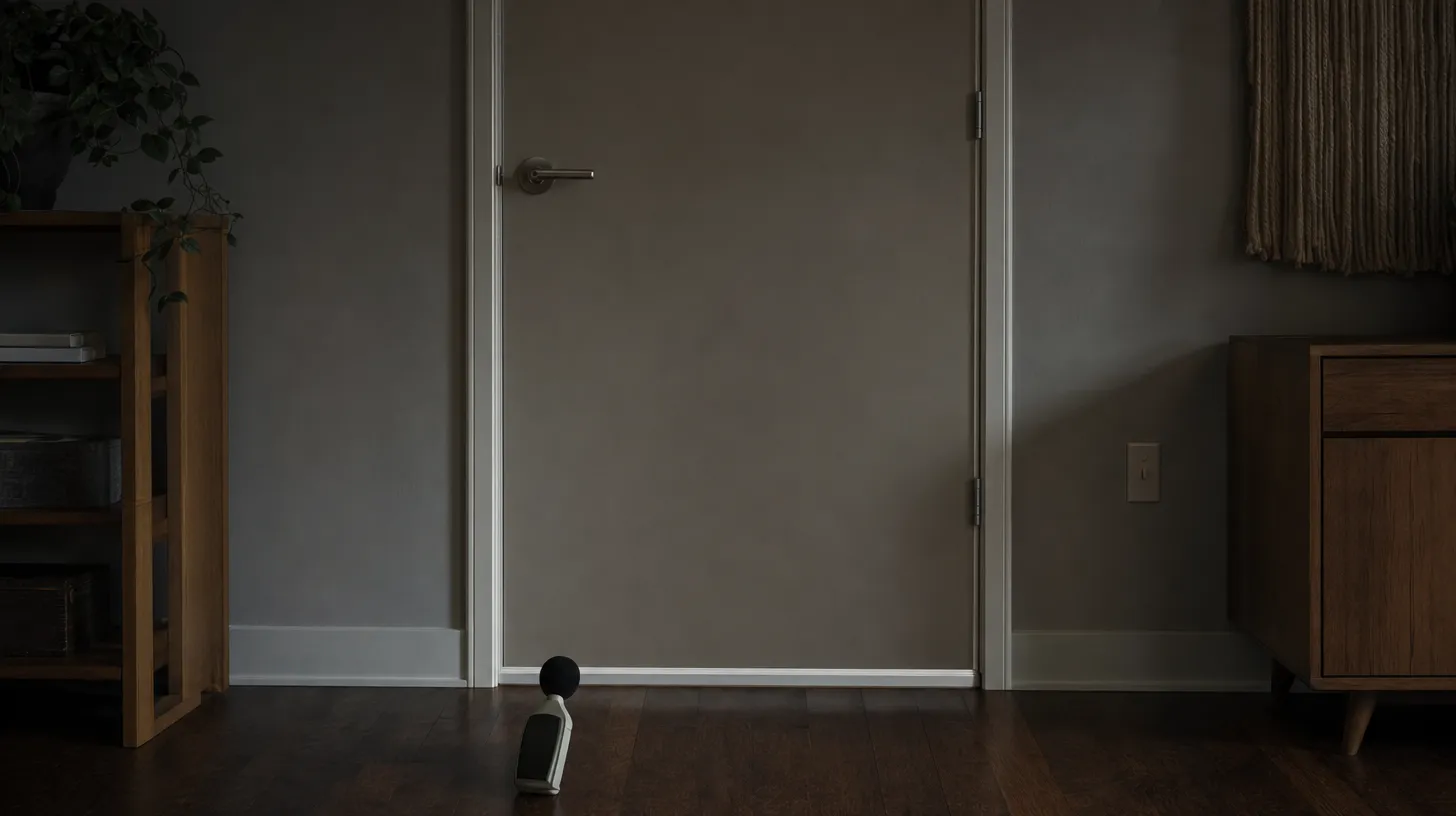
Third, the whole opening is what you hear. Commercial Acoustics makes the point with a field test in Orlando where sound at the base of a door read 69.8 dBA against 60.8 dBA at the wall beside it, 9 dB louder at the door, with automatic sweeps engaged. Their summary of the geometry is worth quoting: "the composite STC of a wall plus door assembly is closer to the door's rating than to the wall's." A good wall with a bad door is a bad partition.
Why your apartment entry door is a different case
This is the distinction that saves renters the most wasted money. Your front door to the shared hallway probably is not hollow, and it probably already has mass. According to Lori Greene of iDigHardware, under the 2021 International Building Code the doors from an interior corridor into a residential dwelling unit are typically required to be fire door assemblies rated for 20 minutes, and those assemblies "must meet the requirements of NFPA 80 - Standard for Fire Doors and Other Opening Protectives, as well as the adopted codes."
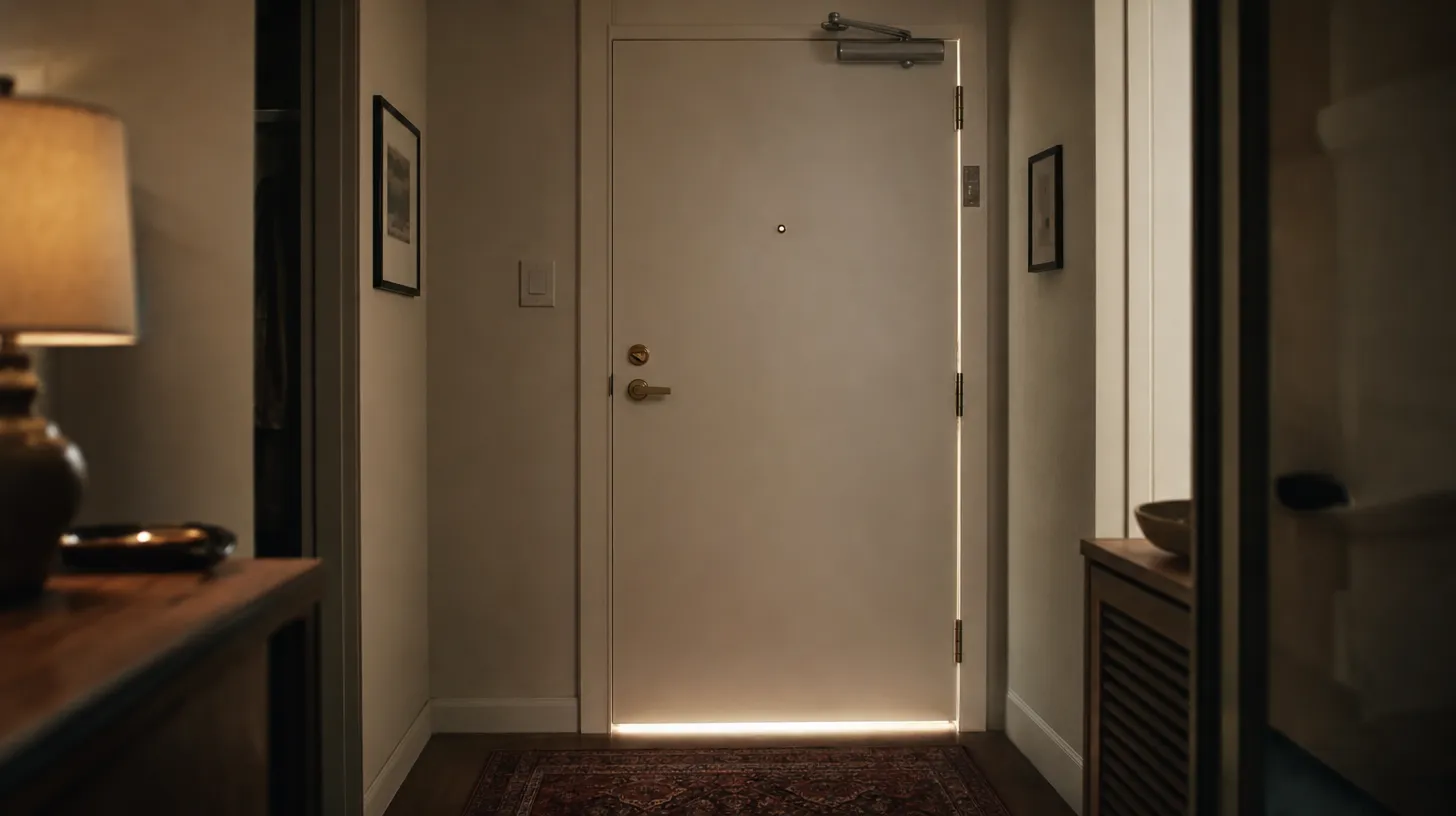
So if you can clearly hear the hallway through a heavy entry door, the slab is very unlikely to be your problem. The perimeter and the bottom gap are. A labeled fire door is hung with clearances, often has a generous undercut, and shows a line of light down the latch side. Mass is the one thing it already has, so buying mass for it is buying the wrong thing.
It also has a hard limit. Do not cut, drill or mortise an apartment entry door. A fire door is a listed, labeled assembly governed by NFPA 80, so modification is a question for your landlord and the building's fire marshal, not a weekend project. Everything useful you can do to an entry door for noise attaches without touching the slab.
Hollow-core door soundproofing, in the order that works
Short, and in this order, because the order is where the savings are.
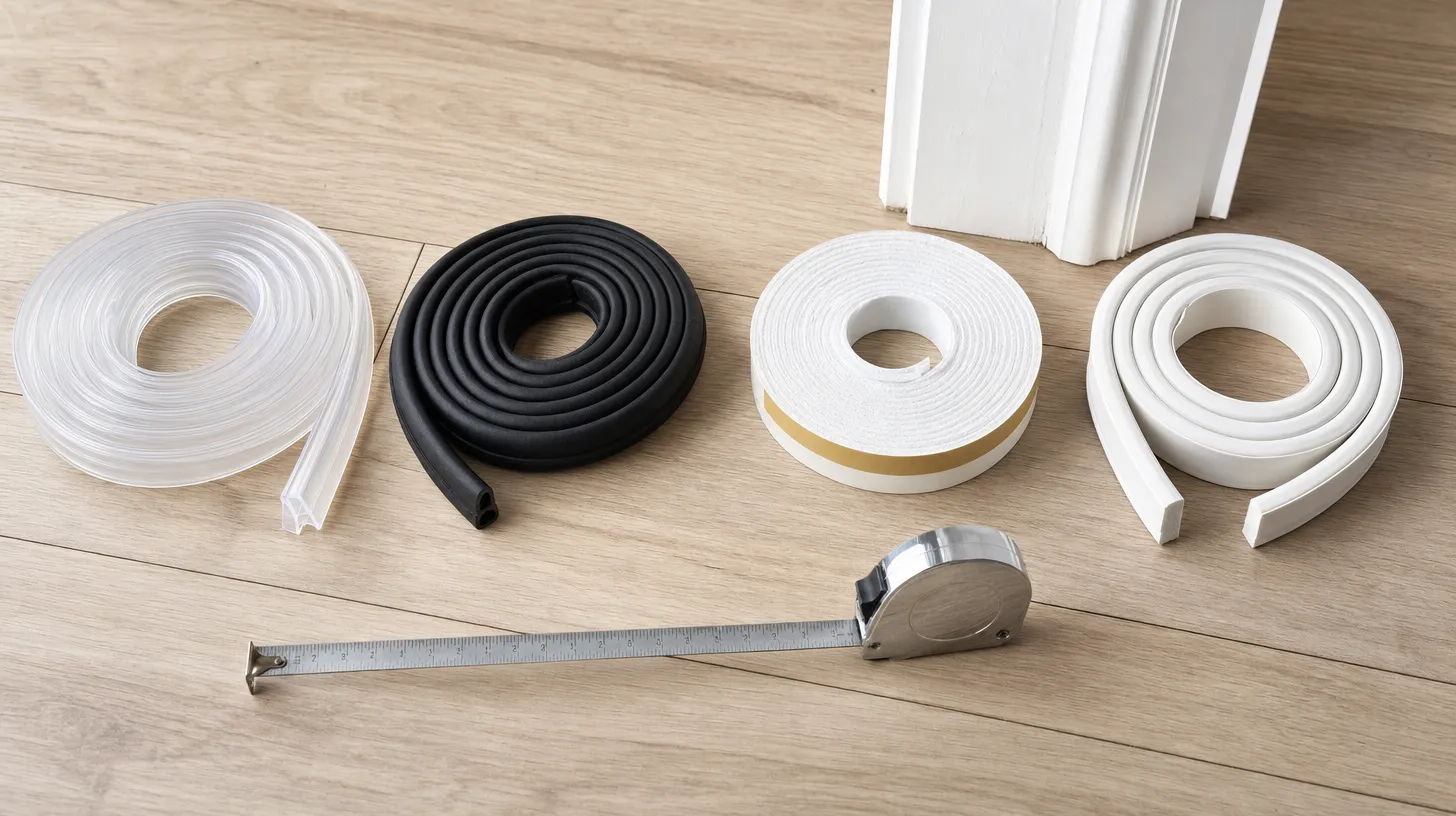
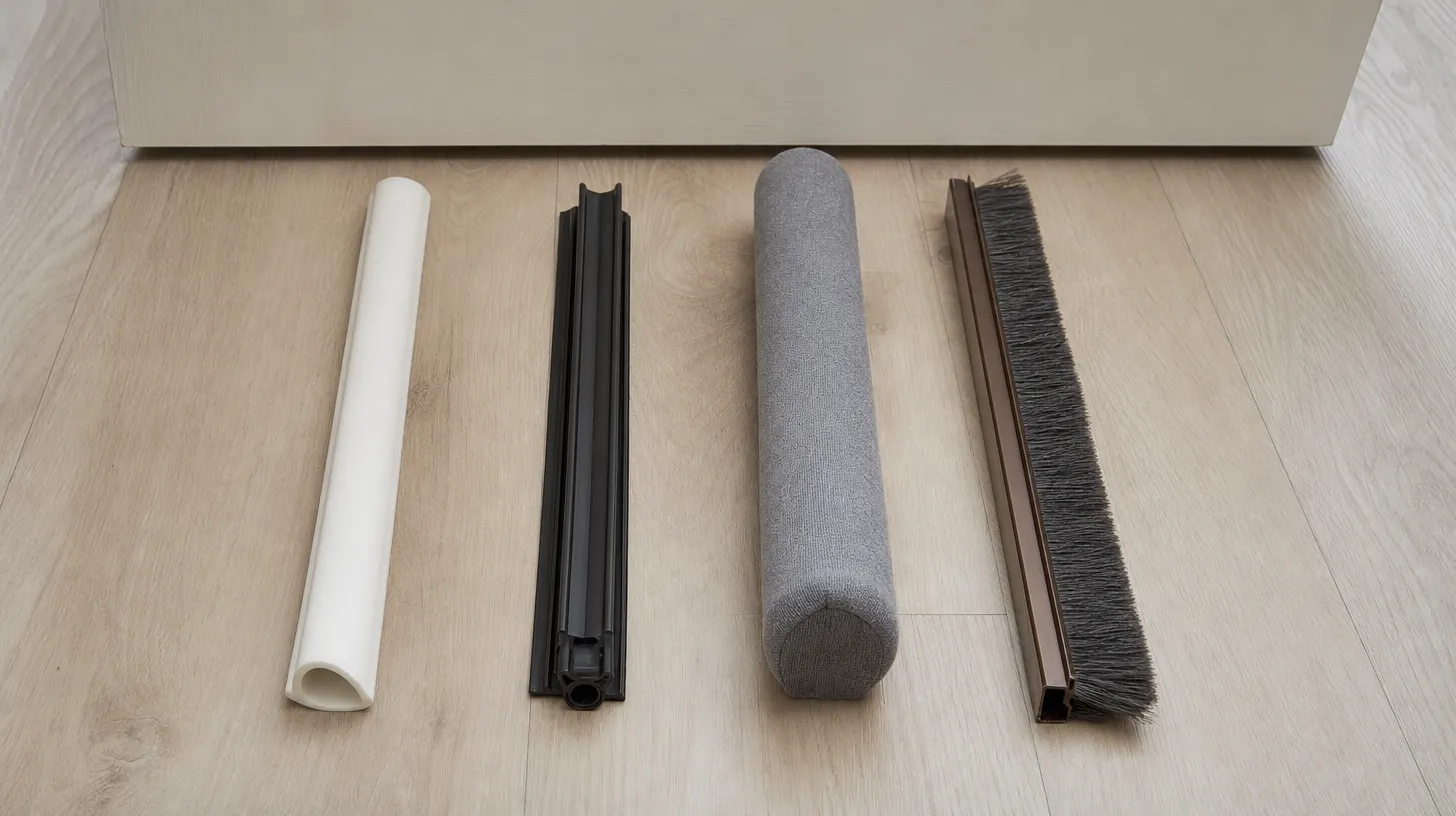
Seal first. The perimeter and the bottom gap are the cheapest fix, the best fix per dollar, and the only one reversible with a putty knife. A silicone sweep runs under $10 and a full adhesive seal kit is usually under $20. We compare the options in the best door sweeps and draft stoppers, and the step-by-step sequence is in five easy steps to soundproof your door. Do the free part first - close the door in a dark room with a light behind it and mark every place you see light.
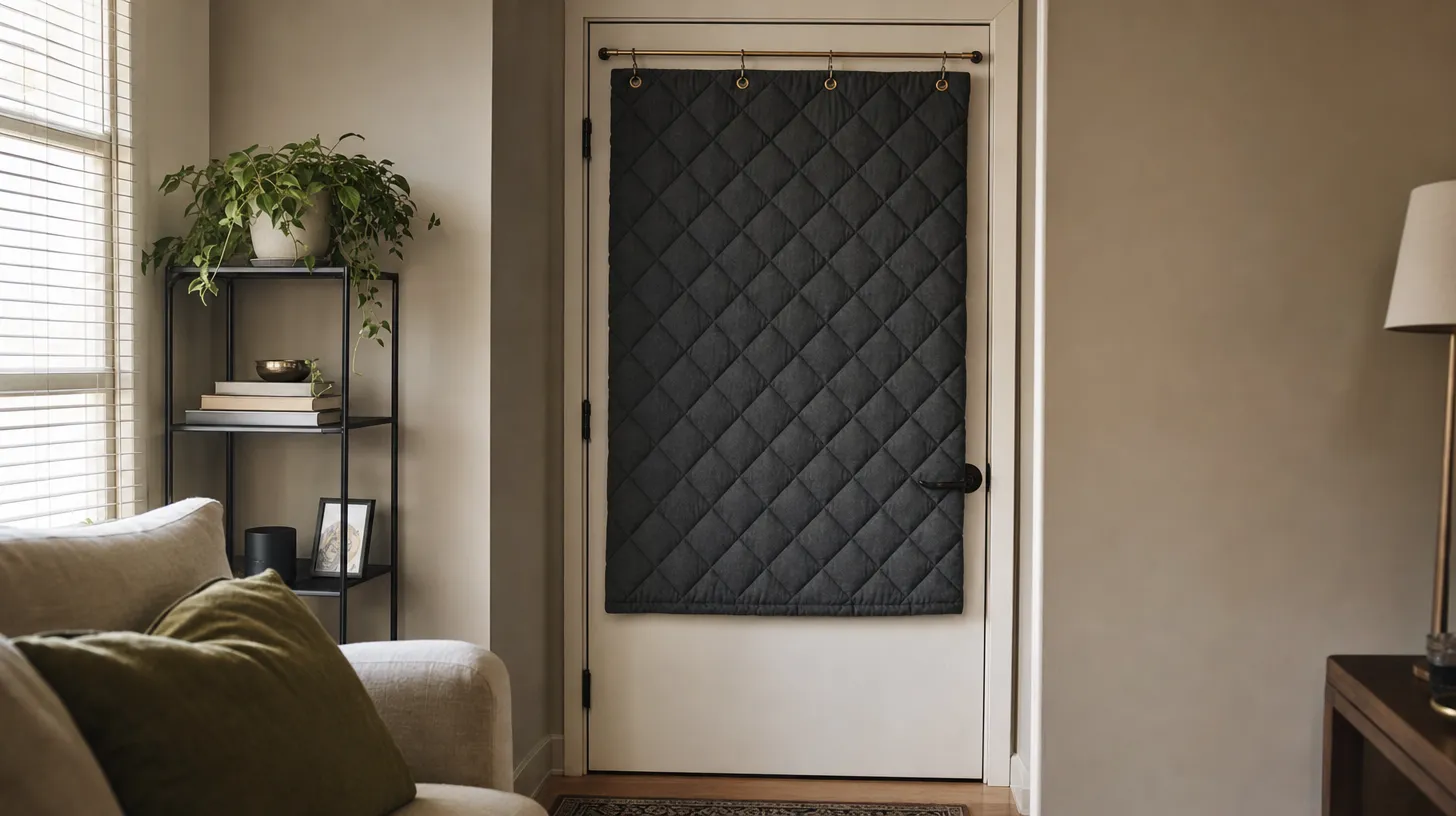
Add mass second, and only to a door you are allowed to treat. Mass-loaded vinyl, a heavy blanket or a dense panel on the room side all pull the lever the mass law describes, at the cost of weight on the hinges and a door that stops looking like a door. That trade-off deserves its own article, and how to add mass to a door is the one we cover in its own guide.
Do not count on replacing the slab. A solid-core door plus a carpenter is a few hundred dollars for a few STC points, it is a permanent alteration you do not own, and noise alone is rarely a repair a landlord will fund. Ask, but plan as if the answer is no.
The honest ceiling
A sealed, mass-loaded hollow-core door will never match a solid-core door in a sealed frame. Those are different amounts of mass, and the mass law does not negotiate. Second Skin Audio puts it about as directly as anyone in the industry does: "You can't soundproof a hollow core door because they don't have enough mass to effectively block sound." They also get the sequence right - "sound always looks for the weakest point. It will find the air gaps, but once those are plugged, it will go through the material easily if it is lightweight like a hollow core door."
So what does success feel like? Speech from the next room stops being intelligible and becomes a murmur. Door slams soften. A television drops to a background mumble. The bass line from a party does not go away, because low frequencies are the expensive end of acoustics and a 40 pound panel was never going to catch them.
That is a real improvement and it is worth the $20. It is not silence, and anyone selling you silence for a door is selling you something. We dig into whether soundproofing a door actually works, with the numbers and the honest disappointments, in a separate piece.
The order is the same whichever door you have. Identify what you are holding, seal the perimeter and the bottom gap, add mass if the door is yours to treat, and stop before you spend solid-core money on a hollow-core result. Our guide to soundproofing an apartment door walks that sequence with what each step costs.
FAQ
Can I fill a hollow-core door with foam or insulation?
We do not recommend it. Getting filler inside means cutting the skin or drilling the top rail, which damages a door you do not own, and lightweight foam adds almost no mass per unit area - the only property the mass law rewards. Dense material on the face is the better version of the same idea.
Does a solid-core door guarantee a quiet room?
No. Commercial Acoustics publishes standard solid-core doors at STC 32 to 36 and standard hollow-core doors at STC 24 to 32, so the ranges overlap at the edges. And as Jerry Heid notes, a gap under an eighth of an inch is enough to cancel an acoustic door's benefit, so an unsealed solid-core door can underperform a well-sealed cheap one.

Lillie Metayer
Lillie Metayer is the founder of a local program that helps apartment-dwellers take action against noise pollution. Involved in environmental activism since high school, Lillie is passionate about raising awareness of the harms of noise exposure and helping people reduce noise in their communities. In her free time, Lillie enjoys playing the violin and spending time outdoors.