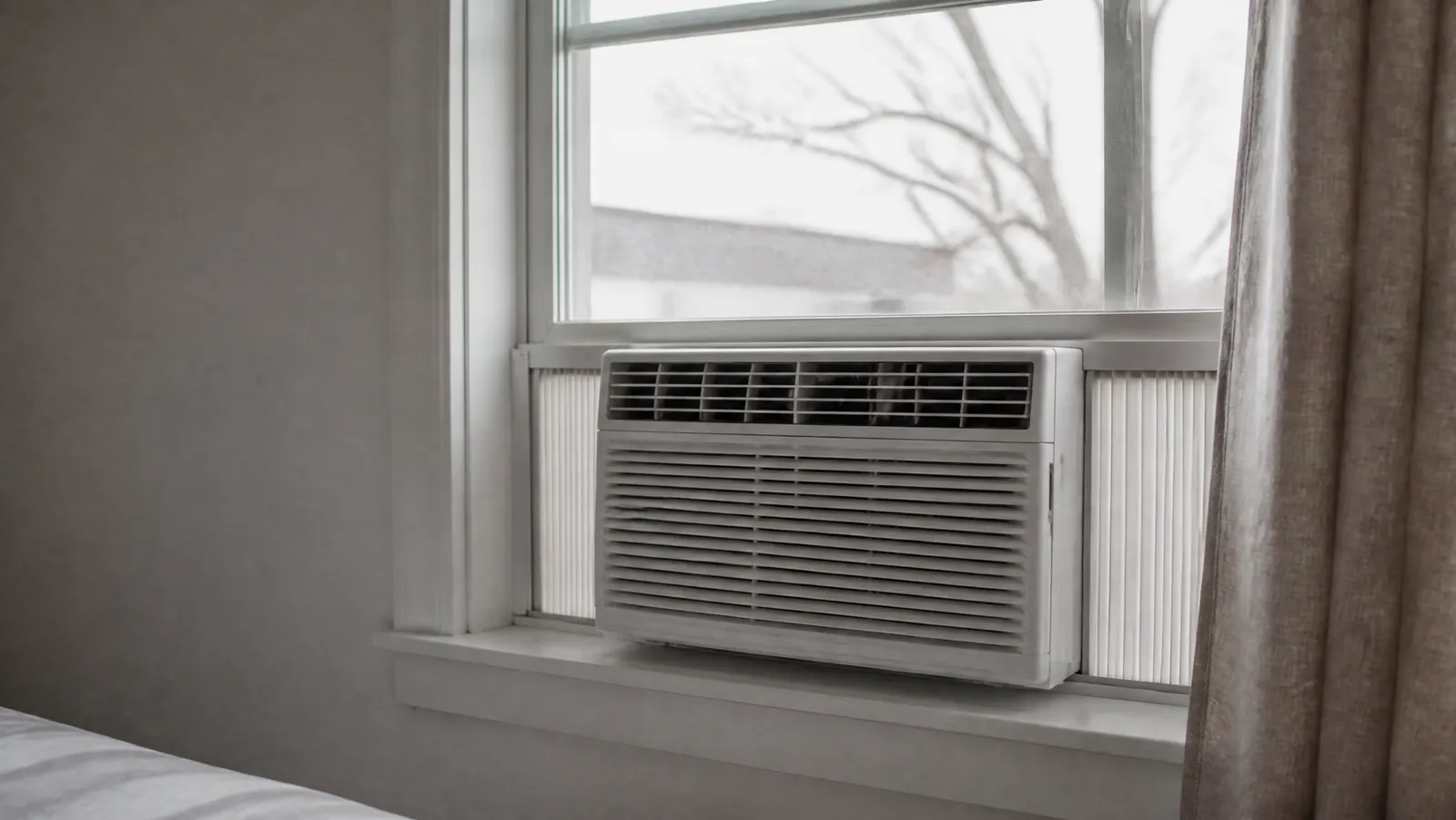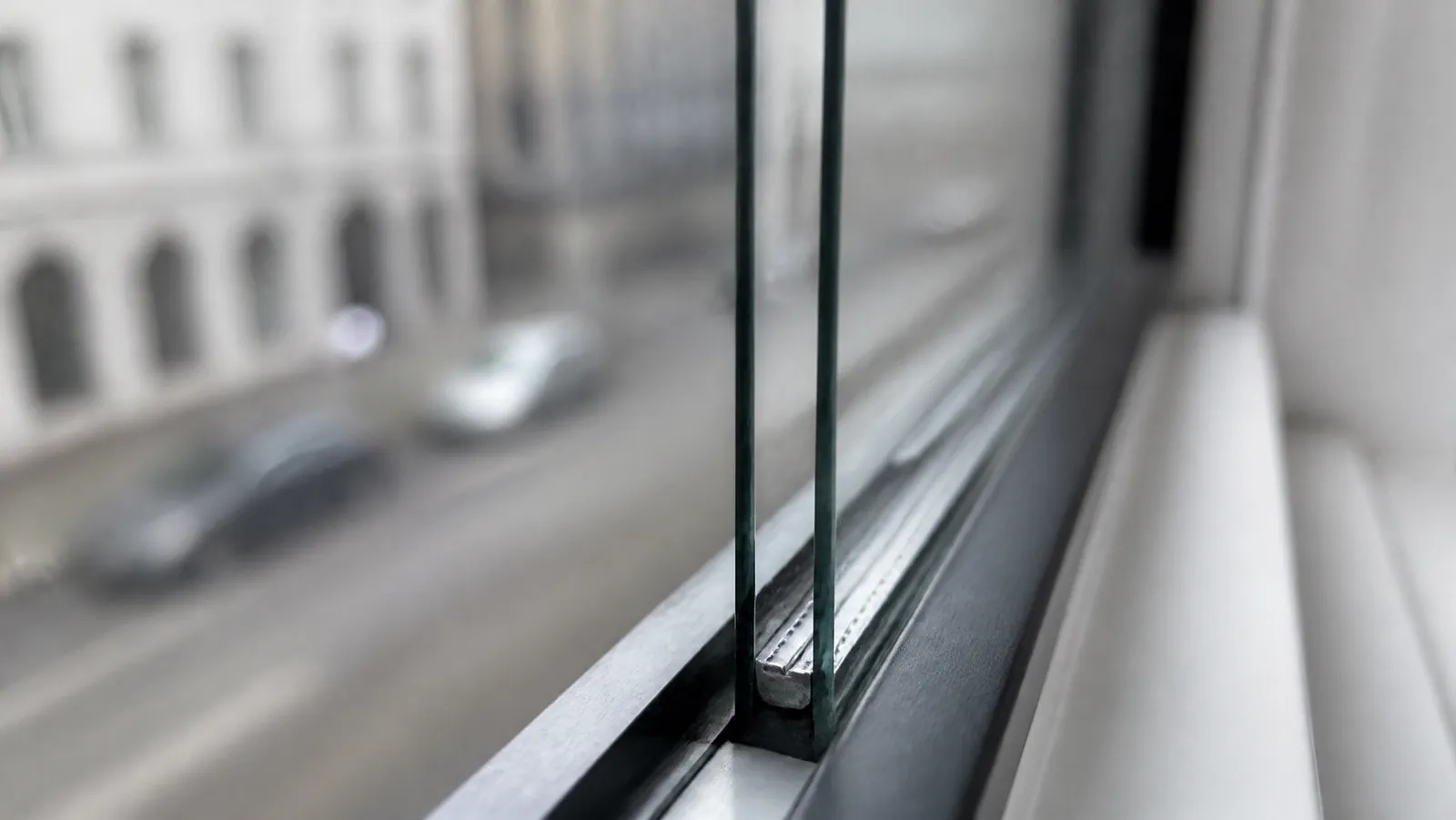
Somewhat, and by less than almost anyone expects. According to Soundproof Windows, Inc., a single pane rates "most likely between 26 and 28" on the STC scale, while "the STC Ratings for double paned windows usually vary from 26 to 33." Those two ranges overlap. Double glazing is not a step change in sound. It is a step change in heat.
So when a renter asks does double glazing block noise, the honest answer has three parts: a little, not at the frequencies keeping you awake, and the reason is design intent. Thermal double glazing was never engineered for sound. Below is the evidence, and what it means when your landlord says the new windows will fix the street.
For the practical order of operations, start with what actually blocks noise at a window and come back here for the physics.
Why two panes help at all
Two mechanisms block airborne sound: mass and decoupling.
Mass is the easy one. Heavier, stiffer layers are harder for air pressure to shake. Saint-Gobain Building Glass UK's acoustics technical note gives single-figure ratings for plain float glass that show the trend cleanly: 3 mm glass rates Rw 29 dB, 6 mm rates 32 dB, 19 mm rates 38 dB. Nine decibels for six times the thickness. Mass works, but slowly and expensively.
Decoupling is the second mechanism, and it is the one double glazing trades on. Split that mass into two panes with air between them and the second pane is no longer shaken directly by the first. The air gap is the break in the chain.
That is genuinely sound physics. The problem is the size of the gap you get, and the fact that both panes are usually identical.
Double pane windows sound reduction: why the gap is the wrong size
Here is the single most useful fact in this article. The air gap in your windows is a heating number.
According to Cardinal Glass Industries, "using the North American wintertime condition of 0F (-18C) as specified by NFRC, the optimal airspace is approximately 1/2 inch (13mm)." With argon fill, Cardinal notes, "the benefits to the U-factor are most pronounced with an airspace of about 1/2 inch (13mm). Beyond this measurement, the performance enhancements tend to wane due to convection."
Read that last clause again. The gap stops at roughly half an inch because past that point the air inside starts circulating and carrying heat across. The number was chosen to defeat convection. Nobody in that calculation was thinking about a bus. Clearview SG puts the built reality at "typically 12 to 16mm" for a standard unit — half an inch, plus or minus.
Mass-air-mass resonance, in plain language
Now the part that turns a virtue into a defect.
Two panes with a sealed pocket of air between them do not behave like two independent barriers. They behave like two weights on a spring, and the air is the spring. As Hall, Dodd and Schmid describe it in their paper for the Proceedings of ACOUSTICS 2019, "the MAM resonance dip is a common problem found in most double leaf panel constructions when the air between the panels acts as a spring," and "at a certain frequency the air spring and panel arrangement reaches a resonance where the panels are oscillating out of phase with each other."
At that frequency the assembly stops blocking and starts cooperating, and the transmission loss falls into a hole. Where is the hole? Saint-Gobain publishes calculated mass-air-mass resonance frequencies for an air-filled unit made of a 4 mm and a 6 mm pane:
- 6 mm cavity — 316 Hz
- 12 mm cavity — 223 Hz
- 16 mm cavity — 193 Hz
- 20 mm cavity — 173 Hz
- 24 mm cavity — 158 Hz
Your window is somewhere in the middle of that list. A typical thermal IGU has its worst weakness at roughly 190 to 220 Hz — engine note, tyre roar, a truck going past, a bus idling at the light. The one band you wanted fixed.
Widening the cavity pushes that resonance down, which is why acousticians want a big gap. A sealed factory unit cannot have one, because of the convection limit above.
The coincidence dip, and why matched panes make it worse
There is a second hole, higher up.
Every pane has a frequency at which bending waves in the glass line up with the sound wave hitting it, and the glass stops resisting. Saint-Gobain gives that critical frequency in hertz as 12,500 divided by the pane thickness in millimetres, so 4 mm glass dips near 3,125 Hz and 6 mm near 2,083 Hz. The article "Architectural Acoustic Glazing" on glassonweb places the coincidence dip between 500 Hz and 10 kHz for common thicknesses of 3 to 25 mm, and notes human hearing sensitivity barely varies across that range — so the dip lands somewhere you will notice.
Now put two identical panes in one frame. Saint-Gobain is blunt about what happens: "if identical thicknesses are used within an IGU, the overlap of the coincidence dips will generate a region where acoustic performance is reduced. In addition, with identical glass thicknesses, sympathetic vibrations occur which cause the glass to vibrate together and transmit sound."
That is the standard 4/16/4 thermal unit sold by the million: two matched panes, two dips stacked on one frequency, and a pair of sheets that would rather vibrate in sympathy than fight each other.
One resonance near traffic frequencies, one dip near speech and siren frequencies, and a gap sized for heat. That is the whole disappointment in three lines.
What actually moves the number
Three levers change a window's acoustic behaviour. Only one of them is dramatic.
Asymmetric pane thicknesses. Making the panes different — 4 mm and 6 mm, or 4 mm and 8 mm — separates the coincidence dips so they no longer reinforce each other, and stops the sympathetic vibration Saint-Gobain describes. It costs almost nothing, which is why acoustic units are usually mismatched.
A wider air gap — but not as much as you would think. This is where the sealed unit runs out of road. Saint-Gobain's own measured data for a 4 mm plus 6 mm unit shows the weighted rating Rw going from 34 dB at a 6 mm cavity to 35 dB at a 24 mm cavity. One decibel for quadrupling the gap. And the traffic-weighted figure went the wrong way: Rw with the Ctr correction applied falls from 31 to 29 across that same range. Ctr is the spectrum adaptation term defined in ISO 717-1 for road traffic noise: a correction subtracted from Rw using a standardised traffic spectrum weighted heavily towards the low frequencies, which is why Rw+Ctr is always the lower number. Saint-Gobain also quotes BS EN 12758:2002 directly: "Over the cavity width range (6-16) mm, the corresponding acoustic data for a given glass combination are regarded as constant." Saint-Gobain adds its own caveat to that: the wording is specific to the standard's own data, which it calls worst case, and the low-frequency range can still be moved by mass-air-mass resonance. Within the range a factory can actually seal, cavity width is close to a non-lever for traffic noise.
Laminated glass. This is the one that matters. A laminated pane is two sheets of glass bonded around a viscoelastic plastic interlayer, and that interlayer turns bending energy into heat instead of passing it on. The glassonweb article reports that "one can gain as much as 6 units in the sound transmission class (STC) rating when making the interlayer upgrade from standard PVB to acoustic PVB," and that at the bottom of the coincidence dip "the STL can be improved by as much as 10 dB." Saint-Gobain's comparison of 6 mm-equivalent panes shows plain float at Rw 32, standard laminate at 33 and its acoustic laminate at 35, describing the softer damping core as something that "will generally completely remove the influence of the critical frequency of the glass."
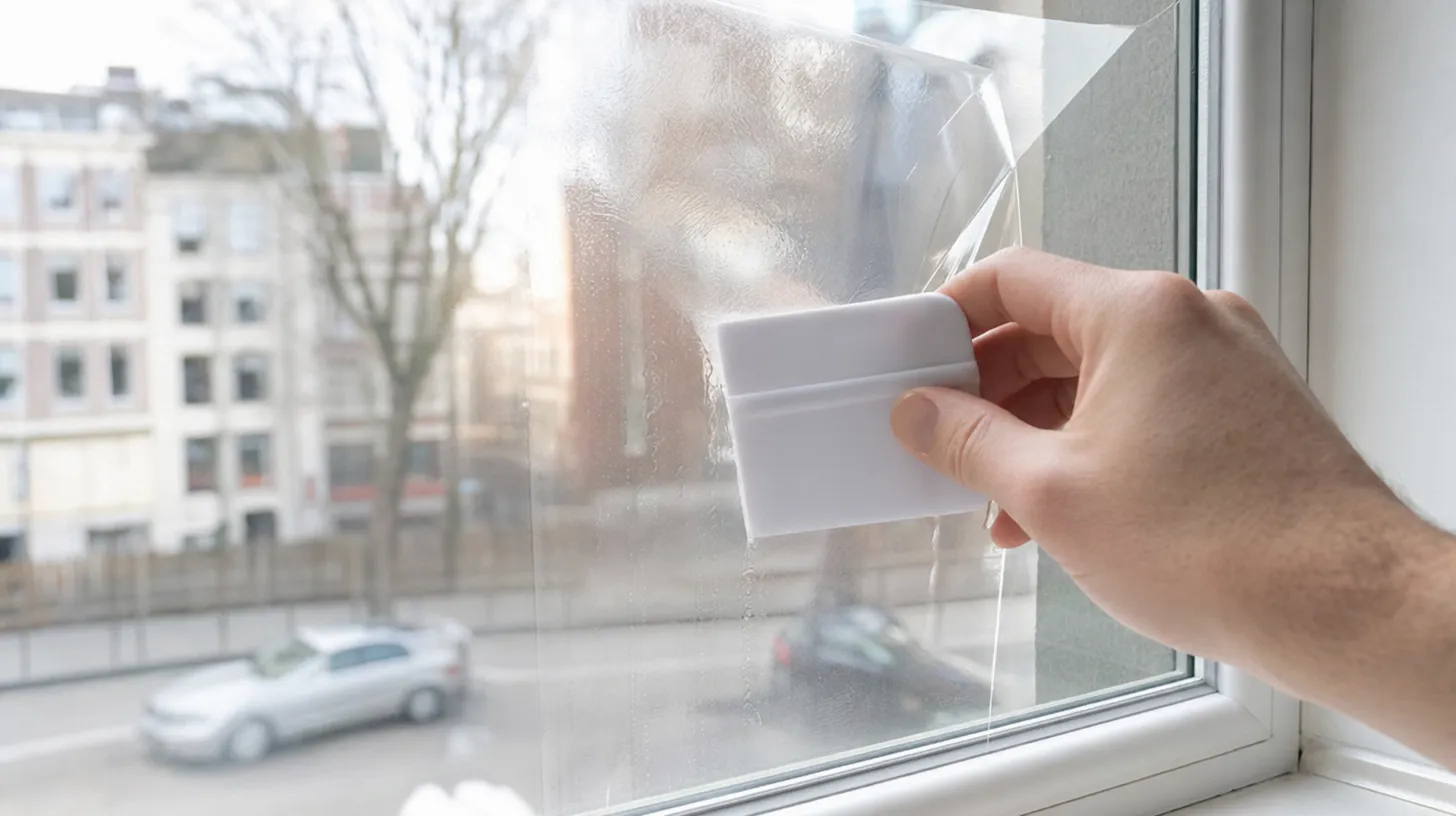
Note what laminated glass is not. It is not a layer added to a window — the interlayer sits between two structural panes and damps them from the inside. Sticking something thin onto the face of existing glass adds negligible mass and only marginal damping, which is the whole reason does soundproof window film work ends the way it does. The same damping principle applied to walls is in green glue and decoupling explained.
Laminated glass noise reduction and the STC vs OITC problem
Now the metrics, because this is where window marketing does its best work.
According to Commercial Acoustics, STC rates sound transmission from 125 to 4000 Hz, under ASTM E90 for the test and ASTM E413 for the rating. It "quantifies how well a partition blocks mid-frequency airborne noise" and is "excellent for predicting privacy between indoor rooms."
OITC is the exterior metric, calculated under ASTM E1332, running from 80 to 4000 Hz — a full octave lower. Commercial Acoustics is direct about why it exists: "OITC exists because STC does not measure low frequencies. Transportation noise contains large amounts of energy below 200 Hz." The rating "weights the low-frequency region heavily using a reference spectrum derived from real outdoor traffic noise, including highway noise through windows."
Now put that beside the resonance table above. Your window's mass-air-mass resonance sits at roughly 193 to 223 Hz. STC does not start measuring until 125 Hz and barely weights that region. OITC starts at 80 Hz and weights it hard. That is the entire mechanism by which a window earns a respectable STC and still lets a bus into your bedroom.
Commercial Acoustics gives the gap in numbers: "A window assembly might rate STC 35 and OITC 26 on the same lab test." Nine points, same window, same day. If a window is sold to you on STC alone and your noise is traffic, you have been handed the flattering number. Ask for OITC.
What a glazing upgrade would actually buy you
Suppose your building replaced everything. Soundproof Windows, Inc. describes that exact scenario: "When good, thick dual pane windows rated at STC 35 are installed (replaced existing single pane windows with STC 27), the sound will not be reduced much." The same page adds the threshold that matters: "Often, until the STC rating is up in the 40's, the noise is not reduced enough to stop it from being a significant problem."
Eight STC points of new windows, and the company that sells acoustic windows for a living tells you not to expect much. We would rather quote that than argue with it.
And you are a renter. The decision is not yours, the payback runs to years you may not be in the apartment, and the result may underwhelm anyway. This is where most articles on this topic run out of things to say.
The air gap you can control beats the one sealed in a factory
Here is the useful conclusion hiding inside all of that physics.
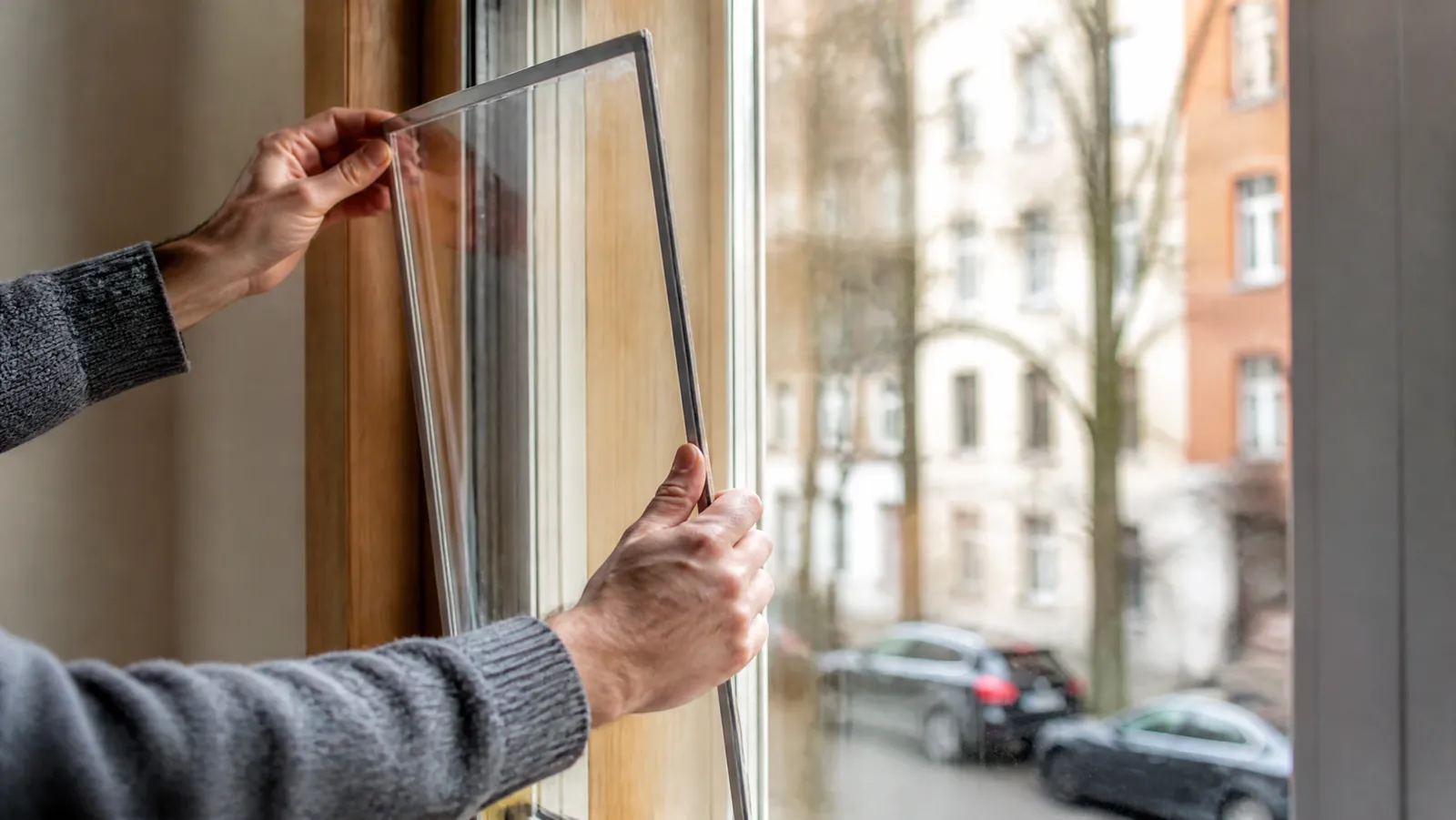
The factory cannot give you a big cavity, because convection ruins the thermal performance it was optimising for. You can. A second pane fitted on the room side of your existing window is not bound by that constraint — nothing is sealed, nothing is optimised for U-factor, and the gap can be as deep as your window reveal allows.
Clearview SG contrasts the two directly: a standard double-glazed unit runs "typically 12 to 16mm", while "the air gap in secondary glazing can be 100mm, 150mm, even 200mm." For noise work the company puts the minimum at 100mm and the optimal range at 150 to 200mm.
That is eight to sixteen times your thermal cavity. Saint-Gobain's resonance equation puts the resonant frequency in inverse proportion to the square root of the cavity width, so widening the gap eightfold moves that resonance down by roughly a factor of three, into the region of 70 Hz — below where most traffic energy sits, even if not clear of it altogether.
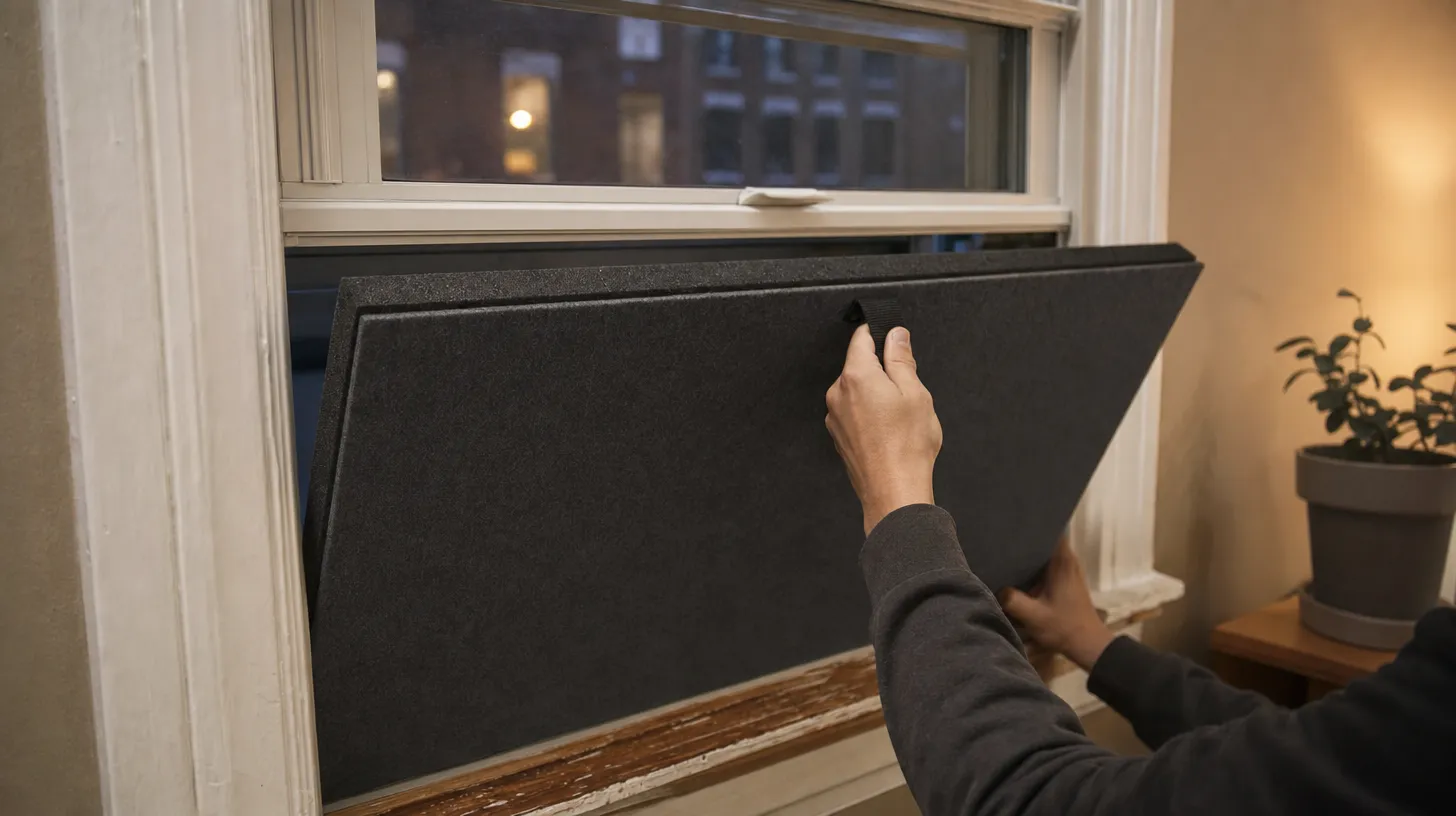
This is the whole case for an interior pane, and it is why we keep sending renters to do soundproof window inserts work rather than to a glazing catalogue. An insert is not a cheaper double-glazed unit. It is a better one, on the only variable that matters here, precisely because it is not sealed.
If you are stuck with single-pane glass
Most old apartment stock is single glazed, and if that is you, none of the above is bad news. The cheapest wins are all still on the table.
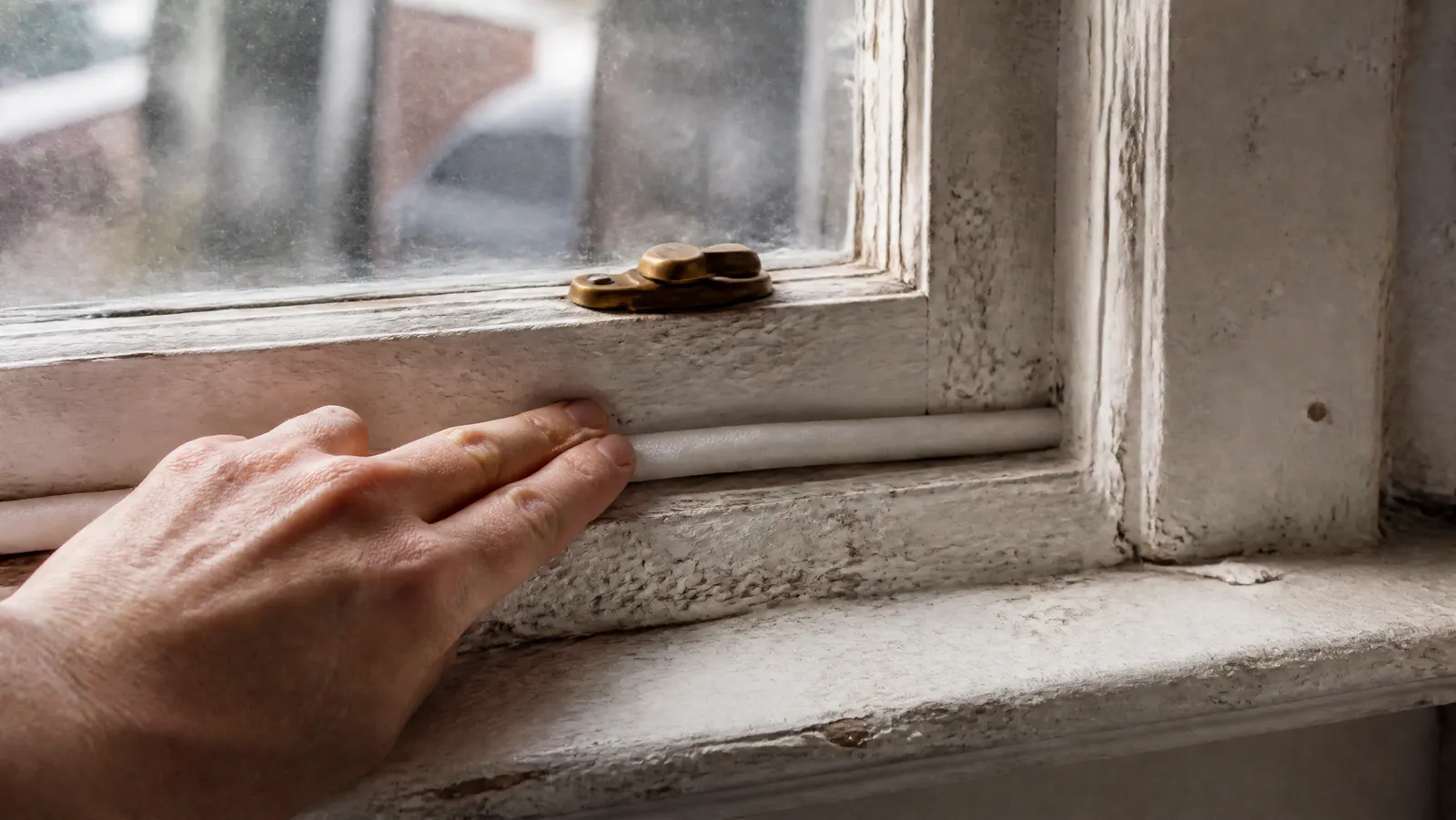
Seal first. Air and sound take the same route, and on an original sash the leak path usually outweighs the glass — our guide to the best weatherstripping to block street noise is the ten-dollar version of this article. Then add mass with a cavity behind it: a DIY soundproof window plug for night use buys you a deep air gap and a heavy layer for the price of a sheet of board. Anyone trying to soundproof old apartment windows should work in that order, because sealing changes what the next step needs to be.
The bottom line
- Does double glazing block noise? A little. Soundproof Windows puts single panes at STC 26 to 28 and double panes at STC 26 to 33 — overlapping ranges, not a leap.
- The gap is a thermal number. Cardinal Glass puts the optimum airspace at about 13 mm under the North American winter condition it specifies, because beyond that convection erodes the U-factor.
- That gap puts the mass-air-mass resonance near 190 to 220 Hz on Saint-Gobain's figures, which is where traffic lives.
- Matched pane thicknesses stack their coincidence dips and vibrate in sympathy, per Saint-Gobain.
- Laminated glass is the real lever — up to 6 STC points and up to 10 dB at the dip, per glassonweb.
- Ask for OITC, not STC. Commercial Acoustics shows the same assembly rating STC 35 and OITC 26.
None of which you control as a renter. What you do control is the one variable the factory could not give you: a deep, unsealed air gap on the room side of the glass you already have. Seal the sash, then put a second pane an inch or more off the existing one, and you beat that half-inch factory cavity on its own terms.
For the full sequence ranked by payoff per dollar, that is our apartment window guide.

Lillie Metayer
Lillie Metayer is the founder of a local program that helps apartment-dwellers take action against noise pollution. Involved in environmental activism since high school, Lillie is passionate about raising awareness of the harms of noise exposure and helping people reduce noise in their communities. In her free time, Lillie enjoys playing the violin and spending time outdoors.