If you live on a busy street, you already know the drill: the bus that hisses to a stop at 6 a.m., the neighbor's car alarm, the Friday-night crowd spilling out of the bar downstairs. A good pair of earplugs is the cheapest, fastest fix in the entire soundproofing toolkit — but only if you choose the right ones. Here's how to pick a pair that genuinely blocks street noise, plus the eight we keep coming back to.
Why street noise is so hard to block
Not all noise is created equal. The deep rumble of traffic and engines is low-frequency sound, and low frequencies are stubborn — they carry long distances and slip through small gaps. The clatter of construction, sirens, and voices sits higher up the spectrum and is easier to attenuate. The best all-round earplugs knock down both, but if your main enemy is engine rumble, lean toward a high-rated foam or a plug designed for low frequencies.
Earplugs only ever reduce sound — they never make a room silent. For the rumble that travels through your walls, floor, and windows, you'll want to pair plugs with room-level fixes like heavy soundproofing curtains and a sealed door. Earplugs handle the rest.
What NRR actually means
In the US, earplugs carry a Noise Reduction Rating (NRR) measured in decibels. The highest you'll find on disposable foam is NRR 33. It's tempting to read that as "33 dB quieter," but NRR is a lab figure measured under ideal conditions. In the real world you'll see less — acousticians often suggest mentally subtracting around 7 dB, and halving what's left, to estimate everyday performance.
The practical takeaways:
- Higher NRR = more blocking, so for consistently loud streets, start at the top of the range.
- Fit matters more than the number on the box. A perfectly seated NRR 29 plug beats a poorly inserted NRR 33 every time.
- Don't chase silence at the cost of safety — if you need to hear a smoke alarm or a crying child, a plug that lets some high frequency through (like the EARHOPE) is the smarter call.
Foam vs. silicone vs. moldable
There are three materials worth knowing, and the right one depends on how you sleep and how much blocking you need.
Foam (polyurethane) gives you the highest NRR and the lowest price. You roll it down, insert it, and let it expand for a tight seal. The downside: it can feel like pressure deep in the canal, and it's single-use-ish. Our value pick here is Mack's Ultra Soft at NRR 33, with Flents Protechs a close second.
Reusable silicone plugs are washable, last for months, and are usually more comfortable for daily wear. They typically rate a bit lower (NRR 25-32) but win on convenience. Our overall favorite, the SUPCEAT silicone plugs, sit in this group, and the ANBOW pair doubles as swimming plugs.
Moldable silicone putty is the side-sleeper's secret. Instead of going into the canal, you flatten it over the ear opening so nothing presses on your pillow. The Vegpoet moldable plugs are our pick if you sleep on your side.
Getting a proper seal
A plug that doesn't seal is just an earplug-shaped placebo. For foam: pinch and roll it into a thin cylinder, reach over your head to pull your ear up and back, then insert and hold for 20-30 seconds while it expands. For silicone tips: insert and gently twist until the noise drops noticeably. If standard plugs never fit you, buy a multi-size set like the IKG plugs — four tip sizes solve most fit problems, especially for smaller ear canals.
One more habit worth building: use a clean pair. Reusing the same grimy plug night after night invites irritation, so a 100-pair bulk box or a big jar of foam keeps things hygienic for pennies a night.
When earplugs aren't enough
Earplugs are a personal fix — they travel with you, but they only protect your ears. If the noise is wrecking your whole apartment, layer in room-level solutions:
- A white noise machine masks the sounds that slip past your plugs, which is especially effective for unpredictable noise like voices.
- Soundproofing curtains cut the noise (and light) coming through your windows.
- If it's your neighbors rather than the street, our guide to silencing noisy neighbors covers wall treatments and the conversations worth having.
FAQ
Are foam or silicone earplugs better for sleeping?
For maximum blocking, foam wins on NRR. For comfort over a full night — especially on your side — soft or moldable silicone is usually the better experience. Many people keep both and switch depending on how loud the night is.
Can earplugs block low-frequency traffic noise?
Partly. Low frequencies are the hardest to attenuate, so no plug eliminates them. A high-NRR foam plug or a low-frequency-tuned design like the EARHOPE does the most, but pairing plugs with sealed windows and curtains makes the biggest difference.
Is it safe to wear earplugs every night?
For most people, yes, as long as you keep them clean and don't push them painfully deep. Use a fresh or freshly washed pair, and if you notice itching, discharge, or pain, take a break and check with a doctor.
Will I still hear my alarm?
Usually, yes. Most sleep earplugs reduce noise rather than eliminate it, and alarm tones sit in a frequency range that tends to come through. If you're a deep sleeper, choose a plug that intentionally passes higher frequencies, or use a vibrating alarm as backup.

Soft, food-grade silicone with a low-profile design that rates NRR 25-33 dB. Reusable, washable, and comfortable enough to sleep on your side.
They're soft, they don't fall out when I roll over, and the city outside finally fades to a hush. After a year they still seal like new.
*Price shown on Amazon and subject to change.

NRR 33 dB slow-release foam from the most doctor-recommended foam brand. Fifty pairs means you can use a fresh, hygienic set every few nights.
For the price, nothing else I've tried blocks traffic this well. I keep a jar by the bed and a few pairs in my bag.
*Price shown on Amazon and subject to change.

Latex-free tapered foam rated NRR 33 dB, made in the USA, with a handy carry case for travel.
The taper makes them easy to roll and insert, and they expand to a really tight seal against street noise.
*Price shown on Amazon and subject to change.

Reusable, BPA-free silicone that's waterproof for swimming and gentle enough for side sleepers. A cheap way to test whether silicone suits your ears.
Comfortable and waterproof. I use them for sleep and at the pool, and three pairs lasts ages.
*Price shown on Amazon and subject to change.
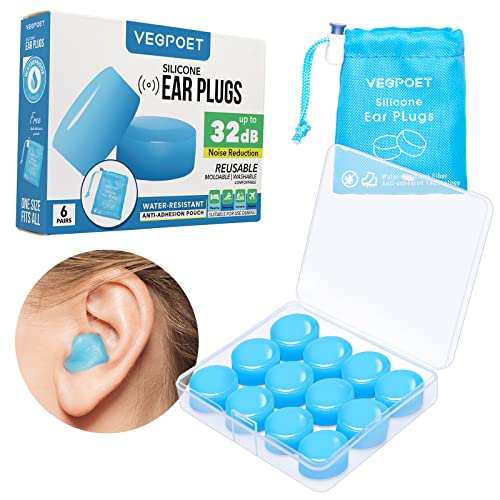
Putty-style moldable silicone (NRR 32 dB) that you shape over the ear opening so nothing pokes into the canal. Sits flat, which side sleepers love.
They mold to a perfect seal and there's zero pressure in the ear. Best option I've found for sleeping on my side.
*Price shown on Amazon and subject to change.

A gel core tuned to absorb low-frequency rumble (traffic, snoring) while letting higher-frequency alarms through. Oval, low-profile, and two sizes in the box.
They knock down the bus rumble outside but I can still hear my alarm. The oval shape disappears under my ear on a pillow.
*Price shown on Amazon and subject to change.
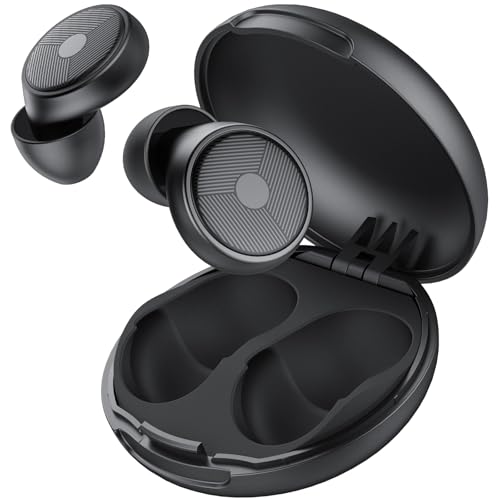
Acoustic-filter earplugs that ship with four tip sizes, so you can dial in a proper seal even if standard plugs never fit you. Includes a carry bag.
I have small ear canals and these are the first plugs that actually seal. Swapping to the XS tips fixed everything.
*Price shown on Amazon and subject to change.

A hundred pairs of NRR 29 dB silicone plugs, each in its own little case. Stash a set in every bag, drawer, and coat pocket and never be caught out.
Buying in bulk means I never reuse a grimy pair. I keep cases in my car, gym bag, and nightstand.
*Price shown on Amazon and subject to change.
| Pick | Product | Link | |
|---|---|---|---|
| Our Pick | SUPCEAT — SUPCEAT Reusable Silicone Ear Plugs (2 Pairs) | $19.99 | Check → |
| Best Foam | Mack's — Mack's Ultra Soft Foam Earplugs (50 Pairs) | $9.89 | Check → |
| Highest NRR | Flents — Flents Protechs Foam Ear Plugs (10 Pairs, with Case) | $7.89 | Check → |
| Best for Swimming | ANBOW — ANBOW Soft Silicone Ear Plugs (3 Pairs) | $6.99 | Check → |
| Best Moldable | VEGPOET — Vegpoet Moldable Silicone Ear Plugs (12 Pack) | $9.89 | Check → |
| Best for Side Sleepers | EARHOPE — EARHOPE 35 dB Silicone Ear Plugs for Side Sleepers (2 Pairs) | $19.99 | Check → |
| Best Multi-Size Value | IKG — IKG Silicone Ear Plugs, 4 Sizes (XS-L) | $9.01 | Check → |
| Best Bulk Buy | TrelaCo — TrelaCo Reusable Silicone Ear Plugs (100 Pairs) | $26.99 | Check → |

Lillie Metayer
Lillie Metayer is the founder of a local program that helps apartment-dwellers take action against noise pollution. Involved in environmental activism since high school, Lillie is passionate about raising awareness of the harms of noise exposure and helping people reduce noise in their communities. In her free time, Lillie enjoys playing the violin and spending time outdoors.