Yes - renters can soundproof a floor, but only with the loose-laid, removable half of the category, and the single most effective product in that category is the one a lease normally rules out. Rugs, dense pads, mats, felt pads and appliance isolation are all yours. Anything glued, nailed, stapled or built into the floor is not.
The constraint is almost always the adhesive, not the product. Nothing about a renter's floor is acoustically special; what is different is that you have to give it back. That one fact removes the top performer from the list and explains most of what is frustrating about shopping here. This is the last article in our floor series and the one to read before spending anything, and the full order of operations lives in how to soundproof an apartment floor.
One thing to say plainly before we start: leases, house rules and tenant law vary enormously by country, state and city, so everything here is general guidance and not legal advice, and the authority on your floor is your own lease rather than us.
The reversibility test settles most purchases
Ask one question of anything you are about to buy: will this come up at move-out leaving the floor exactly as it was?
That question maps well onto how lease language works. According to Prime Property Management Corporate's guide to rental alterations, a tenant who wants to make minor cosmetic or decorative changes could be permitted to do so without previously obtaining clearance from the owner, and the same guide says plainly that you can put temporary flooring on top of existing floors and that almost everything you can reverse at the conclusion of your tenancy should be fine. Reversibility is the hinge, and it is the hinge for your landlord too.
The other half of the picture is the permission language. Alterations clauses in circulation read like the sample collected by LawInsider, in which tenants shall not make any alterations, additions, improvements, non-cosmetic changes or other material changes to the premises without the prior written approval of the landlord. Note which words do the work there: material and prior written approval. A rug is neither.
Sort the whole category by reversibility and the shopping list writes itself.
What a renter can lay today, with nobody's permission
These sit cleanly on the reversible side. Nothing is fixed to anything, nothing is cut, and the floor is unchanged when you lift it.
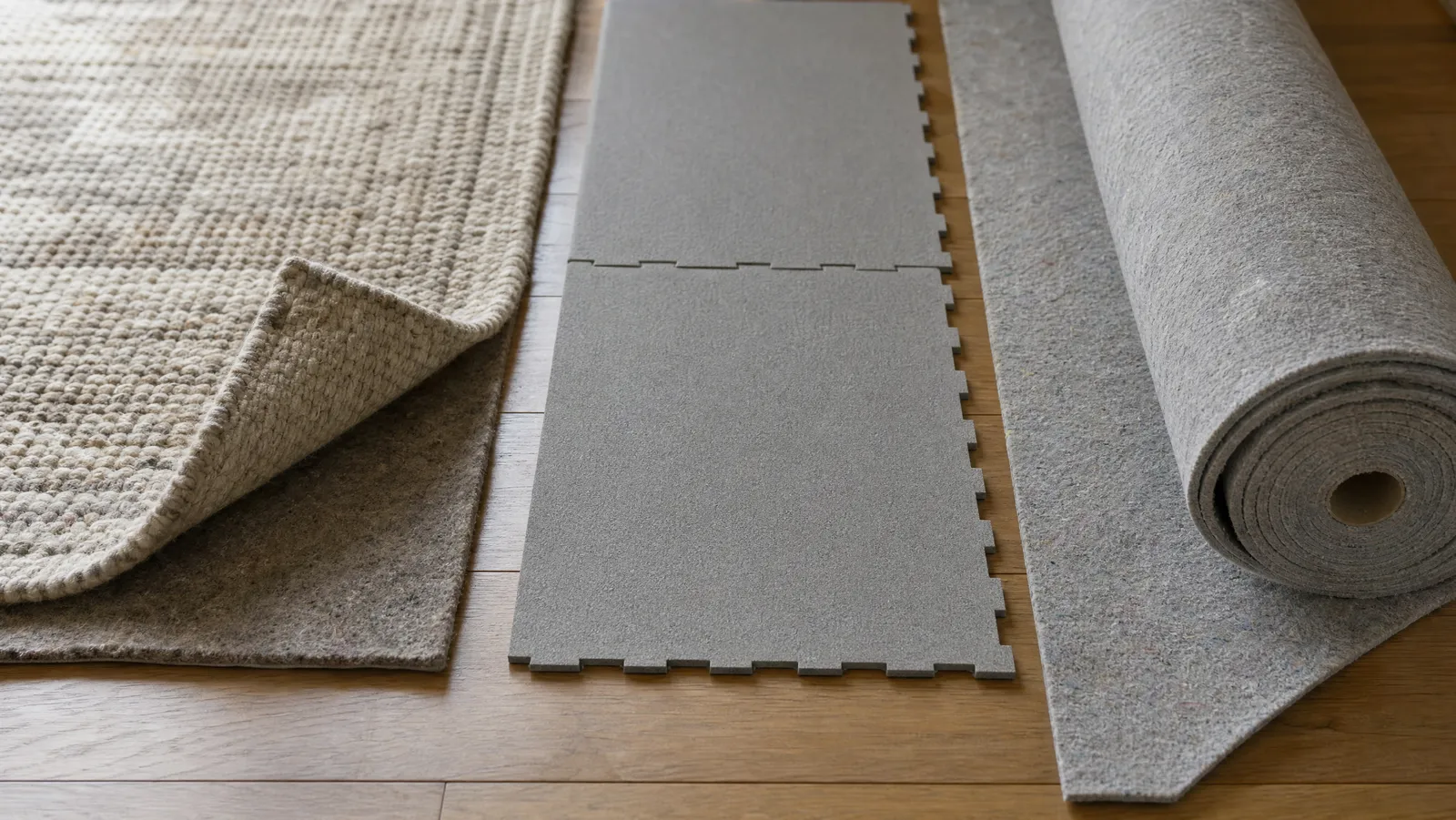
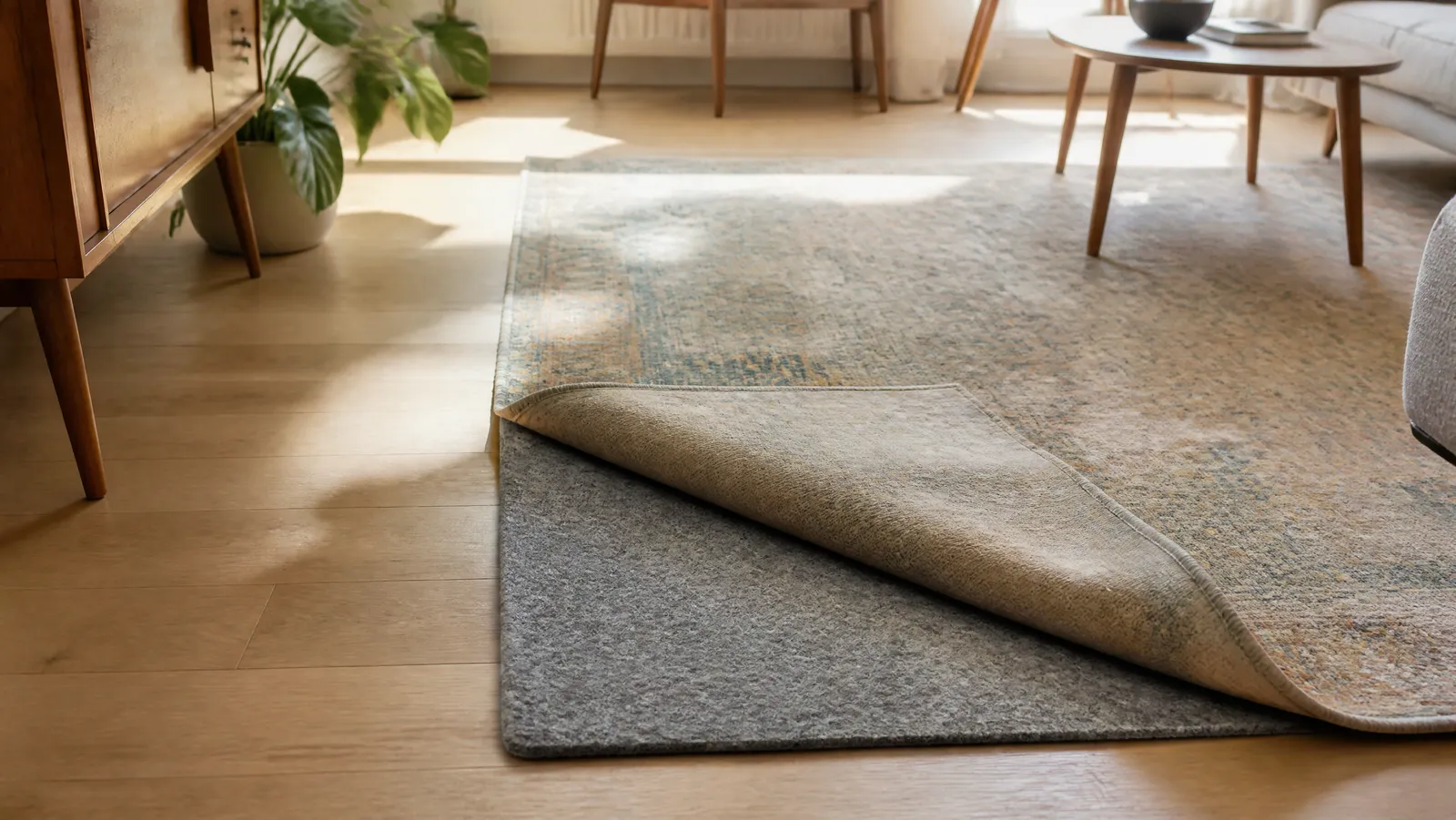
- A large area rug over a dense pad. The best result available to a renter and the first thing we would buy. The pad is the part doing the acoustic work.
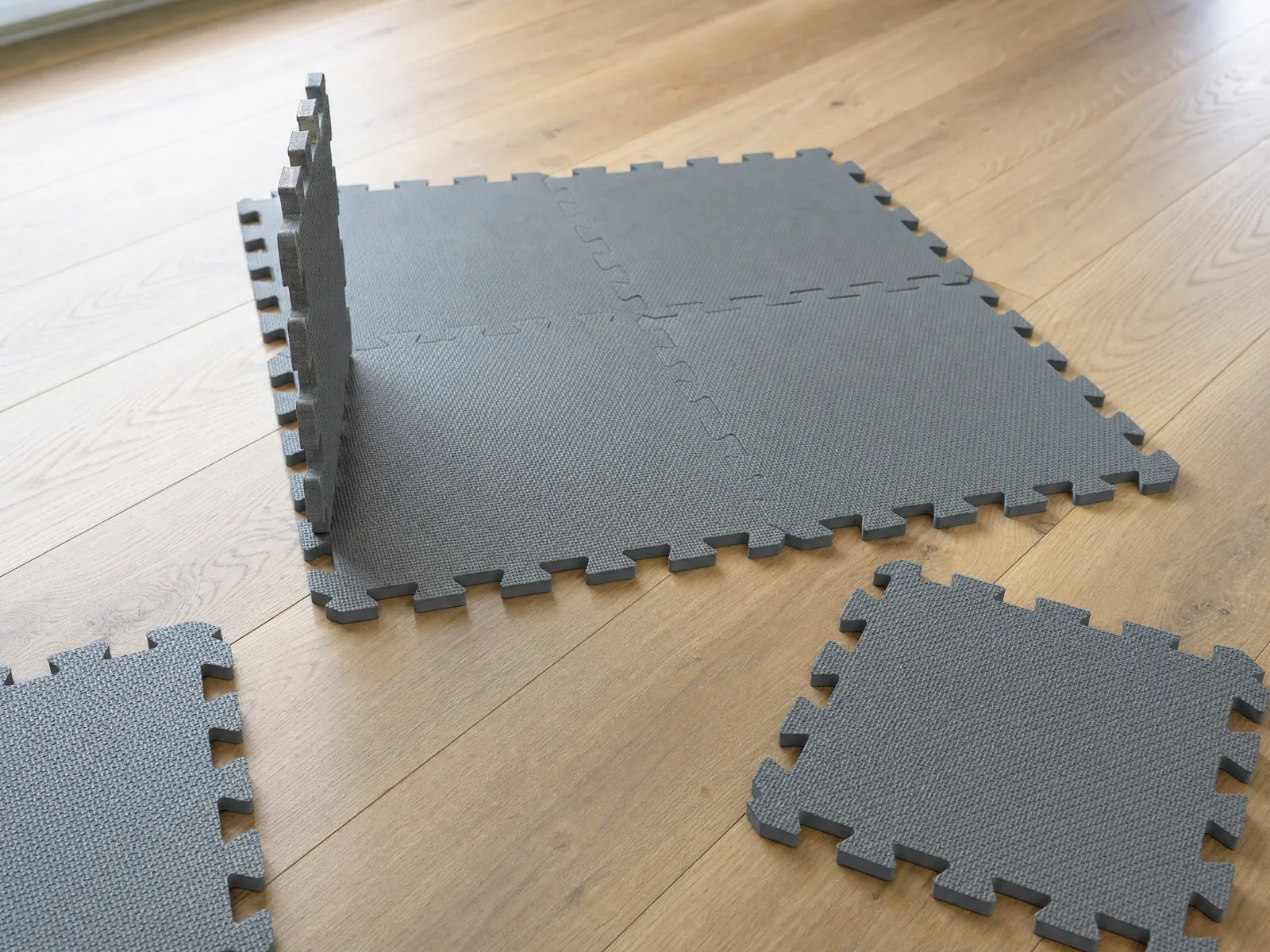
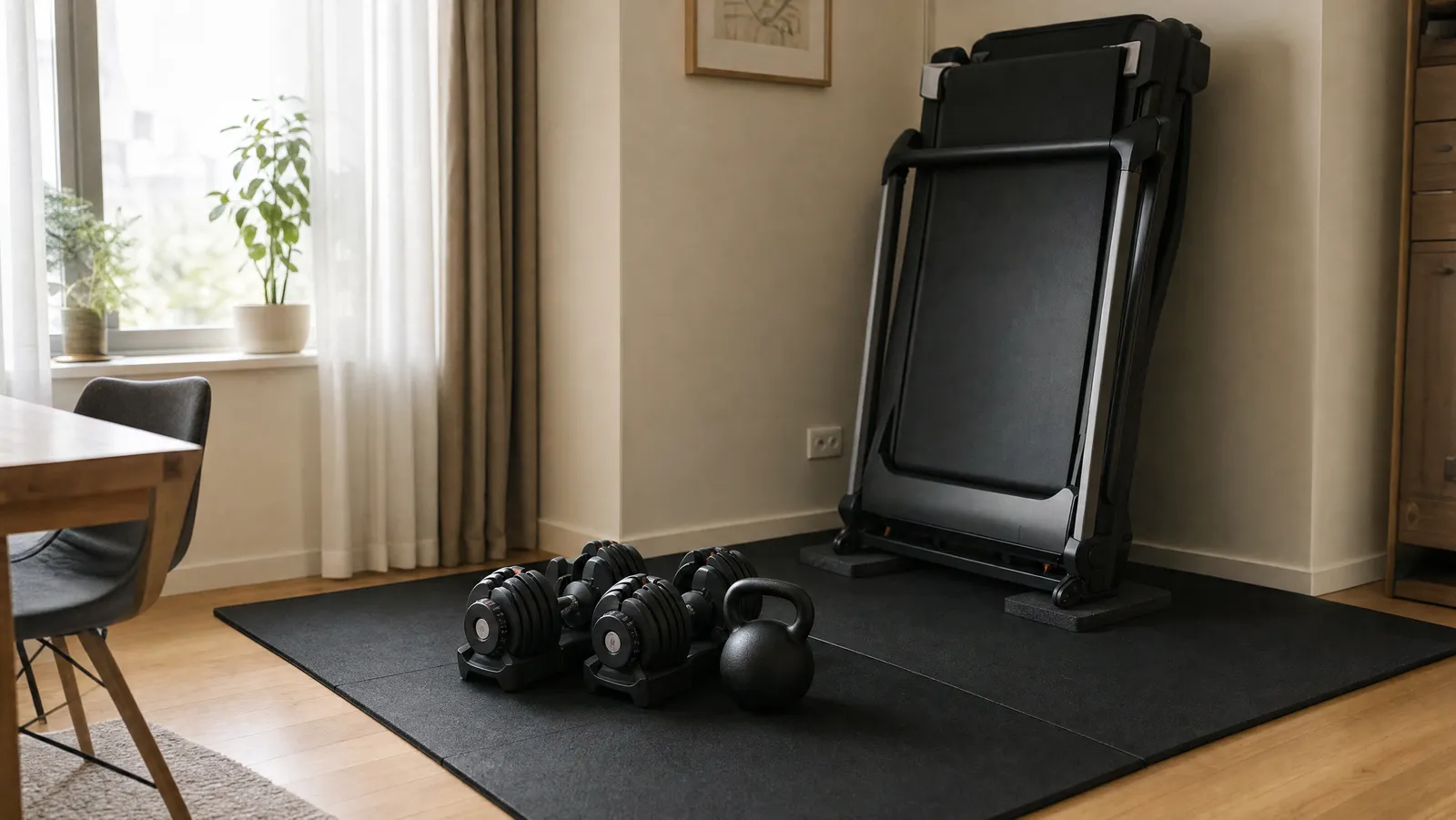
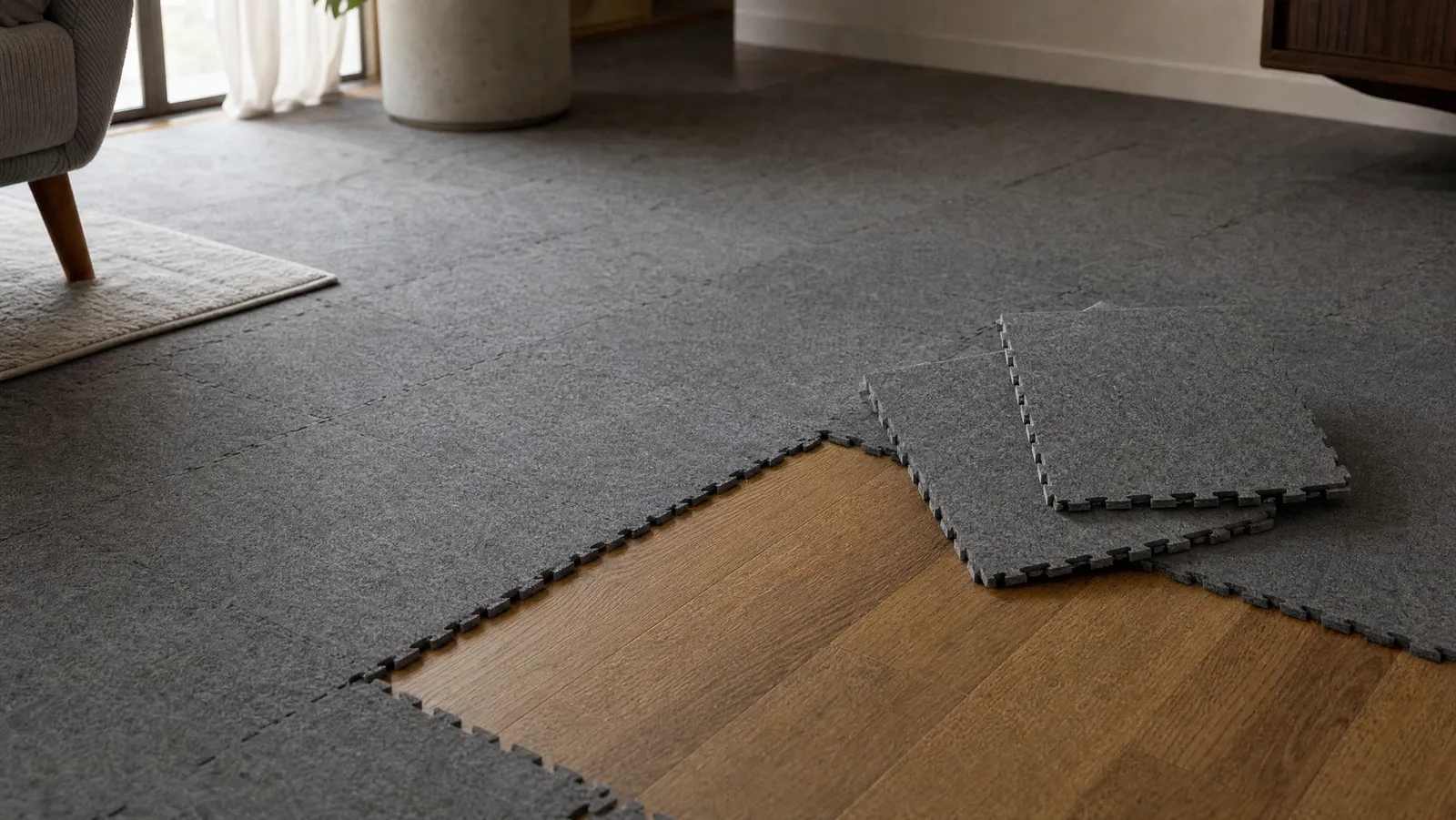
- Loose-laid mats and interlocking tiles, placed under the specific thing making the noise rather than across a whole room. Our picks are in the best soundproof floor mats, and they are the clearest case in the category of a product that needs no permission at all.
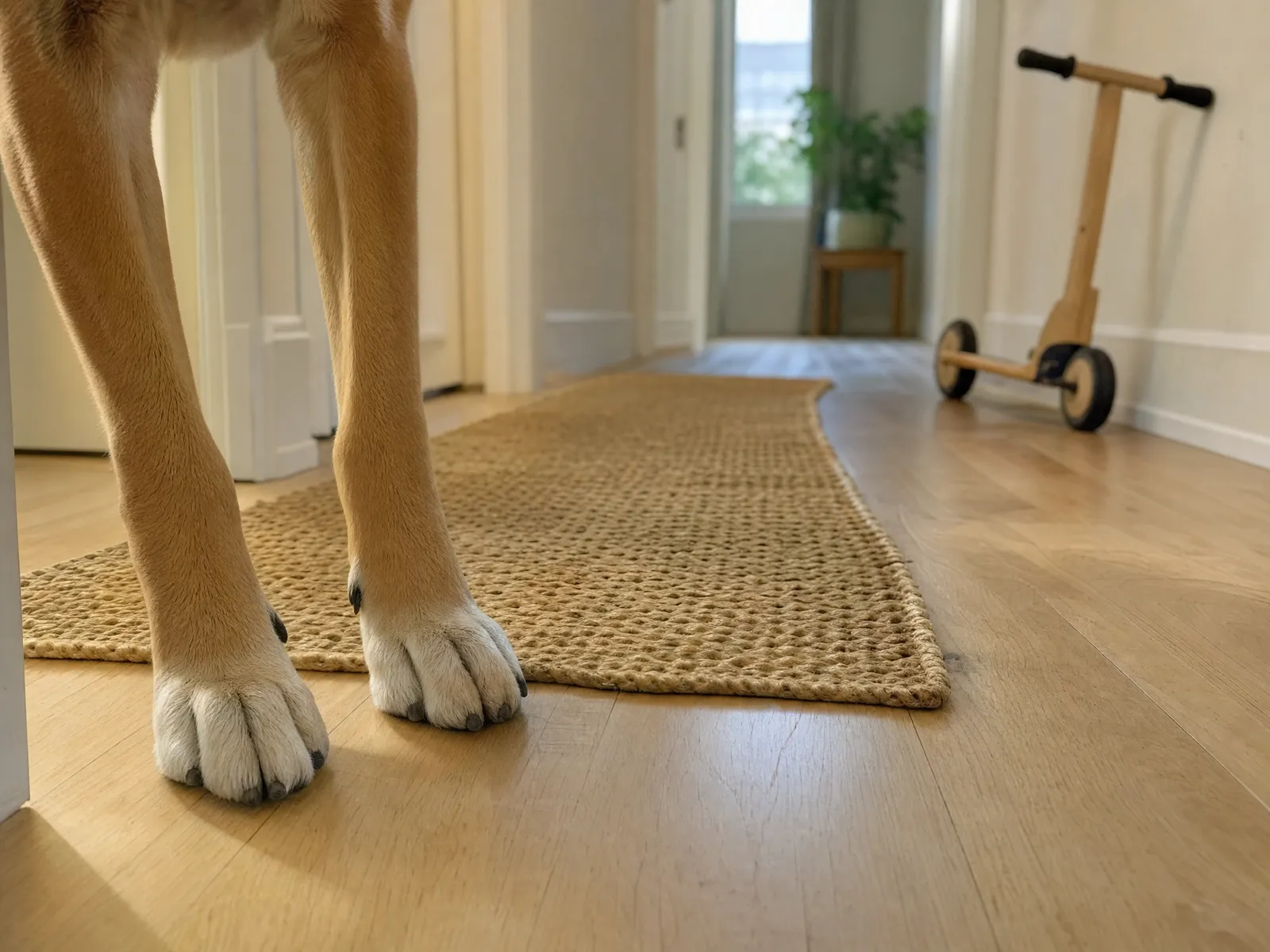
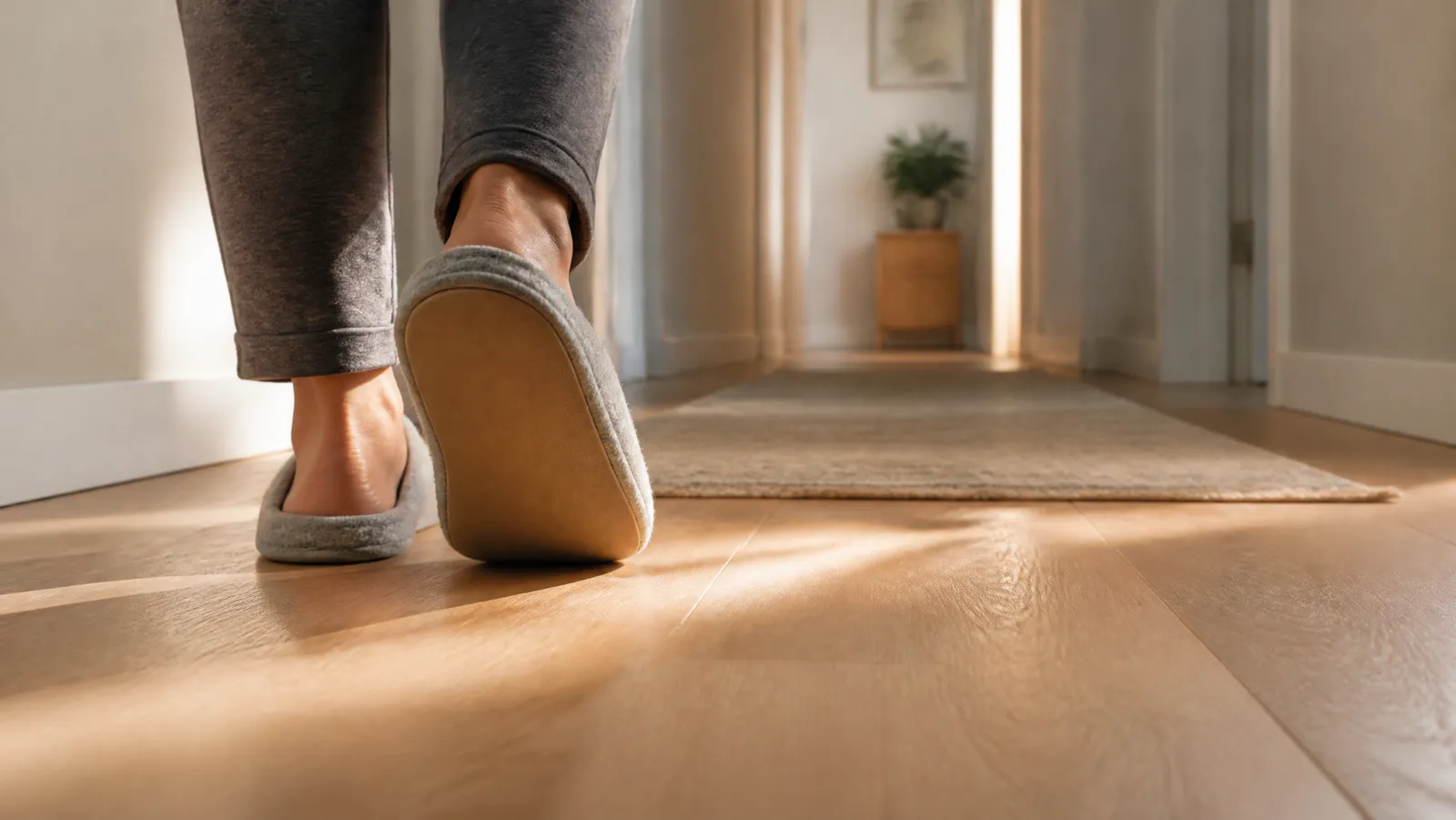
- Runners along the walking paths - the hallway, the route from bed to bathroom, the strip in front of the kitchen counter.
- Felt pads under every piece of furniture that gets dragged, and soft rubber casters on the desk chair.
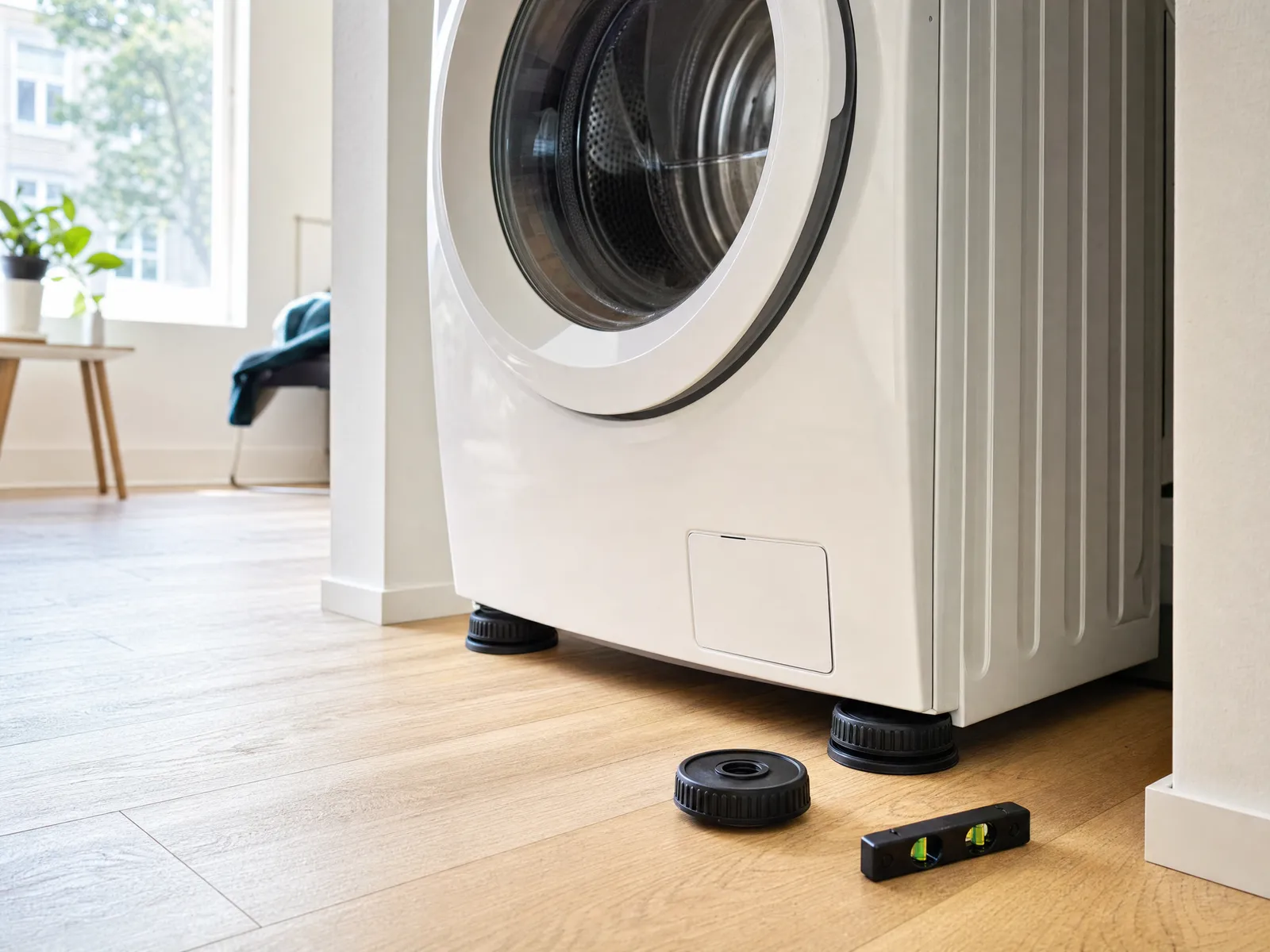
- Isolation pads under appliance feet. Four rubber or cork pads under a washer that walks on spin do more for washing machine vibration noise than any floor covering, because that energy enters the building through four small hard contacts rather than through the surface you walk on.
- Draft seals and door sweeps, which are airborne work rather than impact work but are often the cheapest audible change in the apartment.
If everything you buy comes from this list, the lease conversation never has to happen.
Test first, then commit: tape, peel-and-stick and anything that changes floor height
This is the "depends" tier. Removable adhesive is still adhesive, and finished wood is the surface where it goes wrong.
According to Mr. Floor, when the bond between the finish and the floor has been weakened by age and wear, even a mild adhesive can peel up flakes or patches of the coating, which means spot refinishing or a full refinish. Patrick Daigle Hardwood Flooring makes a related point about residue: a poor-quality tape leaves behind adhesive that is a magnet for dirt and grit, and that grit scratches and prematurely wears the floor's coating. All Flooring Now, which sells a carpet tape of its own, reports that most renter complaints involve rubber-adhesive products bought at a hardware store, which leave residue on hardwood and vinyl plank and split when peeled. That is a seller describing its own category, so treat it as a claim rather than a measurement.
So: test any tape in a closet corner, leave it a week, then peel it before you commit to a room. The same caution covers peel-and-stick tiles of any kind, and interlocking tiles that rely on tape at the perimeter.
Floor height is the other item. A layer thick enough to stop a door swinging freely is a layer you will be taking back up, and planing a door is an alteration in a way that a rug is not.
What needs written permission, or is simply out
- Tack strips, nailed or stapled carpet, and anything that puts a fastener into the floor.
- Glue-down tiles and glue-down planks.
- Permanent underlayment installed under a new floating floor.
- Anything structural, and anything that touches the ceiling of the apartment below.
None of these pass the reversibility test, and a contractor quoting them to a renter is quoting the wrong person. The only route to one is a written agreement with your landlord.
Why the best floor product is the one you cannot use
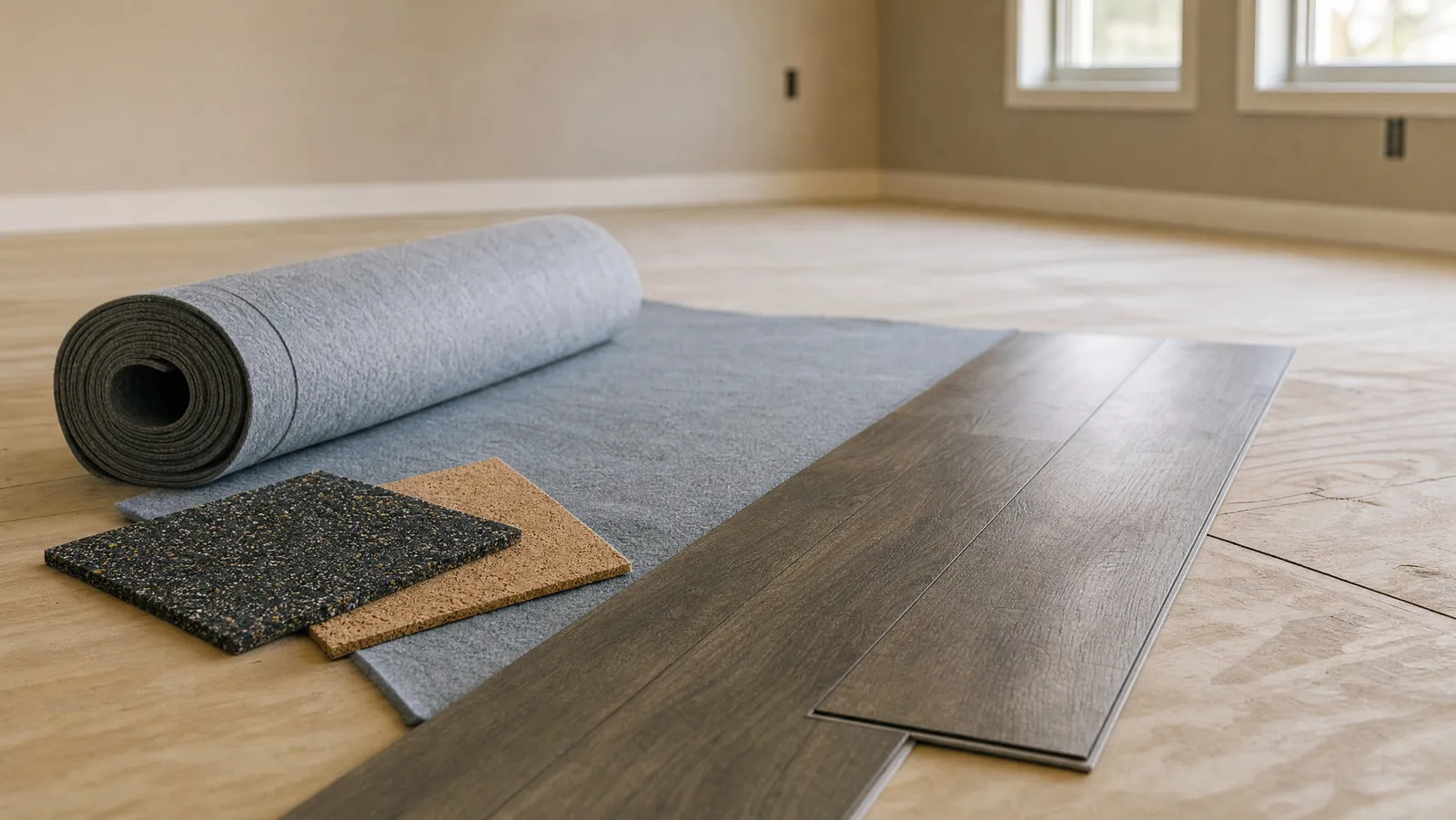
Acoustic underlayment is the most effective floor product in this whole category, and most renters cannot use it. It is a resilient layer that goes under a floating floor, which means using it requires installing a floor - so a renter who cannot install a floor cannot use the best product on the shelf. The honest headline is that this is not a renter product.
There is exactly one legitimate exception: a landlord who agrees in writing to a new floating floor, usually because the existing floor is already due for replacement or because a downstairs complaint has become their problem too. In that case the underlayment is cheap relative to the floor going over it and there is no reason to omit it. Everywhere else, the product that beats it for renters is a rug over a dense pad, because that is the one you are allowed to own.
The category's performance ranking and its permission ranking run in opposite directions. The more effective the product, the more likely it is to be the thing you have to ask about.
The lease clauses that actually decide this
Go and find these five in your own lease and house rules. We are describing categories of clause that exist, not telling you what yours says.
- Alterations clauses. As above, the usual shape is a bar on material changes without prior written approval. Jurisdictions draw the line in different places: the Leasehold Advisory Service, writing for leaseholders in England and Wales, treats replacing carpet with a wooden floor as non-structural alteration work - a useful illustration of how a change you might file under decorating can sit inside an alterations clause.
- Carpet-coverage clauses. Older buildings, co-ops especially, often carry a house rule requiring rugs over a stated share of the floor area. According to StreetEasy, there is no New York City law regulating rug coverage, but leases and co-op agreements often include a clause asking residents to cover 80 percent of their floors with carpeting; Habitat Magazine quotes a typical house rule as requiring rugs or carpeting over at least 80 percent of the floor area of each room, exempting kitchens, pantries, bathrooms and hallways. Those are examples of language other people's buildings use, not a figure for your building - read your own lease and house rules for the number, if there is one at all.
- Quiet-enjoyment and nuisance clauses. This is the clause the complaint against you rests on, and it cuts both ways. According to Cornell's Legal Information Institute, courts read a covenant of quiet enjoyment into every rental agreement or tenancy, so a tenant has that right whether or not the agreement spells it out, and Tenant Law Group describes it as a right to enjoy the unit without substantial interference, a description it illustrates with examples that include noise. That is a general description of the doctrine, not a reading of your building's situation.
- Floor-covering and floor-finish clauses. Buildings with hardwood frequently say something specific about what may go on it and how it must be maintained. This is where a tape prohibition usually hides.
- Restoration and security-deposit language. Who pays to put it back. According to RentPrep, landlords cannot deduct from a deposit for everyday wear and tear or ordinary depreciation, and guidance collected by Security Deposit Laws puts dulling of a hardwood finish over several years and minor scuff marks on linoleum on the wear-and-tear side while treating deep scratches or gouges in hardwood - often from dragging heavy furniture - along with cigarette burns and pet urine stains as deductible damage. All of that is general - the arithmetic that applies to you is in your lease and your local rules.
How to ask your landlord, and why asking is often worth it
Put it in email, not a conversation: you want a record, and their answer in writing too.
Four sentences: name the problem, name the specific product, say it is removable, offer to restore. Something like: the downstairs neighbor has mentioned footstep noise; we would like to lay a 9 by 12 rug over a half-inch felt pad in the living room and dense loose-laid tiles under the desk; nothing is fixed to the floor and everything lifts; we will take it all up at move-out.
Asking is often worth it because the landlord's incentive is not what renters assume. According to Landlord Studio, a landlord should address a tenant's noise concerns even if they do not consider the noise excessive, and needs to be able to demonstrate that they took steps to resolve the issue. Second Nature's guidance on noise-complaint letters describes investigating first, then talking to the tenant causing the noise, then sending a letter informing them that a complaint has been received. A landlord who is already holding a noise complaint about your apartment has their own reason to say yes to a rug.
If the noise is coming at you rather than from you
Different problem, different lever. Treating your own floor does nothing about a neighbor's, because the layer has to sit between the impact and the structure, and in that case the impact is upstairs.
What you have instead is documentation. Landlord Studio notes that for a landlord to act they need written documentation of a recurring noise problem and a record of having notified the tenant causing it, so dated notes and a written report to management are the useful work. If it stays unresolved, a local tenants' union or housing advice service is a better next call than another purchase.
Are soundproof apartment floors worth it?
Honest accounting, because the question that follows "can renters soundproof a floor" is whether any of it is worth the money.
Do the free things first. Shoes off indoors, felt pads under the furniture, pads under appliance feet, a balanced rather than overstuffed washer load, and moving the noisy thing off the middle of a floor span cost nothing and deliver a large share of the improvement available to you. The whole sequence is in how to stop your footsteps bothering the downstairs neighbors, and the order matters: free fixes, then a rug, then zones.
Roughly $50 to $300 of loose-laid treatment buys a real but partial result. At the bottom you get a dense pad and a modest rug, or a few mats under one offender; at the top, a large rug over a thick felt pad covering the path you actually walk. It softens the sharp top end of a footstep - the heel slap, the chair castor, the clatter of a dropped thing. It does not remove the dull low-frequency thump travelling through the joists, and no loose-laid product we have reviewed publishes a meaningful impact-isolation figure for itself, because the test that produces one is run on a complete floor and ceiling assembly rather than on a mat.
So the realistic claim is this: a rug and a dense pad are the best spend available to a renter, and they will not make you inaudible. If the person below you is hearing conversation rather than footsteps, this is the wrong category entirely.
Two more things belong in the accounting. A rug, a pad and a set of mats go with you to the next apartment, which is not true of anything you install. And because nothing is attached, there is no restoration line item waiting at move-out - given how much of the deposit language above turns on who pays to put a floor back, that is a real part of the value.
Where to start
In order: do the free fixes this week and tell your neighbor in writing that you are doing them. Buy a dense pad and the biggest rug the room will take. Add mats under the worst single offender - the desk chair, the treadmill, the washer. Ask in writing about anything with adhesive in it, and about anything that changes the floor itself.
That is the series in four sentences. The long version of the reasoning, the ratings and the products is in our apartment floor guide - and if your lease turns out to allow more than you expected, the cheap half of the list was always doing most of the work anyway.

Lillie Metayer
Lillie Metayer is the founder of a local program that helps apartment-dwellers take action against noise pollution. Involved in environmental activism since high school, Lillie is passionate about raising awareness of the harms of noise exposure and helping people reduce noise in their communities. In her free time, Lillie enjoys playing the violin and spending time outdoors.