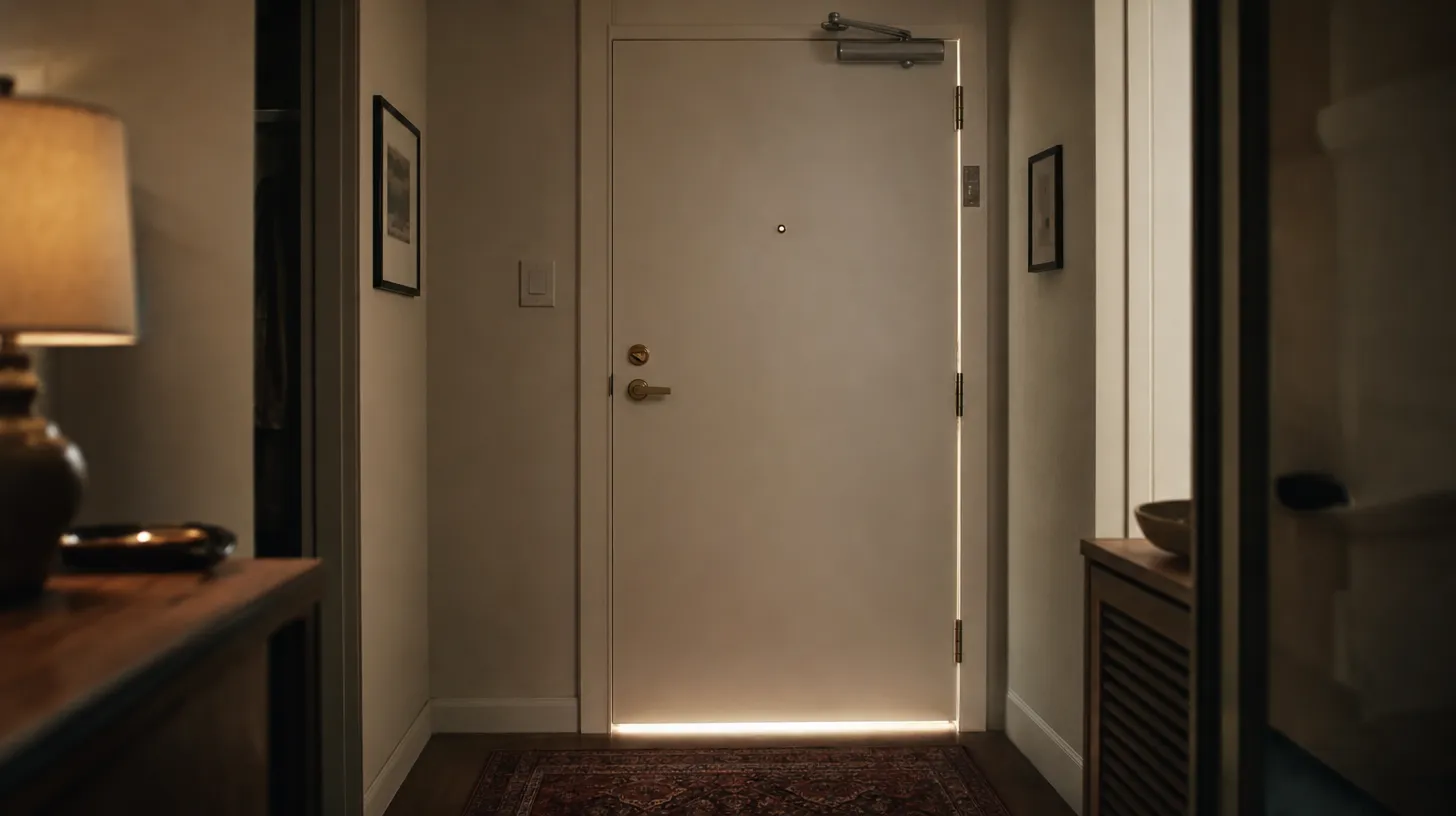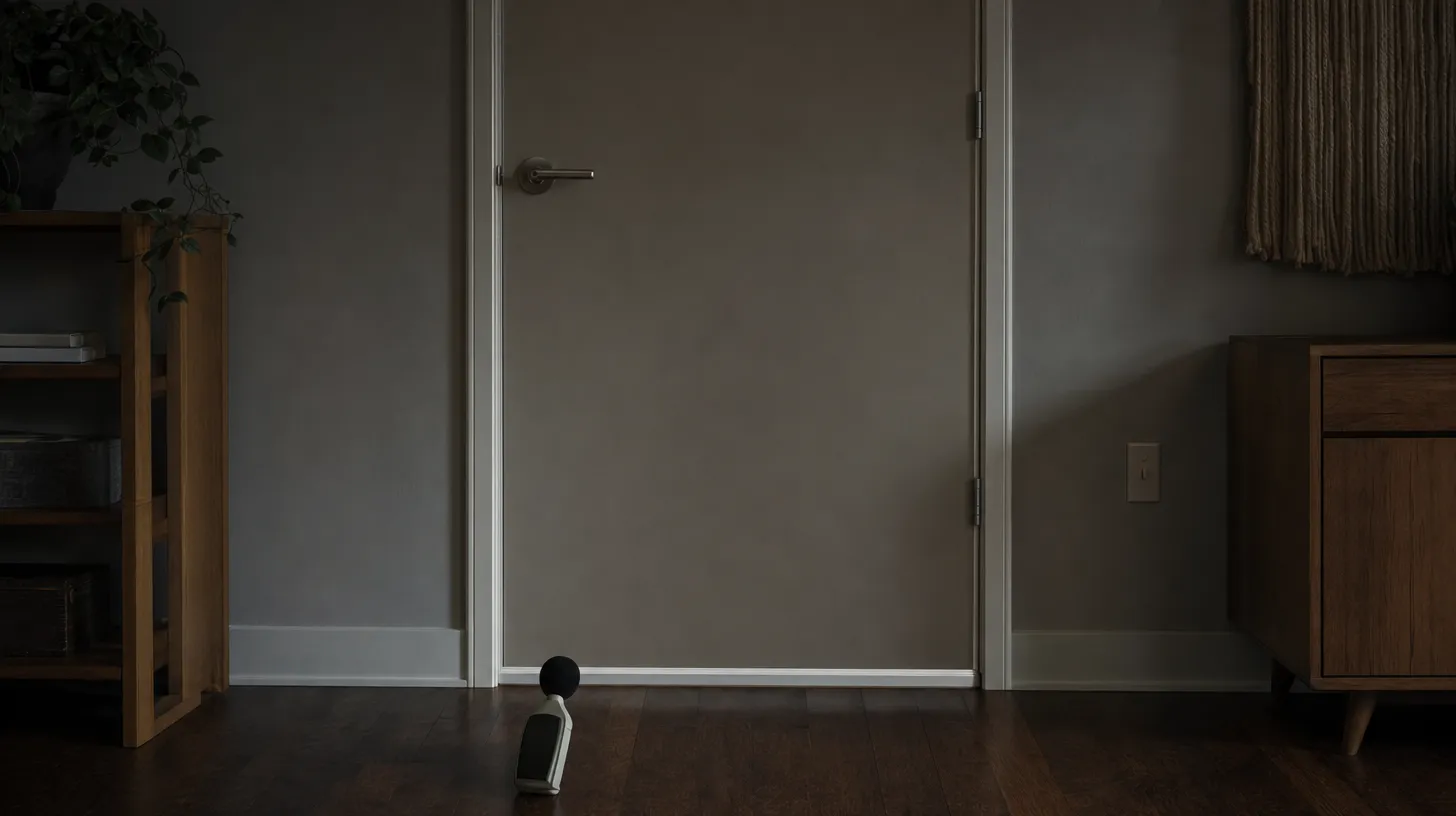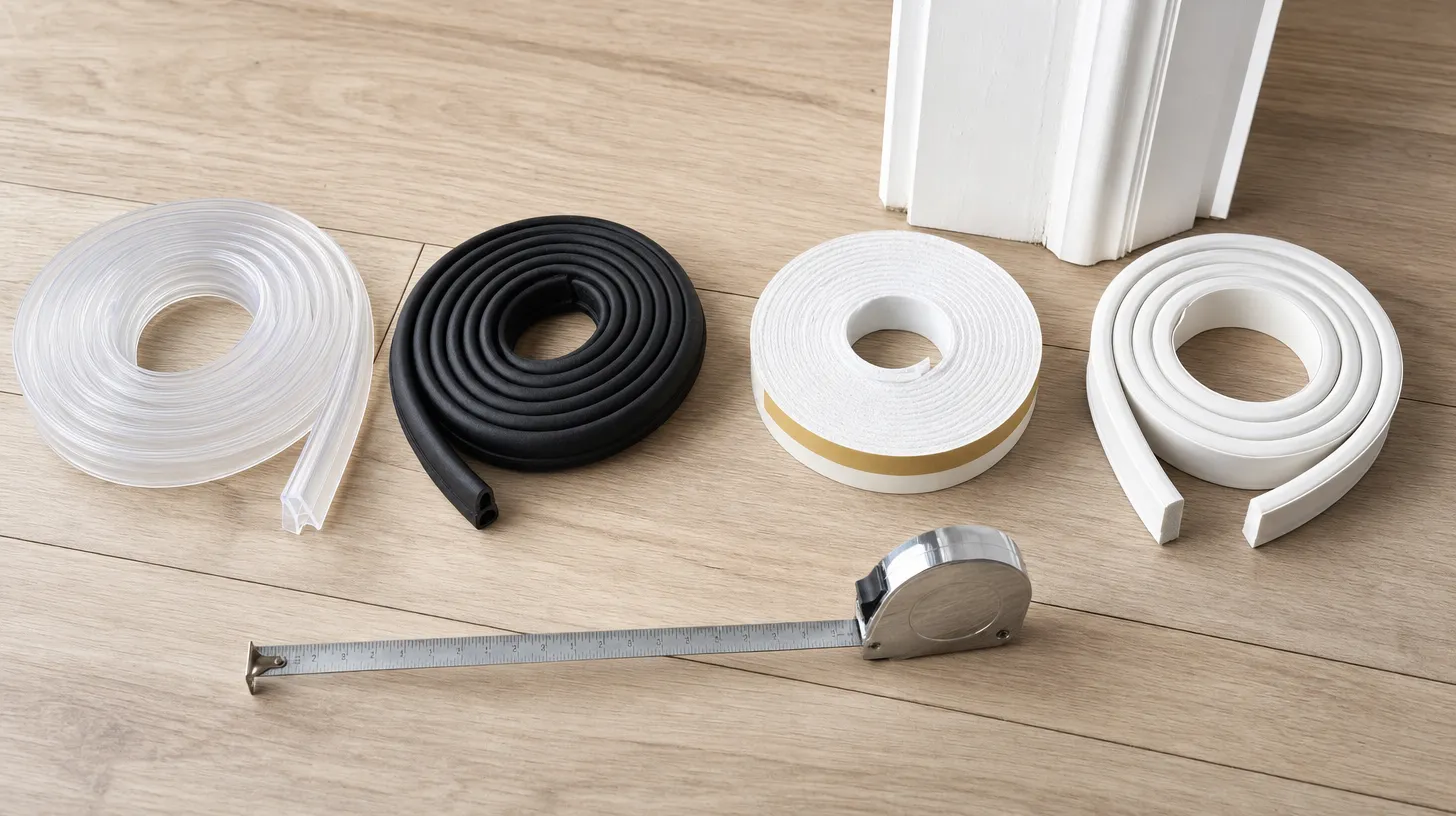
Why are upstairs neighbors so loud? Because of how the building is built, not how they walk. A footstep is an impact, and it injects energy straight into the floor structure. Wooden joists spread that energy sideways, and your ceiling — a big, thin, directly attached panel — radiates it back into your room like a drum head.
First, though: the noise is real. You are not imagining it, you are not too sensitive, and it is not "just apartment living." A 2018 study in PLOS One found that exposure to footstep noise from neighbors predominantly induces emotions clustered around anger, and that in the high-noise-sensitivity group, anger responses appeared at just 30 dB and hit 100 percent of participants at 45 dB — quieter than normal conversation. Your reaction is a documented human response to a specific acoustic stimulus.
What we are going to argue is that the cause is almost never what it feels like at 11 p.m. If you already want the tactical playbook, our pillar guide on how to reduce noise from upstairs neighbors has it. This article is the diagnosis — the five structural reasons an ordinary person walking to their bathroom sounds like furniture being dragged across your skull.
The Short Answer: You Are Hearing the Building, Not the Person
Here's the honest read, compressed to five lines:
- A footstep barely travels through the air to reach you. It goes into the structure at the point of contact.
- Wood-frame floors are light and flexible, so they deflect and thump instead of staying still.
- Your ceiling drywall is screwed straight to the joists above, so it moves when they move.
- Most of that energy is low frequency, the hardest kind to stop and the hardest kind to locate.
- If the carpet upstairs was replaced with hard flooring, every one of these effects got dramatically worse.
None of those five things are under your neighbor's control, and only one (the flooring) is even under their landlord's. This article is the practical companion to our deeper explainer on impact noise versus airborne noise, which is the single most useful concept in apartment acoustics.
Reason 1: A Footstep Is an Impact, Not a Sound
When your neighbor's TV is loud, sound waves push through the air, hit a surface, and vibrate it. That's airborne noise, and barriers work on it.
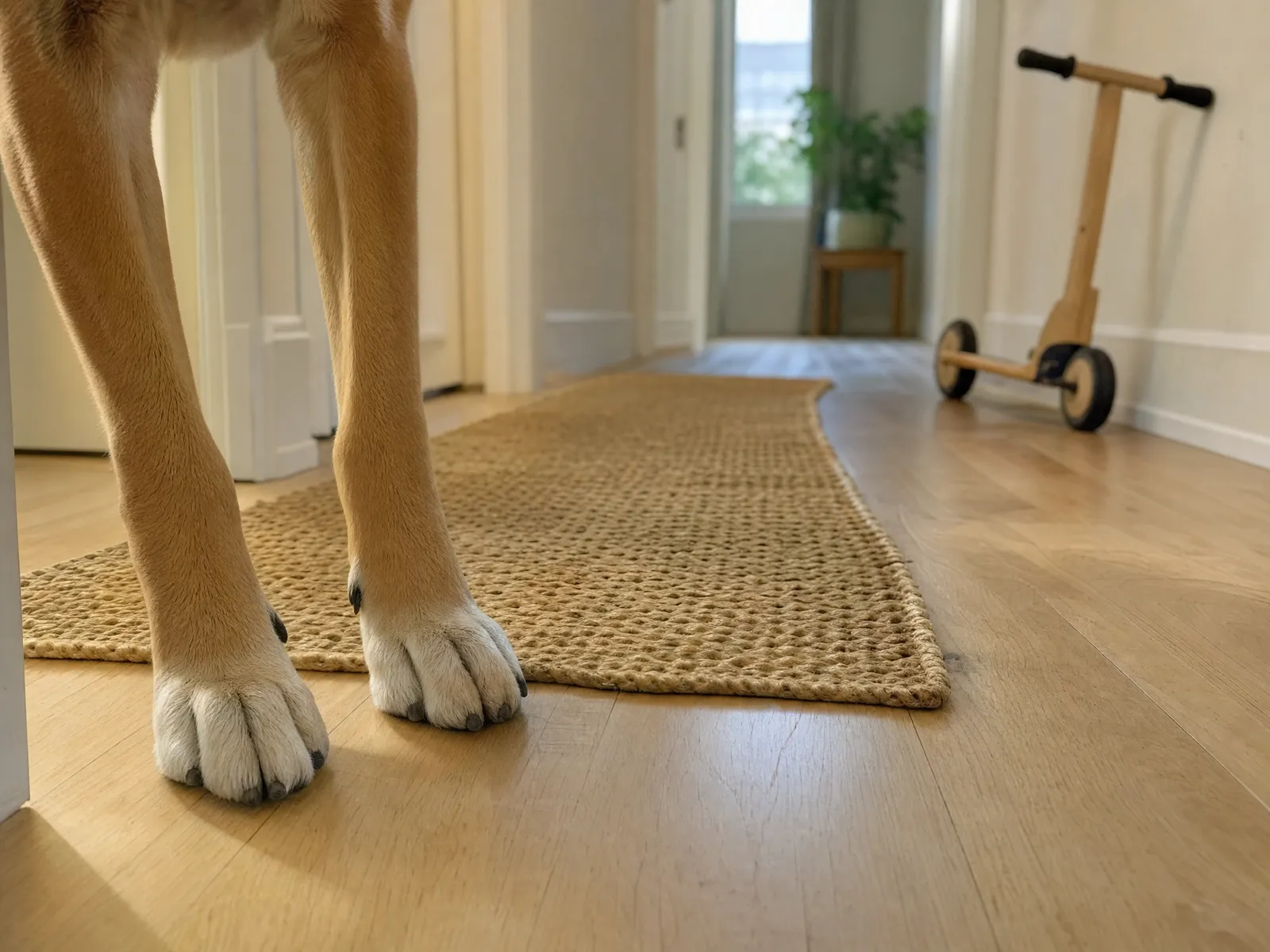
A footstep skips that step entirely. The heel strikes the floor and dumps mechanical energy directly into the assembly — subfloor, joists, ceiling below. It is already inside the building before it becomes a sound in your apartment. According to Weyerhaeuser's technical write-up on residential floor systems, sound travels through solids much easier than through air, which is why the impact path is so brutally efficient.
That's the first reframe. Your neighbor is not "making noise" in any way they can hear or moderate. They are transferring body weight to a floor, the same way you do. The building does the amplifying.
Reason 2: Your Ceiling Is a Drum Head
Now look up. In a standard American apartment, the ceiling you are staring at is a sheet of gypsum board screwed directly to the underside of the floor joists above you. Weyerhaeuser describes the typical construction plainly: "gypsum is attached directly to the underside of the joists with no insulation in the cavities."
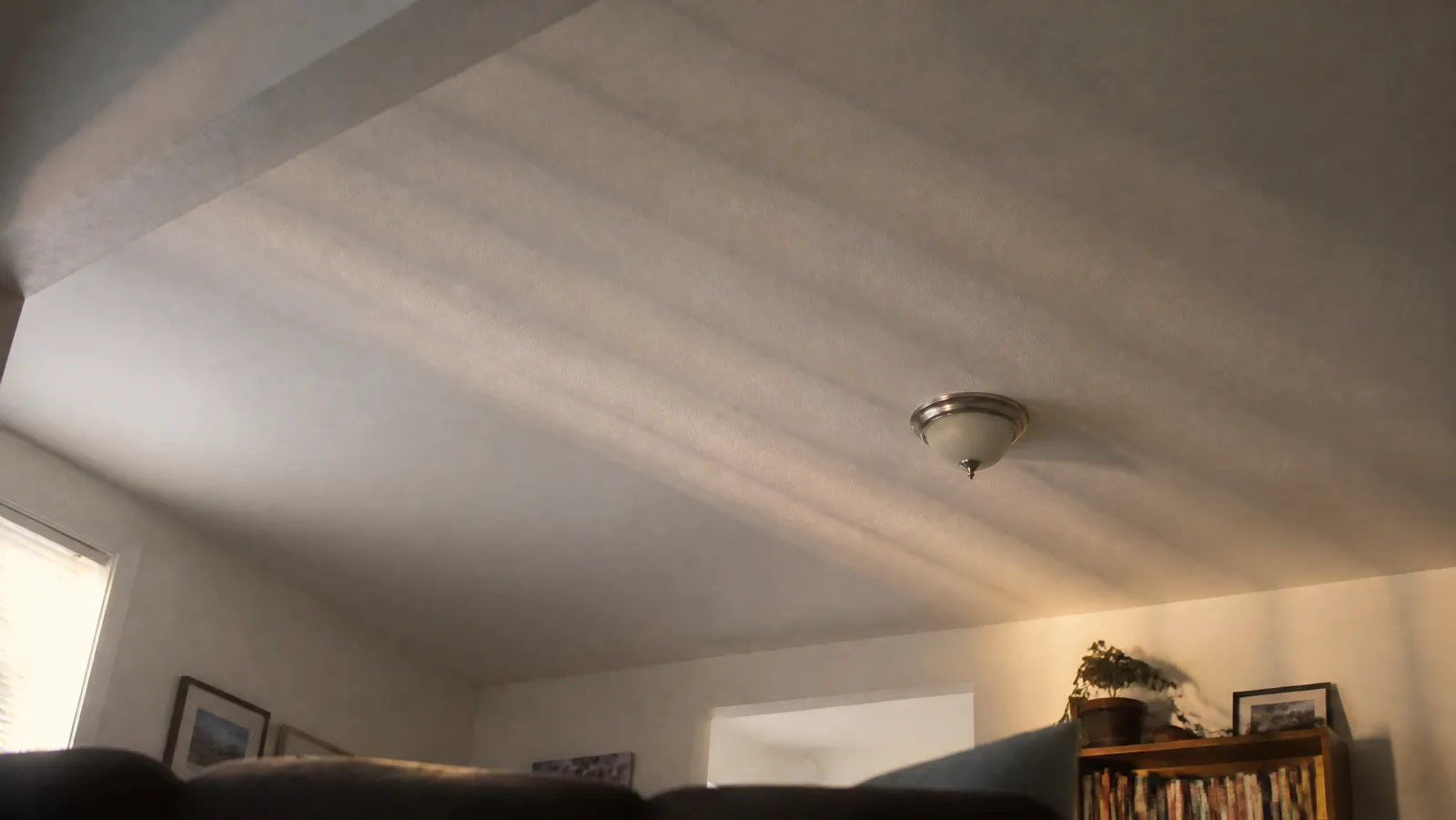
That is a drum. A rigid frame, a large thin membrane fastened to it, a hollow cavity behind it. When the joists vibrate, the drywall vibrates, and a few hundred square feet of vibrating panel pushes air into your living room. Your ceiling is not a barrier that noise is leaking through. Your ceiling is the loudspeaker.
The construction industry knows this, which is why the fix in new buildings is decoupling. According to Weyerhaeuser, adding resilient channels — thin metal strips that hold the drywall off the framing so it can't move with it — improves both STC and IIC by roughly 10 points, while insulation alone gives about +5 STC and no IIC benefit at all. Read that second half again: stuffing the cavity does nothing for footsteps. That one data point kills half the advice on the internet, and it's why we're skeptical of most overhead treatments — see do ceiling acoustic panels work for the full teardown.
Reason 3: Wood-Frame Joists Carry the Energy Sideways
Ever notice the footsteps sound like they're coming from a room the neighbor obviously isn't in? That's not you losing your mind. That's the joists.
According to BKL Consultants, an acoustics firm specializing in multi-family buildings, "in wood frame construction, the floor system is less massive and stiff than that found in concrete construction. Thus, the impact from the footstep tends to cause the floor to deflect and produces a low frequency 'thump.'" A wood floor doesn't just conduct the hit; it flexes, and the whole assembly rings.
Because the joists run continuously across the unit and tie into the walls, the vibration spreads laterally before it ever becomes audible. That produces the classic ceiling vibration noise signature renters describe: a thud that seems to come from everywhere and nowhere, that you feel in your chest as much as hear, and that you can't point at. You are not hearing the point of impact. You are hearing an entire structural plane responding to it.
Concrete behaves differently. It's heavy and stiff enough that it doesn't deflect the same way, which is why the same neighbor in a concrete building would be a fraction as audible. Nothing about the person changed. The frame did.
Reason 4: Someone Pulled Up the Carpet
This is the single biggest variable, and it is the reason so many long-time renters swear their building "got louder" a few years ago.
BKL puts a number on it that we think every renter should know: "footsteps would be 4 to 8 times louder with a hardwood floor than with a carpeted floor for similar constructions." Same building. Same joists. Same neighbor. Four to eight times the perceived loudness, purely from the surface they land on.
Carpet with a good pad is a resilient layer that absorbs the impact before it reaches the structure. Hard flooring is not. According to Basingstoke and Deane Borough Council's guidance on wood and laminate flooring, the trend of replacing carpet with hard surfaces "has led to an increasing number of complaints with regard to noise and disturbance to neighbours, specifically from apartments and flats." Flooring manufacturer Metroflor makes the same point from the other direction: a rigid LVT core sitting on a hard subfloor needs a resilient layer to do the absorbing, which is why its multifamily products ship with a pre-attached IXPE or HDPE underlayment — "when a foot hits the floor, the underlayment … absorbs the vibrational energy." Whether that cushion is pre-attached or rolled out separately, it's the layer a budget renovation is most likely to under-spec or skip.
So a plausible history for your specific misery: unit turns over, management pulls the worn carpet, installs luxury vinyl plank over the existing subfloor with the cheapest underlayment available, and rents it to a completely reasonable person who now sounds like a Clydesdale.
Reason 5: Low Frequencies Do Not Behave
The last reason is the one that makes every product you're eyeing disappointing.
Footfall noise is low frequency. The PLOS One footstep study used real recordings whose dominant sound energies were below 125 Hz. According to NoisyWorld's technical breakdown, the dominant frequencies of upstairs footstep noise sit in the range of roughly 40 to 150 Hz, with pronounced peaks around 50, 65 and 130 Hz — the thud, not the click.
Low frequencies are the expensive end of acoustics. They carry more energy, pass through light structures more easily, diffract around obstacles, and are nearly impossible for a renter-scale product to absorb. They also break masking. NoisyWorld notes that most white noise machines don't generate enough sound power in the 40 to 150 Hz range to effectively mask louder footsteps because the speaker is simply too small. That matches what we hear constantly: a sound machine covers hallway chatter beautifully and does nothing for the thumps.
It's also why the building code is cold comfort. According to the Association of the Wall and Ceiling Industry, Section 1206.3 of the 2021 International Building Code requires floor-ceiling assemblies between dwelling units to achieve an Impact Insulation Class (IIC) of not less than 50 when tested to ASTM E492, with a field-tested alternative of a Normalized Impact Sound Rating of not less than 45 under ASTM E1007. Sounds reassuring. But BKL's occupant-satisfaction scale, drawn from its own project experience, says IIC ratings below 60 are often rated "Unacceptable," 60 to 70 "Marginal," and that above 70 is what's actually required for a floor system to be rated acceptable by the people living under it. BKL also notes that a 10-point IIC change corresponds to roughly a halving (or doubling) of subjective loudness. A building can be fully code-compliant and still be, by a professional acoustician's own scale, unacceptable to live under.
Are They Doing It on Purpose?
Almost never. We'll be direct, because this thought keeps people up as much as the noise does.
Deliberate harassment exists, and it has a recognizable signature: it's responsive (it starts right after you knock or complain), it's targeted (directly over your bed, at 2 a.m., repeatedly), and it involves sounds nobody makes accidentally — rhythmic banging, dragging, dropping. Ordinary living has a different fingerprint. It clusters around waking up, getting home, cooking, and going to bed. It follows the same paths night after night. It stops when they leave for work.
Here's the part that's genuinely hard to accept: what sounds to you like stomping is usually, upstairs, a person walking to the kitchen in socks. They cannot hear what you hear. The transformation from "normal footstep" to "artillery" happens inside the foot-plus of structure between their subfloor and your paint, a zone neither of you can perceive from your side of it. That gap is why these conversations go badly, and it shapes how we suggest you approach the person — our guide to how to deal with noisy upstairs neighbors leans hard on it, because opening with "you're stomping" gets you a defensive person who is honestly confused.
Can My Upstairs Neighbor Hear Me Downstairs?
Yes — but differently, and less. This is the most common noise in apartment building disputes that nobody explains properly.
The asymmetry isn't magic, it's mechanical. Your footsteps go into your floor, which is your downstairs neighbor's ceiling. They don't go up. What travels up to the unit above you is your airborne noise — voices, TV, bass, a dog — and airborne sound has to cross a barrier to get there, losing energy the whole way. As Soundproof Living puts it, floors and ceilings are thicker and denser than walls, so they won't let higher-frequency sounds through as easily, and since nearly every noise-maker in a home connects to the floor, in practice more noise travels downward than up.
Practically:
- They probably can hear your subwoofer, your bass-heavy TV, loud arguments, and anything mounted to or resting on a shared surface.
- They probably cannot hear you walking around, which is the exact thing that's driving you crazy about them.
- You are almost certainly the upstairs neighbor to somebody else, doing the same invisible thing to them.
That last bullet is not a scold. It's the strongest evidence we have that intent has nothing to do with it.
What This Actually Means for What You Try
If the cause is structural, the honest conclusion is uncomfortable: the effective fixes live on their floor, not on your ceiling. A resilient layer between the impact and the structure — carpet with a real pad, a large area rug over a thick felt-and-rubber underlay, a proper resilient underlayment beneath hard flooring — intercepts the energy before it enters the building. Nothing you hang on your existing ceiling gets to touch it, because by then the sound is already being made by that ceiling. The one overhead fix with real IIC numbers behind it is decoupling — the resilient channels above — and that means taking the ceiling down and rebuilding it, which is not a renter project.
So the realistic renter sequence is: understand the mechanism, approach the neighbor from the "the building is doing this to both of us" angle, get soft mass onto their floor if they'll allow it, mask what's left knowing masking works poorly at these frequencies, and document everything if it becomes a lease matter. For the broader toolkit covering all noise types, not just overhead impact, see our roundup of genius ways to silence noisy neighbors.
The Bottom Line
Your upstairs neighbors are so loud because a footstep is an impact injected straight into a lightweight wood structure, spread sideways by joists, radiated into your room by a ceiling that is bolted directly to those joists, made 4 to 8 times worse if the carpet came out, and delivered at frequencies below 150 Hz that resist every renter-scale countermeasure.
None of that is a character flaw in the person above you. It's a floor assembly built to a code minimum that professional acousticians themselves consider inadequate for occupant comfort.
That reframe is worth something practical. It tells you not to waste money on ceiling treatments, it tells you what to ask for instead, and it tells you how to open a conversation without starting a war you can't win. When you're ready for the step-by-step version, our guide to reducing noise from upstairs neighbors walks the whole plan — including the parts where we tell you what doesn't work.

Lillie Metayer
Lillie Metayer is the founder of a local program that helps apartment-dwellers take action against noise pollution. Involved in environmental activism since high school, Lillie is passionate about raising awareness of the harms of noise exposure and helping people reduce noise in their communities. In her free time, Lillie enjoys playing the violin and spending time outdoors.