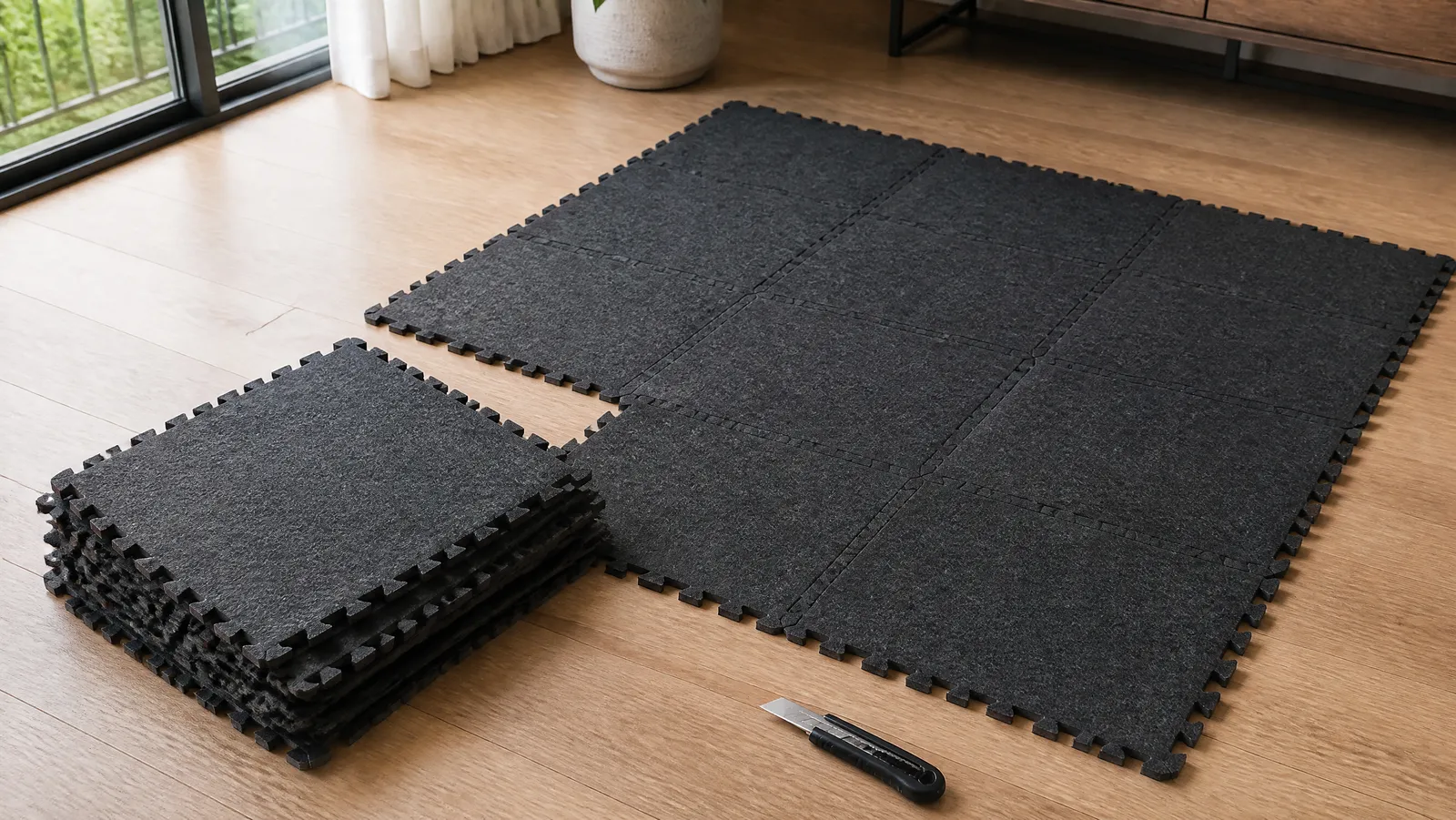
The best soundproof floor mats for apartments are drum mats. Every product in this category was designed to sit under a kit, a piano or a pair of monitors, and every number printed on the box - NRC, density, absorption coefficient - describes how much sound the felt soaks up inside your own room. None of them describes what the person below you hears.
That is not a reason to skip them. It is a reason to buy the right one, for the right nine square feet of floor, knowing in advance what you get. For the full order of operations on a rental floor, start with how to soundproof an apartment floor and treat this page as the mat chapter.
The short version: pick on coverage, thickness and price, because nobody in this category publishes an impact isolation number. Accept that and the six products below sort themselves out in two minutes.
What a soundproof floor mat for an apartment actually is
Read the listing photos rather than the headline. A drum throne, an upright piano, studio monitors, a treadmill. TroyStudio lists its intended uses as drums, piano, speakers, treadmill, home gym and playroom. That is who these were built for: someone making a lot of noise in a small room who has been asked to stop.
Physically, four of our six picks are the same thing - interlocking tiles of dense polyester fibre felt, 0.32 to 0.4 inches thick and roughly a foot square, that press together like a child's play mat and cut with a utility knife. Most ship with removable double-sided tape. Nothing screws down, nothing glues, nothing your landlord sees at move-out.
The sets are small. GOGHOST and LITLANDSTAR both state a maximum coverage of 17 square feet - a square a little over four feet on a side. That is not a floor covering. It is a patch.
Which raises the question everyone types into a search box, some version of do soundproof floor mats actually work. It depends which of two physical problems you have, and those two are measured by completely different tests.
NRC measures absorption. IIC measures what your neighbour hears.
This is the distinction that decides whether the category is for you at all.
NRC, the noise reduction coefficient, is an absorption rating. According to the Wikipedia summary of the standard, it is a single-number rating "intended to describe the average sound absorption performance of a material, derived from reverberation-room measurements," reported from 0.0 for very low absorption to 1.0 for very high. The test is ASTM C423, run in a reverberation chamber: absorption measured at 250, 500, 1,000 and 2,000 Hz, averaged, rounded to the nearest 0.05. NRC 0.7 means the material soaked up roughly 70 percent of the sound that struck it, inside the test room.
IIC, the impact insulation class, is an isolation rating, and it is the one your neighbour cares about. Wikipedia defines it as "an integer-number rating of how well a building floor attenuates impact sounds, such as footsteps," derived from ASTM method E989, "which in turn uses a tapping machine specified in ASTM method E492." ASTM titles E492 exactly as it works: laboratory measurement of impact sound transmission through floor-ceiling assemblies using the tapping machine. A machine taps the floor upstairs, microphones listen downstairs, and the result is scored across sixteen standard frequencies from 100 to 3150 Hz.
One test never leaves the room. The other is defined by a microphone in the apartment below. As Commercial Acoustics puts it, IIC measures structure-borne impact while STC measures airborne sound, and the two are independent ratings. We wrote the long version in impact noise and airborne noise are different problems, and it is worth ten minutes before you spend anything.
So when GOGHOST states a tested NRC of 0.87 and tells you the mats block structure-borne sound so the neighbours will not hear you practise, the number and the claim are about different physical quantities. The 0.87 is real as an absorption figure, but no absorption test measures transmission. Supporting the second half of that sentence needs an IIC or delta IIC result, and GOGHOST does not publish one. Neither does anyone else here.
What a felt mat will actually do for footstep noise
Our honest read, offered as opinion rather than measurement.
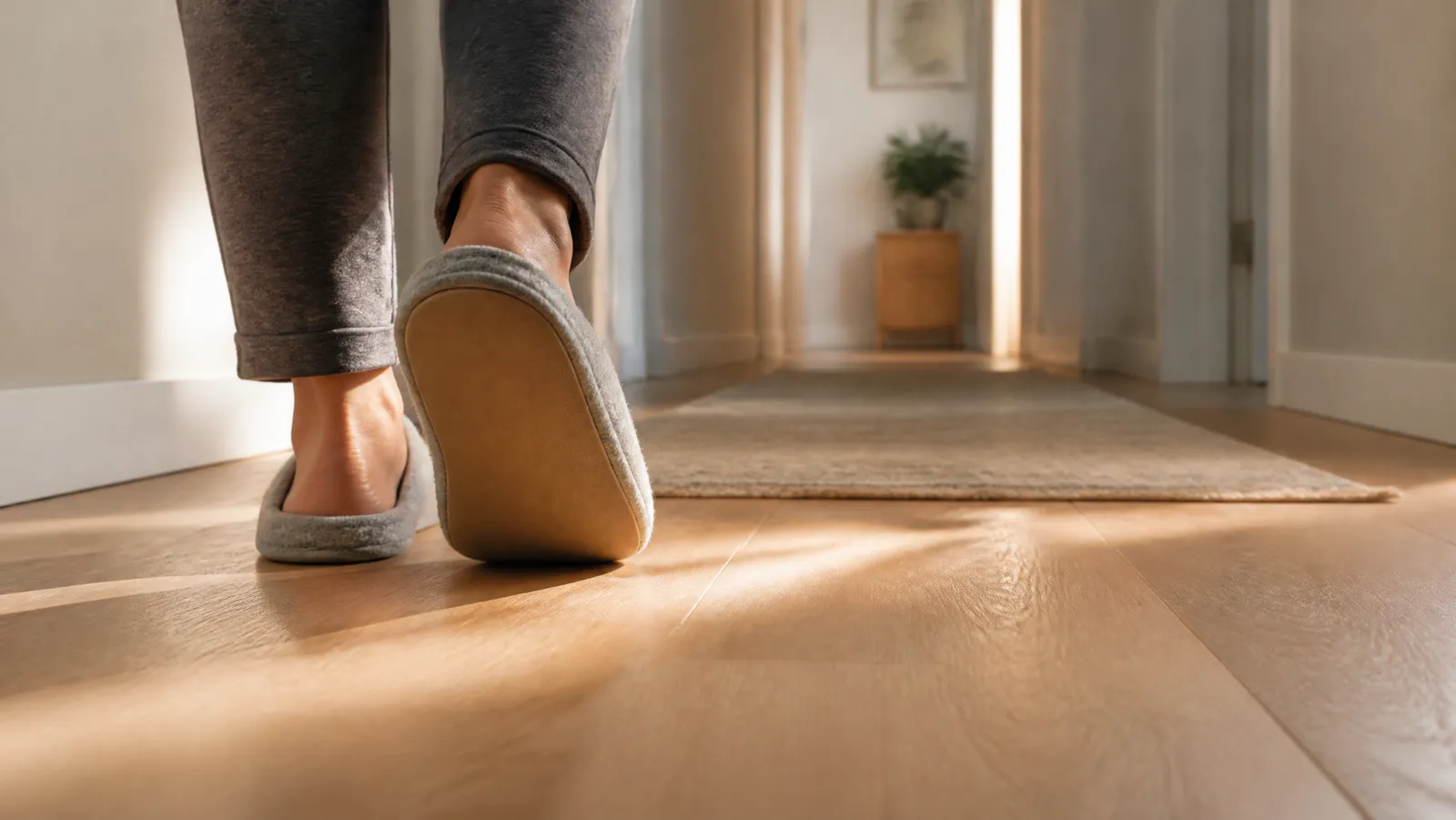
A felt tile sits between a hard shoe and a hard floor, so it can soften the contact itself - the slap, the heel click, the rattle of a chair castor. That is the fast, high-frequency part of a footstep, and also the part your own room hears, which is why a mat under a desk chair genuinely quietens the room you stand in.
What it cannot do much about is the low-frequency thump, and that limit is physics rather than branding. Wikipedia's note on IIC is blunt about the mismatch: real-world footstep noise is also generated at frequencies below 100 Hz, below the bottom of the test range, "so the IIC value may not accurately describe the complete noise attenuation profile of a floor." The energy that travels furthest through a building is the energy a third of an inch of felt is least equipped to stop. If what you hear from above is a dull boom rather than a clatter, low-frequency noise from upstairs explains why, and the answer is not a mat. Wikipedia adds that a field-measured FIIC runs "typically several points lower than its laboratory IIC," because real buildings have flanking paths laboratories do not.
None of which makes the mats useless. It makes them one component. If your goal is to stop your footsteps bothering the downstairs neighbors, the mat is the gear half of a fix whose other half is soft soles, moving the chair and not running the treadmill at 6am - the approach in how to reduce noise from upstairs neighbors, read backwards.
Thickness and density are the only two specs worth comparing
For footfall, mass plus a resilient layer is what slows the impact, and those are the two things a spec sheet can tell you. The flooring industry agrees: in Commercial Acoustics' chart of delta IIC values for floor underlayments, the summary is that "thickness and density drive most of the difference - thicker, denser rubber generally posts the highest values," with 5 mm recycled rubber at a delta IIC of 21 to 25 and 10 mm recycled rubber at 25 to 29.
Now hold our four felt sets against that idea:
- TroyStudio - 0.32 in thick, maker-stated density 135 kg/m3, 0.17 lbs per panel
- GOGHOST - 0.4 in thick, maker-stated density 150 kg/m3
- LITLANDSTAR - 0.4 in thick, described as high-density, no figure published
- Wunzkii - 0.35 in thick, 0.21 lbs per panel, no density published
The whole spread is 0.08 of an inch - about two millimetres - and about 11 percent of density between the only two makers who publish a number. That is not a performance league table. It is four versions of one material, and you should treat them as interchangeable on everything except price and coverage.
Do the arithmetic on the prices below, as of September 2026, and every felt set lands between roughly $2.29 and $2.39 per square foot. The category has already been competed down to one price.
One warning about borrowing industry numbers. That same chart lists a 3 mm recycled fibre or felt mat at a delta IIC of 16 to 20, which looks like wonderful news for felt until you read the test. According to Intertek, ASTM E2179 measures how effective floor coverings are at reducing impact sound through concrete floors, comparing a bare reference slab with the same slab once the material is installed. That is a bonded layer under a hard floor on concrete, not loose tiles taped to a wood-frame apartment floor. We would not transfer that number to these products, and neither should a seller.
Cover the walkway, not the apartment
A 17 square foot set treats a zone, and choosing the zone is most of the skill. The ones that pay in a real apartment:
- The walkway. The four or five steps between bed and bathroom - same path, twenty times a day, and the one the neighbour below has memorised.
- Under the desk chair. Castors on a hard floor are a continuous impact source, and the most improvable square metre in most home offices.
- Under the treadmill, rower or weights. Machine feet concentrate a lot of force into a small contact patch.
- Beside the crib. A short, predictable path walked at 3am.
- Under the kit or the piano. The job the product was designed for.
Scaling up is where the maths turns against you. Covering a 12 by 15 foot bedroom takes about eleven 17 square foot sets, roughly $430 at GOGHOST's price as of September 2026 - for a floor of taped-down felt squares you would still have to lift at move-out. At that budget you are in rug territory, and a rug is better.
The best floor soundproofing material for a renter is a rug and a dense pad
We will cost ourselves a sale here, because it is true.
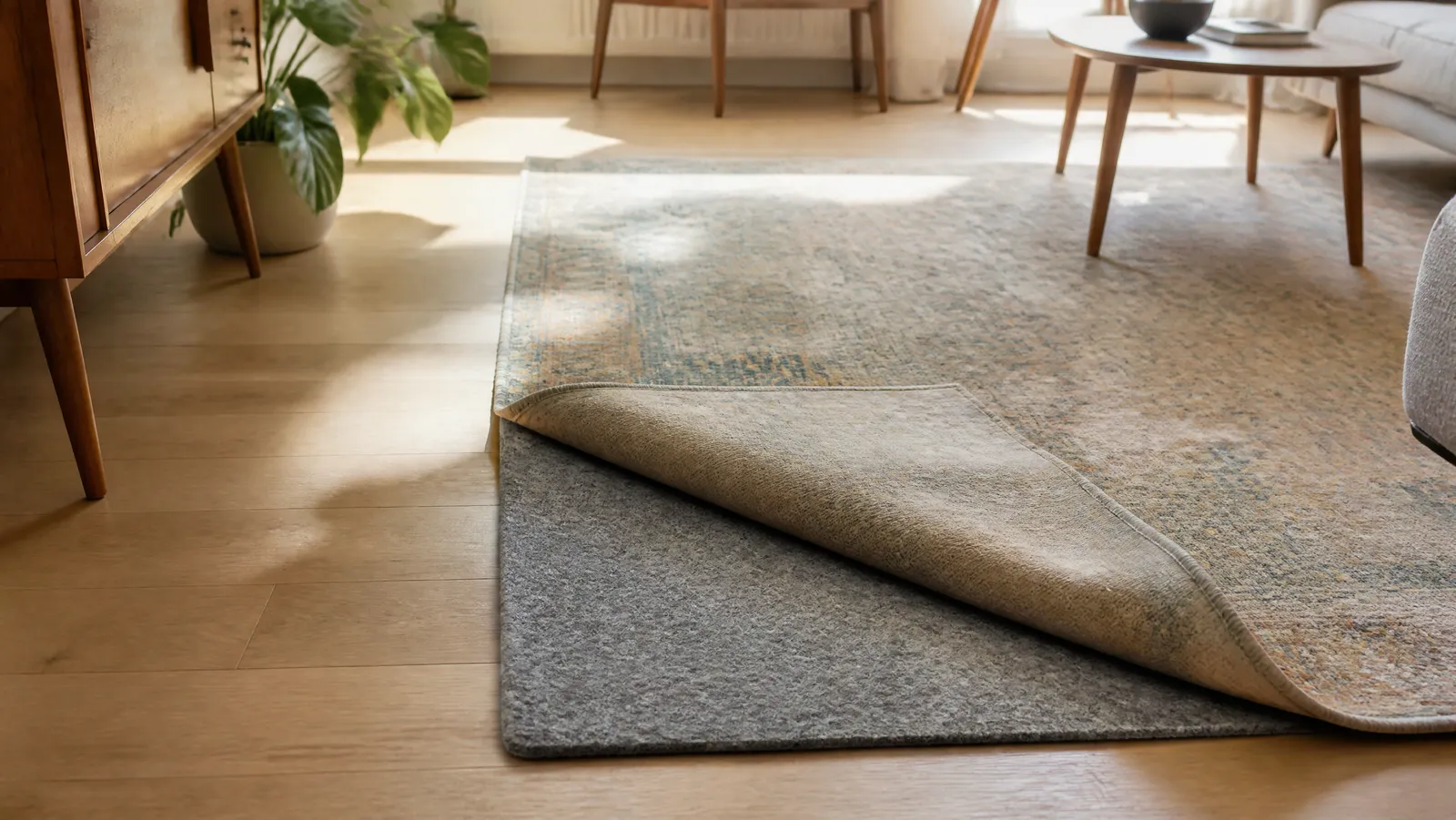
The best-documented impact result available to a renter is soft flooring over a resilient cushion. In acoustical research sponsored by the Alliance for Flexible Polyurethane Foam and the Carpet Cushion Council and conducted by Intertek Testing Services, reported by FMLink, a bare concrete slab rated IIC 19 improved to 58 with direct-glue carpet, and to 69 when the same carpet went over a bonded commercial polyurethane cushion. The same test put the carpet alone at roughly NRC 0.25, rising to 0.55 with the cushion - "a sound absorption more than twice that of the carpet alone."
Two caveats we will not bury: that is an industry-funded test, and it describes glued-down commercial carpet on concrete, not an area rug in a rental. But the mechanism is the one you want, and a large rug over a genuinely dense pad is the closest a renter gets to it - which is why we point people at rug pads that reduce footstep noise before anything on this page.
For scale: Commercial Acoustics notes the International Building Code requires at least IIC 50 in the laboratory, or IIC 45 in the field, between dwelling units, and puts the IIC 25 to 35 band - roughly a bare slab - where footsteps are clearly audible below. Mats are not moving a floor between those bands. A rug and a pad are the cheapest thing that credibly might.
Our six picks, and what each one is for
Buy on the line that matches your situation, not on the order.
Our Pick - TroyStudio Interlocking Acoustic Floor Mats
About $46.99 as of September 2026 for 24 panels at 11 x 11 x 0.32 inches, a little over 20 square feet - the most floor of any set here. The felt is 100 percent polyester fibre at a maker-stated 135 kg/m3 and 0.17 lbs per panel, with 36 pieces of removable double-sided tape in the box. TroyStudio publishes the most detail of anyone here, an NRC of 0.7 and an average absorption coefficient of 0.75, and labels them as absorption rather than dressing them up as isolation. Start with this set if one purchase has to cover a walkway and a chair.
Best Coverage - GOGHOST Sound Absorbing Interlocking Floor Mats
About $38.99 as of September 2026 for 20 panels at 11.8 x 11.8 x 0.4 inches, a stated 17 square feet, 4.2 lbs a pack and 48 adhesive strips. At a maker-stated 150 kg/m3 it is the densest felt here on the published numbers and ties for the thickest, and separately these mats work out the cheapest felt per square foot in the group. We have said our piece on the structure-borne claim: buy the material, ignore the marketing.
Best Value Felt - LITLANDSTAR High-Density Felt Floor Mats
About $39.99 as of September 2026 for 20 puzzle pieces at 11.8 x 11.8 x 0.4 inches, a maximum of 17 square feet, plain black, 48 pieces of removable tape. Same size, thickness and coverage as the GOGHOST set for about a dollar more, with no NRC figure published - which by now you will understand we do not hold against it. This one is a straight substitute: buy it on the day it is the cheaper of the two.
Best Budget - Wunzkii Thick Interlocking Acoustic Floor Mats
About $36.99 as of September 2026 for 16 polyester felt panels at 11.8 x 11.8 x 0.35 inches and 0.21 lbs each, roughly 15 square feet. The lowest ticket price and the smallest set, at a thickness between the others. Buy it to test the idea rather than commit to it - one chair, one patch of walkway, one machine. A small set is the cheapest possible experiment, and if nothing changes you are out the price of a takeaway.
Best If You're Laying New Floor - HOLNURY 3-in-1 Acoustic Underlayment
About $64.99 as of September 2026 for a 200 square foot roll of 3 mm EVA with a silver foil vapour barrier and pre-attached lip tape. This is not a mat. It is acoustic floor underlayment, the layer that goes beneath a floating hardwood or laminate floor you install yourself - not an available move for most renters.
HOLNURY states a Sound Transmission Class of 72 and an Impact Isolation Class of 73. Ratings like those describe a complete tested floor and ceiling assembly, not 3 mm of foam on its own, and reading them as the roll's own performance is the most common way this spec gets misused. If you are laying LVP or laminate somewhere you own, the roll is the right product at the right moment. If you are renting, skip it.
Best for Appliance Feet - PneumaticPlus Rubber/Cork Anti-Vibration Pads
About $16.50 as of September 2026 for four rubber and cork pads at 4 x 4 x 7/8 inches, rated by the maker to a 50 PSI maximum load, with alternating rib heights so they isolate under both high and low weight loads. PneumaticPlus lists them for air compressors, HVAC, stereo equipment and treadmills.
For a lot of renters this is the highest-value item on the page, and it is not a floor covering. A washer on spin, a treadmill or a subwoofer stand puts vibration into the building through four small hard contacts, and Second Skin Audio's guide to quieting a washing machine describes the path plainly: vibrational noise transfers mechanically through the floor framing and walls. Break those contacts and you treat the source rather than the surface. No decibel or impact figure is published for these pads, so we cannot say how much - only that the mechanism is right, for sixteen dollars.
Fitting them so your deposit survives
- Test the tape somewhere invisible first. One strip under a tile in a corner, left a day, then pulled. Old varnish and cheap vinyl both lift.
- Dry-lay the zone before you tape anything. Interlocking tiles only tessellate one way round, and you want to find the trip edge before it is stuck down.
- Cut to the shape of the walkway. TroyStudio and GOGHOST both state their panels cut with a utility knife, and a fitted mat stays put.
- Use fewer tape strips than you are given. Every strip is adhesive on your landlord's floor. Corners and traffic edges are enough.
- Do not tile a doorway, and keep felt out of wet zones. A third of an inch is a trip edge, and felt near a washer overflow is a damp problem you meet later.
Where we would start
If you are the neighbour below, reading this to fix someone else's footsteps, none of these is your product. That is a ceiling problem, and soundproofing an apartment ceiling is the right page.
If you are upstairs and trying to be a good neighbour, we would work in this order:
- Put the machines on pads first. Washer, dryer, treadmill, speaker stands. Cheapest fix, clearest mechanism, and it treats a source rather than a surface.
- Buy one small felt set for the worst single zone. The chair or the walkway. Live with it a fortnight.
- Then buy the rug and the dense pad. The step with measured evidence behind it, and it will do more than the tiles did.
- Scale tiles only into places a rug cannot go - under the kit, under the treadmill, in the entry.
Measure before and after if you can, even crudely. A phone app or one of the decibel meters for renters will not hand you an IIC number, but it will tell you whether the room changed.
The one thing we would not do is spend $400 on felt tiles expecting a floor to become a different floor. These are a room treatment that helps a little with impact at the source, sold to musicians, with no isolation data behind them. Bought on that basis, for the right nine square feet, they are decent value. Bought as soundproofing, they disappoint. The rest of the stack, ranked by what it returns per dollar in a rental, is in our apartment floor guide.

Twenty-four panels of 100 percent polyester fibre felt, each 11 x 11 x 0.32 in and 0.17 lbs, at a maker-stated density of 135 kg/m3. Ships with 36 pieces of removable double-sided tape and cuts with a utility knife.
The set we would start with, because 24 tiles is enough to treat a walkway and a desk area rather than one small square, and TroyStudio publishes more about the material than anyone else here. It states an NRC of 0.7 and an average absorption coefficient of 0.75 - figures that describe sound soaked up inside your own room, not sound stopped from reaching the apartment below.
*Price shown on Amazon and subject to change.
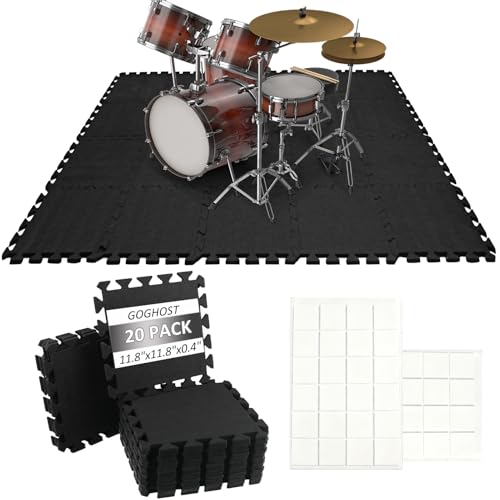
Twenty polyester felt panels, each 11.8 x 11.8 x 0.4 in, covering up to 17 sq ft for a total pack weight of 4.2 lbs. Maker-stated density is 150 kg/m3, and 48 double-sided adhesive strips are included.
The thickest felt and the largest stated coverage in this group, which is the honest reason to pick it. GOGHOST states a tested NRC of 0.87 and markets the mats as blocking structure-borne sound so neighbours will not hear you practise, but NRC is an absorption measurement and cannot support a claim about what travels through the floor.
*Price shown on Amazon and subject to change.

Twenty high-density felt puzzle pieces, each 11.8 x 11.8 x 0.4 in, covering a maximum of 17 sq ft. Plain black with no pattern, supplied with 48 pieces of removable double-sided tape.
The same 17 sq ft of 0.4 in felt as the GOGHOST set, with no acoustic claim attached to it - LITLANDSTAR publishes no NRC figure at all, which given what NRC actually measures here costs you nothing. Buy whichever of the two is cheaper on the day you look, because in this category that changes week to week.
*Price shown on Amazon and subject to change.

Sixteen panels of 100 percent polyester fibre felt, each 11.8 x 11.8 x 0.35 in and 0.21 lbs, which works out to roughly 15 sq ft of floor.
The smallest set and the lowest ticket price, which makes it the sensible way to test the idea before committing a room to it. Wunzkii publishes no NRC figure, and at 0.35 in the panels sit between the 0.32 in TroyStudio tiles and the 0.4 in sets - a difference of well under two millimetres either way.
*Price shown on Amazon and subject to change.

A 200 sq ft roll of 3 mm EVA with a silver foil vapour barrier and pre-attached lip tape, sold for hardwood, laminate and other floating floors. HOLNURY combines sound insulation, a moisture barrier and thermal insulation in a single layer.
Not a mat and, for most renters, not actionable - this goes under a floating floor you are installing yourself. HOLNURY states a Sound Transmission Class of 72 and an Impact Isolation Class of 73, but ratings like those describe a complete tested floor and ceiling assembly rather than a 3 mm roll on its own, so do not read them as what this layer adds to your floor.
*Price shown on Amazon and subject to change.
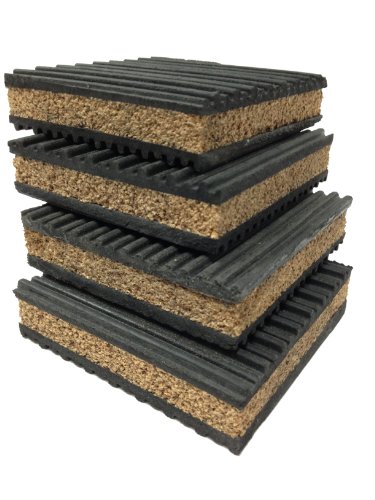
Four rubber and cork pads, each 4 x 4 x 7/8 in, rated by the maker to a 50 PSI maximum load, with alternating rib heights so they isolate under both high and low weight loads.
The cheapest genuinely useful thing on this page for a lot of renters, and the only one that is not a floor covering. These go under the feet of a washer, a compressor, a treadmill or a speaker stand, where vibration enters the building directly through four small contact points. PneumaticPlus publishes no decibel or impact rating for them, so treat the size of the effect as unmeasured.
*Price shown on Amazon and subject to change.
| Pick | Product | Link | |
|---|---|---|---|
| Our Pick | TroyStudio — TroyStudio Interlocking Acoustic Floor Mats (24 pcs, 11 x 11 x 0.32 in) | $46.99 | Check → |
| Best Coverage | GOGHOST — GOGHOST Sound Absorbing Interlocking Floor Mats (20 pcs, 11.8 x 11.8 x 0.4 in) | $38.99 | Check → |
| Best Value Felt | LITLANDSTAR — LITLANDSTAR High-Density Felt Interlocking Floor Mats (20 pcs, 11.8 x 11.8 x 0.4 in) | $39.99 | Check → |
| Best Budget | Wunzkii — Wunzkii Thick Interlocking Acoustic Floor Mats (16 pcs, 11.8 x 11.8 x 0.35 in) | $36.99 | Check → |
| Best If You're Laying New Floor | HOLNURY — HOLNURY 3-in-1 Acoustic Floor Underlayment (200 sq ft roll, 3 mm EVA) | $64.99 | Check → |
| Best for Appliance Feet | PneumaticPlus — PneumaticPlus Rubber/Cork Anti-Vibration Pads (4 pack, 4 x 4 x 7/8 in) | $16.50 | Check → |

Lillie Metayer
Lillie Metayer is the founder of a local program that helps apartment-dwellers take action against noise pollution. Involved in environmental activism since high school, Lillie is passionate about raising awareness of the harms of noise exposure and helping people reduce noise in their communities. In her free time, Lillie enjoys playing the violin and spending time outdoors.