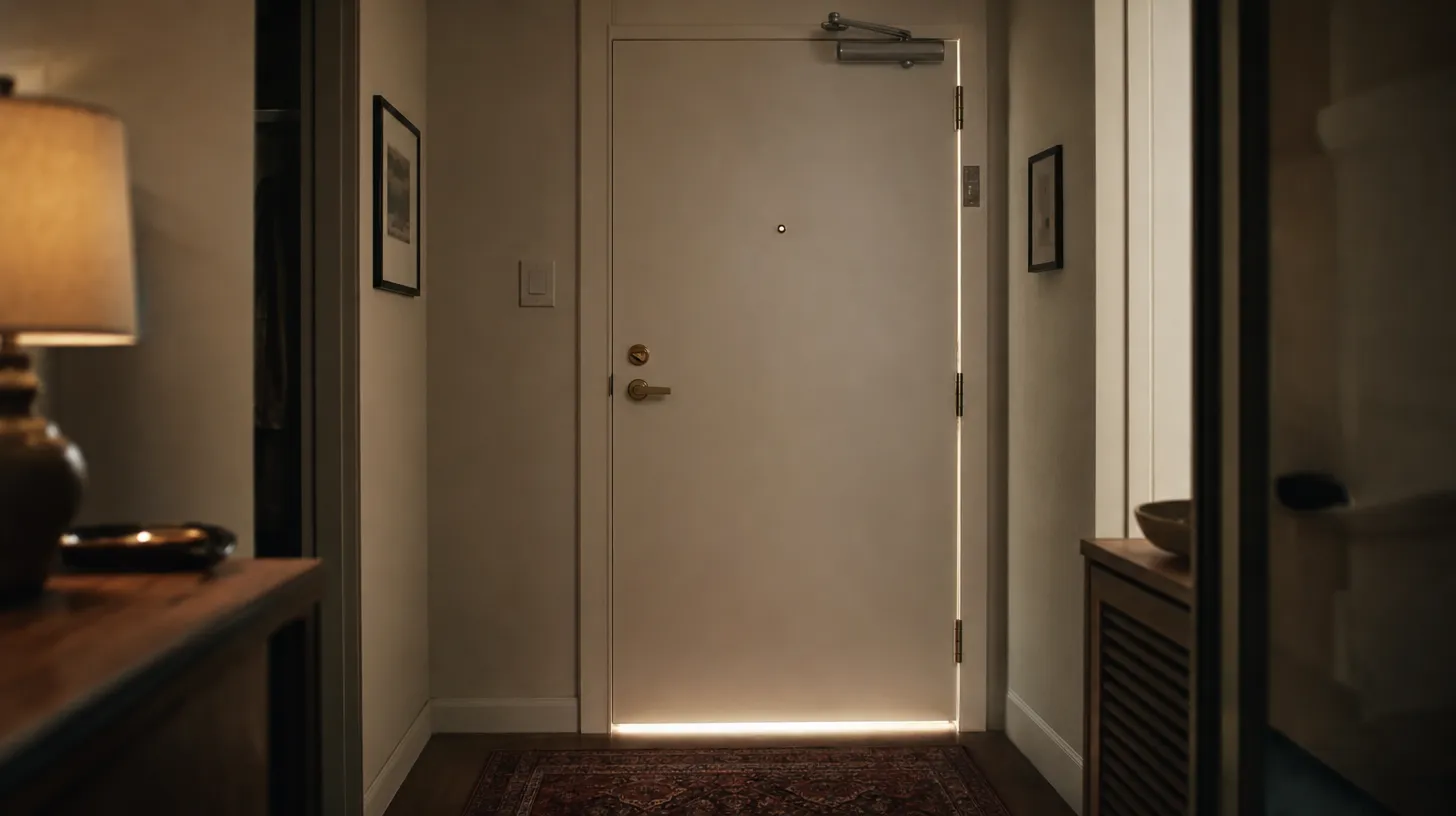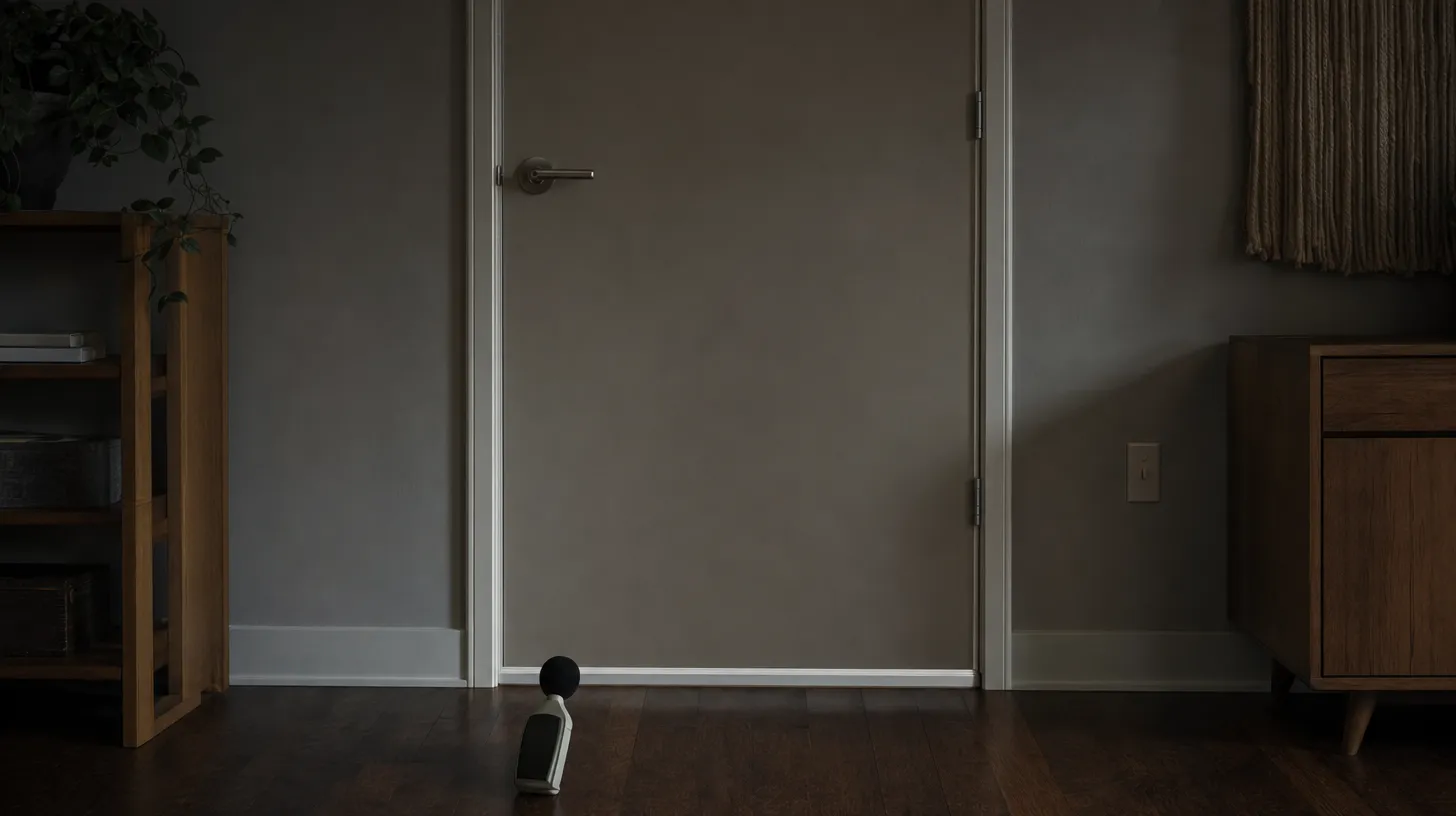
Soundproofing a door works, partly. Sealing the perimeter and the gap along the bottom is cheap, reversible, and the step almost everyone underestimates. Adding mass to a rental door is marginal. Nothing you can do to a door makes it perform like a wall, because a door is a thin removable panel hung in a hole with air all the way around it.
That is the honest answer to does soundproofing a door work. The rest of this page is the evidence, a number sense for what a few decibels feels like, and the point where you should stop spending. If you want the sequence instead, how to soundproof an apartment door is the playbook.
Three questions, asked as one
Door soundproofing expectations go wrong because one question is really three.
- Does sealing work? Yes, and nearly all of the improvement available to a renter lives here.
- Does adding mass work? A little, capped by what the hinges, the latch and your lease tolerate.
- Does a soundproofing kit work? Only if what is in the box is a seal rather than a decoration.
The answers differ because a door fails in two unrelated ways at once. The slab is a mass problem. The air gap around it is a sealing problem - different physics, different products, wildly different cost per decibel. We take the construction side apart in why your door leaks sound.
Does soundproofing a door work as well as the published rating implies?
No, and the reason sits in how the rating gets made.
A door's Sound Transmission Class is a laboratory figure. Writing in The Construction Specifier, Jerry Heid explains that "the TL of a door is measured over 16 different frequencies," in two phases: a fixed phase where "the doors are sealed in place, and sound is applied and recorded," and an operable phase where "all sealants are removed before sound is applied." Heid's summary is the sentence to carry away: "As sound doors are tested under optimal conditions, actual field performance varies."
Which of the two phases a number comes from matters, and Heid says so directly: "Professionals should be aware some manufacturers will advertise their sealed-in-place STC ratings rather than this more-realistic operable rating. Selections based solely on the sealed-in-place ratings are likely to yield disappointing results for the end-user." Either figure describes a rated opening tested as a unit - slab, frame, gasketing, threshold - under laboratory conditions, and neither is a forecast for your frame.
Then there is the leak, and it takes almost nothing. Heid is unambiguous: "a gap of less than 3 mm (1/8 in.) may only allow a small amount of air to pass through, but it is still large enough to completely cancel out any noise-reduction benefits of an acoustic door." ZERO International, which manufactures acoustic gasketing for doors, states the principle in one line - "Gaps in sound barriers are a major problem because sound travels through any opening with very little loss."
A leak sets the ceiling, and everything else you do to the door sits underneath it. Plenty of apartment doors have several times an eighth of an inch of daylight under them, so the slab's published number was never in play.
The door is also not the only path. In Canadian Building Digest 239, published by the National Research Council of Canada, A.C.C. Warnock sets the lab against the building: "In laboratory measurements of airborne sound transmission, the only significant sound transmission path between the test rooms is through the test partition or the test floor itself. In real buildings, however, sound travels between suites indirectly by way of the surrounding constructions as well as directly through the common wall or floor assembly." Those indirect routes are flanking paths, and "in a poor design, they can transmit more sound energy than the direct path through the common wall or floor."
In the companion digest, Canadian Building Digest 236, he adds that "Holes, fissures and similar defects provide a path for sound travel that can increase the sound transmission between rooms," and notes that a real building gets its own rating, the field sound transmission class, because the on-site figure includes "the effect of flanking paths and construction defects." The lab number excludes exactly what your apartment has.
NRC is an absorption figure and says nothing about blocking
This is the most exploited confusion in the category. Warnock defines the term plainly in Canadian Building Digest 236: "The noise reduction coefficient (NRC) is the average of the sound absorption coefficients at 250, 500, 1000 and 2000 Hz. It is useful for roughly comparing materials." Then he draws the line that product listings blur: "It is very important to distinguish between sound absorption and sound transmission loss."
Why the two cannot stand in for each other is in his next sentences. "Sound absorbing materials control sound within spaces and function by allowing sound to pass through them relatively easily," Warnock writes, and "Conversely, a material or system that provides a good sound transmission loss is usually non-porous and a good reflector of sound."
An absorber is designed to let sound in. A barrier is designed to turn it back. A high NRC is evidence a product is good at the first job, which is not the job you hired it for. The panel version of this mistake gets its own treatment in do acoustic foam panels block sound. An NRC on a door product answers a question you did not ask, and a listing that says "soundproof" with no published rating at all is marketing copy rather than a measurement.
How much noise does a door sweep block?
Nobody publishes a transmission-loss figure for a nine-dollar adhesive sweep. There is no lab test and no rated assembly behind one, so any site quoting a decibel number for a consumer sweep is quoting itself. What you can have instead is a sense of scale.
The Federal Highway Administration's traffic noise guidance gives the standard perception scale. Its table of decibel changes lists a 3 dBA reduction as a "Barely Perceptible Change," a 5 dBA reduction as a "Readily Perceptible Change," and a 10 dBA reduction as "Half as Loud." The text says it outright: "an increase or decrease of 10 dB in the sound pressure level will be perceived by an observer to be a doubling or halving of the sound."
Two more FHWA figures set the ends of the ruler. Doubling the noise source "produces only a 3 dB increase in the sound pressure level," and "Studies have shown that this increase is barely detectable by the human ear." At the other end, in FHWA's guidance on reviewing noise analyses, "a 5 dB reduction is relatively simple to obtain and is readily perceptible," while a 10 dB reduction is listed as "Attainable" and a 20 dB reduction as "Nearly impossible."
Those figures describe outdoor traffic noise and engineered highway barriers, not a strip of silicone on a rental door. The perception scale, though, is the same ear. Roughly 5 dB is where a change stops being arguable and becomes obvious. Roughly 10 dB is where the hallway feels half as loud. And 10 dB is hard work for a barrier built for the job, which should calibrate what you expect from adhesive tape. So measure the same spot at the same time of day, before and after, and the result becomes a number rather than a mood. Meters and phone apps both have limits, and we go through them in decibel meters for renters.
Sealing works, and it is where nearly all the gain is
Sealing is the one part of this article with no caveat about the direction of the effect, only about its size.
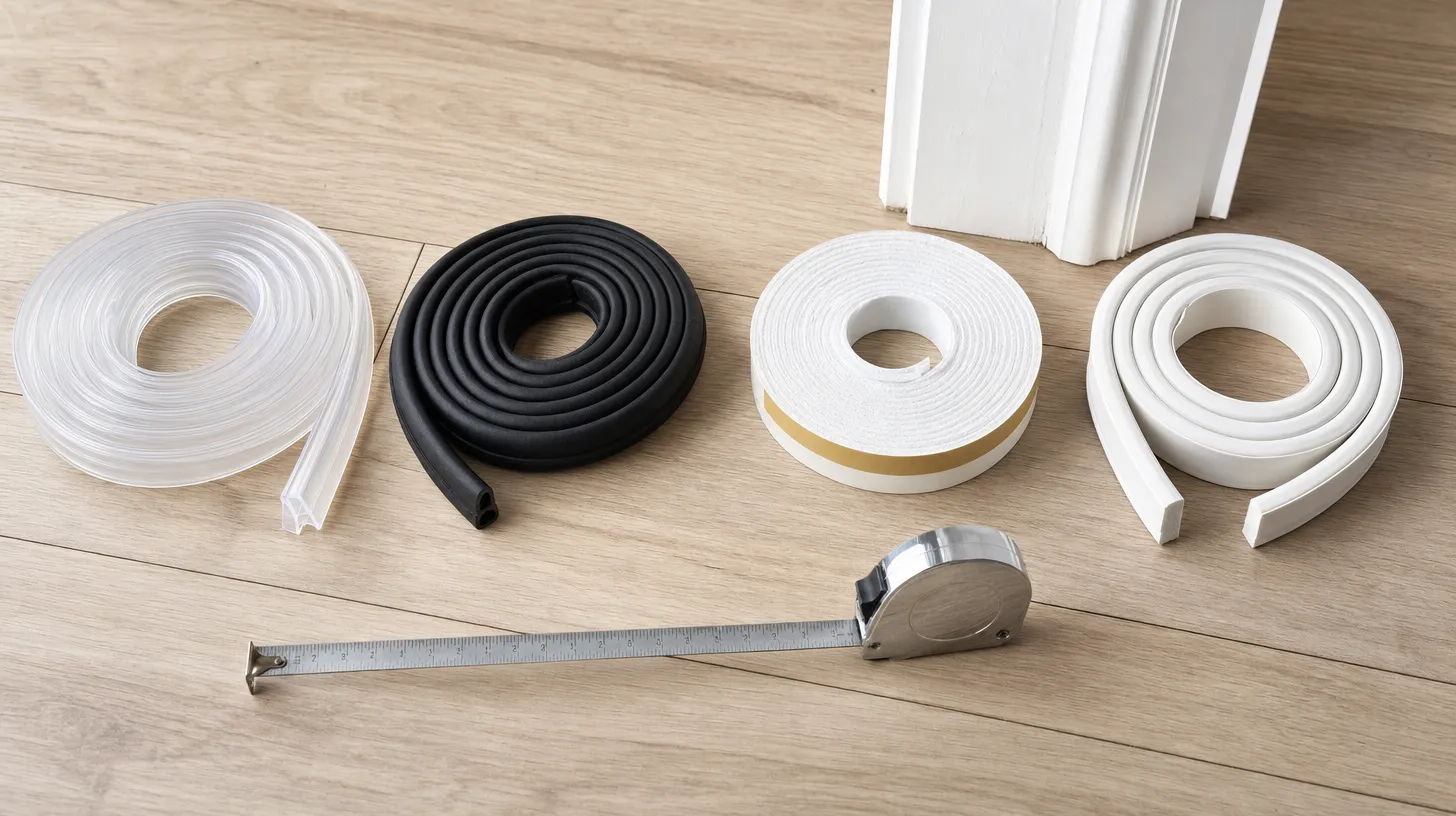
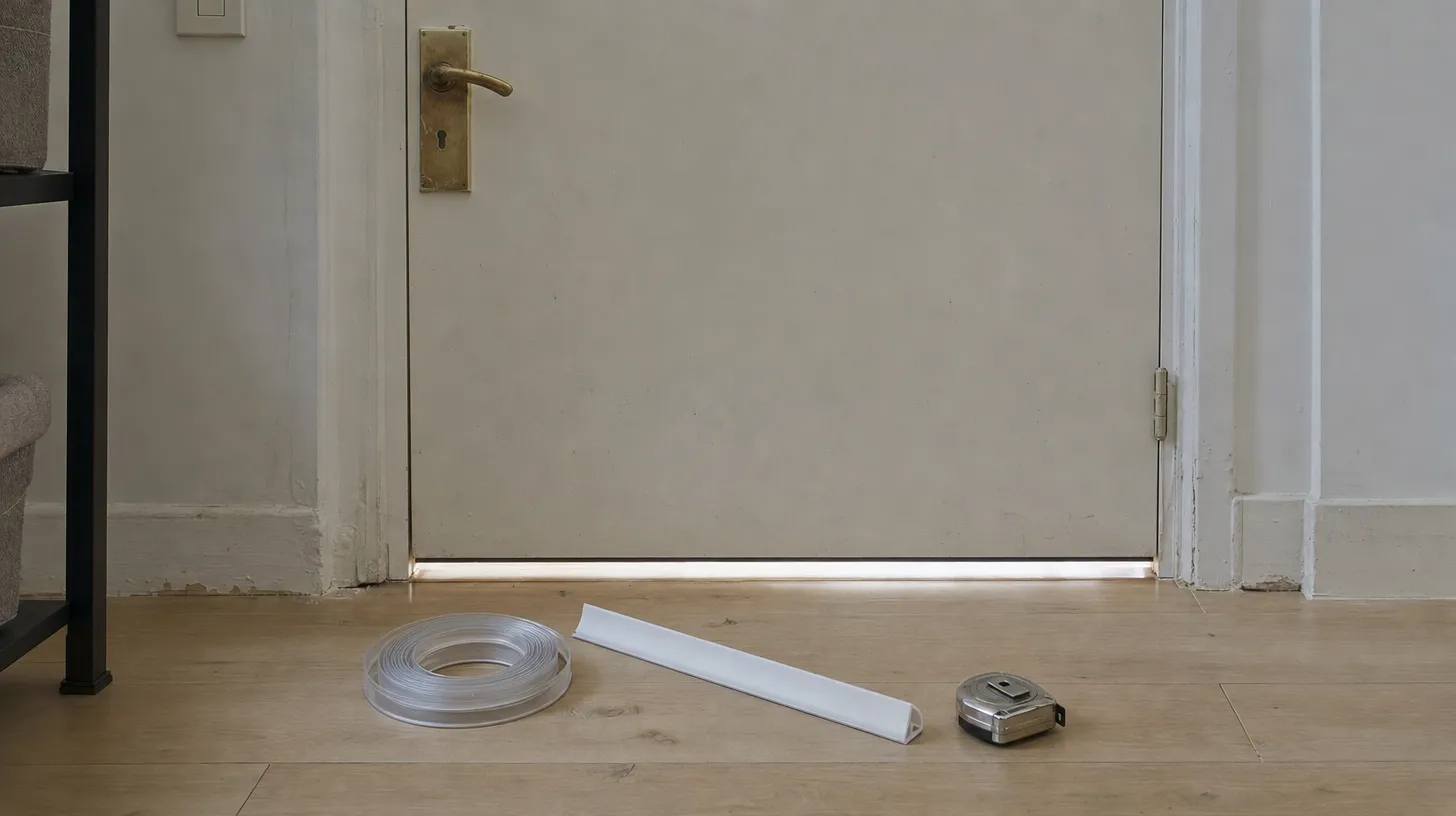
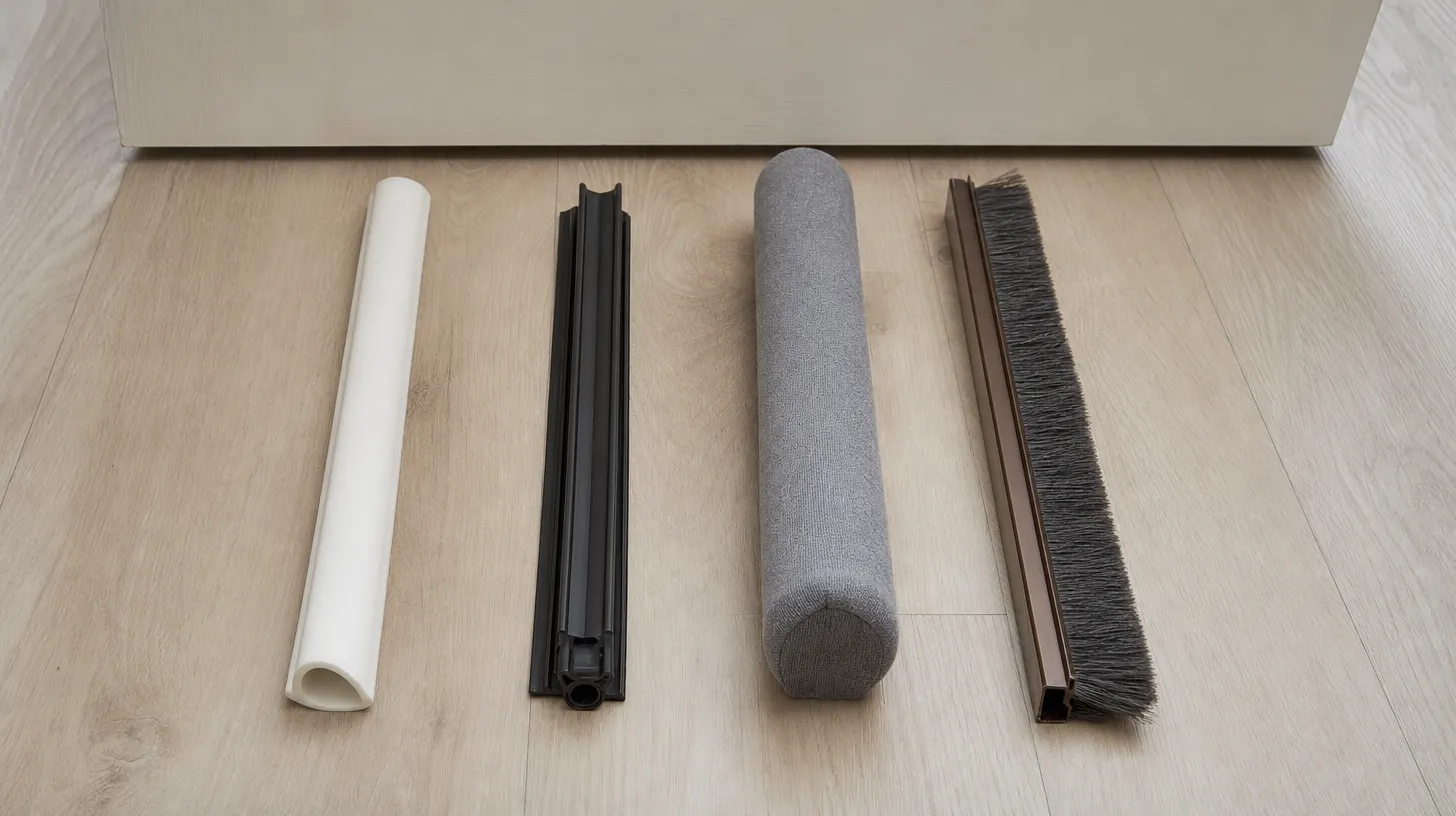
The professional specification is instructive. Heid writes that any gaps around a door's perimeter "must be sealed with gasketing providing a complete, uninterrupted airtight seal," and that sound-rated door bottoms "should close on solid, flat surfaces like marble or aluminum thresholds." A renter approximates that with self-adhesive silicone and a sweep, which still beats an open hole. The perimeter and the undercut are separate openings taking separate products: our roundup of the best door seal kits for apartments covers the perimeter, and the best door sweeps and draft stoppers covers the bottom gap.
Two honest limits. A renter seal is adhesive-mounted, and ZERO International notes that "Imperfect alignment is a common cause of gaps even in newly installed gasketing" - true of professional hardware, so expect it of tape. And the door still has to latch: a strip too thick for the latch to catch is worse than nothing.
Does adding mass to a door work?
Yes, and the honest version of yes is small.
The physics is uncontroversial. Warnock, in Canadian Building Digest 239, states it plainly: "The most important physical property controlling the airborne sound transmission loss through an assembly is the mass per unit area of its component layers." The working rule follows - "The mass law equation predicts that each time the frequency of measurement or the mass per unit area of a single layer wall is doubled, the transmission loss increases by about 6 dB." He spells out the rest of the curve too. For 12 dB, "the mass per unit area must be increased by a factor of 4; an increase of 18 dB requires an increase by a factor of 8."
Set that beside the perception scale. Doubling the weight of your door buys about 6 dB in the ideal case, which is real and audible. Reaching the 10 dB that feels like half as loud means roughly tripling the mass per square foot of the slab, on the original hinges, in an apartment you do not own. That is why we treat adding mass to a door as a qualified yes rather than a recommendation. Note the other term too: transmission loss rises with frequency as well as mass, so the same panel does least at the low end.
Do door soundproofing kits work?
Open the box and sort the contents into two piles.
Seals. Perimeter gasketing, kerf-mounted or adhesive strip, plus a sweep or threshold seal for the bottom. This pile does the thing the kit is named for.
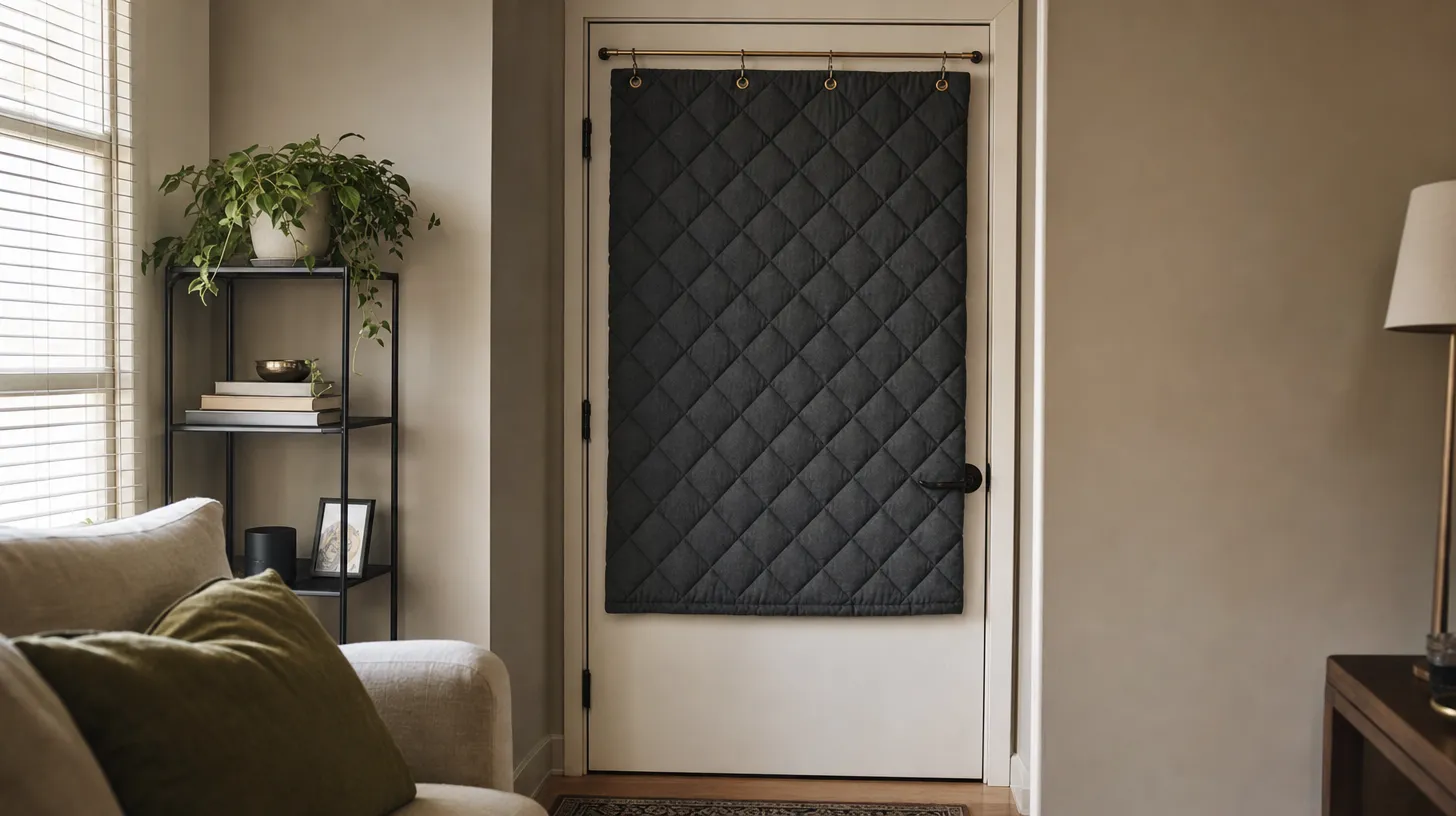
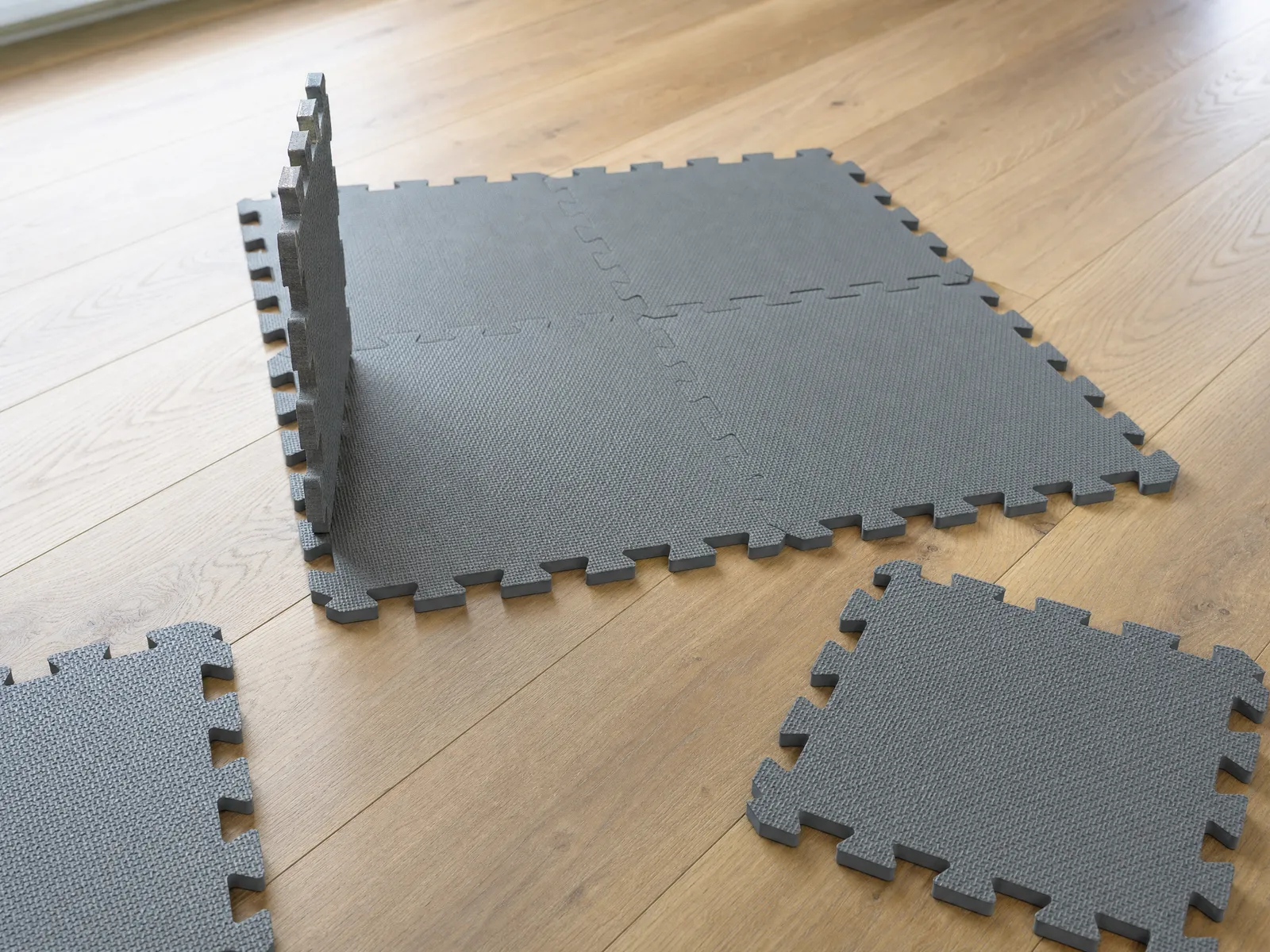
Decoration. Foam tiles, thin felt, a quilted panel, a blackout curtain with an acoustic label. Absorption at best, and absorption works, by Warnock's definition, by letting sound pass through.
Then look for a rating, and expect to find none. Across this category we keep finding the same thing: the word soundproof in the title, no test data, an NRC figure at most. A maker's claim is not a measurement, and a kit with no rating behind it is sold on the strength of its name.
If a kit you already bought did nothing, it is usually one of three things. It was absorption rather than sealing. The seal went on but the biggest leak, usually the undercut, stayed open. Or the noise was never airborne, in which case the door was never the path.
What fails, and why
Four categories fail predictably, and all four fail for the same reason.
- Acoustic foam on a door. Light, porous, built to absorb. Warnock's distinction covers it exactly.
- Soundproof paint. A coating adds a trivial amount of mass per unit area, and mass per unit area is the lever. We go through the claims in does soundproof paint work.
- A thin curtain. Light and porous again. A heavy one overlapping the opening on all sides and reaching the floor is partly acting as a crude seal, which is a real effect and an inefficient way to buy one.
- Anything called soundproof with no published rating. Which, in this category, is most of it.
What success actually looks like
A well-sealed door will usually turn a hallway conversation from something you can follow into something you can only hear. Words become a murmur. Door slams soften into thuds. A television next door can drop to a mumble you stop noticing by the second evening. Treat that as a reasonable expectation rather than a measured result: there is no published figure for a taped-up rental door, and how far it goes depends on your door, your frame and the noise itself.
That is the win: modest, repeatable, and genuinely worth twenty dollars and an afternoon, which is the real answer to whether soundproofing a door is worth it. It is not silence, and anyone selling silence for a door is selling you something.
When to stop and do something else
Four situations where more money on the door is wasted money.
- The noise is impact or structural. Footsteps, dropped objects, furniture dragging. That energy travels through the building rather than your doorway, and a door seal does not touch it. Impact noise versus airborne noise sorts out which one you have.
- The noise is bass. Low frequencies are where the mass law gives you least.
- The flanking path dominates. If the wall, floor or ceiling is now the weakest surface, sealing the door harder achieves nothing.
- It is a behavior problem. A neighbor with a subwoofer at 2 a.m. is not an acoustics project. Log dates, times and measured levels, put it in writing to your landlord, and spend nothing.
The honest verdict
Hold two published figures side by side and the ceiling becomes obvious.
Warnock writes in Canadian Building Digest 239 that "for occupants of multi-family dwellings to enjoy a reasonable degree of acoustical privacy, the effective STC between dwelling units should be at least 55." Heid, writing about purpose-built acoustic doors, says "door openings rated in the range from STC 30 to 40 are common" and that "achieving a rating of STC 50 or higher is extremely difficult."
The quiet a dwelling unit is designed for is a number a door opening barely reaches at the top of the commercial market, with engineered gasketing and a proper threshold. Your rental door, with tape on three edges and a sweep at the bottom, works a long way below that. Which is fine, as long as you know it going in.
So seal both leaks, because that is cheap and it works. Add mass only if the door is yours to treat and you accept roughly 6 dB for a doubling of weight. Ignore anything priced as a barrier and rated as an absorber. Then stop, and put the next twenty dollars into the wall or the floor. Our guide to soundproofing an apartment door walks that sequence in order, with what each step costs.

Lillie Metayer
Lillie Metayer is the founder of a local program that helps apartment-dwellers take action against noise pollution. Involved in environmental activism since high school, Lillie is passionate about raising awareness of the harms of noise exposure and helping people reduce noise in their communities. In her free time, Lillie enjoys playing the violin and spending time outdoors.