Stop letting the weights hit the floor, put every machine on dense anti-vibration pads, and train between 9am and 9pm. That is the honest short answer to how to quiet a home gym in an apartment, and none of those three things costs money. A floor build comes fourth, and it will not rescue you if you are still dropping the bar.
We are writing to the person making the noise, and we are not going to scold you. Training at home is reasonable. It is also, acoustically, the loudest thing most people do in an apartment - louder than the television, louder than walking around. For the full order of operations on a rental floor, start with how to soundproof an apartment floor and treat this as the gym chapter.
The spine, up front: a dropped weight cannot be fixed by flooring. You can make a treadmill nearly disappear and take most of the sting out of jumping. A loaded barbell released onto an apartment floor delivers an impulse no renter-installable build absorbs.
Your home gym is three noise problems, not one
Nearly all of it is impact noise - energy injected straight into the structure rather than the air, carried by joists and slab, then radiated into the apartment below by their ceiling. If that is new, impact noise and airborne noise are different problems is the short version. Split your gym into three, because they need different fixes:
- Dropped and dumped weights. One high-energy impulse, arriving downstairs as a bang. The worst and least fixable.
- Treadmills, bikes and rowers. Continuous vibration entering the building through four small machine feet. The most fixable.
- Jumping and plyometrics. Repeated moderate impulses, dozens a minute. Fixable mostly by substitution.
The construction that makes your burpees carry is why your ordinary walking carries too, so also read stop your footsteps bothering the downstairs neighbors, and why upstairs neighbours sound so loud.
Dropped weights and the apartment floor: the problem no build solves
The best measurements we can find come from an acoustics firm testing the lightweight, retrofittable gym floors people actually put in apartments - and, as the paper discloses, every material tested except the low-density rubber is one of that firm's own products, so read the winner with that in mind. According to Cosstick, Hong and Murray of Embelton Noise and Vibration, presented at ACOUSTICS 2016 in Brisbane, a 10 kg kettlebell was dropped ten times from 620 mm onto each of several builds over a 150 mm concrete slab, with the loudest level recorded in the room below.
A bare slab measured 94.0 dB(A). Their best build - two adhered layers of 14 mm plywood on damped spring mounts under a 15 mm high-density rubber top - measured 63.2 dB(A), a 30.8 dB reduction, roughly the ceiling of what engineering does here.
Now notice two things. 63.2 dB(A) is still a bang. And the test weight was only a 10 kg kettlebell from 620 mm, a little over two feet, because the authors state heavier weights were not used owing to occupational health and safety concerns with repeated drops. A loaded barbell is worse, and it has been measured: Kaewunruen, Huang and Haslam, in Sport Sciences for Health in 2021, dropped barbells loaded from 40 kg to 130 kg from the top of a deadlift onto a university gym's damp-proof flooring over a floating slab and recorded averages of 98.3 to 102.7 dB beside the bar.
The fixes, in descending order of what they buy you:
- Do not drop the weight. Control the eccentric, lower under tension, set the bar down rather than letting go. Free, and it beats every product here.
- Lower onto something. A bench, rack, spotter arms or blocks at the right height turn a drop into a placement. Adjustable spotter arms are the best buy in this article, and a safety item anyway.
- Buy equipment that cannot make the noise. Adjustable dumbbells instead of loose plates; cables, machines and bands for lifts where you might fail. Bumper plates help only if you are also lifting onto something.
- Then, and only then, a floor build.
Why a plywood spreader beats a thicker mat
A rubber mat under the point of impact is squeezed nearly flat in a few milliseconds and then behaves like part of the floor. Because it is flexible, it spreads the load over a small area. The Embelton authors say as much about their own test geometry: plywood's rigidity requires a large area to account for realistic load spreading from impact, while the flexibility of rubber mats constrains the spread to a smaller area.
A rigid sheet hands that point load to the resilient layer below as a lower force over a larger area and a longer time. Same energy, spread out - and a resilient layer only works when it is not being crushed. That is the mechanism of a lifting platform, and why the order of layers matters more than total thickness.
| Build over the concrete slab | Loudest level below | Slab vibration, 1-80 Hz, vs bare slab |
|---|---|---|
| Bare 150 mm concrete slab | 94.0 dB(A) | reference |
| 15 mm high-density rubber tile alone | 84.9 dB(A) | worse |
| 25 mm low-density rubber plus rubber top | 72.5 dB(A) | 27.4 percent worse |
| 75 mm low-density rubber plus rubber top | 64.2 dB(A) | 19.5 percent worse |
| Two layers 14 mm plywood on rubber mounts, rubber top | 66.7 dB(A) | 45.8 percent better |
| Two layers 14 mm plywood on damped springs, rubber top | 63.2 dB(A) | 60.5 percent better |
Read the right-hand column twice. Per that paper, every rubber-only build amplified slab vibration between 1 and 80 Hz - by 19.5 percent for matting generally, 27.4 percent in the worst case - which the authors attribute to the lower resonant frequencies of the rubber being excited. Their conclusion is blunt: to gain vibration improvement in that band, a separated floor such as plywood or compressed fibre cement on rubber or spring mounts is required as a minimum, because no combination of rubber matting by itself provided attenuation.
Rubber is not useless. The same paper found the 15 mm high-density tile gave reductions of up to 25 dB above 1.25 kHz. It kills the clatter, the ring and the slap, and leaves the low-frequency thump that travels through a building.
Home gym flooring for noise: the renter version
None of that is a weekend project as published - the plywood was adhered, the mounts were engineered products at 600 mm spacing, and the platforms stood 115 mm and 137 mm tall. But the renter-feasible approximation is the rubber-mount row, and it still returned 27.3 dB and 45.8 percent less slab vibration. Laid loose, for a lifting zone of roughly four feet by six, bottom up:
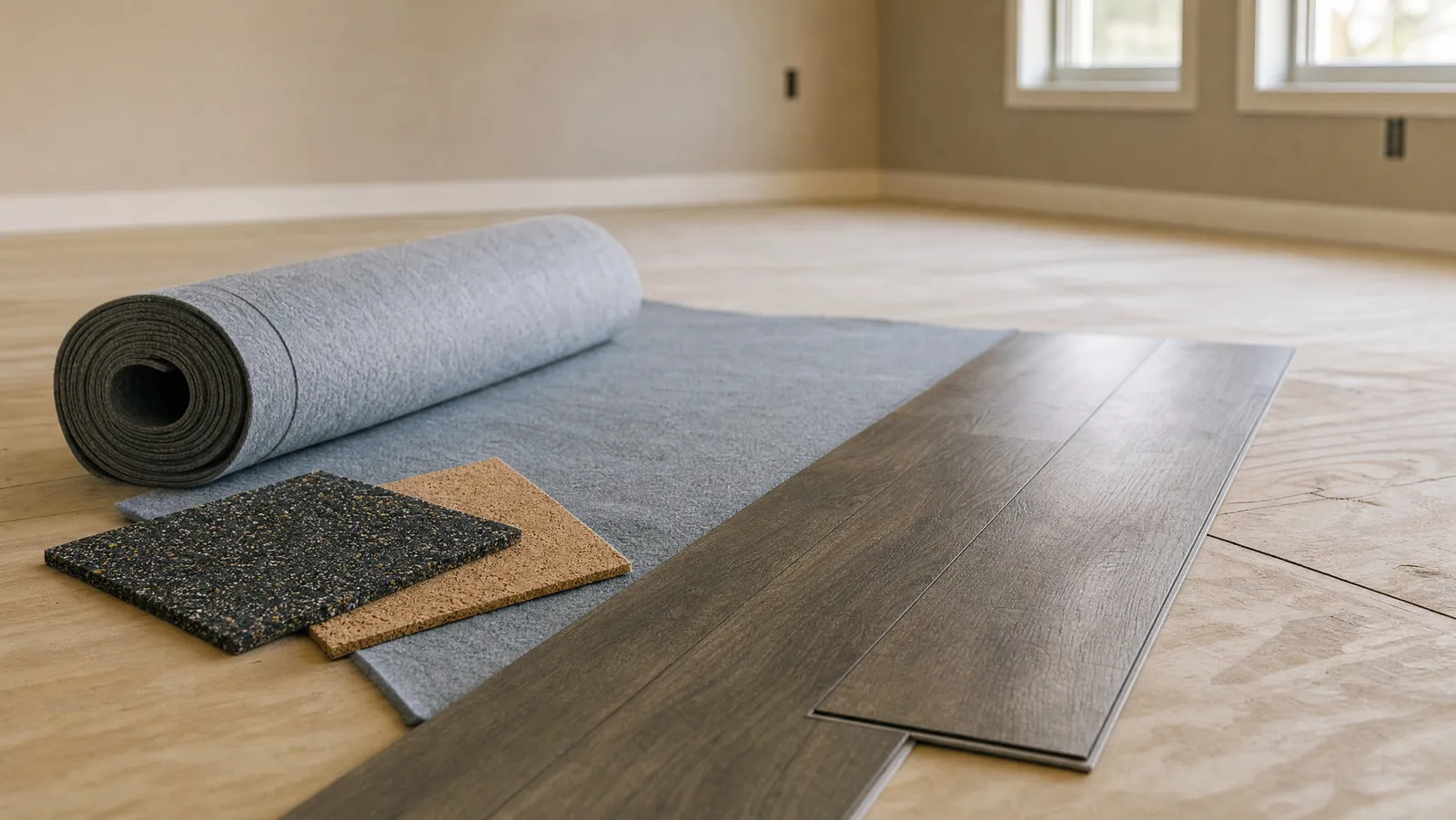
- A resilient layer that stays resilient. Discrete dense rubber pucks on a grid, not a continuous sheet - discrete mounts keep a lower stiffness per square foot than wall-to-wall rubber.
- A rigid spreader. Two layers of 3/4 inch plywood, seams offset, screwed to each other and to nothing else. This layer does the physics.
- A dense rubber top surface. Protects the plywood, takes the high frequencies out of the contact, stops the platform sliding.
- Nothing glued or fastened to the building. It sits on its own weight and lifts out at move-out.
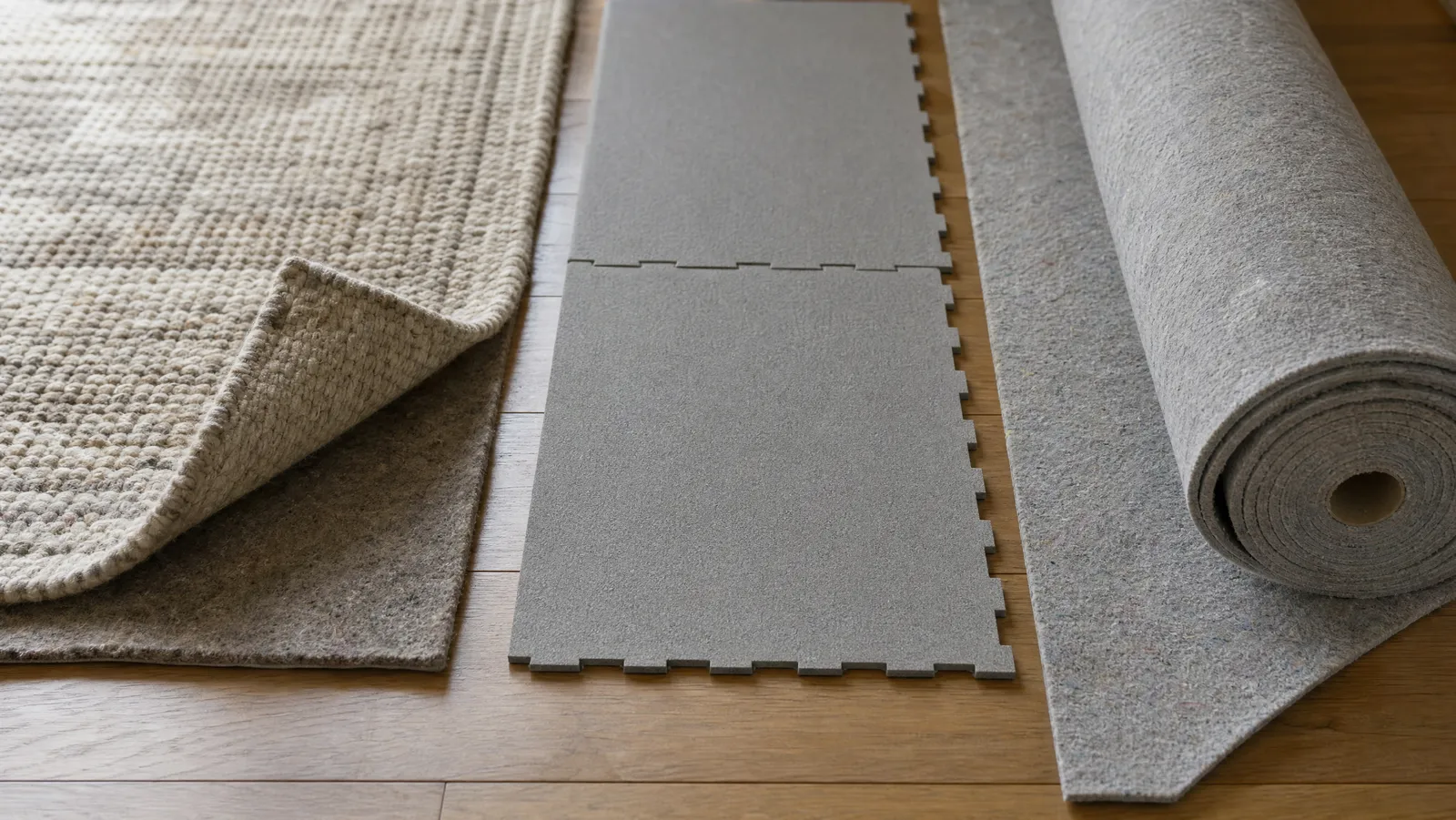
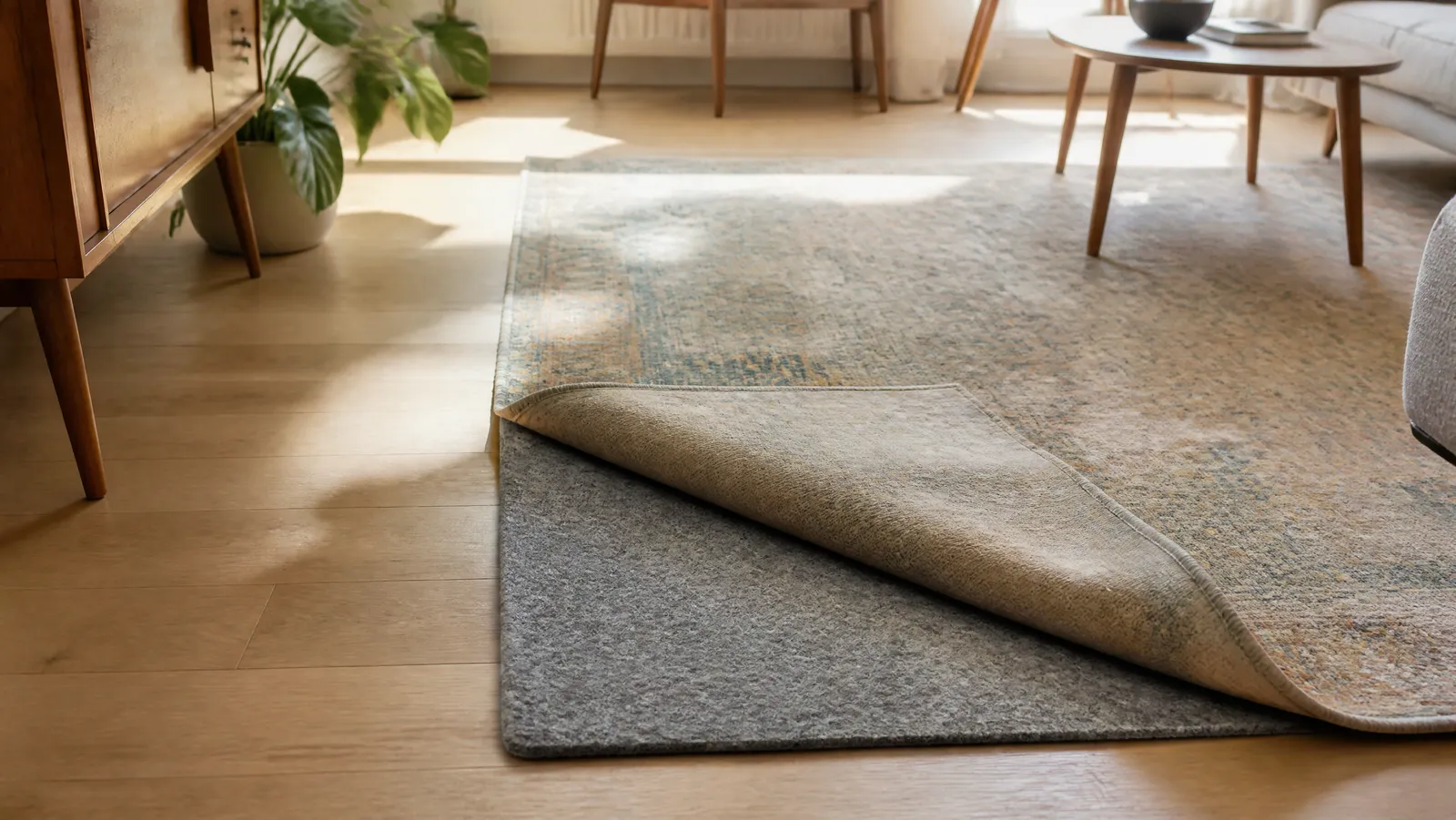
Total height lands near three and a half to four and a half inches, so it is a real step and a real trip hazard. Keep it to the footprint you lift in, and do not run it to the walls - a platform touching the skirting bridges straight back into the structure. For the mat layer and the anti-vibration pads for machine feet, we have done the shopping in the best soundproof floor mats.
Apartment treadmill noise is the most fixable of the three
This one usually responds cheaply, because the energy enters through four small contact points you can get underneath. According to the Embelton paper, citing Bachmann and Ammann, treadmill and aerobic activities input low-frequency excitation of less than 3.2 Hz into a floor, and the effect depends heavily on the vibration modes of the structure underneath - which is why an identical treadmill is inaudible in one apartment and intolerable next door. In order:
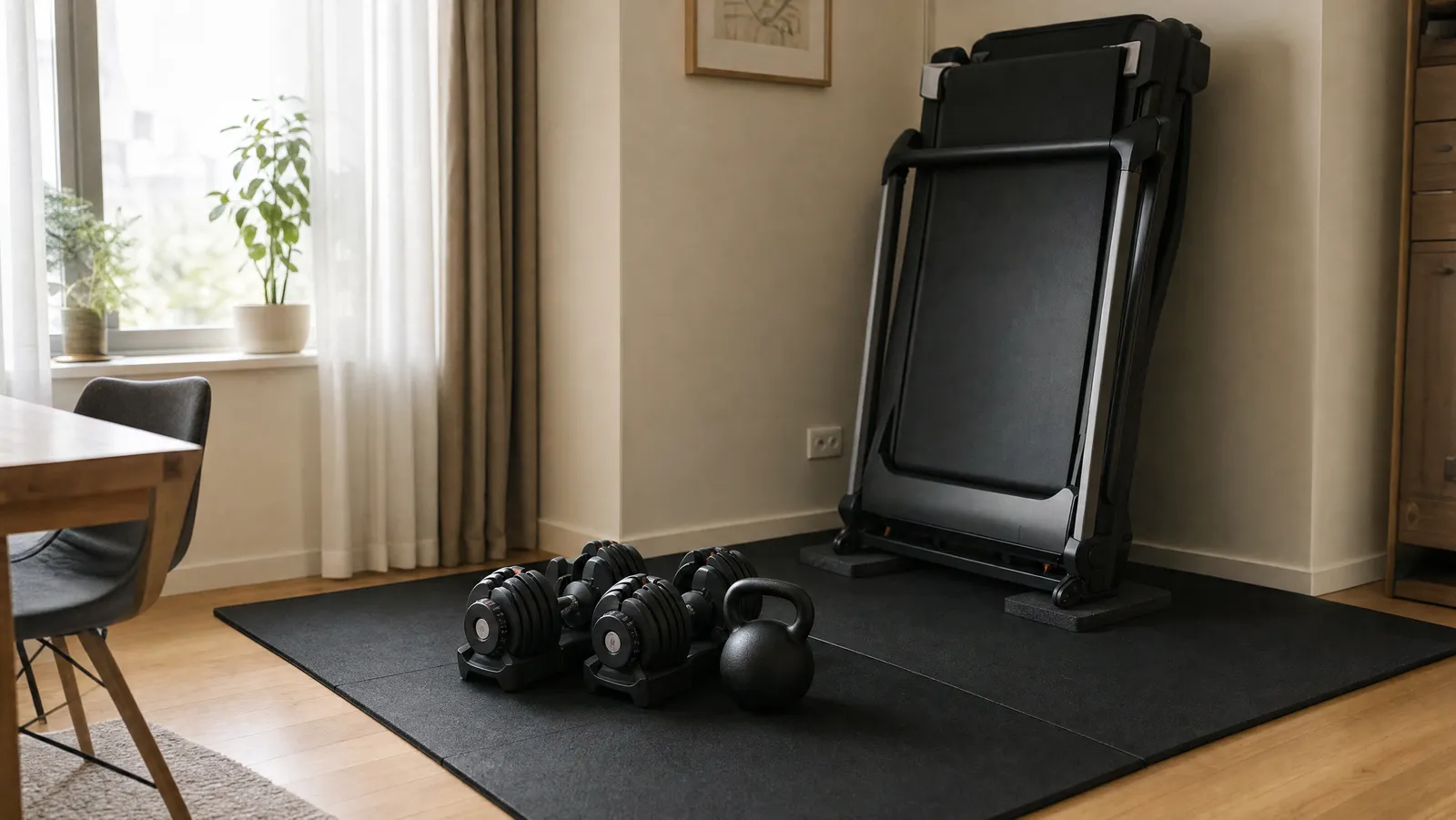
- Isolate the feet. One dense anti-vibration pad under each foot, sized to the load. The highest-value ten minutes in your gym.
- Level it and tighten it. A rocking frame adds a knock on every stride; a loose deck bolt buzzes.
- Keep it off the wall. A frame touching a shared wall couples vibration into the partition and flanks around everything you did to the floor.
- Think about what is under it. A treadmill over a bedroom is a siting problem before it is a product problem.
One honest limit. In a case study by the consultancy Phoenix Noise and Vibration, a condominium treadmill was exciting a floor with a natural frequency near 10 Hz, and rubber isolators failed because they become relatively ineffective at lower frequencies; the fix was a spring-isolated steel inertia base of roughly 1,500 pounds. If pads and repositioning do not solve your treadmill, the next step is not a better pad - it is a different room or a different machine.
Jumping and skipping: substitute first, pad second
Landing forces are large and they repeat. In a 2023 study in the journal Sports, peak vertical ground reaction force for a single-leg jump landing from a 30 cm box averaged 4.89 times body weight, against 2.73 for a plain drop landing from the same height. For a 175 lb person that is roughly 855 lb through one foot, fifty times in a conditioning block. No renter floor makes that quiet. Substitution does:
- Swap the jump, keep the stimulus. Skipping becomes a row or a bike sprint, box jumps become step-ups, burpees lose the hop.
- Land quietly on purpose. Mid-foot, knees and hips absorbing, with the goal of making no sound. Coaches cue it for joint health anyway.
- Relocate it. Twenty minutes of plyometrics is the easiest part of a week to move to a park or the building gym.
- Then put a mat down. A mat takes the slap out of a landing, not the thump.
The two free variables: which room, and which hour
Room. In order of preference: over a garage, a lobby, a storage or plant room, your own living space, or a stairwell corner. A ground-floor unit on a slab is the jackpot. A back bedroom over someone's bedroom is the worst available choice, and no build fixes a bad choice.
Hour. This is where complaints are generated. According to LocalNoiseLaws, there is no national standard - federal law leaves noise control to state and local government - and most residential ordinances set quiet hours around 10pm to 7am on weekdays, roughly 11pm to 8am at weekends. Those limits are generally written around sustained sound levels, so in our reading they map poorly onto the single bang of a dropped plate, which is often why impact complaints get handled as a nuisance question rather than a measurement.
The 6am and 10pm sessions generate almost all of the ill will, because they land while your neighbour is asleep and nothing else in the building is masking you. Lifting at 7pm on a Tuesday is a different social event from lifting at 5.45am.
Tell the neighbour before they tell the office
One short conversation, before the note under the door, beats anything you can buy: what you are doing, which hours you will keep, and an invitation to tell you when something is bad. Asking which noise bothers them is useful - it is usually one machine, one exercise or one hour, and that you can fix in an afternoon. If a complaint has already landed, how to deal with a noise complaint without making it worse is written from the receiving end, which is why it helps here. Not legal advice, and your lease may have its own rules on hours and floor coverings.
What does not work
- Acoustic foam on the walls. Foam is an absorber, rated by NRC. According to the Wikipedia summary of the standard, the noise reduction coefficient is a single-number average of a material's absorption coefficients at 250, 500, 1000 and 2000 Hz, measured in a reverberation room under ASTM C423, and it describes sound absorbed within a room rather than sound stopped on its way through a barrier. Your impact energy is going down through the structure, and wall foam is not on its route.
- Any product whose only evidence is an NRC number. Isolation is a different measurement. According to Wikipedia's entry on impact insulation class, IIC - how well a floor attenuates impact sound such as footsteps - is derived from ASTM E989 using the tapping machine specified in ASTM E492, and is rated from attenuation at sixteen standard frequencies from 100 to 3150 Hz measured in the room below; according to Intertek's summary of ASTM E492, that machine's five hammers strike the floor ten times a second. An NRC figure is never evidence that your downstairs neighbour hears less.
- Reading an advertised IIC as a product rating. Those numbers describe a complete tested floor and ceiling assembly, not a sheet of anything. The honest per-product figure is delta IIC, the improvement a covering adds to a reference floor: according to Intertek, ASTM E2179 measures how effective floor coverings are at reducing impact sound transmission through concrete floors, and ASTM E989 is the classification defining that change in IIC for the E2179 test. Two cautions - it is measured on concrete, and almost nobody selling gym mats publishes one.
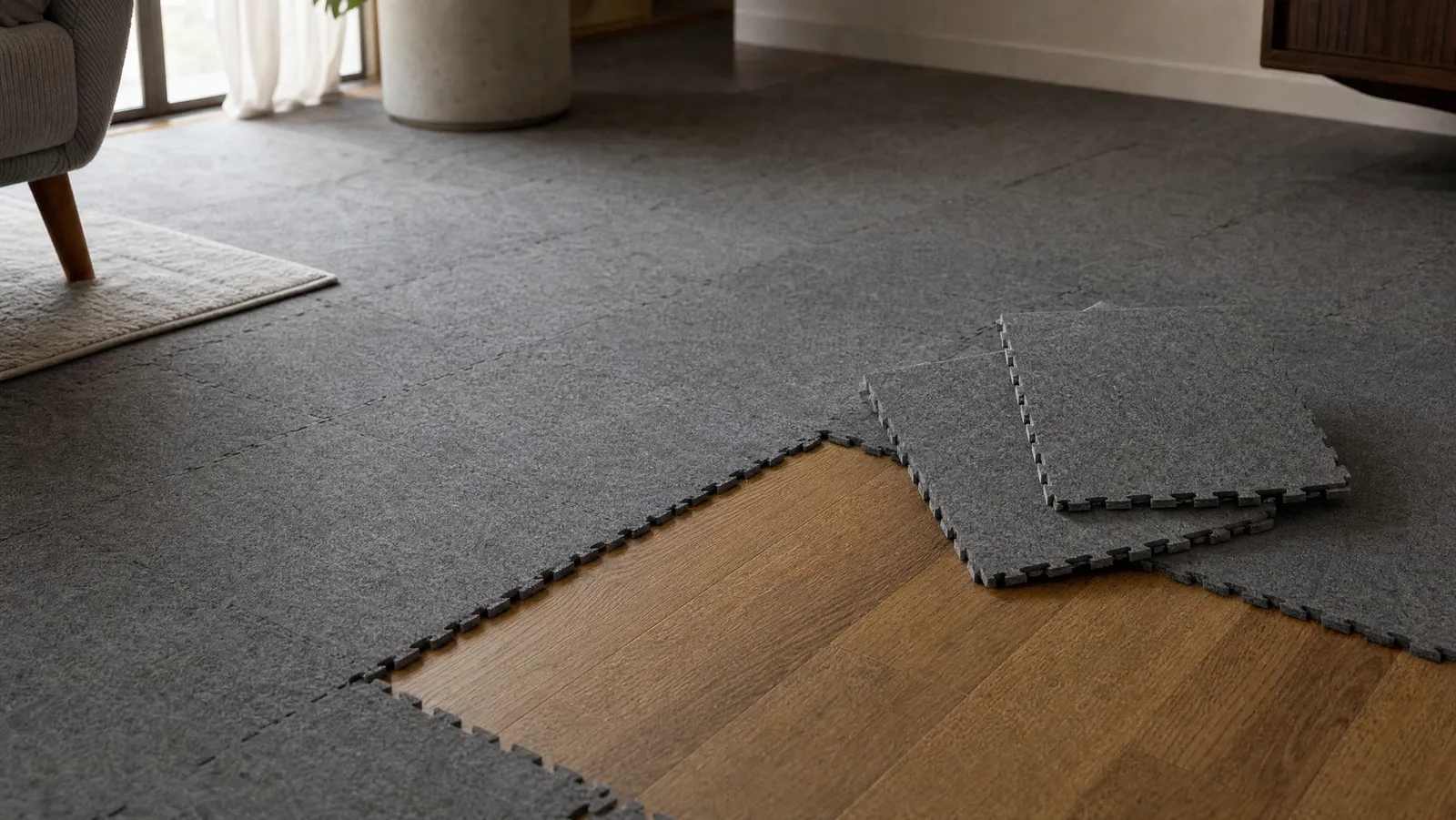
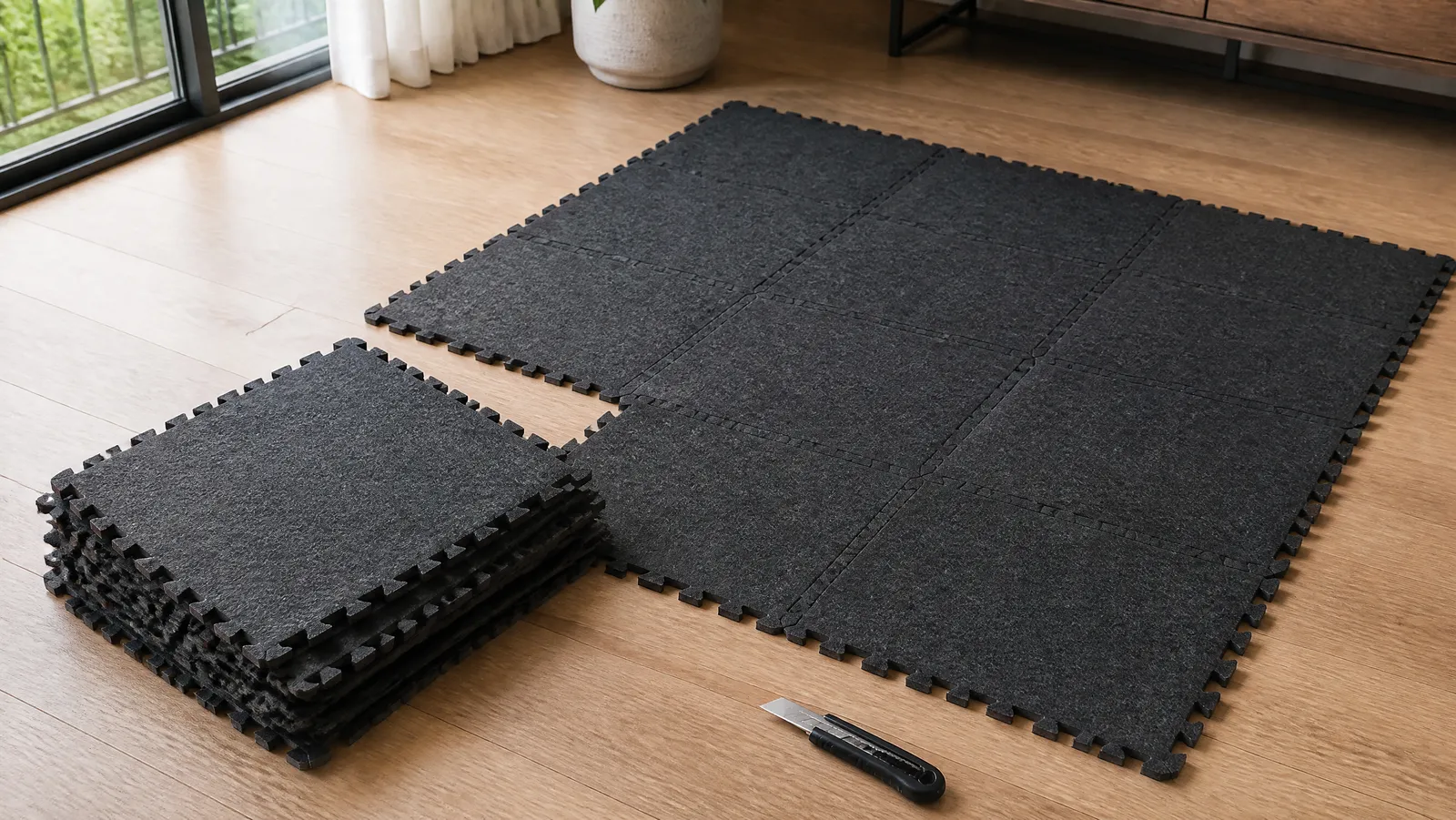
- One thin foam puzzle mat under a rack. It protects the floor from dents. That is the job it is doing, and it is a useful job - just not this one.
Where we would start
- Change the technique. Stop releasing weights; lower to a bench, rack or spotter arms. Free.
- Change the hours. Nothing loud before 9am or after 9pm. Free.
- Change the room. Over a garage, a lobby or your own living space, not over a bedroom. Free.
- Substitute the loudest exercises. Step-ups for box jumps, rower for rope. Free.
- Pads under every machine foot. Ten minutes, clearest mechanism here.
- Swap the worst equipment. Adjustable dumbbells over loose plates; machines where you might fail a rep.
- Build the platform. Resilient mounts, two layers of plywood, dense rubber on top, laid loose.
- Measure crudely, before and after. A phone meter will not give you an IIC number, but it will tell you whether anything changed.
The first four are free and they outperform the last four. That is what the numbers describe: the best-engineered build in the literature still left a 10 kg kettlebell audible as a 63 dB(A) bang downstairs, and the published loaded-barbell figures - 98.3 to 102.7 dB beside the bar, on gym flooring already designed to absorb it - are worse again.
Build the platform anyway if you lift - it is worth 27 dB and halves the vibration entering the slab. Just build it after you have stopped needing it to save you. If the gym is one part of a wider floor problem, the rest of the stack is in our guide to soundproofing the floor itself.

Lillie Metayer
Lillie Metayer is the founder of a local program that helps apartment-dwellers take action against noise pollution. Involved in environmental activism since high school, Lillie is passionate about raising awareness of the harms of noise exposure and helping people reduce noise in their communities. In her free time, Lillie enjoys playing the violin and spending time outdoors.