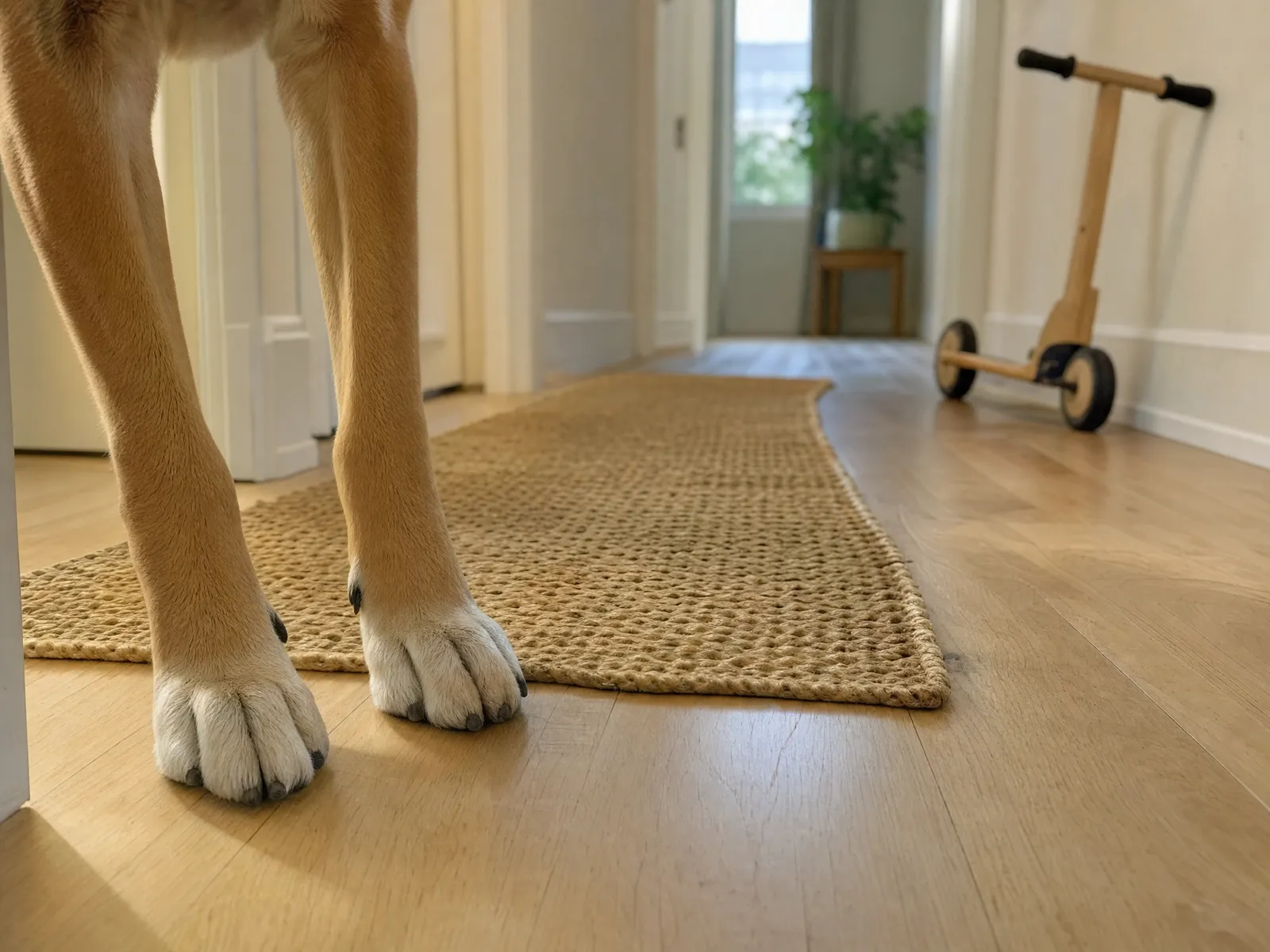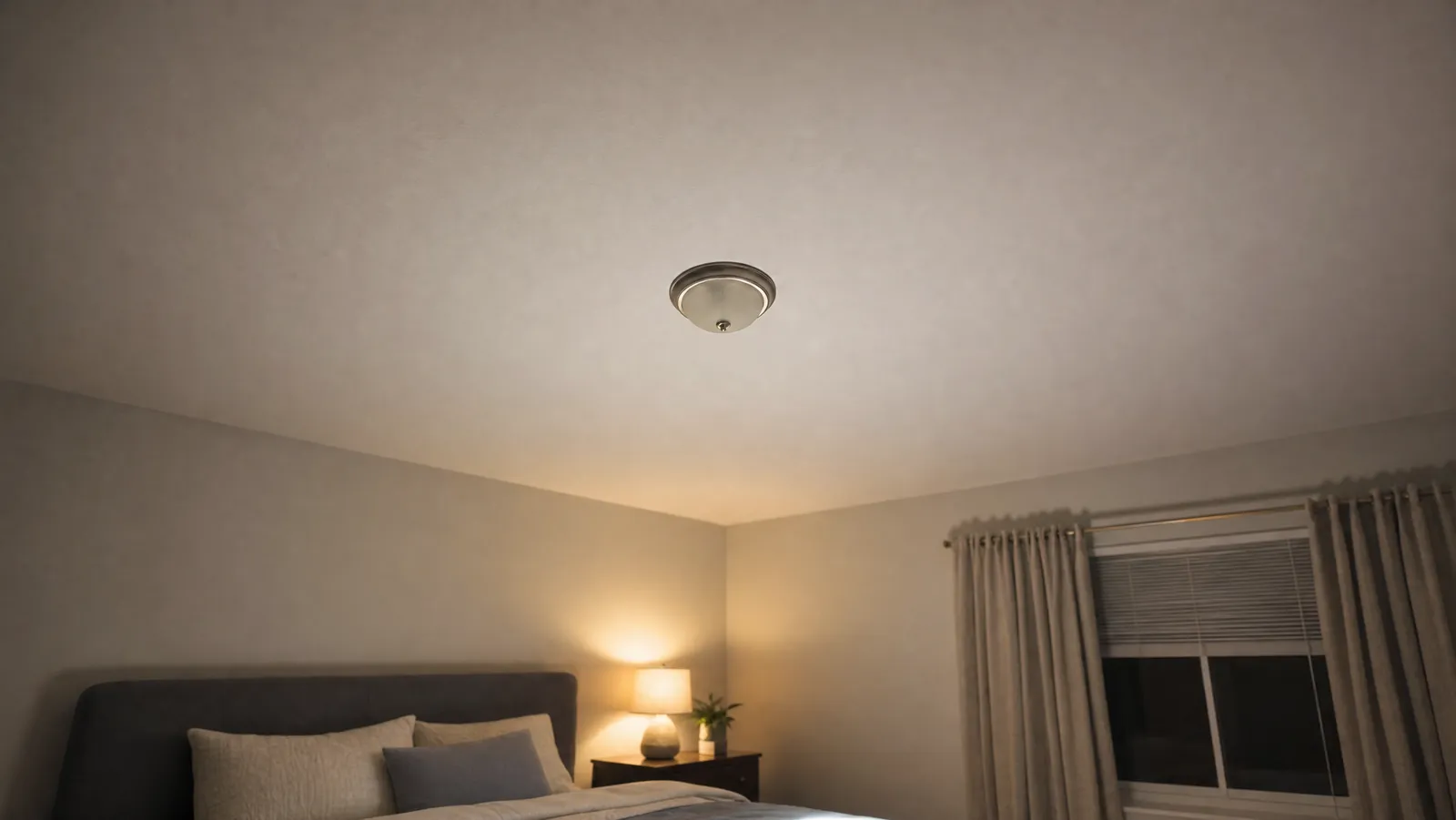
The honest answer to how to reduce noise from upstairs neighbors is uncomfortable, so we'll lead with it: the most effective fixes don't happen in your apartment. They happen on the floor above you. Footsteps, thumps and dropped objects are impact noise, and impact noise is generated inside the building's structure — a structure you are not allowed to modify.
That doesn't leave you helpless. It just means the plan is different from what the internet usually sells you. A renter's realistic options are to talk to the neighbor, get soft mass onto their floor if they'll allow it, mask whatever's left, and document it if it becomes a lease matter. Treating your own ceiling is expensive, disruptive, and mostly disappointing.
This guide walks the whole problem: why the physics are stacked against you, what the products actually do, what to say to the person upstairs, and how to build a paper trail if it comes to that. No hacks, no foam-on-the-ceiling fantasies.
Why Upstairs Noise Is a Different Problem
Every noise complaint in an apartment falls into one of two buckets, and the bucket determines what can fix it.
Airborne noise starts in the air — a TV, a voice, a barking dog. The sound waves hit a surface, vibrate it, and that surface radiates new sound into your room. Impact noise starts with physical contact — a heel, a dropped dumbbell, a chair leg. According to Acoustical Surfaces, airborne noise moves through the air while impact noise travels through solid structures, becoming structure-borne sound that moves through joists, studs and slabs before radiating back out as audible noise on your side. Designing Buildings describes impact sound the same way: a form of structure-borne sound generated when one object strikes another.
That distinction is the entire article in one sentence, and it's worth understanding in depth — we go deeper on impact noise versus airborne noise separately, because almost every wasted dollar in apartment soundproofing comes from treating one as if it were the other.
Two more things follow from it.
First, impact noise hits harder. According to Acoustiblok, impact noise is generally more intense than airborne noise and carries a deeper, low-frequency thud typical of footsteps and dropped objects. That's why a single footstep upstairs can startle you more than a neighbor's entire television.
Second, the two are measured on separate scales. Acoustical Surfaces notes that airborne noise is rated with STC (Sound Transmission Class) while impact noise is rated with IIC (Impact Insulation Class). A product advertising a great STC number tells you nothing about footsteps.
If your problem is actually a shared wall — a neighbor's TV, their music, their 11pm phone calls — you're in a different and considerably more winnable fight. Start with our guide to soundproofing apartment walls instead, because the tactics genuinely differ.
Why Your Upstairs Neighbors Sound So Loud
Here's the part that makes renters feel crazy: your upstairs neighbors are probably not doing anything unusual. The building is amplifying an ordinary person walking to the bathroom.
When someone's heel strikes the floor above, the energy goes straight into the floor assembly. The joists and subfloor carry that vibration outward, and your ceiling — a large, thin, lightweight panel — vibrates in sympathy and radiates the sound into your bedroom. Your ceiling is not a barrier in this scenario. Your ceiling is the speaker.
That's the core reason why upstairs neighbors are so loud even when they're being considerate. And building codes set a floor that is lower than most renters assume.
- According to Second Skin Audio, the national building code requires hard finished floors in multifamily housing to have an IIC of at least 50 — and at IIC 50, you or your downstairs neighbor would still likely hear a lot of noise through the floors.
- Second Skin Audio also puts numbers on the human side of that: IIC 50 and up means some people will complain but not many (roughly 95 percent satisfied), while IIC 55 and up is where very few people complain (roughly 99 percent satisfied). On that scale, a unit built to the bare code minimum is the one most likely to produce a complaint.
So an apartment can be fully code-compliant and still be genuinely, measurably loud. Add the last decade's renovation trend — pulling out carpet and putting down luxury vinyl plank or laminate because it photographs better and cleans easier — and a lot of units got dramatically worse at exactly the thing carpet was quietly doing for free.
And no, you're not being precious about it. According to the World Health Organization, night noise levels above 40 dB Lnight are associated with self-reported sleep disturbance, environmental insomnia, and increased use of sleeping pills and sedatives, which is why WHO recommends staying below 40 dB Lnight outside bedrooms. The WHO Night Noise Guidelines for Europe put the threshold for waking in the night or too early in the morning at 42 dB. Sleep loss from a noisy ceiling is a documented health effect, not a personality flaw.
What You Can Actually Do to Your Ceiling
Short version: less than you want, and it's the most expensive dollar-per-decibel in the entire apartment.
The techniques that genuinely stop impact noise are all construction. You add mass, you decouple the ceiling from the joists with resilient channel or isolation clips, you damp the cavity, and you seal everything airtight. Every one of those requires permission, drywall, and a contractor. Renters get none of them. We break down the full menu — including the handful of reversible ideas — in our guide to how to soundproof an apartment ceiling.
It's also worth knowing why even the legitimate heavy-material approach disappoints here. According to Aural Exchange, the mass law predicts transmission loss increases only about 6 dB for each doubling of surface mass. Doubling the weight of a ceiling — an enormous, invasive, landlord-approval-required project — buys you roughly 6 dB against airborne sound, and impact noise partly bypasses the barrier entirely by traveling through the structure. That's the trap with mass loaded vinyl stapled to a ceiling: real mass, real weight, real money, and it still isn't decoupled from the joists carrying the footstep. If you want the full explanation of the technique that does work and why renters can't have it, we covered green glue and decoupling.
What's actually worth doing in your own unit:
- Move your bed. The cheapest decibel you will ever buy. Sound from an impact radiates most strongly directly below the strike point. If the upstairs traffic pattern runs over your headboard, shifting the bed six feet can change your night more than $400 of materials.
- Soften your own room. Absorption doesn't block the transmission, but a hard, echoey room lets the thump ring and decay. Rugs, heavy curtains, upholstered furniture and a full bookshelf shorten that decay so each impact sounds shorter and less startling. This is real, it's just smaller than you'd like.
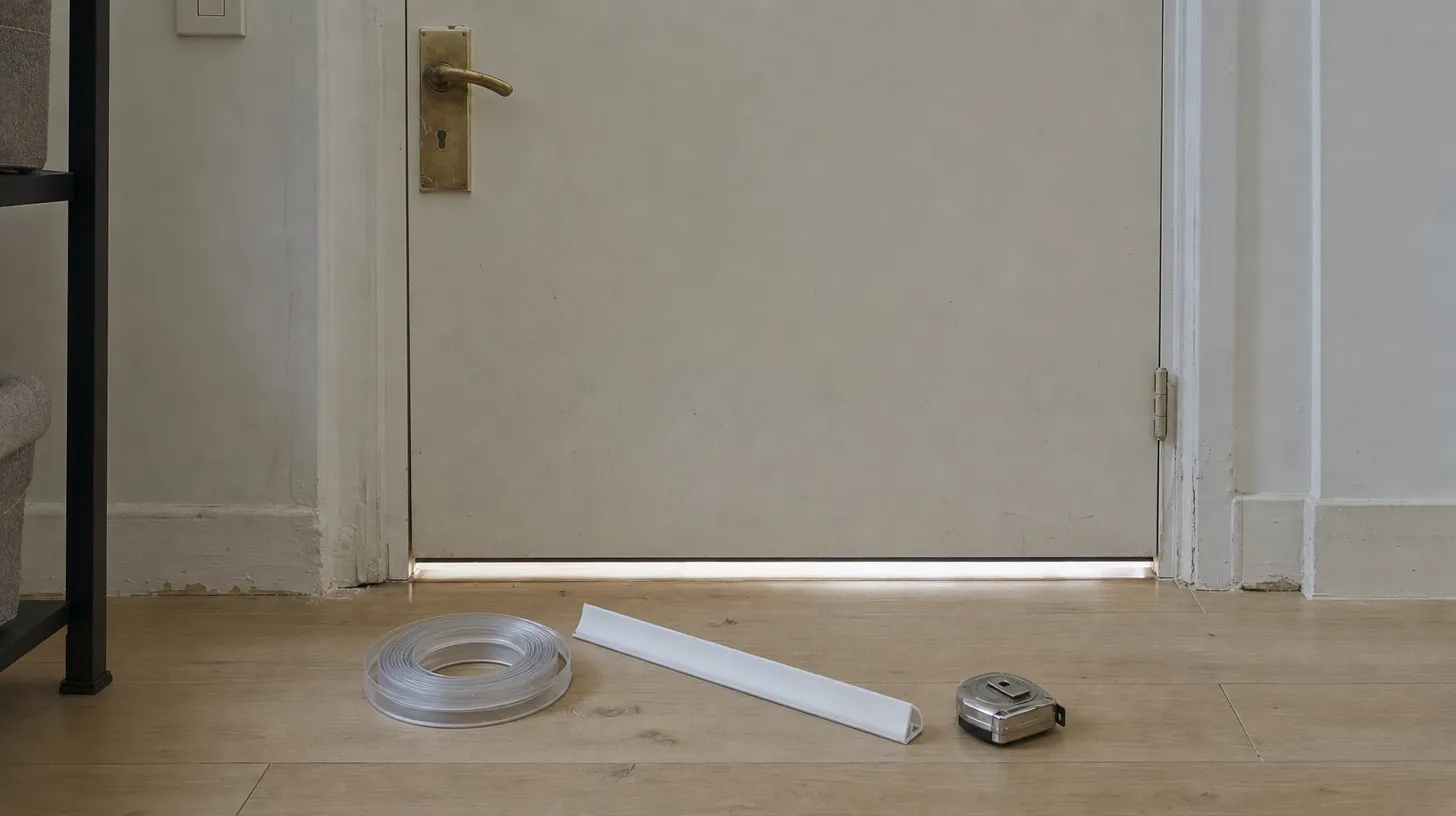
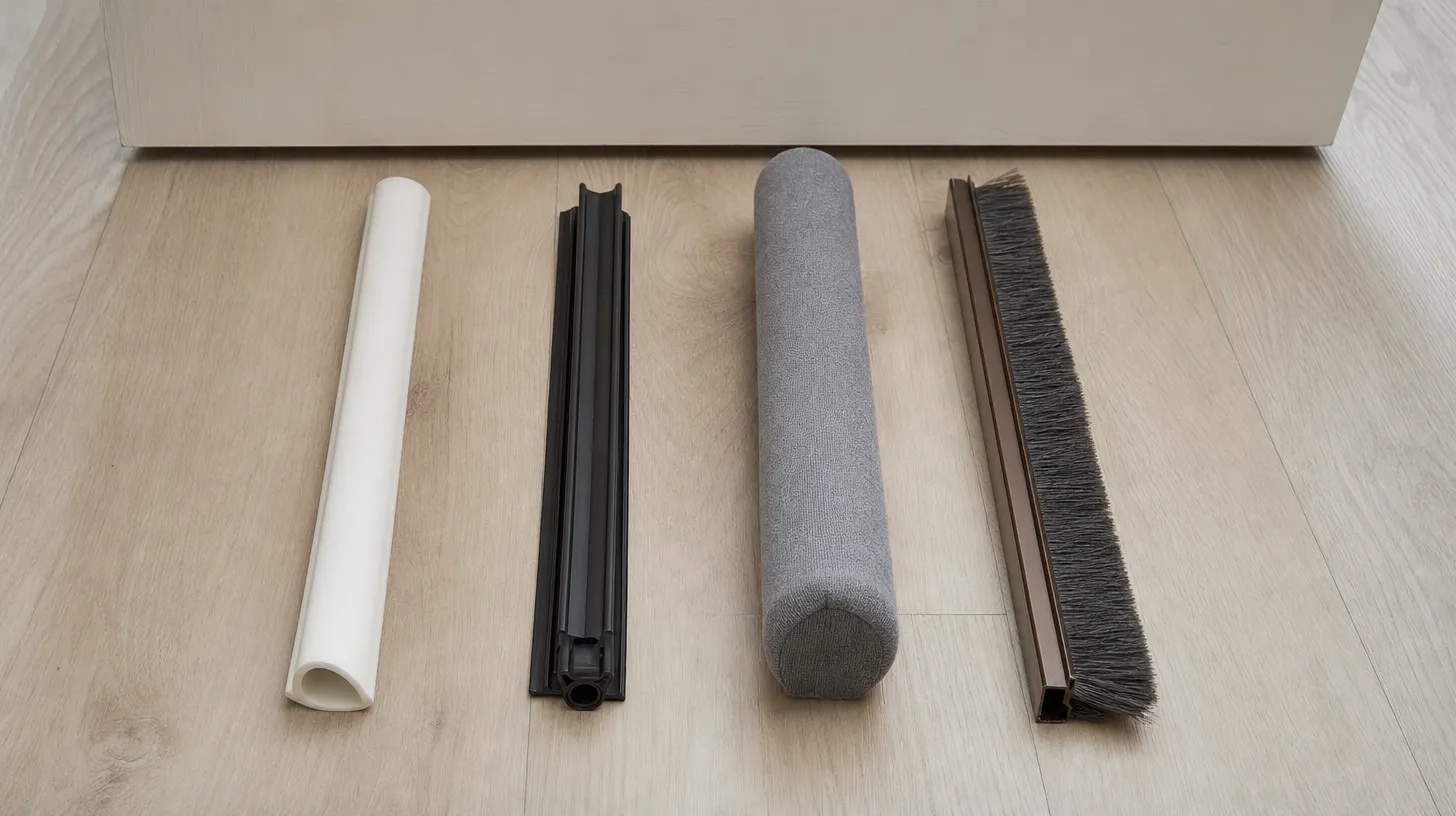
- Seal obvious airborne leaks. If you can hear conversation clearly, some of it may be airborne flanking through gaps around old light fixtures, vents or a shared stairwell door — the same door-sealing steps that work on a hallway door apply here. Sealing those helps with voices and TV. It does nothing for footsteps.
- Skip the ceiling-mounted vinyl-and-foam sandwich. It is heavy, it damages the ceiling, it risks your deposit, and it underperforms.
Why Ceiling Panels Don't Stop Footsteps
This is the single most common purchase renters regret, so we'll be blunt about it.
The question of whether do ceiling acoustic panels work has one accurate answer: they work at the job they were designed for, which is absorbing reflected sound inside your room. They do not stop noise coming through the ceiling. Gluing egg-crate foam to your ceiling will not quiet a footstep, and the physics behind that is not subtle.
According to Engineer Fix, porous materials like standard acoustic foam are ineffective against low-frequency noise because they absorb high-frequency airborne sound but cannot stop the structure-borne energy involved. A footstep is structure-borne and low-frequency. A porous absorber is the wrong tool at the wrong frequency in the wrong direction.
We wrote a whole honest post on this because it keeps costing people money — see does acoustic foam actually block sound for the full breakdown.
When ceiling absorption is still worth buying: if your own apartment is echoey and you want your space to sound calmer, or you're on video calls in a room with hard floors and bare walls, panels genuinely improve that — our roundup of the best acoustic panels for apartments covers which ones earn their price. Buy them for your room's acoustics. Don't buy them expecting your neighbor to disappear.
Talking to the Neighbor (and What to Ask For)
We know. This is the option everyone wants to skip. It is also, by a wide margin, the highest-return move available to a renter — because it's the only one that operates on the correct side of the floor.
The mistake most people make is leading with the complaint instead of the request. A neighbor who hears "you're too loud" gets defensive. A neighbor who hears "would you be open to a rug pad, I'll pay for it" usually says yes, because most of them genuinely have no idea. People upstairs cannot hear what they sound like downstairs. That's not a dodge, it's just how the assembly works.
A script that works better than most:
"Hey, I'm in 2B, right below you. This is going to sound strange, but the floors in this building carry sound really badly — I can hear normal footsteps like they're in my bedroom. It's not you doing anything wrong, it's the building. Would you be open to a couple of area rugs in the main walkway? I'm happy to buy the pads."
Concrete things worth asking for, in order of how much they buy you:
- An area rug with a thick pad in the main walking path and under the bed. Biggest single improvement, by far.
- Felt pads on every chair leg, especially at a dining table or desk. Chair drag is a distinct, brutal sound and this fix costs about five dollars.
- House slippers or socks after 10pm. Hard-soled shoes and bare heels are the loudest footfall there is.
- Moving the exercise equipment. A treadmill or a dropped kettlebell over your bedroom is a different category of problem, and often the fastest thing for them to relocate.
- Getting speakers and subwoofers off the floor. More on that below, because bass is its own animal.
Bring the ask in writing too — a short, friendly note with your phone number gives a neighbor who's shy or busy an easy way to respond. And if the conversation goes badly, or you never get to have it, our general playbook on genius ways to silence noisy neighbors covers the wider set of moves for how to deal with noisy upstairs neighbors when diplomacy stalls.
Rugs and Rug Pads: The Fix That Actually Works
Here's the one thing in this entire article with the physics on its side — and the catch is that it goes on their floor, not your ceiling.
Soft mass at the point of impact stops the energy before it ever enters the structure. The numbers are genuinely dramatic compared to everything else in this guide. According to Engineer Fix, a carpeted floor assembly with a quality pad can reach an IIC of 55 or greater without any additional underlayment, while a bare hard surface over a wood-framed floor lands only in the low-to-mid 40s. Industry figures put the swing between a soft finish and a hard one at roughly 15 to 25 IIC points — and on a concrete slab the gap is wider still, with bare hardwood measured as low as IIC 29 against IIC 65-75 for carpet. Nothing you can attach to your ceiling comes close to that.
A note on how those numbers get made, because the marketing is slippery. According to Commercial Acoustics, Delta IIC is measured under ASTM E2179 by testing a bare 6-inch concrete reference slab and then re-testing the same slab with the underlayment installed — so a Delta IIC figure describes the improvement over bare concrete, not the finished performance of your actual floor. Treat those numbers as comparative, not absolute.
So the practical question is: what do you ask your upstairs neighbor to put down, or what do you put down so you aren't the problem for the unit below you? A dense felt-and-rubber pad under a large area rug. Felt supplies the soft mass, rubber keeps it anchored to a hard floor without adhesive, and a quarter inch is the thickness that does real work while still fitting under a door.
If you're searching for the best rug pads for footstep noise, two are worth knowing:
- The RUGPADUSA Dual Surface felt and rubber pad is the one to hand someone if cost isn't the obstacle — heat-pressed quarter-inch recycled felt over natural rubber, with no glues, PVC or adhesives, rated safe for hardwood, laminate, stone, tile, concrete, bamboo and radiant heat. It runs about $89.95 (as of August 2026) in the 8' x 10' size.
- The Deep Dream felt and natural rubber pad is the same basic construction and thickness at about $59.55 (as of August 2026), and it's trimmable with scissors for odd-sized rugs.
Offer to pay. Sixty to ninety dollars is less than one month of ruined sleep is worth, and "I'll buy the pad" converts a confrontation into a favor. It is the best money in this article by a distance.
If you're the one on the top floor reading this in guilt: same advice, run the rug down your main walkway, and put felt under every chair.
Masking What's Left (The Best Thing You Actually Control)
Let's be precise about what a white noise machine does, because the category is marketed dishonestly: a white noise machine does not reduce noise at all. It masks it. The footstep still arrives at exactly the same volume. What changes is that it no longer stands out against a silent room, so your brain stops flagging it as an event worth waking up for.
That's not nothing. It is, realistically, the most reliable improvement a renter can make to their own sleep in an apartment with a loud ceiling — because it's the only intervention that works on the one variable you control, the noise floor of your own bedroom.
The research is real but appropriately hedged. According to a systematic review published in Sleep Medicine Reviews, white noise improved sleep in subjects who reported difficulty sleeping specifically because of high environmental noise levels — while the same review cautions that more research using objective sleep measures is needed before continuous noise is broadly promoted as a sleep aid, since it may also negatively affect sleep and hearing. Read that as: useful tool, not a health product, and don't run it at maximum all night.
Two machines worth considering, for different reasons:
- The Dreamegg Vibe 1, about $30.39 (as of August 2026), is a 10W unit with 29 non-looping tracks and a stated 46-87 dB volume range. That range is the spec that matters against a ceiling, because masking a thud requires enough level to compete with it. Dreamegg's own guidance is to place it 3-6 feet from your head, between you and the noise source, and that's the right instinct — the machine should sit between your pillow and the loud part of the ceiling, not across the room.
- The Yogasleep Dohm Uno, about $36.98 (as of August 2026), makes its sound with an actual fan rather than a recording, so there's no loop point to notice at 2 a.m., and it produces the sound without moving air through the room. One speed, an adjustable tone collar, hand-assembled in the USA.
We compared sound machines in more detail in this noise machine will help you fall asleep fast. And if masking alone doesn't get you across the line, good earplugs stack with it — see how to choose earplugs that block loud sounds.
The honest limit: masking works well on mid and high frequencies and much less well on a deep, structure-borne thud you partly feel. If the sound is shaking your bed frame, no speaker is going to cover it.
Ceiling Thumpers and Revenge Devices
You've seen the ads: telescoping poles, ceiling vibrators, "get back at your upstairs neighbor" gadgets. We are going to be very direct about ceiling thumpers and payback devices.
Don't. Three reasons, none of them moral posturing:
- They don't reduce your noise. They add noise. You now live in an apartment with footsteps and a device you're operating at midnight. The problem you actually have — sleep — gets worse.
- They put your lease at risk. Deliberately generating noise to disturb another tenant is the sort of thing that shows up in a lease's nuisance or quiet-enjoyment clause. The tenant with the documented complaint log is in a strong position. The tenant with the ceiling thumper is not, and in a dispute you want to be obviously the reasonable party.
- They end the negotiation. The moment a neighbor knows you're retaliating, every reasonable request you were going to make — rugs, felt pads, moving the treadmill — becomes impossible. You will have traded a fixable situation for a feud.
If you have already reached the revenge-shopping stage, that's a signal you're past what a product can solve. Skip to documentation, escalate through your landlord, and protect your own sleep with masking in the meantime.
Documenting the Noise
The moment a conversation with the neighbor fails, your job changes. You are no longer soundproofing; you are building a record. Landlords and property managers respond to specifics and ignore vibes, so the goal is to document and record neighbor noise in a form somebody else can evaluate.
Keep a noise log. One line per incident, in a single running document:
- Date and start time
- Duration
- What you heard, described factually ("repeated heavy footfall and what sounded like furniture dragging" — not "they were being obnoxious")
- Where you were and what it interrupted ("in bed, woke me")
- Any action you took (knocked, texted, emailed management)
Two weeks of consistent entries is far more persuasive than one furious email. Patterns are what get action — "every weeknight between 11:40pm and 1am" is a fact a manager can take to a tenant.
Add audio or video, carefully. A phone recording from inside your own apartment captures the character and timing of the sound. Recording inside your own home is generally fine; recording into someone else's unit or their conversations is a different legal matter that varies by state, and it's not worth the risk. Keep the recordings short, keep the timestamps, and note that phone mics under-represent low-frequency thumps — what you capture will usually sound less bad than reality.
Put it in writing to management. Email, not a phone call, so there's a timestamp. State the pattern, attach the log, reference the lease's quiet hours or quiet-enjoyment language if it has any, and ask for a specific remedy — most often that management ask the tenant to add rugs. Stay unemotional. The tenant who is calm and organized wins these.
Measuring It: Decibel Meters and Apps
Numbers change conversations. "It's really loud" is an opinion; "it peaks at 62 dB in my bedroom at 12:30am" is a data point that goes in a log. But be careful about how much weight you put on the reading.
According to NIOSH, an evaluation of 192 sound measurement apps for iOS and Android found only four met the accuracy criterion of within 2 dB(A) of a reference type 1 sound level meter — and NIOSH notes that using external, calibrated microphones greatly improves accuracy and removes much of the variability of built-in phone mics. NIOSH's guidance is that apps should complement, not replace, conventional sound level meters.
What that means for decibel meters for renters, practically:
- Use a well-regarded app — NIOSH developed its own iOS Sound Level Meter app, and a 2023 study in JMIR mHealth and uHealth found it measured noise accurately across a range of levels in both simulated and real-world settings, while some popular commercial apps consistently underestimated levels.
- Measure consistently. Same spot, same phone, same app, mic unobstructed. Relative change over time is more trustworthy than any single absolute number.
- Log peaks and the time, not averages. A footstep is an impulse. A 30-second average will flatten the exact thing that woke you.
- Know your reference points. The WHO's community noise guidance recommends below 30 dB(A) in bedrooms for good quality sleep, with adverse effects appearing above 40 dB Lnight. If your bedroom is reading well above that at midnight, you have a concrete, citable comparison for your landlord.
- Don't oversell the number. Present it as "my phone measured roughly X," never as a certified measurement. If the dispute becomes formal, a professional measurement is a different instrument entirely.
If you want to sanity-check what any of these numbers mean before you cite them, we built a set of free soundproofing calculators for mass law, reverberation and perceived loudness.
When It's Bass, Not Footsteps
Sometimes the complaint isn't footsteps at all. It's a subwoofer, a bass-heavy TV setup, or a floor-standing speaker — and if that's your situation, everything above gets harder, because low frequency is the toughest thing in acoustics to stop.
According to Engineer Fix, a 30 Hz bass note has a wavelength of roughly 37 feet in air, and waves that long carry significant energy and don't reflect off typical room-sized surfaces — they wrap around or push through barriers instead. Worse, low-frequency energy excites the resonant frequency of lightweight building materials, so an entire wall or floor assembly vibrates in sympathy like a drumhead and re-radiates the noise into your apartment as a secondary source.
Combine that with the mass law's 6 dB per doubling of mass and you get the honest picture: low-frequency noise from upstairs is essentially unfixable from your side. No curtain, panel, rug or machine you own will meaningfully reduce it. Absorption does nothing at those frequencies, and masking struggles because you're partly feeling the sound rather than hearing it.
Which makes the neighbor conversation the only real lever — and fortunately the asks are cheap and specific:
- Get the subwoofer off the floor. A sub sitting on a hard floor couples directly into the structure. On an isolation stand, a dense foam pad, or even a folded thick rug, far less energy transfers into the joists.
- Move speakers off shared surfaces. Floor-standing speakers and anything touching a shared wall are transmitting mechanically, not just acoustically.
- Ask for a time boundary rather than a volume one. "Could the sub be off after 11?" is a request people say yes to. "Turn it down" is one they argue with.
- Turn the sub level down, keep the mains up. Most people don't realize that a few dB off the subwoofer channel changes almost nothing about their experience and changes everything about yours.
If none of that lands, this is squarely a documentation-and-management problem. Log it, measure it, escalate it — and use masking to protect your sleep while the process grinds.
The Honest Plan, in Order
If you take one thing from this guide, take the sequence — because doing these in the wrong order is how renters end up with a ceiling full of foam and the same problem.
- Diagnose the sound. Footsteps and thumps are impact noise. Voices and TV are airborne. They need different responses.
- Move your bed out of the main traffic path above. Free, immediate, occasionally decisive.
- Talk to the neighbor and lead with a specific, cheap ask you'll pay for.
- Get a rug and a thick pad onto their floor. This is the only intervention with a 15-to-25-point IIC swing behind it.
- Mask what's left in your own bedroom, and be clear-eyed that masking covers noise rather than reducing it.
- Document everything the moment diplomacy fails, with dates, durations and measurements.
- Escalate in writing to management, calmly and with a pattern.
- Skip the ceiling project. Save the money. It won't do what the product page implies.
None of this is as satisfying as a product that makes the noise stop. But the renters who get relief are almost always the ones who worked on the floor above them and their own noise floor — not the ones who bought the most stuff.
Explore the full series
- Impact Noise vs Airborne Noise: Why Your Ceiling Is a Different Problem — The one distinction that explains every disappointing soundproofing purchase.
- How to Soundproof an Apartment Ceiling (Without Touching the Drywall) — What would actually work, why your lease says no, and the reversible moves worth your time.
- Why Are Upstairs Neighbors So Loud? The Building Reasons — The building reasons your neighbor sounds like they are stomping when they are just walking.
- Do Ceiling Acoustic Panels Stop Upstairs Noise? The Honest Answer — Why panels on your ceiling will not stop footsteps, and the narrow case where they still help.
- How to Deal With Noisy Upstairs Neighbors (Without Making It Worse) — The escalation ladder that works, starting with the one ask that gets a yes.
- The Best Rug Pads for Reducing Footstep Noise — The one upstairs-noise fix that genuinely works, and how to get it onto the floor above you.
- Ceiling Thumpers and Payback Devices: Why They Backfire — Why retaliating costs you the negotiation, the record, and your own sleep.
- How to Document and Record Neighbor Noise That Counts — The log, the recording rules and the email that make a property manager act.
- The Best Decibel Meters and Noise Apps for Renters — Which meter is worth buying, why C-weighting matters, and how to take a reading that counts.
- When It's Bass, Not Footsteps: Low-Frequency Noise From Upstairs — The hardest case in apartment acoustics, and the one cheap ask upstairs that actually helps.

A quarter-inch of heat-pressed felt over a natural rubber backing that grips hard floors without glue or adhesive. On the floor above you, a thick pad under a big rug is the single most effective thing anyone can add short of wall-to-wall carpet.
Ask your upstairs neighbor for exactly this under their area rug, or put one under yours so you are never the problem for the unit below. Made in the USA from recycled felt, low-VOC, and safe on hardwood, laminate, tile, stone and radiant heat.
*Price shown on Amazon and subject to change.

The same felt-plus-natural-rubber recipe at the same quarter-inch thickness, for about thirty dollars less. It is trimmable with scissors, which matters when the rug someone already owns is an odd size.
If money is the reason your neighbor says no, this is the version to offer to buy for them. Same basic construction, much lower barrier to a yes.
*Price shown on Amazon and subject to change.

A 10W machine with 29 non-looping tracks and a 46-87 dB volume range, which is the spec that actually matters when you are trying to cover footsteps. Understand what it does. It does not reduce the noise, it covers it.
Dreamegg suggests placing it 3-6 feet from your head, between you and the noise source, and that placement guidance is worth following. Judge it on the volume range and the non-looping audio, not on the marketing copy.
*Price shown on Amazon and subject to change.

Fan-based white noise instead of a recording, so there is no loop point for your brain to latch onto at 2 a.m. It makes the sound mechanically without pushing air through the room.
One speed, an adjustable tone collar, hand-assembled in the USA, and nothing to charge or update. If looping audio is what keeps waking you up, this is worth the few extra dollars.
*Price shown on Amazon and subject to change.
| Pick | Product | Link | |
|---|---|---|---|
| The Fix That Actually Works (On the Floor Above) | RUGPADUSA — RUGPADUSA Dual Surface Felt + Rubber Rug Pad (8' x 10', 1/4" thick) | $89.95 | Check → |
| The Cheaper Rug Pad | Deep Dream — Deep Dream Felt + Natural Rubber Rug Pad (8' x 10', 1/4" thick) | $59.55 | Check → |
| Best Masking for a Loud Ceiling | Dreamegg — Dreamegg Vibe 1 White Noise Machine (10W, 29 sounds) | $30.39 | Check → |
| The Mechanical Alternative | Yogasleep — Yogasleep Dohm Uno White Noise Sound Machine (real fan) | $36.98 | Check → |

Lillie Metayer
Lillie Metayer is the founder of a local program that helps apartment-dwellers take action against noise pollution. Involved in environmental activism since high school, Lillie is passionate about raising awareness of the harms of noise exposure and helping people reduce noise in their communities. In her free time, Lillie enjoys playing the violin and spending time outdoors.