Here is how to block traffic noise in a bedroom, in the order that actually works: seal the air gaps around the window, lock the sash so the two halves clamp shut, add a removable layer of mass over the glass at night, hang heavy floor-length curtains, move the bed off the exterior wall, and add masking sound last. Sealing costs the least and returns the most.
Now the reframe that explains that order. Sleep does not respond to averages. It responds to events. A single bus at 3 a.m. can wake you in a room whose average night-time level is entirely reasonable. Griefahn and Basner, in a review paper for the Proceedings of ACOUSTICS 2011, state that "the probability of being woken up is significantly related to the maximum level of the intruding noises." Almost every traffic noise article on the internet optimises the average. This one optimises the peaks, and that changes what you do first. If you want the window-by-window version, we have a longer guide to how to quiet apartment windows. This article is about the room.
The two numbers that define your target
Traffic noise arguments quote two different figures, and they measure different things. Conflating them is the standard mistake.
Outdoors, at the building. The European Environment Agency, summarising the World Health Organization's 2018 environmental noise guidelines, says that "noise exposure from road traffic should not exceed 53dB during the day-evening-night period and 45dB during the night." The WHO Regional Office for Europe separately notes that its night noise guidelines recommend "less than 40 dB(A) of annual average (Lnight) outside of bedrooms." Those are outdoor exposure targets, measured at the facade, aimed at city planners. As a renter you have precisely zero control over them.
Indoors, in your bedroom. This is the number you can actually move. The World Health Organization's guidelines for community noise give, for dwellings, "30 dB LAeq for steady-state continuous noise and for a noise event 45 dB LAmax" inside bedrooms.
Read that second pair again, because it is the whole article in miniature. There is one limit for the hum and a separate, stricter allowance for the bang. WHO writes the bedroom target as two numbers because sleep experiences noise as two things. A road that idles along at 30 dB in your room and spikes to 60 dB eleven times a night is failing the second number badly while passing the first comfortably. Your body is grading you on both.
Why a bedroom is a special case
Every other room in the flat can be treated as an averaging problem. You raise the TV, you move to the other side of the sofa, you stop noticing. A bedroom cannot, for one uncomfortable reason.
According to Griefahn and Basner, the autonomic arousals triggered by noise during sleep — the transient jumps in heart rate, breathing and blood pressure — "do not habituate as demonstrated by numerous studies; they increase during the course of single nights and are evoked even in longterm residents living in the vicinity of noise emitting facilities (airports, railway tracks, roads)." The same paper describes what happens when an event actually wakes you: heart rate shows "a long lasting increase over at least 30 s by on average 30 bpm," and the baseline is not regained within a minute.
You may stop consciously noticing the road. That is not the same as your sleep stopping noticing it. We are not going to make health promises here, and neither should anyone else selling you curtains, but the practical conclusion is narrow and useful: you cannot wait out a peak problem, so you have to physically reduce the peaks or bury them.
One more finding matters for choosing tactics. Griefahn and Basner list "the duration of the previous noise-free interval (the longer the interval, the more likely is an awakening)" among the influences on awakening probability. That is why a quiet residential street with occasional heavy vehicles can be worse for sleep than a constant arterial road at a higher average level. Isolation makes an event louder in the only sense that counts.
Find where the sound actually gets in
Before you buy anything, find the path. In a rental bedroom facing a busy road, they rank in this order almost every time.
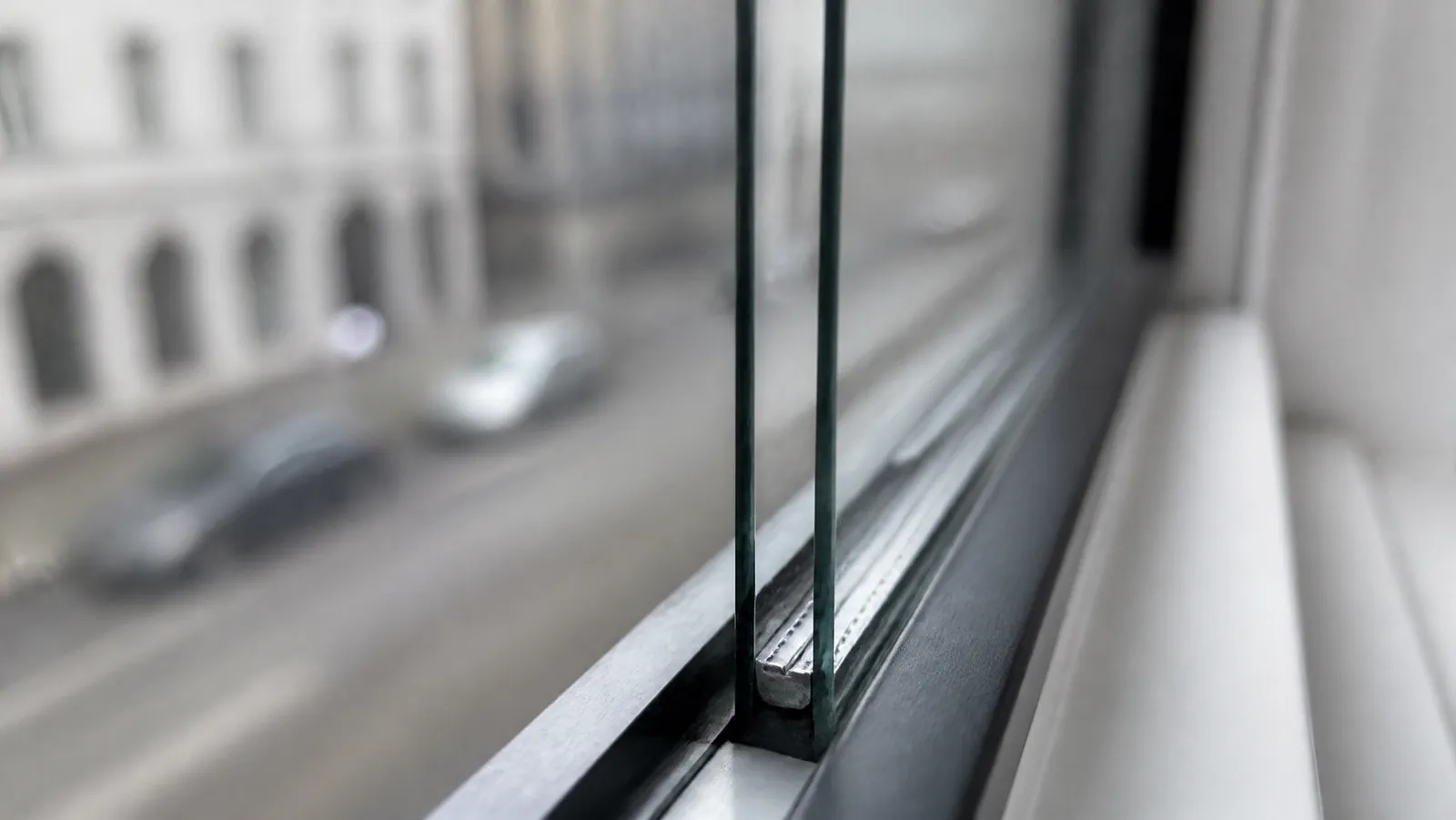
- The window, and specifically the gaps rather than the glass. Air paths are ruthless. Second Skin Audio publishes a table showing that a 5% opening "will change a wall from stopping 40 dB to only stopping 13 dB," with 1% open area capping the assembly at 20 dB and 0.1% at 30 dB. A sash that does not close tight, a worn meeting rail, a shrunken perimeter bead — that is your 1%.
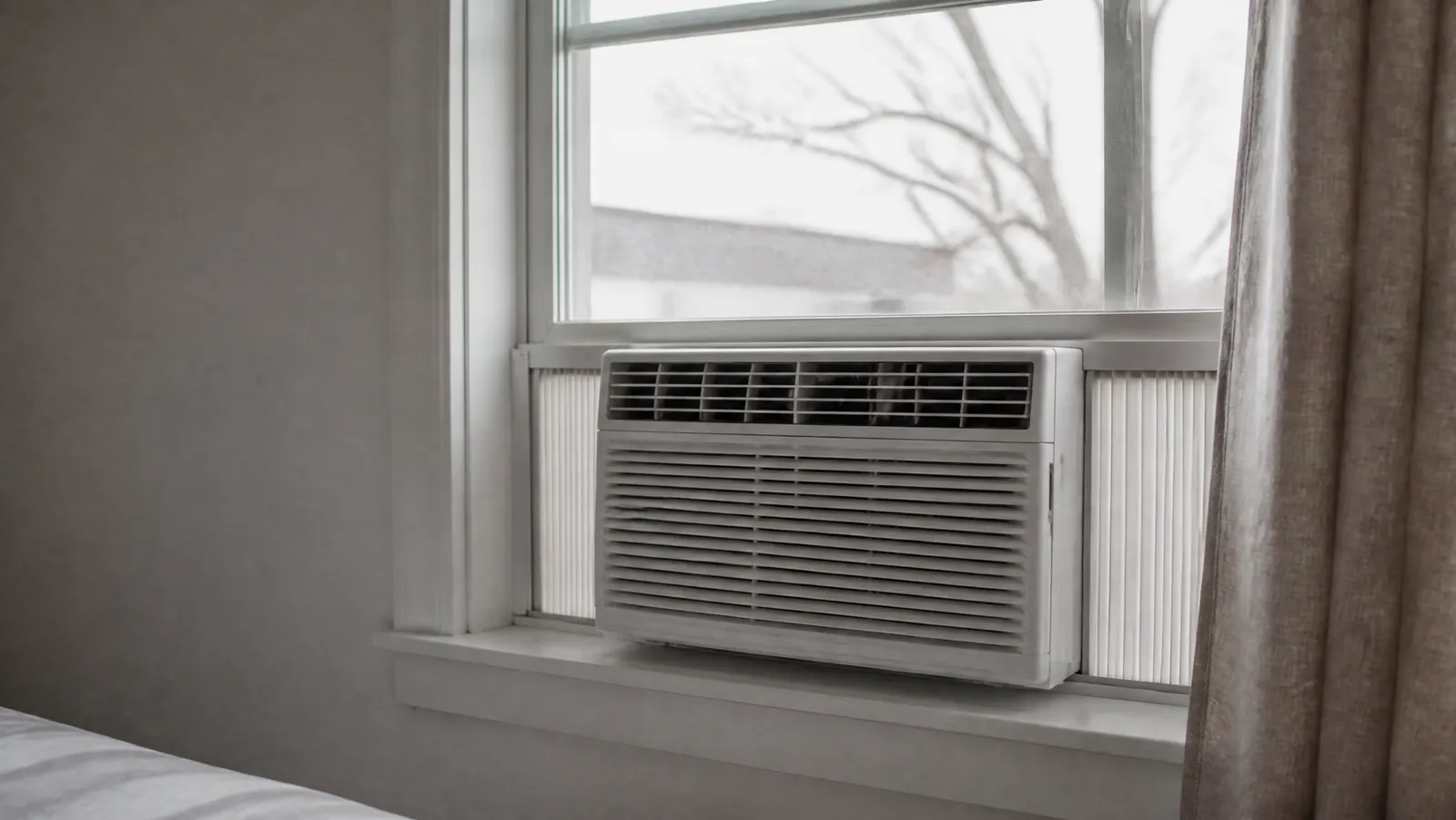
- A window air conditioner. If you have one, it is almost certainly the loudest path in the room, because it is a hole in the wall with a machine in it and a foam accordion panel on each side. Sealing around a window air conditioner is a whole project of its own, and worth doing before anything else on this list.
- The frame-to-wall joint. Run a hand around the casing on a windy night. Cold air means sound.
- Vents and trickle vents. Small, direct, and often forgotten. Never block one that your bedroom needs for ventilation.
A quick field test costs nothing. Stand at the window during a lull, then have someone open and close the sash while traffic passes. If the difference between open and closed is dramatic, your glass is doing its job and the gaps are the problem. If it is barely there, the leaks are winning.
How to block traffic noise in a bedroom, step by step
Each step sits where it does for a reason. The cheapest ways to reduce road noise in a bedroom are also the first three, which is not a coincidence. Do them in order and stop when the room is good enough.
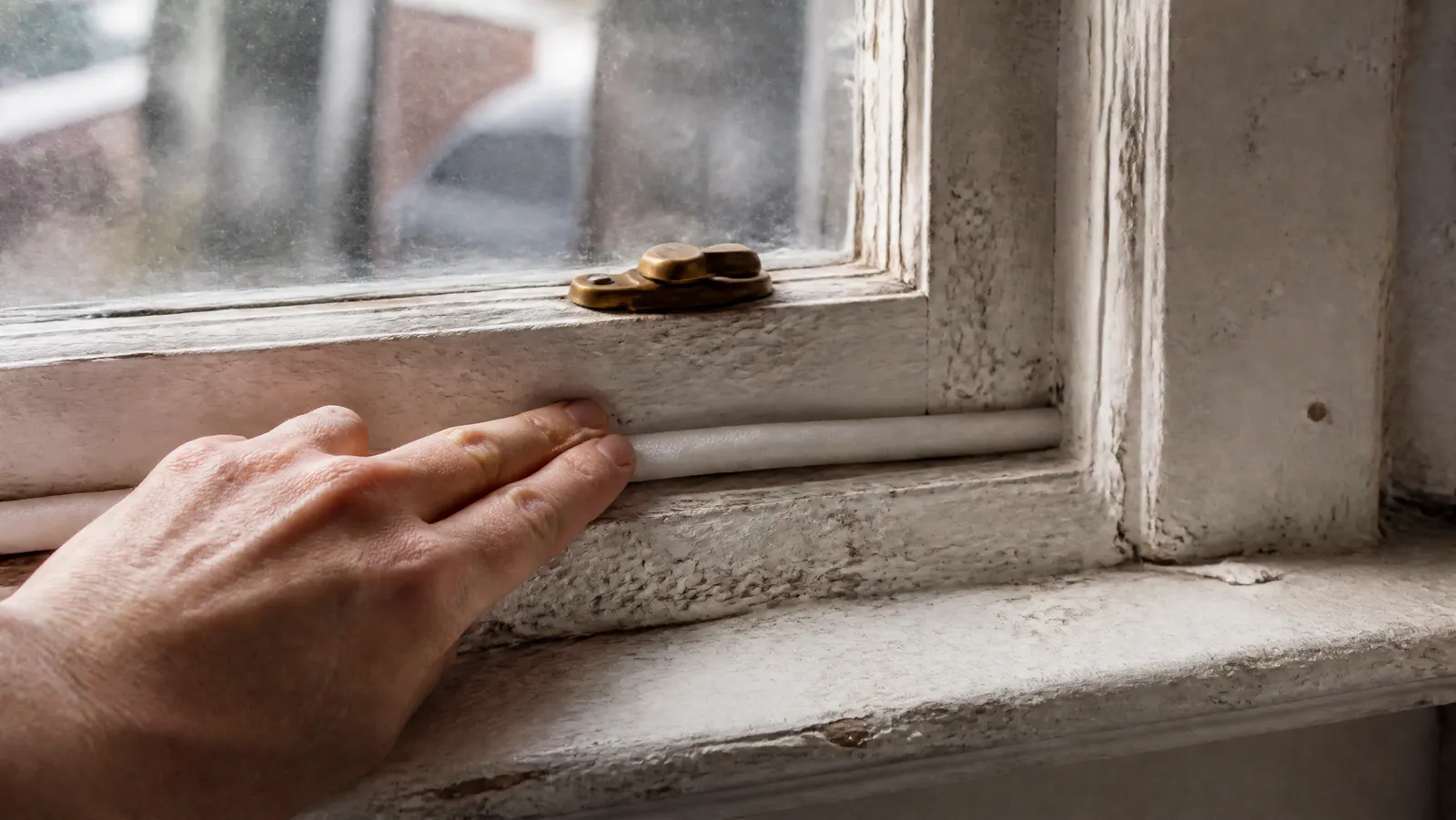
- Seal the gaps first. Cheapest, fastest, highest return per dollar, and completely removable. Foam tape on the sash stops, rope caulk in the perimeter, a draught seal at the meeting rail. This is where the open-area maths above pays you back, and it is the one step that makes every later step work better, since mass over a leaky opening is wasted mass. Our guide to weatherstripping to block street noise covers which type goes where. Never seal a window you need for ventilation or for egress, and if your bedroom window is your fire escape route, leave it operable and sealed only by its own closed sash.
- Lock the sash. Free, and most people skip it. On a double-hung window the latch is not a security device, it is a clamp: turning it pulls the two sashes together and closes the gap at the meeting rail. On a casement, the multi-point handle does the same against the seal. A latched window is a different acoustic object from an unlatched one.
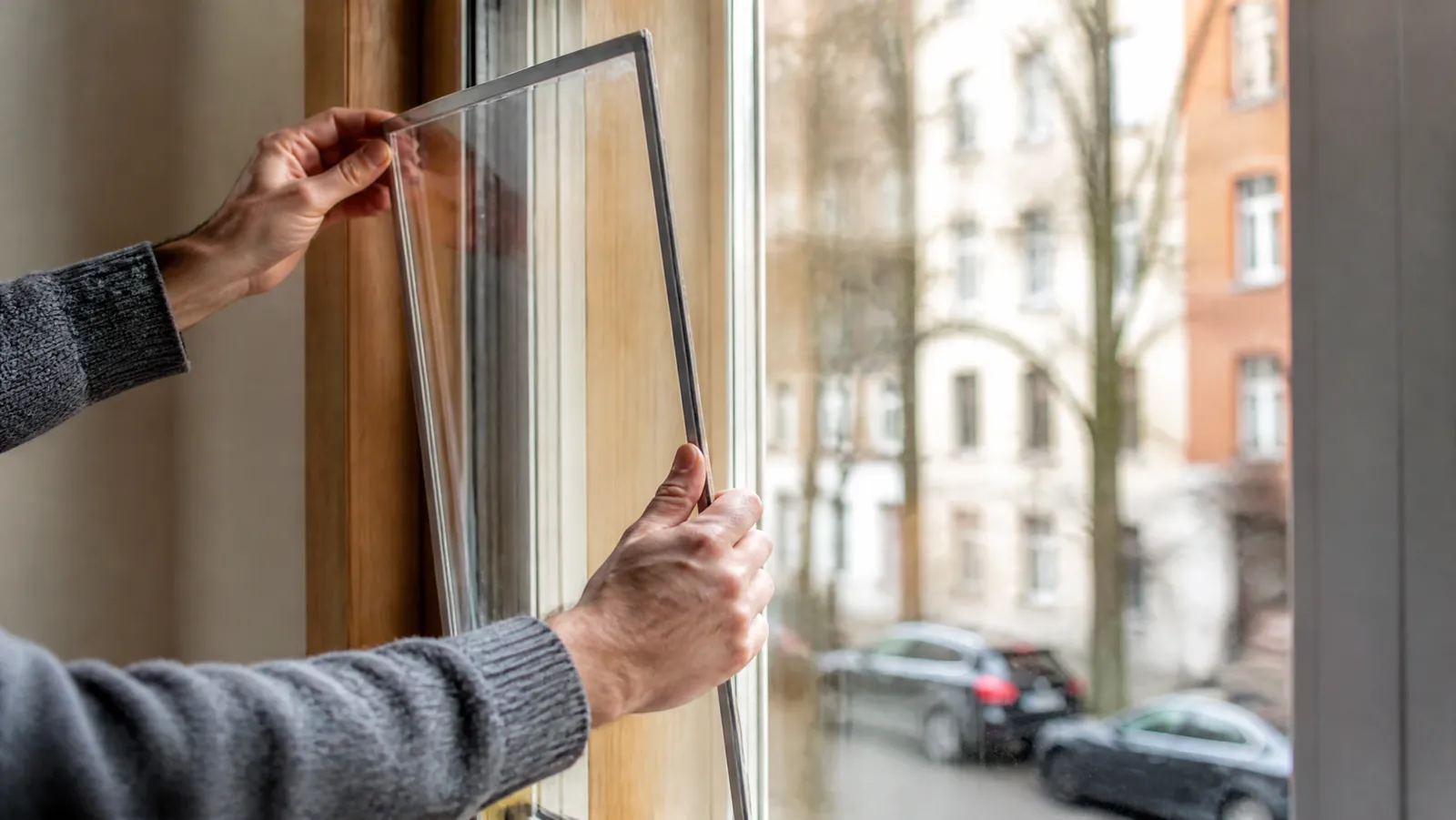
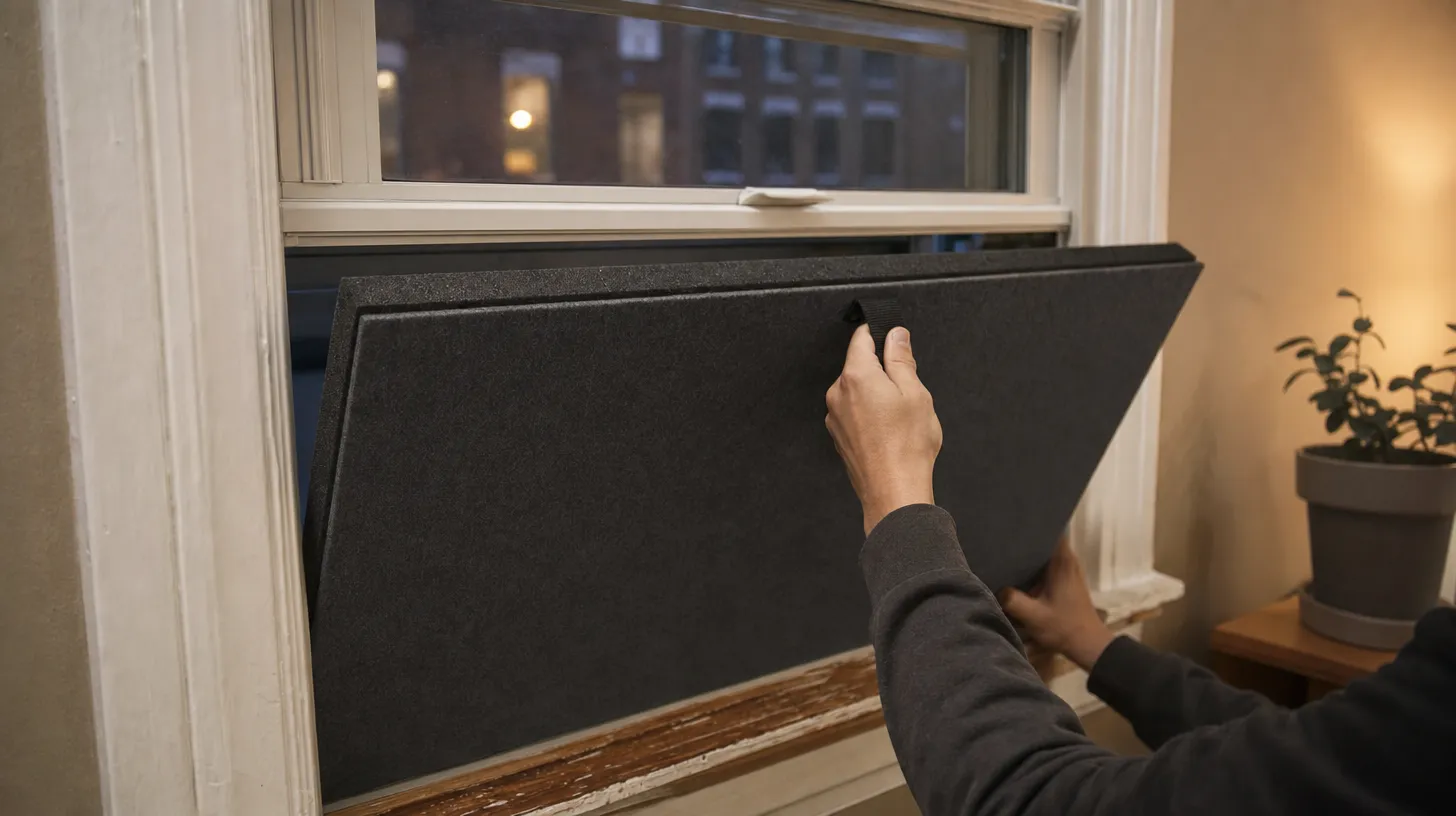
- Add mass at night. With the leaks closed, the next gain is a second layer over the glass, ideally with an air gap behind it. A removable acrylic insert, a purpose-made window plug, a heavy shutter. The physics is unglamorous: the Acoustical Society of America's standards terminology database defines mass-law sound transmission loss as the phenomenon whereby "doubling the mass per unit area of a panel, or doubling the frequency for a given mass per unit area, increases the sound transmission loss by six decibels." Six decibels for double the weight is a poor exchange rate, which is exactly why you seal first. We looked at the honest performance ceiling on this in do soundproof window inserts work. In a bedroom you get a bonus most rooms do not: the layer only has to be in place while you sleep, so it can be ugly and it can come down at breakfast.
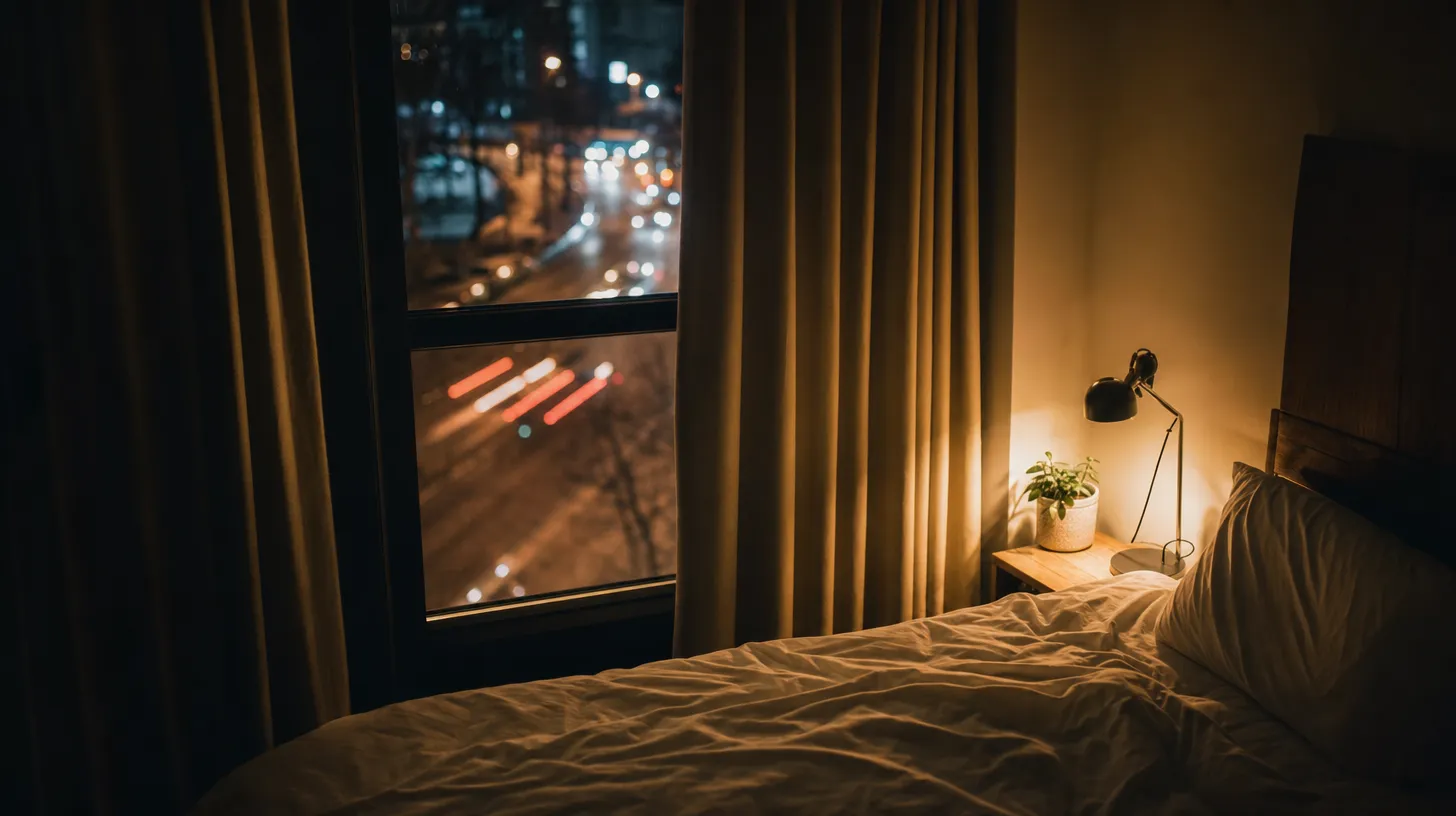
- Hang heavy curtains, hung wrong on purpose. Wider than the frame, longer than the sill, and closing flat against the wall rather than sitting inside the reveal. Curtains work mostly by absorbing, not by blocking, so treat them as the fifth-best thing you can do rather than the first — we set out that distinction in soundproof curtains vs window inserts, and covered the fabric weights in heavy curtains. What they do well in a bedroom is take the edge off the sharp, bright content of a passing engine, which is disproportionately the part that wakes you.
- Move the bed off the exterior wall. Free, and it changes your personal peak levels more than a $60 curtain does. Get your head away from the window wall, put the headboard against an interior partition, and put mass between you and the street: a wardrobe, a full bookcase, a chest of drawers. The furniture is not soundproofing the wall, it is standing in the path, which for one sleeper in one position is enough. More on that logic in soundproofing apartment walls.
- Add masking sound last. A fan, an air purifier, or a white noise machine. Last, because it reduces nothing. Still worth doing, for the reason below.
Why masking goes last and why it still works
A white noise machine blocks zero decibels. It adds them. Every honest source will tell you the same thing, and it sounds like a reason not to bother. It is not.
The best evidence we have found for what masking actually does comes from a 2005 study by Stanchina and colleagues in the journal Sleep Medicine, which played recorded intensive care unit noise to sleeping volunteers. Compared with a baseline night at 13.3 arousals per hour, the arousal index rose to 48.4 during the noise night, but only 15.7 on the night when mixed-frequency white noise was added to the same recorded noise. The mechanism is the interesting part: the researchers found that the change in sound from baseline to peak, rather than the peak sound level, determined whether an arousal occurred, and that change was effectively identical in both conditions (17.7 dB versus 17.5 dB).
That is the peaks-not-averages insight stated as a laboratory result. Masking does not make the bus quieter. It makes the bus less of an event. For traffic noise, which is peak-driven by nature, that is often the difference between waking and turning over. It goes last only because every step above it lowers the peak you are trying to bury, and a smaller peak needs less masking noise to hide it. Do it first and you end up running a machine at an unnecessarily high level for the rest of your tenancy.
Bedroom-only moves that cost nothing
- Headboard against an interior wall, always, if the room's layout allows any choice at all.
- A full wardrobe on the street-facing wall. Loaded with clothes it is a genuinely heavy, absorptive object, and it is already in your flat.
- Soft furnishings for the room's own reverberation. A rug, a fabric headboard and a full laundry basket will not reduce a single decibel arriving from outside, but they shorten the room's decay time, which makes each pass-by finish sooner rather than ring around bare plaster.
- Sleep with the door shut. Free. It stops the bedroom borrowing peaks from a street-facing living room.
What does not work, honestly
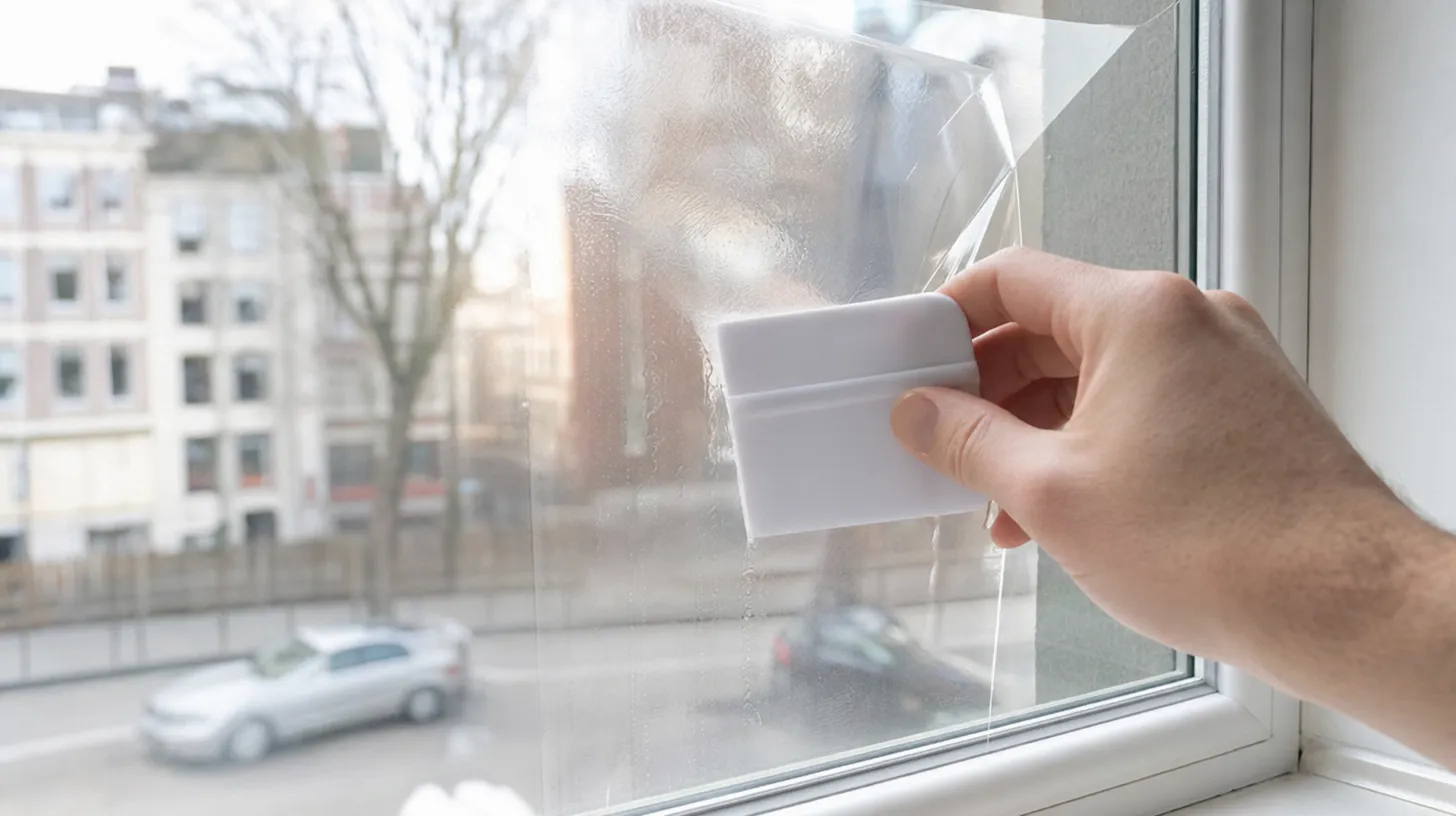
- Thin adhesive window film sold as sound deadening. A few thousandths of an inch of plastic adds a negligible amount of mass to a pane. Film that comes with a sealed perimeter can help a little, but the help is the seal, not the film.
- Foam panels on the wall. These are the most common wasted purchase in this whole category. Second Skin Audio makes the distinction cleanly: NRC ratings measure "how effective a material is when it comes to absorbing sound energy," while STC measures "how effective a material or structure is at preventing sound from passing through it." The same source notes that while such materials "can reduce the noise level a bit, they aren't really designed to keep sound out."
- Anything labelled soundproof that is really an absorber. If the product's own spec sheet quotes an NRC and no transmission figure, it is a room-tone product. It may still be worth owning. It will not do anything to the road.
What to expect, and when to accept partial success
Be realistic about the ceiling. A renter who cannot drill, cannot replace glass and cannot re-frame an opening is not going to reach the WHO bedroom figures on a busy street, and anyone promising otherwise is selling something. What you can reasonably aim for is fewer events that cross your personal waking threshold — which, given that WHO writes the bedroom guidance as a separate LAmax allowance for individual events, is the right target anyway.
Our advice is to spend the first $20 and a free afternoon on steps 1, 2 and 5, sleep on it for a week, and only then decide whether the room needs an insert. Most street-facing bedrooms we would treat get most of their improvement from sealing, latching and moving the bed. If you decide the glass itself is the remaining problem, our full guide to how to soundproof apartment windows is the next thing to read.
And if the answer at the end of all that is still that one truck at 3 a.m. gets through — turn on the fan. Burying the peak is not defeat. On a peak-driven problem, it is the last honest tool in the box.

Lillie Metayer
Lillie Metayer is the founder of a local program that helps apartment-dwellers take action against noise pollution. Involved in environmental activism since high school, Lillie is passionate about raising awareness of the harms of noise exposure and helping people reduce noise in their communities. In her free time, Lillie enjoys playing the violin and spending time outdoors.