If you are trying to work out how to soundproof apartment windows, here is the whole answer in one sentence: seal the gaps first, add mass second, and expect a real improvement rather than silence. The window is almost always the weakest acoustic element in an apartment, and the good news is that the cheapest fixes are also the ones that pay off most.
We are going to be blunt about the ceiling on this, because the internet is not. A renter cannot replace glass, cannot re-frame an opening, and cannot drill a landlord's window. What a renter can do is close the leaks, hang or fit a second layer of mass with an air gap behind it, and stop the sash rattling. Done properly, that stack is worth more than most people expect. Done in the wrong order, you will spend $200 and hear no difference.
Two ideas keep everything straight. Blocking means stopping sound from getting into your apartment: that takes mass, an airtight seal, and ideally a separated second layer. Absorbing means soaking up echo once sound is already inside your room, which makes a space sound calmer but does nothing to the street. Curtains, panels and foam mostly absorb. Inserts, seals and plugs mostly block. Confusing the two is the single most expensive mistake renters make at a window.
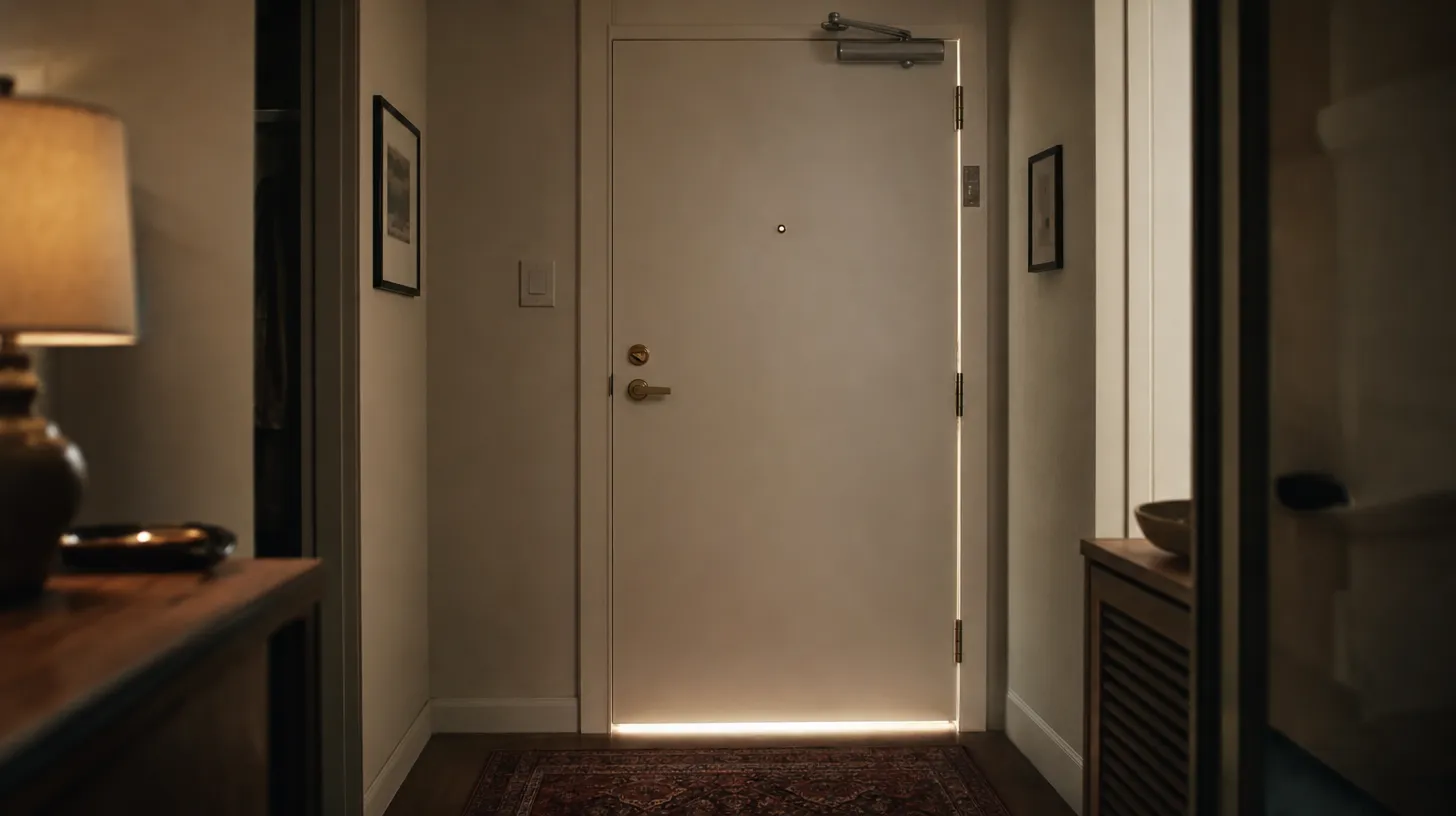
Gaps beat glass, every time. According to BuildCorp Direct, a gap as small as 1% of a wall surface can allow up to 50% of sound to pass through. A typical apartment window has far more than 1% of its area open to the outside once you count the sash meeting rail, the sides of a double-hung, the weep holes and the perimeter caulk. That is why a $7 roll of foam tape sometimes outperforms a $60 curtain.
Know which number you are reading. Commercial Acoustics explains that STC, or Sound Transmission Class, "quantifies how well a partition blocks mid-frequency airborne noise" across 125 to 4,000 Hz and is best for speech, TV and indoor activity, while OITC, or Outdoor-Indoor Transmission Class, runs from 80 to 4,000 Hz — "a full octave lower" — and is the right rating for traffic, trains, aircraft and mechanical noise. The same source notes that OITC is always lower than STC on the same assembly, and gives an example window that tested at STC 35 and OITC 26. If your problem is a bus route, OITC is your number, and the marketing on the box almost never shows it.
Here is the order of operations we would follow, ranked by payoff per dollar:
- Seal every gap around the sash and frame. Cheapest, fastest, most reliable gain.
- Stop rattle and movement — sash locks, shims, tightened stops.
- Add a removable second layer with an air gap: an insert or a DIY plug.
- Add mass and absorption at the opening — heavy curtains, blinds, furniture placement.
- Fix the mechanical hole — the window air conditioner, if you have one.
If you want to sanity-check any of this before you buy, our roundup of free soundproofing calculators is a good place to test your assumptions against real numbers.
Do window inserts actually work?
Yes — of everything a renter can do at a window, this is the one with the strongest lab evidence behind it. When people ask do soundproof window inserts work, they are usually picturing a magic pane that deletes the street. What an insert really does is add a second sheet of acrylic in front of the existing glass with a sealed air gap between them, which is the same principle as double glazing but with a bigger, better-behaved cavity.
The numbers are surprisingly good. Bob Vila, reporting two separate lab studies of Indow's inserts, cites the Green Building Research Laboratory at Portland State University finding that Acoustic Grade inserts placed over single-pane windows "reduce noise by 18.9 dBAs," and Standard Grade inserts over single-pane windows reduce noise by "10 to 12 dBAs." The same article cites the British Columbia Institute of Technology finding that Acoustic Grade inserts over double-pane windows can reach "an STC rating as high as 45," against roughly 26 STC for a single-pane window alone and 33 to 35 for a double-pane. Indow's own marketing claims a reduction of "as much as 70 percent" of outside noise over single-pane windows and "up to 50 percent" over double-pane.
Treat the percentages as manufacturer language and the dB figures as the useful part. An 18.9 dBA drop is genuinely transformative — more than the 10 dB that halves perceived loudness. A 10 to 12 dBA drop from a standard-grade insert is still the largest single change most renters will ever make to a window.
The catch is fit. An insert only performs if it seals continuously around the whole perimeter, which is why the serious products are made to measure. We go deeper on the tradeoffs in our full look at window inserts.
Choosing a window insert
Shopping for the best soundproof window inserts runs into an awkward fact immediately: the products with real acoustic data behind them are not sold on Amazon. Indow, CitiQuiet and Magnetite are all made to measure. You submit your own measurements or have someone come out, the panel is cut for your specific opening, and it ships direct from the manufacturer. There is no add-to-cart version, and we are not going to link you to a generic acrylic sheet and pretend it is the same thing.
What each one claims, in their own words: CitiQuiet markets its interior window inserts as blocking up to 95% of the noise coming through a window. Zen Soundproof reports that Magnetite's system — acrylic panes held by magnetic edging — can take a standard dual-pane window up to an STC of 41. Indow's acoustic-grade figures are covered above. All three are manufacturer or reseller claims, tested under conditions that will not match your apartment exactly.
The practical decision comes down to three things:
- Cost. Custom inserts are priced per opening and scale with size. Budget for the window you actually care about — usually one bedroom — rather than the whole apartment.
- Removability. Compression-fit inserts hold themselves in with a silicone tubing edge and lift out by hand, leaving nothing behind. Magnetic systems need a steel frame attached around your opening, which is a landlord conversation.
- Reversibility on move-out. Compression-fit panels come with you. Anything adhered or screwed does not.
If custom pricing is out of reach, the honest alternatives are a DIY plug for night use and a properly sealed sash. Both are covered below, and both are cheap enough to try this weekend.
Building your own window plug
A DIY soundproof window plug is the renter's answer to a custom insert: a removable, friction-fit panel that presses into the window reveal, adds mass, and seals the perimeter. It blocks light completely and it is genuinely effective at night, which is when street noise matters most. It also looks like a board in your window, which is why almost nobody uses one during the day.
The build is simple. Cut a rigid panel — plywood, MDF or foam board with a stiff backing — to the exact inside dimensions of your window reveal, minus about a quarter inch on each side. Line the back with something dense: a layer of mass loaded vinyl, or a doubled-over moving blanket. On the front, glue a strip of weatherstripping foam around the entire perimeter so the plug compresses into the opening and seals rather than just resting there. Add two small handles or a fabric pull so you can lift it out in the morning.
The details that make or break it:
- Seal the perimeter, not just the middle. An unsealed plug is a decoration. The same 1% gap arithmetic from BuildCorp Direct applies here.
- Keep the air gap. Do not press the plug flat against the glass. A cavity of an inch or more between glass and plug does most of the acoustic work.
- Mass beats thickness of foam. A half-inch of dense board outperforms three inches of soft foam for blocking. If you want to compare panel weights before you cut anything, the soundproofing calculators we collected will do the arithmetic.
- Do not seal a window you need for ventilation or egress. Check your lease and your building's fire rules before you make anything permanent-feeling.
Use it as a night-only tool. Plug in at bedtime, pull it out with the curtains in the morning.
Does soundproof window film do anything?
Barely. This is the section where we cost ourselves a sale, so let us be direct: soundproof window film is the most oversold product in this category, and the physics explains why. Film is thin and light. Blocking sound requires mass and a sealed cavity. A few thousandths of an inch of polyester laminate adds almost no mass and no cavity at all.
The suppliers themselves are surprisingly candid. Campbell Window Film states plainly that "there is no specialized noise-blocking window film that can be used to block out significant amounts of outdoor noise," adding that while any film "may slightly reduce the sound vibrations coming through your windows, it won't make any significant difference in the amount of excess noise you perceive." Amersol, which sells film, puts the best case at the top of the range: acoustic films "provide the best noise reduction, often cutting down noise by 5-7 decibels."
Now put that in perceptual terms. According to Silent Direct's guide to perceived sound reduction, a 3 dB drop halves the sound's physical energy but is barely noticeable to the ear, while a 10 dB reduction is heard as about half as loud. A film at the optimistic end of Amersol's range lands between those two — noticeable in a quiet room, invisible against a garbage truck at 6 a.m.
There is one honest use case. Thicker safety or security film adds a laminated layer to old single glazing and slightly damps the pane's ring, which can take the edge off high-frequency sharpness. If you are buying film for UV, glare or shatter resistance anyway, treat any acoustic benefit as a small bonus. If you are buying it for noise, spend the money on sealing and an insert instead.
Sealing the gaps around the frame
This is the highest-return work at any window, and it costs less than lunch. Using weatherstripping to block street noise works because you are not fighting the glass at all — you are closing the direct air paths that let sound bypass it entirely. Remember the BuildCorp Direct figure: a gap of 1% of a surface can pass up to 50% of the sound. Windows are full of those gaps.
Find them first. At night, run a flashlight around the outside of the sash while someone inside watches for light. Or hold a lit incense stick along the perimeter on a breezy day and watch where the smoke bends. Check the meeting rail where the two sashes overlap, both side channels, the sill, and the joint where the frame meets the wall.
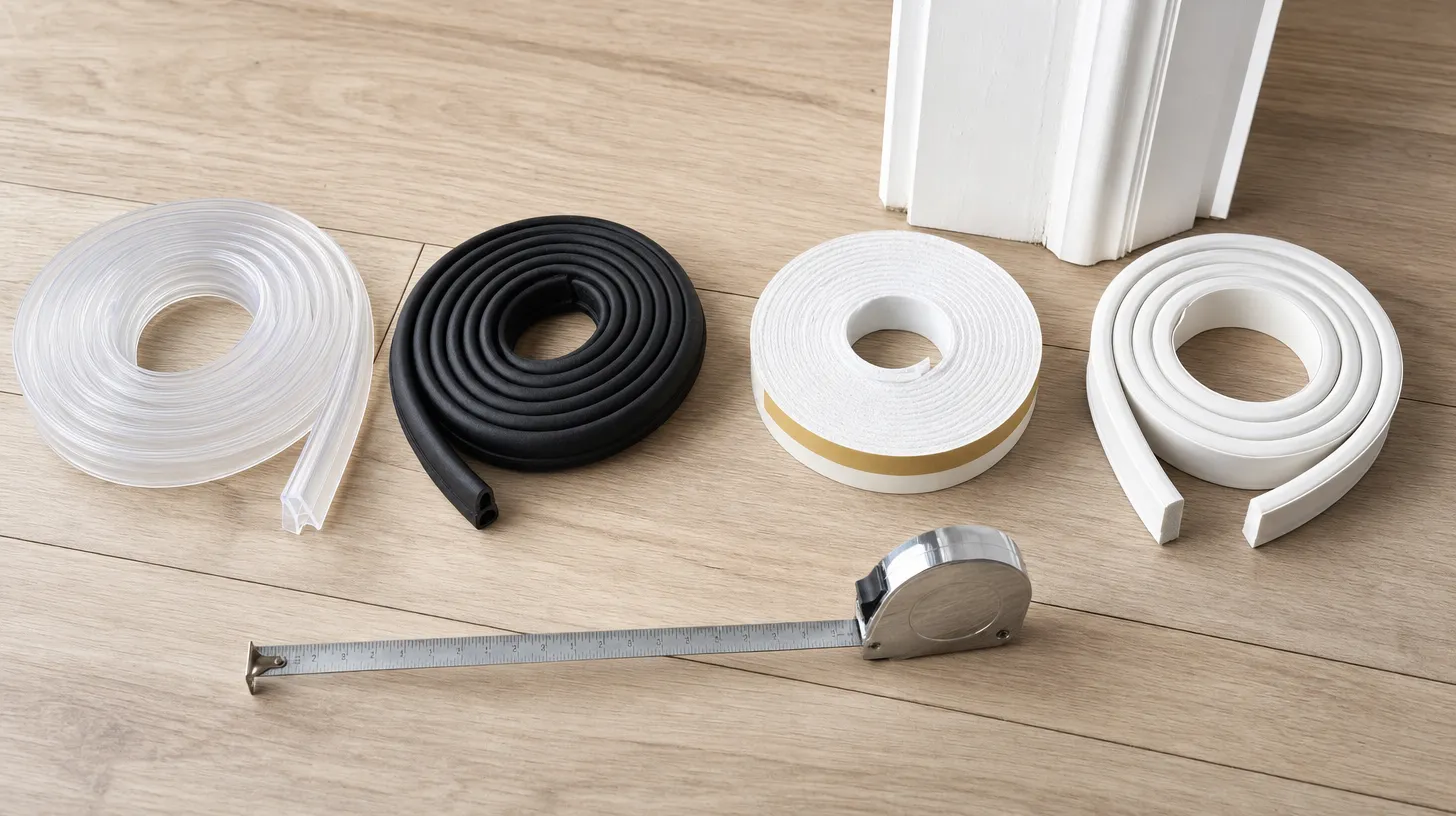
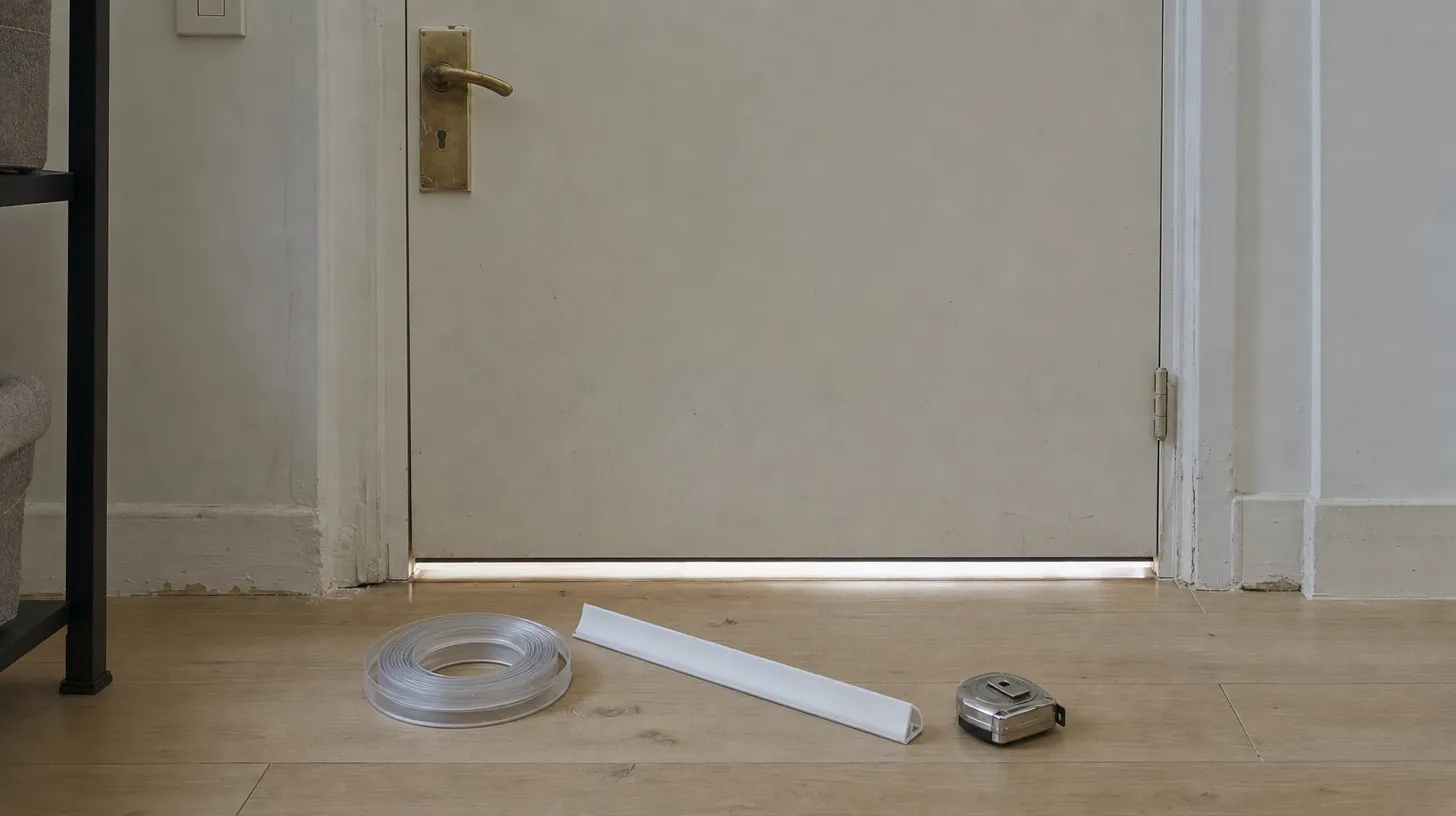
Then match the seal to the gap. Our Start Here pick is the Kikerike self-adhesive foam weatherstrip tape — about $6.66 as of September 2026 for two 21-foot rolls of half-inch-wide, quarter-inch-thick EVA foam. It cuts with scissors, conforms to an uneven frame, and there is enough on the two rolls to do the perimeter of several windows. For the price, it is the cheapest way to find out how much of your noise is leaking rather than transmitting.
Where a quarter inch is too fat — a sash that already closes tightly and would bind or fail to latch — step down to the Thinner Gaps pick, Frost King R338H self-stick rubber foam weatherseal, about $2.93 as of September 2026 at 3/8 inch wide by 3/16 inch thick. A window that no longer locks is a window that seals worse than before you started.
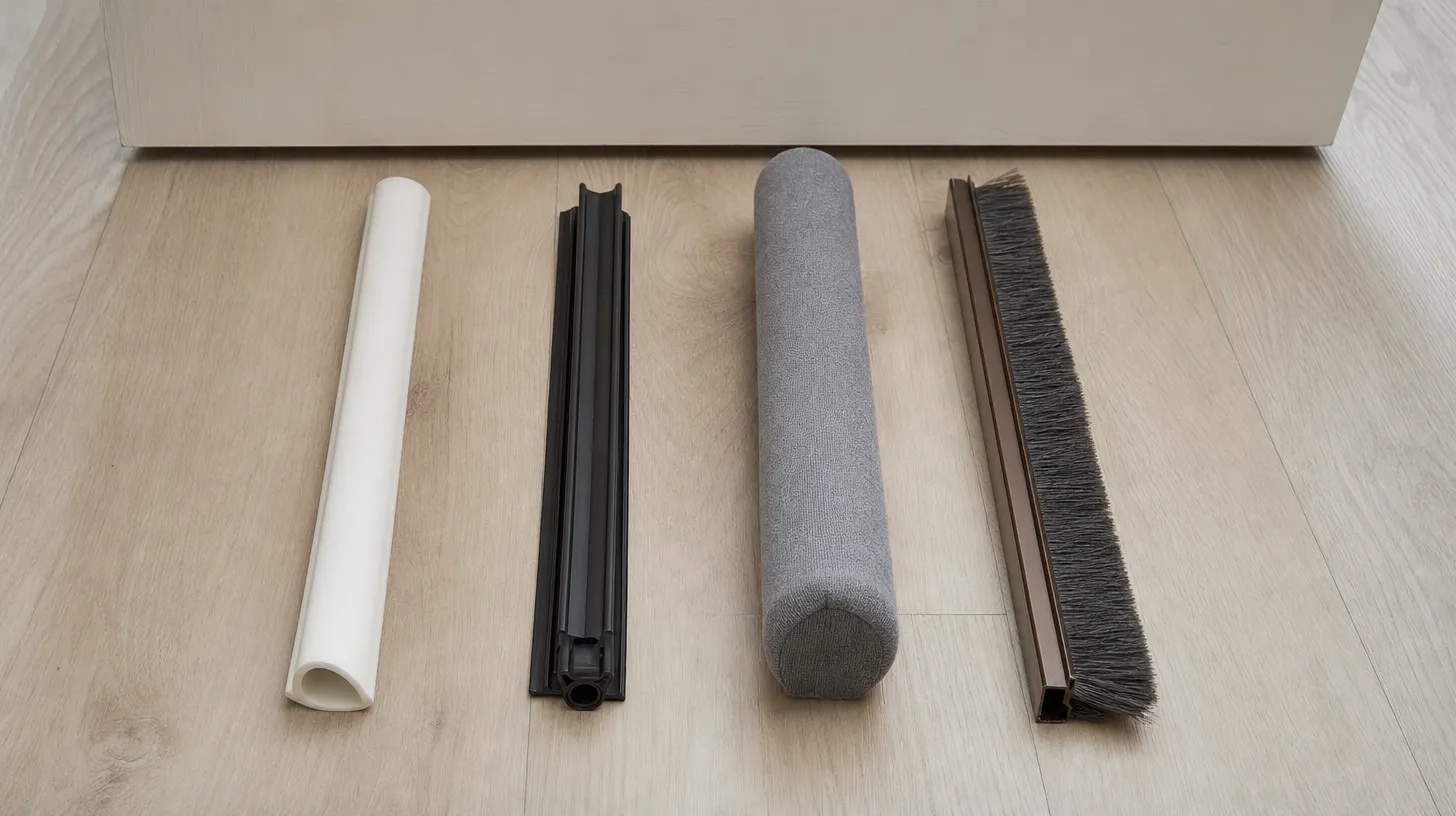
For the vertical channels of a double-hung or a slider, foam tape is the wrong shape. Bob Vila describes V-strip, also called tension seal, as a thin length of durable vinyl or metal folded into a V that compresses to create a tight seal as the surface closes, and rates it highly effective where windows slide or meet, especially on double-hung windows. Use V-strip in the tracks, foam on the compression faces. Clean and dry the surface first or the adhesive will let go in a month.
Traffic noise in the bedroom
If you only fix one room, fix this one. To block traffic noise in a bedroom you need to think about thresholds rather than percentages, because sleep responds to peaks. The World Health Organization's Environmental Noise Guidelines for the European Region recommend keeping night-time road traffic exposure below 45 dB Lnight, and average 24-hour road noise below 53 dB Lden, above which adverse health effects are expected. WHO's earlier Guidelines for Community Noise are stricter about the room itself: less than 30 dB(A) in bedrooms overnight for good quality sleep, with individual noise events above 45 dB(A) to be avoided.
Those numbers explain why a bedroom feels different from a living room. A single 60 dB bus at 3 a.m. wakes you even though the room's average is fine. You are chasing peaks, not averages.
The order of operations for a street-facing bedroom:
- Seal the window completely. Foam on the compression faces, V-strip in the channels, sash locked tight so the two sashes clamp together.
- Fit a plug or insert for night use. This is the single biggest step, and at night the loss of daylight costs you nothing.
- Hang heavy, wide, floor-length curtains that overlap the frame by at least six inches on each side and close against the wall, not just across the glass.
- Move the bed off the exterior wall if the layout allows, and put a bookcase or wardrobe against it. Mass in the path helps; our guide to soundproofing apartment walls covers what that furniture can and cannot do.
- Add masking last. A fan or white noise machine does not reduce anything, but it raises the floor so individual peaks stop standing out. For peak-driven traffic noise, that is often the difference between waking and not.
Curtains or inserts?
The soundproof curtains vs window inserts question comes up constantly, and the honest answer is that they are not competitors — they solve different problems and the disappointment comes from expecting the wrong one to do the other's job.
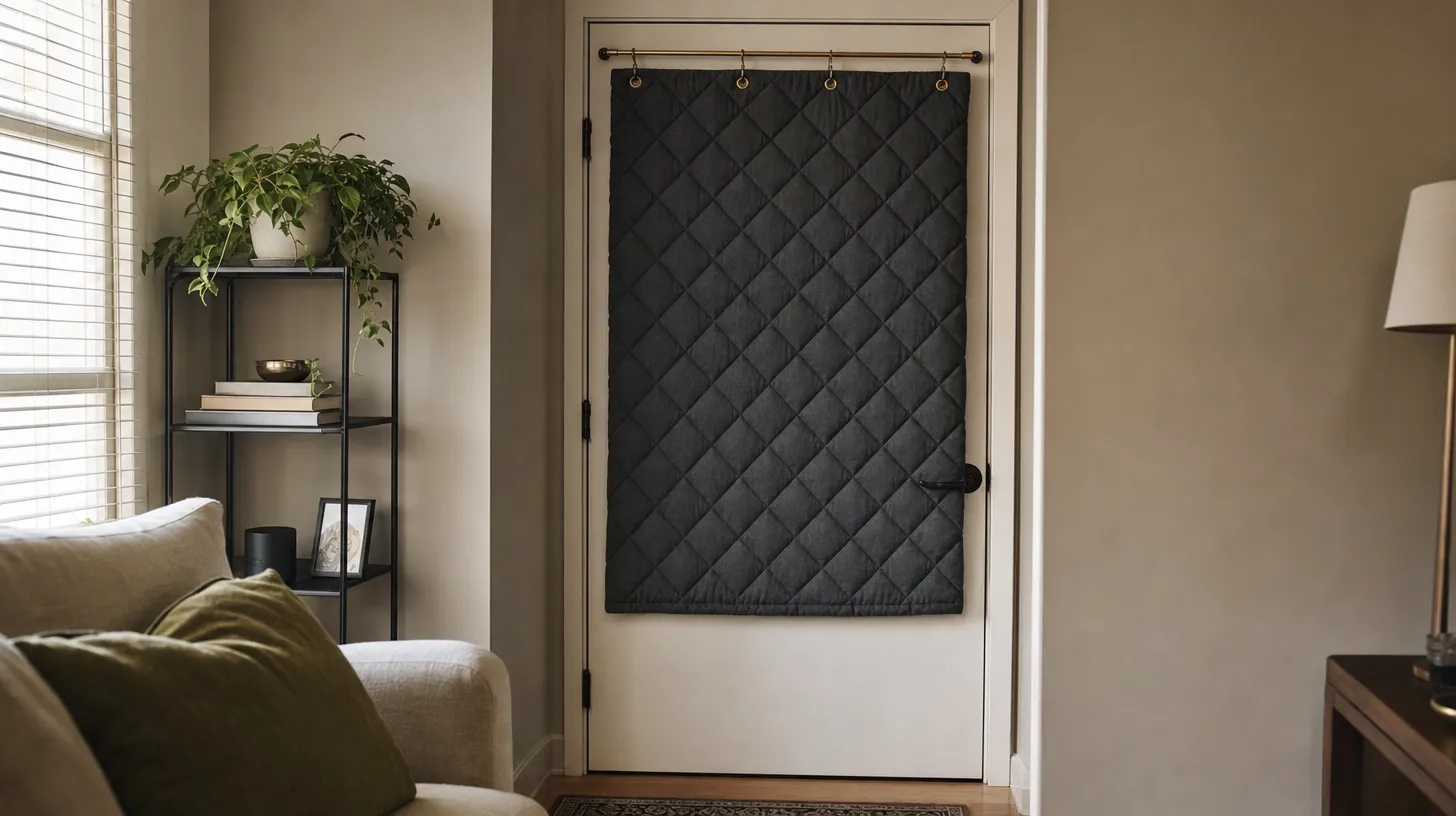
Curtains absorb. Heavy fabric soaks up reflected sound inside your room, softening the hard glass-and-plaster ring that makes an apartment feel loud. eNoise Control puts the realistic ceiling for treating a room with acoustic curtains at a maximum noise reduction of 6 to 9 decibels, which it equates to a 30 to 40% decrease in loudness. That is a real, audible change in how a room sounds — worth having, particularly if you take calls or the space echoes.
Inserts block. A sealed second pane with an air gap stops energy from crossing the opening in the first place, which is why the lab figures for inserts start where curtains top out. If the noise is a bus route, a schoolyard or a bar, the insert is the tool.
In practice we would fit both, in this order: seal the gaps, add the insert or plug for blocking, then hang curtains for absorption and for the small extra layer of mass across the opening. Our full write-up on heavy curtains covers what to look for in weight and coverage, and the curtains-versus-inserts comparison goes through the cost-per-decibel argument in more detail.
One thing curtains genuinely cannot do is bass. Low-frequency rumble — engines, subway, a distant sound system — has long wavelengths that pass through fabric essentially unimpeded. If your complaint is rumble rather than hiss and chatter, no curtain will fix it.
Old, single-pane and sash windows
Pre-war buildings are where this gets interesting, because the failures are mechanical rather than material. To soundproof old apartment windows you are mostly fixing loose parts, not upgrading glass. According to Soundproof Windows, Inc., the STC rating for single-pane windows is "most likely between 26 and 28" — and a well-sealed old single pane can beat a rattling newer unit, because the leak dominates.
Work through the failure points in order:
- The sash lock. On a double-hung, the lock is not just security — it pulls the meeting rails together and closes the horizontal gap. A lock that no longer draws tight is a permanent open seam at ear height. Tighten the screws or shim the keeper.
- Loose stops and parting beads. The thin strips that hold the sash in its channel work loose over decades. A sash that can be wiggled front-to-back has an air path around it and will buzz at certain frequencies.
- Rattling glass in the putty. Old glazing putty shrinks and the pane vibrates in its rebate, which is what you hear as a sympathetic buzz when a truck passes. Do not re-putty a rental yourself; instead, damp the rattle with a plug or insert pressed against the reveal.
- Ropes, chains and pockets. The weight pockets beside a traditional sash window are hollow voids in the wall, connected to the outside. Sealing the sash channel closes most of that path.
For sashes that already close tightly, the thinnest weatherseal you can find at around 3/16 inch is the right thickness — thick tape here just stops the window latching, which loses you more than the foam gains. Everything here is reversible, which is the whole point in a building you do not own.
Double glazing, laminated glass and what the numbers mean
Renters ask does double glazing block noise and are then baffled when a new thermal window makes almost no difference to the street. The explanation is that thermal double glazing is optimised for heat, not sound, and the two goals want different things from the same cavity.
The measured spread is narrower than the marketing suggests. Soundproof Windows, Inc. puts single-pane windows at STC 26 to 28 and states that "the STC Ratings for double paned windows usually vary from 26 to 33." Soundproof Central puts typical double glazing between STC 28 and 34, against around STC 40 for laminated glass. So a thermal upgrade can buy you a handful of STC points — or, at the bottom of the range, nothing at all.
Three things actually move the number:
- Air gap width. Thermal units use a narrow gap, often around half an inch, tuned for insulation. Acoustic performance wants a much wider cavity, which is exactly why a retrofit insert sitting two or three inches off the original glass can outperform a factory sealed unit.
- Asymmetry. Installix Windows and Doors puts a laminated double-pane unit at STC 38 to 39, rising to STC 42 to 45 with an acoustic PVB interlayer, and notes that pairing panes of different thicknesses — what engineers call asymmetric glazing — avoids the coincidence-frequency overlap that creates a weak spot when two identical panes resonate together.
- Lamination. The plastic interlayer in laminated glass damps the pane's vibration rather than just adding mass, which is why it outperforms plain glass of the same weight. It is the same mass-plus-damping logic that governs apartment walls.
And remember the rating mismatch from the top of this guide: Commercial Acoustics notes OITC is always lower than STC on the same assembly, and showed a window rated STC 35 and OITC 26. When a landlord tells you the new windows are rated STC 32, the number that matters for the bus outside is meaningfully lower than that.
The window air conditioner problem
Nothing else on this list matters if you have a through-window AC unit. Learning to soundproof around a window air conditioner means accepting an uncomfortable truth: you have deliberately cut a hole in your exterior wall, filled most of it with a box, and closed the rest with two sheets of thin plastic accordion. It is by far the largest acoustic leak in a street-facing room, and it undoes the work of every seal elsewhere in the window.
There are three separate problems, and they need three different fixes.
The accordion side panels. Those thin plastic flaps have almost no mass. Cut rigid foam board or plywood to replace or back them, seal every edge with foam tape, and you close the biggest hole in the assembly. Soundproofing guides recommend exactly this order — seal the gaps with weatherstripping first, then close a remaining bottom gap with a trimmed foam board or draft stopper.
The perimeter gaps. Where the sash rests on the unit, and where the unit meets the sill, there are usually visible daylight gaps. A self-adhesive foam weatherstrip handles these well, since it conforms to the irregular shapes an AC install leaves behind.
The rattle. A unit vibrating against the sill radiates its own noise into the room and lets the frame buzz. Anti-vibration pads or rubber grommets between the unit and the sill, as those same guides suggest, decouple the box from the building.
In winter, the best fix is the simplest one: pull the unit out, store it, and treat the window normally. A seasonal removal turns your worst acoustic weak point back into an ordinary window for half the year.
Explore the full series
- Do Soundproof Window Inserts Actually Work? — What compression-fit and magnetic acrylic inserts really do to street noise.
- The Best Soundproof Window Inserts for Renters — Insert kits and renter-friendly alternatives, compared on cost and removability.
- How to Build a DIY Soundproof Window Plug — A removable, renter-safe plug you can build in an afternoon.
- Does Soundproof Window Film Actually Work? — Why thin films measure only a few decibels, and what that means in practice.
- The Best Weatherstripping to Block Street Noise — Foam, rubber and V-strip seals ranked for window gaps.
- How to Block Traffic Noise in a Bedroom — An order of operations for a street-facing bedroom.
- Soundproof Curtains vs Window Inserts: Which Actually Helps? — Where each one wins, and why they solve different problems.
- How to Soundproof Old Apartment Windows Without Replacing Them — Rattling sashes, single panes and loose stops, fixed without a contractor.
- Does Double Glazing Block Noise? What the Numbers Say — Air gap, mass and laminated glass, and why thermal panes disappoint.
- How to Soundproof Around a Window Air Conditioner — The biggest hole in a street-facing wall, and how to close it.

Two 21-foot rolls of high-density EVA foam tape, cuttable with scissors, enough to seal the perimeter of several windows for the price of a sandwich.
Sealing air gaps is the cheapest real gain available at a window, and this is the least you can spend to find out how much of your noise is leaking rather than transmitting.
*Price shown on Amazon and subject to change.

A thinner, shallower foam seal for sashes that already close tightly and would bind on thicker tape. Made in the United States and sold almost everywhere.
Use this where thicker foam would stop the window closing. It is the difference between a sash that seals and a sash that no longer latches.
*Price shown on Amazon and subject to change.

Lillie Metayer
Lillie Metayer is the founder of a local program that helps apartment-dwellers take action against noise pollution. Involved in environmental activism since high school, Lillie is passionate about raising awareness of the harms of noise exposure and helping people reduce noise in their communities. In her free time, Lillie enjoys playing the violin and spending time outdoors.