Soundproof curtains vs window inserts is a fight that should never have been booked. One of them absorbs sound that is already inside your room. The other blocks sound trying to get through your glass. They are separated by roughly a factor of five to ten in price, and buying the wrong one is how renters end up with beautiful heavy drapes and the exact same bus stop outside the bedroom.
So we are not going to crown a winner. We are going to show you what each one measurably does, what it costs as of September 2026, and which of the two your specific noise problem calls for. If you want the wider menu first, start with our rundown of window soundproofing options for renters and come back here to choose between these two.
The short version: curtains absorb, inserts block
Two completely different physics problems get sold under the same word, "soundproof."
- Blocking (what acousticians call transmission loss) needs mass and an airtight seal. Sound is air pressure. If air can get through, so can noise. A window insert is a rigid pane pressed into your window opening with a sealed air gap behind it, which is mass plus a seal.
- Absorbing means converting sound energy to heat inside a porous material so it stops bouncing around your room. That is what fabric does. It shortens reverberation, softens edges, makes a hard echoey room feel calmer.
A curtain is an absorber that happens to hang in front of a window. It is not a barrier. Fabric weighs a few hundred grams per square meter and leaves gaps at the top, sides and floor, so air, and therefore sound, walks straight around it.
Keep that distinction in your head and every confusing product listing on Amazon suddenly resolves. If you want the deeper version of the insert side of this, we go through it in do soundproof window inserts work.
Soundproof curtains effectiveness, measured honestly
Here is the number that explains curtains better than any marketing copy. Commercial Acoustics' sound absorption coefficient chart lists a pleated 14 oz per square yard drapery at an absorption coefficient of 0.07 at 125 Hz, rising to 0.49 at 500 Hz and 0.75 at 1,000 Hz, for a noise reduction coefficient of 0.55.
Read that curve again. At 1 kHz, roughly where voices and sirens live, the drapery is soaking up about three quarters of the energy that hits it. At 125 Hz, where the bus engine and the club bass live, it is absorbing seven percent. Nothing.
That is not a defect in one product. It is what fabric is. And it is why NRC is a slippery number for shoppers: as the acoustic materials guide at Acousplan points out, NRC is averaged from the mid-range bands and ignores 125 Hz entirely, so two products with the same NRC can behave completely differently in the bass.
Curtains do better than nothing at blocking, too, but the honest figures come with conditions. A study from the Department of Mechanical Engineering at the National University of Singapore, published as the preprint "Investigation of lightweight acoustic curtains for mid-to-high frequency noise insulations" by Kumar and colleagues, measured PVC-coated polyester fabric at a sound transmission loss of about 11 to 22 dB in the 600 to 1,600 Hz range, with an average insertion loss above 10 dB from 500 to 1,600 Hz in a reverberation room. The authors found performance tracked the material's surface mass density, and that multi-layer curtains beat single-layer ones, by 1 to 2 dB for the coated polyester and 2 to 5 dB for pure PVC sheet.
Two caveats matter. Those were PVC-coated technical fabrics and PVC sheet, not blackout drapes from a home store. And the title of the paper is the finding: mid-to-high frequency. Nobody is publishing curtain data that solves low-frequency rumble, because there isn't any.
The manufacturers know it. RYB HOME states in its own listing that its curtains are not 100% soundproof and that the effect varies by environment. We would rather quote that than argue with it.
Coverage is the cheap lever most curtain buyers miss
If you do buy curtains, the single biggest performance variable is not the fabric. It is how much of the wall you cover.
Sound leaks the way light leaks. A panel that stops at the edge of the window frame lets noise slide around three sides of itself. Mount the rod high and wide, buy panels far wider than the opening so they hang gathered rather than stretched flat, and let them run to the floor.
This is why the KOUFALL extra-wide curtains are on this list at $39.99 as of September 2026. Each panel is 72 inches wide on its own, so on a standard bedroom window you can overlap the frame by a foot on each side and still have fullness in the fabric. Width is cheaper than fancy fabric and does more.
Mass is the second lever, and the layered picks are where you spend for it. (If you want to see how much difference doubling mass actually makes, our free soundproofing calculators include a mass-law calculator.) The RYB HOME 3-layer set at $79.95 puts a detachable felt liner between two fabric layers, and the felt is the part doing the acoustic work. The KGORGE 4-layer set at $80.70 adds a melt-blown overlay on top of that felt liner. KGORGE claims the liner absorbs 2 to 3 times better than an ordinary curtain, which is a manufacturer figure rather than an independent measurement, but the extra layer is genuinely extra mass hanging on your window.
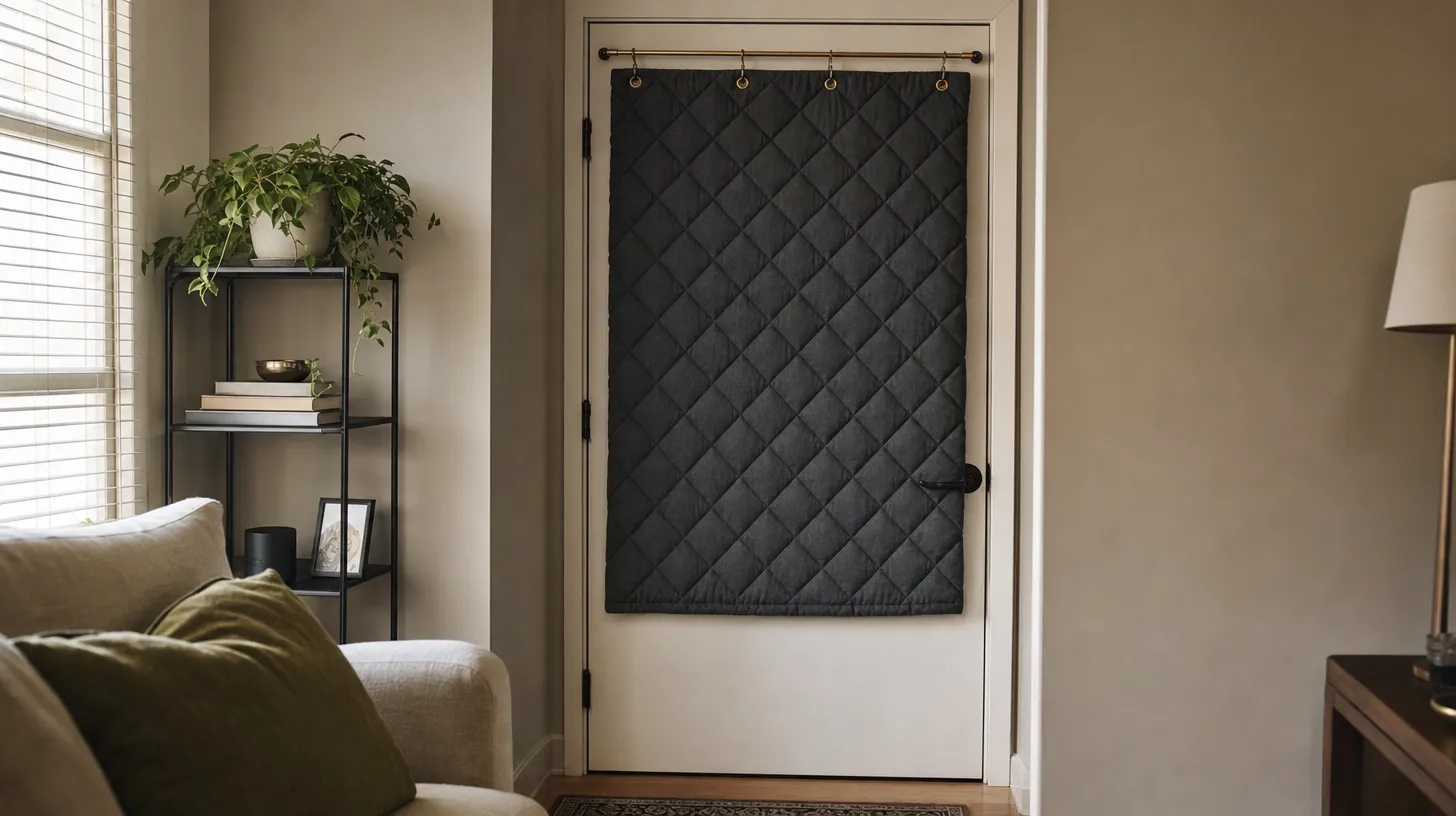
Already own drapes you like? The DriftAway quilted liners at $43.99 hang behind them on 16 included rings and add the dense layer without changing how the room looks. For more on getting the most out of fabric alone, we go deeper on heavy curtains.
What window inserts do that no curtain can
An insert is a different category of object. It seals.
Start with the baseline. Soundproof Windows, Inc. puts a single-pane window at an STC rating most likely between 26 and 28, typically 27. That is the wall of glass between you and the street, and it is terrible. The same company rates its interior soundproof window installed over a single pane at STC 48 to 54, typically 48.
Indow publishes lab-measured numbers that tell the same story in decibels. According to Indow, testing at the Green Building Research Laboratory at Portland State University found its Acoustic Grade inserts reduced noise by 18.9 dBA over a single-pane window, with Standard Grade inserts at 10 to 12 dBA. Indow's own noise disclaimer is worth respecting: those lab reductions came from an isolated test window and do not describe how much quieter a whole room gets, since sound also arrives through your walls, door and ceiling.
Put those decibels in human terms. Sound Seal's decibel demonstration page describes a 3 dB reduction as an 18% reduction in perceived volume and "just barely perceptible," while a 10 dB reduction is a 50% cut in perceived volume that "sounds half as loud." So a good insert is offering something you would describe as the traffic being cut in half. The curtain numbers that come close, like the PVC specimens above, are lab test pieces sealed into a partition wall or an impedance tube, not drapes hanging on a rod with gaps at the top and sides.
The mechanism is the reason: an insert adds a second rigid layer plus a sealed dead-air cavity, and it closes the leak paths that a curtain floats past. Acoustical Solutions makes the same point about acoustic caulk, which stays flexible specifically so it can keep blocking the air pathways that sound travels through. Sealing is not a bonus feature of soundproofing. It is most of it.
The price ladder, as of September 2026
This is where the comparison stops being close.
- $18.16 — the Mellroom cut-to-size window insulation kit, a 63 by 63 inch film panel.
- $39.99 — the KOUFALL extra-wide curtains, two 72 by 84 inch panels.
- $43.99 — the DriftAway quilted liners, if you already own curtains.
- $79.95 to $80.70 — the RYB HOME 3-layer and KGORGE 4-layer sets, the heaviest fabric here.
- $250 to $500 per window — the average cost of window inserts in Angi's 2026 soundproof windows cost guide. Insight Glass puts quality acoustic inserts at $200 to $600 per window.
A three-window apartment done in inserts is a $750 to $1,500 decision at Angi's range. The same three windows in the heaviest curtains on this page is roughly $240. That gap is the whole argument, and it is why "which is better" is the wrong question. The right one is how much noise reduction you actually need to sleep.
Where curtains genuinely win
Curtains are not a consolation prize. They win outright on several axes that matter enormously to renters.
- Cost and reversibility. Forty dollars, a tension or wall rod, and you can take the whole thing to your next apartment. No measuring, no custom order, no email to your landlord.
- Nothing to approve. Inserts are pressed into the window opening, which for some buildings and some landlords is a conversation. Curtains never are.
- Echo. If your apartment is hard floors and bare walls, a large area of heavy fabric measurably calms the room. That is the 0.75 absorption at 1 kHz doing exactly what it is good at, and no insert does it at all.
- Light and heat. Blackout fabric fixes the streetlight and the west-facing afternoon at the same time. Every curtain pick here is blackout or thermal-rated by its maker. (The Mellroom film is the exception: it insulates but stays transparent.)
- Speed. Same-day fix versus a custom order and a measuring session.
If your complaint is "this room is echoey and bright and the neighbors' voices carry," curtains are the correct purchase, not the compromise.
Where inserts genuinely win
Inserts win on the thing curtains structurally cannot do.
- Traffic, trucks and bass. Anything below roughly 250 Hz passes through fabric close to unchanged. The mass-plus-cavity approach is the only one of the two with published double-digit dBA reductions on real windows.
- Sealed gaps. A rattly old sash leaks air continuously. An insert stops that; a curtain hangs in front of it.
- Voices and sirens through the glass. Curtains soften them in the room. Inserts reduce how much of them enters the room at all.
- Rooms you cannot rearrange. An insert takes no floor space and no rod, and it stays put behind whatever else you hang.
We have a separate roundup of the best soundproof window inserts for renters, because the fit and removability details vary a lot by brand and that decision deserves its own page.
The odd middle option: a cut-to-size film kit
The Mellroom window insulation kit sits between the two categories, and we want to be precise about what it is: a thermal insulation film, not an acoustic insert. It is a transparent panel about 7 mil thick that mounts on adhesive hook-and-loop straps, peels back so you can open the window, and folds away for reuse.
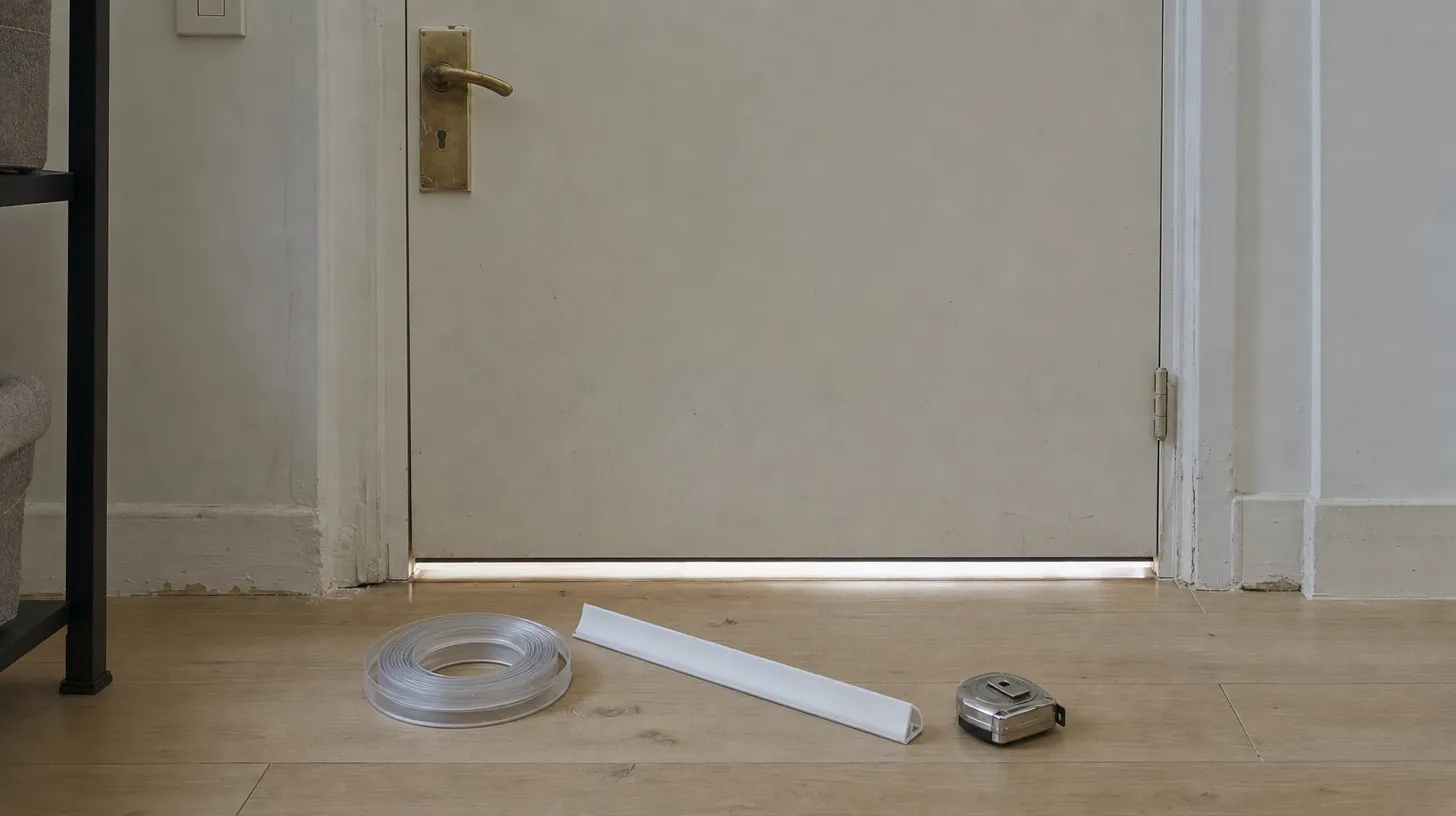
Seven mil of film has almost no mass, so nobody should expect insert-class transmission loss from it. What it does have is the other half of the equation: it covers the opening and it seals, at $18.16 as of September 2026, with no drilling. Adhesive straps can still lift paint on the way off, so test one in a corner before you commit the whole frame. On a drafty single-pane rental where you can feel air moving, that is a genuinely worthwhile thing to try before committing to a $400-per-window order. Pair it with weatherstripping to block street noise around the sash and you have addressed the leaks, which is the cheapest real soundproofing there is.
Just do not buy it believing it is a budget Indow. It isn't, and the maker doesn't say it is.
Curtains or window inserts for noise: how to decide
Buy curtains if your noise is mid and high frequency (voices, sirens, birds, distant traffic hiss), your room echoes, you also want blackout and thermal control, you are renting month to month, or your budget is under a hundred dollars. Start with the RYB HOME 3-layer set for mass, or the KOUFALL wide panels if your window is broad and coverage is your problem.
Order inserts if the noise is low frequency and constant, if you can hear conversations on the sidewalk as words rather than mumble, if your windows are single-pane or rattle in the frame, if you are staying at least a year, and if a few hundred dollars per window is worth a night of sleep to you.
Do both if you can, and in this order: seal the window, then insert, then curtain. Sealing is cheapest and does the most per dollar. The insert delivers the transmission loss. The curtain then mops up the reflections inside the room and handles light and heat, which is the one job the insert leaves undone. The layers are complementary, not redundant, and that is the actual answer to the head-to-head.
The bottom line
Before you spend on either, measure what you actually have — our roundup of the best decibel meters for renters covers the cheap ones that are accurate enough to be worth owning.
Curtains and inserts are not rivals. Curtains are a cheap, reversible, mid-and-high-frequency absorber that also fixes light, heat and echo. Inserts are an expensive, semi-permanent barrier that is the only one of the two with published double-digit decibel reductions on a real window.
Diagnose the noise first. If it is boomy and constant, fabric will disappoint you and we would rather say so now. If it is sharp, bright and bouncing around a hard room, eighty dollars of layered curtain will do more for you than four hundred dollars of glass.
Either way, seal the gaps before you spend anything, and if you want the full sequence in order of bang for buck, that is our full guide to apartment windows.

Two panels totalling 104 inches of width, built as three layers with a detachable felt liner in the middle. The felt is the part doing the acoustic work, and it comes out for washing.
The detachable felt liner is what separates this from ordinary blackout drapes. RYB HOME says plainly that the curtains are not 100% soundproof, which is the right expectation to have going in.
*Price shown on Amazon and subject to change.

Four layers rather than three, adding a melt-blown overlay on top of the detachable felt liner. Two panels, 52 inches each, 104 inches of total width.
KGORGE claims the felt liner performs 2-3 times better at sound absorption than an ordinary curtain. Treat that as a manufacturer figure, not an independent measurement, but the extra layer is real mass on the window.
*Price shown on Amazon and subject to change.

Liners rather than curtains, designed to hang behind drapes you already own. Two panels with 16 metal rings included, sized for 84-inch grommet curtains.
The cheapest way to add mass if you already like your curtains. You keep the look of the room and add a thick quilted layer behind it.
*Price shown on Amazon and subject to change.
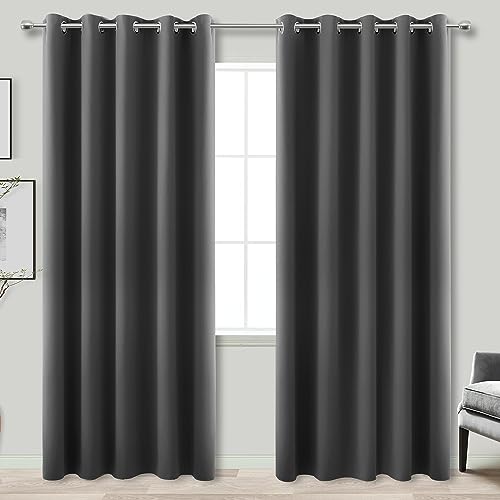
Each panel is 72 inches wide, which matters more than it sounds. Coverage well past the frame is what stops sound sneaking around the edges of a curtain.
Wide panels are the cheap trick most people miss. KOUFALL describes these as triple-weave blackout fabric that also works as noise-cancelling curtains, and the width lets you overlap the frame generously.
*Price shown on Amazon and subject to change.

A clear 7-mil film panel that mounts on adhesive hook-and-loop straps, so it sits across the window as a removable second layer and peels back for ventilation.
This is not an acoustic insert and we are not going to pretend it is. It is the cheapest way to put a second sealed layer over a leaky window, and on a single-pane rental that alone is worth trying before you spend real money.
*Price shown on Amazon and subject to change.
| Pick | Product | Link | |
|---|---|---|---|
| Our Pick | RYB HOME — RYB HOME 3-Layer Soundproof Curtains (84 in, 2 Panels) | $79.95 | Check → |
| Heaviest Build | KGORGE — KGORGE 4-Layer Soundproof Thermal Insulated Curtains | $80.70 | Check → |
| Best Add-On Liner | DriftAway — DriftAway Quilted Soundproof Thermal Curtain Liners (50 x 80 in, 2 Panels) | $43.99 | Check → |
| Best for Wide Windows | KOUFALL — KOUFALL Extra-Wide Thermal Soundproof Curtains (72 x 84 in, 2 Panels) | $39.99 | Check → |
| Closest Thing to a Cheap Insert | Mellroom — Mellroom Cut-to-Size Window Insulation Kit (63 x 63 in) | $18.16 | Check → |

Lillie Metayer
Lillie Metayer is the founder of a local program that helps apartment-dwellers take action against noise pollution. Involved in environmental activism since high school, Lillie is passionate about raising awareness of the harms of noise exposure and helping people reduce noise in their communities. In her free time, Lillie enjoys playing the violin and spending time outdoors.