The best soundproof window inserts for renters come from four makers — Indow, Magnetite, Climate Seal and CitiQuiet — and every one of them is cut to your exact opening and sold direct. You cannot buy a real acoustic window insert on Amazon, and we have no affiliate relationship with any of those four companies. We earn nothing from the first half of this article.
We are saying that in the opening paragraph because it explains the shape of the page. The first half ranks the real inserts by who each suits, using the numbers their makers publish, so you know which one to ask for a quote. The second half covers the renter-budget equivalent you can buy today — a magnetic panel you cut yourself — which is the same physics at roughly a tenth of the price and nothing like the same finish. For the full menu of window fixes ranked by payoff, start with our guide to soundproofing your apartment windows.
One promise up front: no decibel or STC figure appears on this page unless a manufacturer published it and we found it. Nobody has lab-tested a homemade panel, so we will not invent a number for one.
Why there is no soundproof window insert kit you can add to a cart
Search that phrase and you get shrink film, weatherstripping and sheets of plexiglass. None of it is an insert. That is a manufacturing constraint, not a conspiracy.
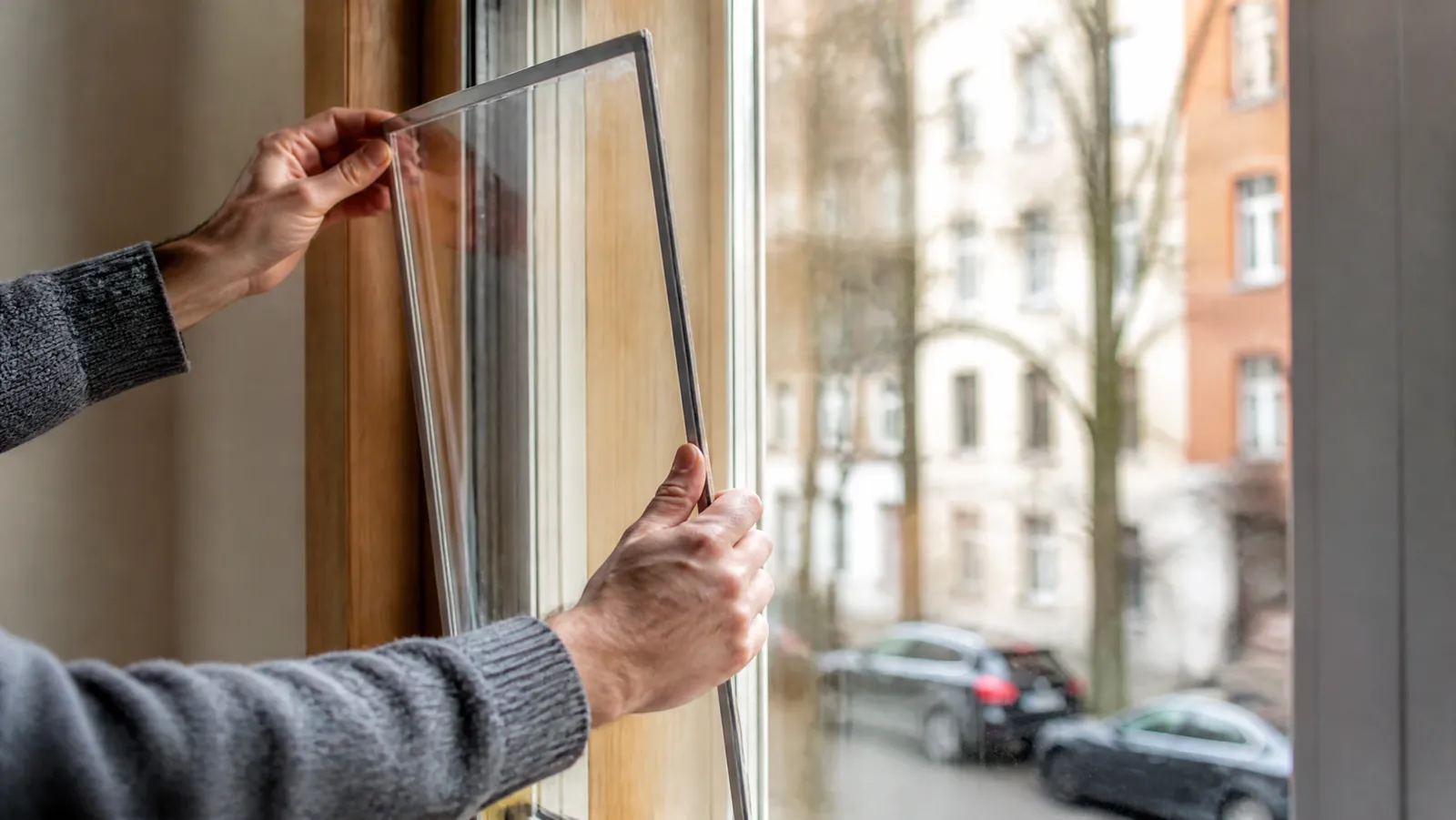
An acoustic insert is a rigid pane held inside your window opening by a seal running the entire perimeter. Apartment openings are almost never square — a hundred-year-old sash can be half an inch out of plumb top to bottom — so a panel cut to a nominal size seals on two sides and leaks on the other two. A leak is the one failure that cancels the whole product.
So every real insert is measured, fabricated and shipped per window. The buying process is a quote and a wait: you measure the opening, you get a price, the panels arrive weeks later.
If you have not yet decided whether the category earns its money, read do soundproof window inserts work first. That is the evidence piece behind this buying guide.
How a window insert for noise actually works
Three ingredients, and the cheap products on the shelf usually have one.
Mass. A rigid pane resists being pushed by air pressure. Thicker and denser is better, which is why the premium options move from 1/8-inch acrylic to 1/4-inch acrylic or laminated glass.
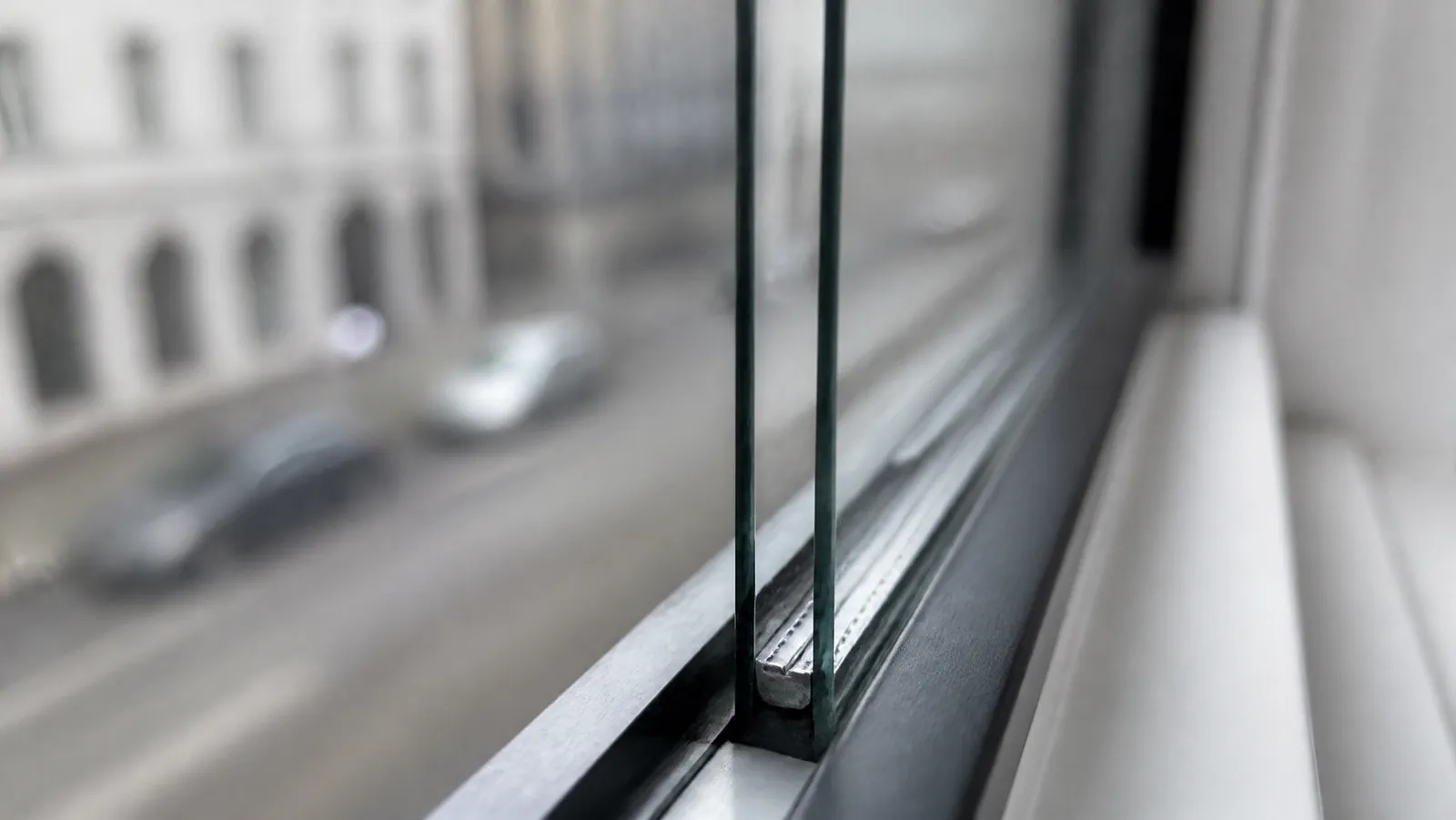
A trapped air gap. The cavity between old glass and new pane acts like a spring between two barriers, so vibration in the outer pane does not pass cleanly into the inner one. Deeper is better. According to Clearview Secondary Glazing's guide to air gaps, at least 100 mm is needed for meaningful acoustic benefit, with an optimum of 150 mm to 200 mm, and performance noticeably compromised below 80 mm. That is 4 to 8 inches — deeper than most interior inserts can sit in a shallow apartment reveal, which is a real ceiling on what any of them can do in your window.
A continuous seal. Sound is air pressure, so anywhere air moves, noise follows.
One piece of jargon you will meet: STC, or Sound Transmission Class, a single number summarising how much airborne sound an assembly blocks, higher being better. For a baseline, CitiQuiet's explainer on STC ratings puts a standard double-pane window at roughly STC 26 to 33. That is the number every insert below is trying to beat.
The best soundproof window inserts, ranked by who they suit
We have not lab-tested any of these. Every figure below is the maker's own published claim from its own test setup, which is why we have not stacked them into one ranked table — an STC number from one company's lab and a dBA figure from another's are not comparable quantities.
Indow — best if you cannot attach anything to the window
Indow's panels are edged in patented silicone compression tubing that squeezes against the inside of the existing frame. Bob Vila's write-up describes them as needing no mounting brackets, with each insert taking about ten minutes to pop in. According to Indow's own installation guide, the sequence is: set the bottom edge on the sill, press down so the bottom tubing compresses and the panel sits "shorter", then bend the top edge into the frame and work down the sides. Indow says it uses silicone because it resists UV and does not lose its spring force over time — a low compression set, in seal terms.
For a renter that is the whole argument. Nothing is screwed, glued or fixed to the window, and a landlord inspecting at move-out sees an unmodified sash.
According to Indow, its Acoustic Grade inserts reduce noise by 18.9 dBA over single-pane windows, which the company states as a 70% reduction and attributes to independent analysis by Portland State University. Indow's pricing page lists its Performance Grades starting at $44 per square foot MSRP as of September 2026; Engineer Fix's third-party breakdown puts the acoustic option at $25 to $36 per square foot and the standard grade at $20 to $28. Either way, a 3-by-5-foot bedroom window runs into the hundreds.
Magnetite — best if you want the panel off and on regularly
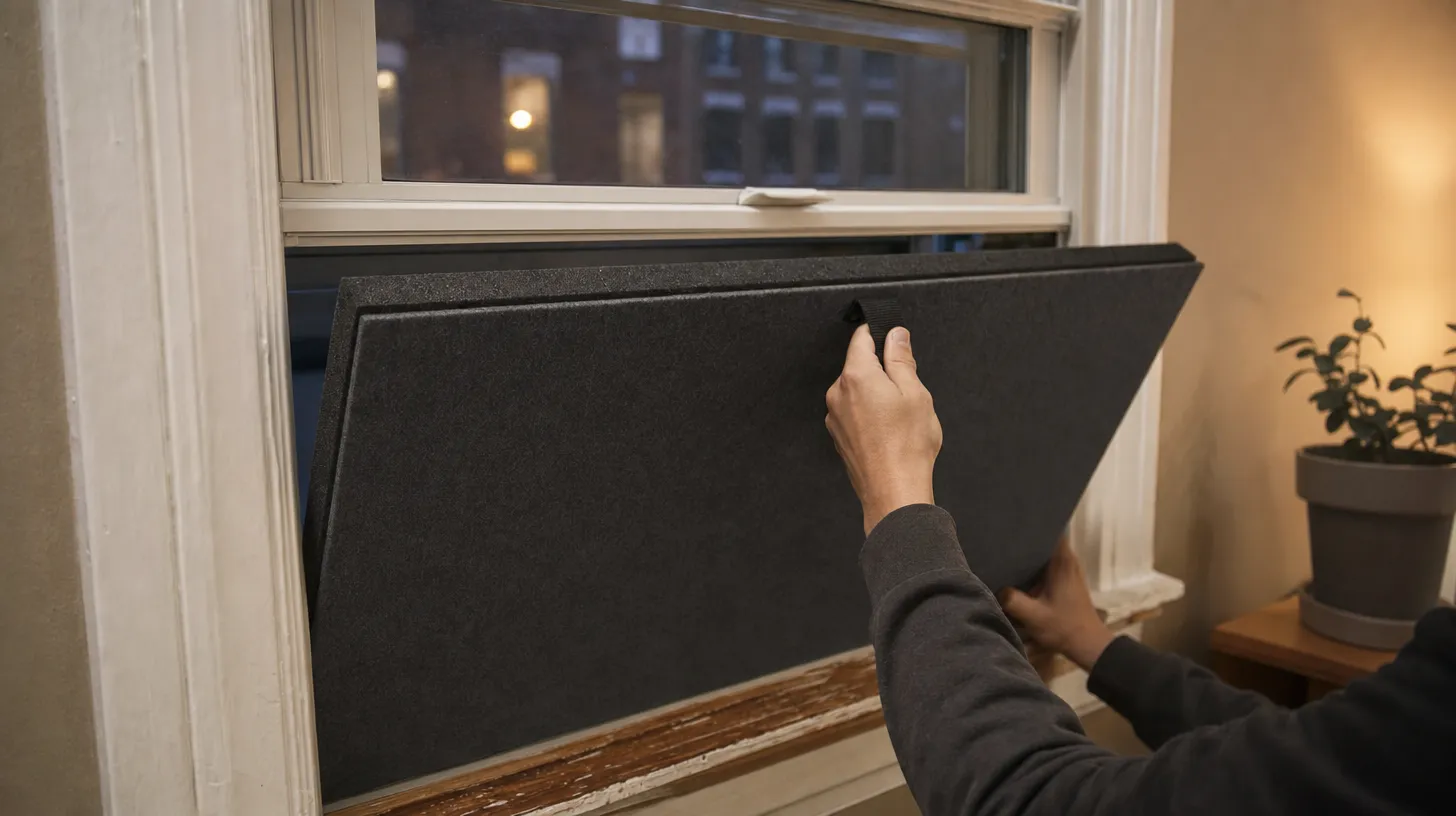
Magnetite works the other way round: a slim magnetic frame is fitted around the opening and the acrylic panel snaps onto it, then pulls off for ventilation or cleaning.
Magnetite's technical details page states the STC rating can improve from 28, for dual 1/8-inch glass panes with a 3/8-inch air space, to 41 when Magnetite is added, and puts the average single-pane window at STC 26. The same page says effective sound transmission reduction is over 70%, and is particularly effective in the 250 to 4,000 Hz range.
Read that band honestly, because it is the most useful sentence any of these companies publishes. 250 Hz to 4 kHz is voices, sirens, brake squeal and tyre hiss. It sits above where a bus engine idles. If your complaint is a low boomy rumble, temper expectations and read how to block traffic noise in a bedroom before spending.
Renter caveat: the magnetic frame is fixed around your window. That is a landlord conversation, not a free action.
Climate Seal — best for odd shapes and the highest published STC
Climate Seal's Acoustic Series is also magnetic, aimed at historic and irregular openings where a rectangular compression panel will not fit. According to Climate Seal, the Acoustic Series reaches STC ratings as high as 49 with up to 80% sound reduction across all frequency levels, and the company describes its magnetic seal as the strongest in the industry while still removing easily for access to the primary window. Acoustical Surfaces, which distributes the line, adds that it filters out up to 85% of UV.
STC 49 is the highest figure on this page, with the usual caveat: "as high as" describes a best-case configuration in the maker's own testing, not the panel that arrives for your bedroom.
CitiQuiet — best for a severe city noise problem, at a severe price
CitiQuiet is a different purchase entirely: an interior window installed by the company, laminated glass rather than acrylic, set back from the existing sash. Per CitiQuiet's own product pages, its 1/8-inch interior insert is rated STC 29, its 1/4-inch laminated option STC 35, and its Acoust-A-Pane STC 38. The company separately claims its windows eliminate up to 95% of outside noise — a marketing figure on its own site with no test document attached.
Price is the disqualifier. Real quotes collected by Replacement Windows Reviews came in around $9,700 to $9,900 installed for three very large window openings, and installation means a contractor in the apartment with the landlord's agreement in advance.
What inserts cost, and when that money is justified
The honest ladder, all figures as of September 2026:
- Under $20 — a shrink-film kit, which seals but adds no mass.
- About $62 — the DIY magnetic panel below, in materials, for one small window.
- About $350 to $700 per window — where a typical 3-by-5-foot opening lands at the published per-square-foot rates above ($25 to $44), driven by square footage. Third-party pricing guides put buyer-installed inserts at roughly $350 to $450 per opening, and a large opening costs more: real Indow quotes collected by Replacement Windows Reviews came to $3,000 installed for three 4-by-8-foot windows.
- Thousands — a CitiQuiet-style installed interior window.
The jump from the second line to the third is roughly six- to eleven-fold, and the reason to make it is not that the DIY panel does nothing. It is that a manufactured insert seals to a tolerance, stays optically clean, and comes with a published number. You are buying precision and evidence.
Before any of it, seal the window you already have: the best weatherstripping to block street noise is the cheapest real soundproofing there is, and it changes what the next step should be. If you are still choosing between categories rather than brands, soundproof curtains vs window inserts puts the two side by side.
The renter-budget version: a magnetic panel you cut yourself
A clear rigid panel, held to the inside of your frame by magnet tape, with a compressible seal around the whole perimeter, has the same three ingredients as a commercial insert. It is still not an Indow, and we have no measured decibel figure for a homemade panel and will not estimate one.
The parts list, all prices as of September 2026:
- The panel. The VOISEN clear sheets at about $37.99 give two 24 by 36 inch sheets at 1/8 inch thick. Worth knowing before you buy: they are sold as plexiglass, but the listing's own description says the material is PET, not cast acrylic. For this job that is arguably better — published plastics data puts PET at about 1.38 g/cm3 against roughly 1.19 for cast PMMA acrylic, and on a barrier panel density is the point.
- The clearer alternative. The trade for that density is optics: cast acrylic is quoted at about 92% light transmission, matching optical-grade glass. The Deylixay acrylic sheets at $34.19 are listed at over 90% light transmission with UV resistance to limit yellowing. On a window you look out of daily, we would take the clarity.
- The magnets. The NIUBIKLUS A+B paired magnetic tape at about $14.99 is the part most DIY guides get wrong. Ordinary magnet tape is single-polarity — it grabs steel, not another strip of itself. This set ships one A roll and one B roll, polarity-matched to attract each other, so it works on wood or vinyl.
- If your frame is steel, and only then, the Master Magnetics Roll-N-Cut refill at $7.59 does it for half the money, rated by the maker at up to 6 lb per linear foot on a smooth magnetic surface. On wood it does nothing.
- The seal. Fifty feet of pundin D-shape TPE weatherstrip at $9.79, 0.35 inch wide and 0.23 inch thick, sized by the maker for gaps from 0.1 to 0.22 inch. A hollow bulb deforms to an out-of-square frame instead of resisting it.
Do the weight arithmetic before you trust it
NIUBIKLUS states each square inch of its paired tape holds 50 g. By our own arithmetic from the density figures above, a 24 by 36 inch sheet of 1/8-inch PET comes to roughly 2.4 kg, and the same sheet in acrylic to about 2.1 kg.
Half-inch tape run around that panel's full 120-inch perimeter gives 60 square inches of contact, so it is rated for about 3 kg. Against a 2.4 kg panel that is a margin of only about 25%, and it assumes an unbroken run with no lifted corners.
So run the tape the whole way round, double it across the top edge where the load is, and do not build one of these above a bed. One A+B pack covers exactly this: 15 feet per roll is 180 inches, and you need 120 inches of A on the panel and 120 of B on the frame.
How we would build it
- Measure the inside of the frame at top, middle and bottom, and take the smallest number.
- Cut about 1/8 inch under that on each dimension so the seal has something to compress into. VOISEN says the sheets cut with a table saw, miter saw or jigsaw and sand at the edges.
- Leave the masking film on while you cut. Both makers say to peel it only at the end. Scratches are what make a DIY panel look like one.
- Clean both bonding surfaces with isopropyl alcohol and let it flash off. Adhesive on dust is adhesive on nothing.
- Run the B strip around the frame and the A strip around the panel edge, in matched positions, butting the corners square rather than bending tape around them.
- Run the D-shape seal on the panel face that meets the frame, so the bulb compresses when the magnets pull the panel home.
- Wait. NIUBIKLUS says its adhesive reaches 90% strength at 24 hours and full strength at 72; pundin says its strip fully bonds after 24 hours and suggests a hair dryer on the backing in a cold room.
Then measure the result instead of guessing. A before-and-after from the same spot at the same time of day is the only honest test, and our roundup of the best decibel meters for renters covers cheap ones good enough for it.
Where a homemade panel loses to the real thing
- Seal quality. Commercial silicone tubing keeps its spring force for years. Adhesive-backed foam and rubber take a set, and the adhesive is the failure point in a cold room. Yours will need re-taping.
- Edge and optics. A sawn, sanded edge is visible, and a cut sheet with film marks and a slight bow reads as plastic against glass.
- Size. 24 by 36 inches is smaller than most apartment windows, so a bigger opening means two panels and a seam — and a seam is a leak, which is the exact problem the approach exists to solve.
- No data. Nobody has published a transmission-loss figure for a sheet of PET and some magnet tape, us included.
If you do not need to see out, the opaque version of this idea does the job better, because you can pack real mass behind the face. That is our DIY soundproof window plug — same seal-the-opening logic, more mass, no daylight, and for a bedroom used mainly at night it is the stronger build.
The $19 way to find out if sealing alone fixes it
Before you cut acrylic or request a quote, run a cheap diagnostic.
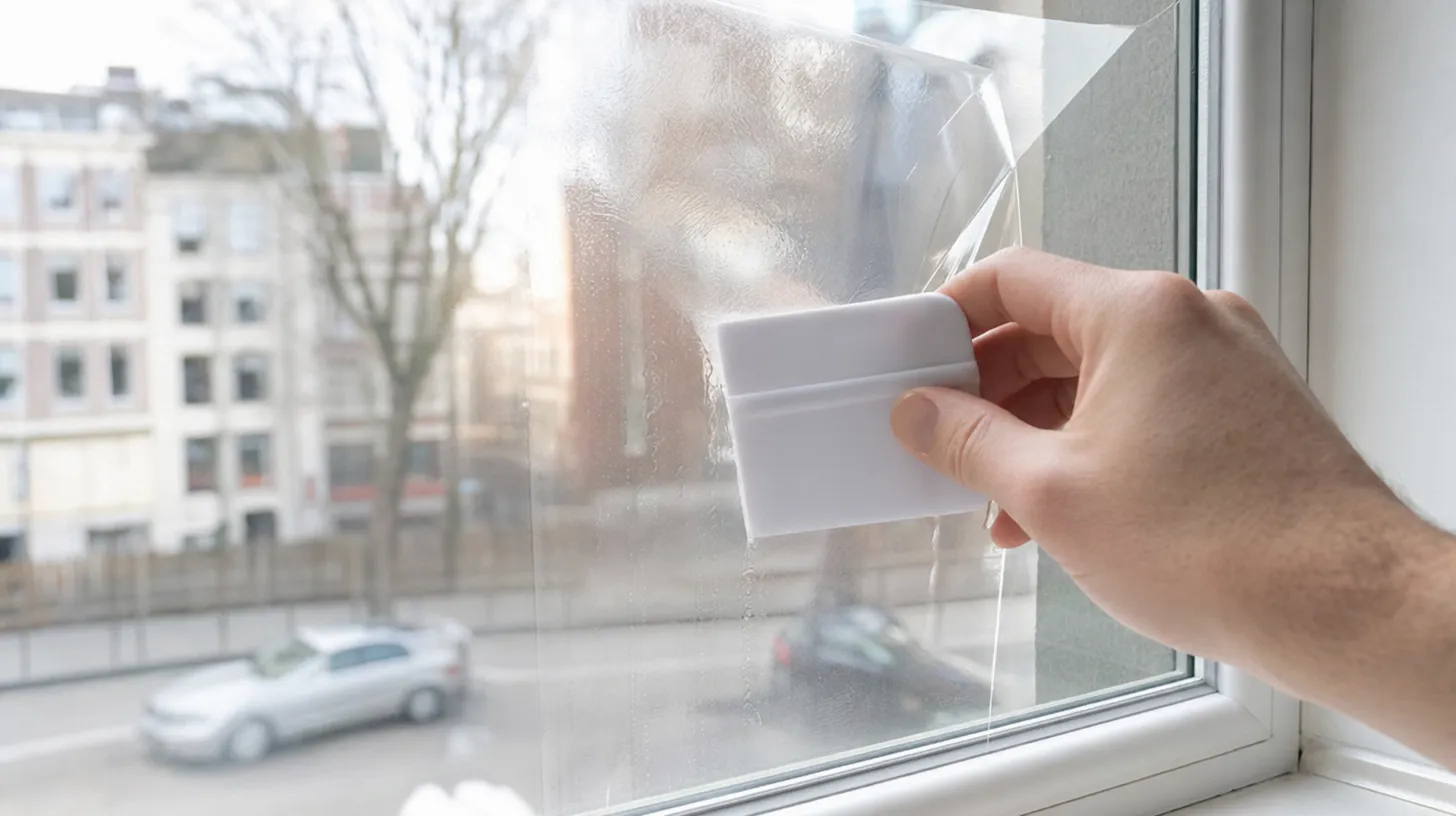
The Duck MAX Strength window insulation kit is about $18.99 as of September 2026 and covers up to five 3-by-5-foot windows with shrink film and tape. Duck describes the film as two times thicker than standard window kits and puncture resistant. It goes on with scissors and a hair dryer and comes off at the end of the season.
This is a thermal product and we are not going to dress it up. A film membrane has almost no mass, so it will not perform like an acoustic insert — the same conclusion we reached on whether soundproof window film works. What it does have is a complete seal across the opening.
That makes it a test, not a fix. Wrap the window for a night. If the street gets noticeably quieter, your problem was leaks, and weatherstripping plus a panel will do well. If nothing changes, the sound is coming through the glass itself, and only mass and an air gap will touch it.
The bottom line
If the noise is costing you sleep and you will be there more than a year, order a real insert. Indow if you cannot attach anything to the frame; Magnetite if you want it off and on and can get sign-off for the magnetic surround; Climate Seal for an odd-shaped or historic window; CitiQuiet only if budget is not the constraint. Expect a few hundred dollars per window, a few weeks of waiting, and best-case published figures.
If that is out of reach, build the panel. About $62 in materials, a seal you will redo once a year, and a result nobody has measured — but the right three ingredients, in the right order, on a window that currently has none of them.
If you are not sure which you are, spend $19 on shrink film and listen for a night. It is the cheapest information you can buy, and it tells you whether you have a leak problem or a mass problem before you spend twenty times or more answering the same question.
Either way, seal the gaps first — and for the full sequence of window fixes in order of payoff per dollar, that is how to soundproof apartment windows.

One roll of A-polarity strip and one roll of B-polarity strip, each 15 ft long, 1/2 in wide and 0.06 in thick, with adhesive backing. The two rolls are polarity-matched so they attract each other, and both cut to length with scissors.
The detail most DIY panel guides get wrong. Ordinary single-roll magnet tape does not stick to itself, so a paired A and B set is what you need on a wood or vinyl frame. NIUBIKLUS states each square inch holds 50 g, which is the number to do your arithmetic against before you trust it with a panel.
*Price shown on Amazon and subject to change.
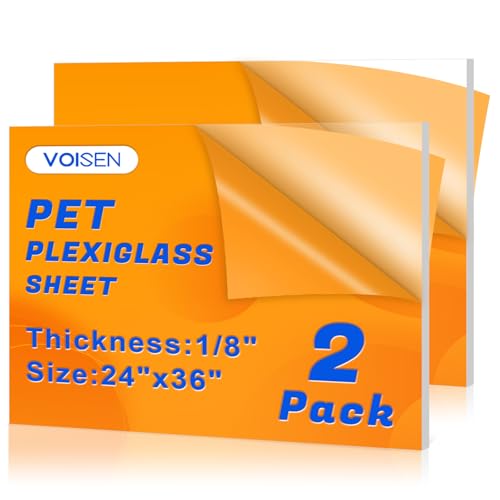
Two 24 x 36 in (61 x 91 cm) sheets, 1/8 in (3 mm) thick, shipped with protective masking film on both sides. Sold under the name plexiglass, but the listing's own description says the sheets are PET rather than cast acrylic.
PET is slightly denser than acrylic, and on a window panel density is the whole point, so the substitution is not a downgrade for this job. VOISEN describes the sheets as shatter resistant and cuttable with a table saw, miter saw or jigsaw, then sanded at the edges. Peel the masking film only after every cut is made.
*Price shown on Amazon and subject to change.

A two-pack of 24 x 36 in panels at 1/8 in thick, listed at over 90% light transmission with UV resistance to limit yellowing. Protective film on both sides, which the maker says to remove only after all cutting and drilling is done.
The cheaper of our two panels at $34.19, down from a $35.99 list price, and the one to pick if the window is somewhere you look out of every day. Clarity and yellowing resistance matter more on a living room window than the small density advantage of PET does.
*Price shown on Amazon and subject to change.

Fifty feet of hollow D-profile TPE, 0.35 in wide and 0.23 in thick, which the maker sizes for gaps from 0.1 to 0.22 in. It cuts with scissors and bends around corners.
The seal is the part of a homemade panel that decides whether it does anything at all, and a hollow bulb deforms to the shape of an uneven frame instead of fighting it. pundin says the adhesive fully bonds after 24 hours and advises warming the backing with a hair dryer in cold conditions.
*Price shown on Amazon and subject to change.

A single 15 ft roll, 1/2 in wide and 1/16 in thick, with adhesive backing. Ferrite powder in a rubber resin, described by the maker as crack resistant, holding up to 6 lb per linear foot on a smooth magnetic surface.
Cheap, and only right in one specific case. This is a single-polarity roll, so it grabs steel rather than another strip of itself, which means it works on a steel window frame and nowhere else. On wood or vinyl you need the paired A and B tape instead. Listed at $7.59, down from a $10.28 list price.
*Price shown on Amazon and subject to change.

One 62 x 210 in roll of shrink film plus a 0.5 in x 84 ft roll of tape, enough to cover up to five 3 x 5 ft windows. Duck describes the film as two times thicker than standard window kits and puncture resistant. It installs with scissors and a hair dryer and comes off at the end of the season.
A thermal product, not an acoustic one, and we are not going to dress it up as anything else. A film membrane has almost no mass. What it does have is a full seal across the opening, which is the cheap way to find out whether your window's problem is leaks before you spend on a panel.
*Price shown on Amazon and subject to change.
| Pick | Product | Link | |
|---|---|---|---|
| Our Pick | NIUBIKLUS — NIUBIKLUS A+B Paired Magnetic Tape (15 ft x 1/2 in, 2 rolls) | $14.99 | Check → |
| Best Panel for a Standard Sash | VOISEN — VOISEN Clear Plexiglass Sheets, 1/8 in Thick, 24 x 36 in (2 pack) | $37.99 | Check → |
| Best Value Panel | Deylixay — Deylixay Clear Acrylic Sheets, 1/8 in Thick, 24 x 36 in (2 pack) | $34.19 | Check → |
| Best Perimeter Seal | pundin — pundin D-Shape Self-Adhesive TPE Weatherstrip, White (50 ft) | $9.79 | Check → |
| Cheapest Magnet Option | Master Magnetics — Master Magnetics Roll-N-Cut Flexible Magnetic Tape Refill (15 ft x 1/2 in x 1/16 in) | $7.59 | Check → |
| Cheapest Way to Test the Idea | Duck — Duck MAX Strength Window Insulation Kit (62 in x 210 in, fits up to 5 windows) | $18.99 | Check → |

Lillie Metayer
Lillie Metayer is the founder of a local program that helps apartment-dwellers take action against noise pollution. Involved in environmental activism since high school, Lillie is passionate about raising awareness of the harms of noise exposure and helping people reduce noise in their communities. In her free time, Lillie enjoys playing the violin and spending time outdoors.