Yes, you can make an apartment wall quieter — but let's be honest up front about what "quieter" means. As a renter, you'll mostly absorb echo inside your own room and add a little mass to a shared wall. Truly blocking a neighbor's TV takes construction you're not allowed to do. That difference is the whole game, and understanding it saves you from wasting money on the wrong products.
This guide walks through every renter-friendly option, from the cheapest gap-sealing tricks to decorative panels that look good on the wall. It's straight with you about which ones actually stop noise and which ones simply make your own room sound nicer — because on this site we'd rather set honest expectations than sell you foam that can't deliver.
First, Know the Difference: Blocking vs. Absorbing
Almost every mistake renters make with wall noise comes from confusing two very different jobs.
- Absorbing sound means soaking up echo and reverb inside your room. Soft, porous materials — panels, foam, curtains, rugs — catch reflections so the space sounds less harsh and hollow.
- Blocking sound means stopping it from passing through the wall. That needs mass, airtight seals, and ideally decoupling: heavy, rigid, sealed construction.
Here's the catch, and the reason a lot of people feel scammed. The fuzzy foam panels marketed as "soundproofing" only do the first job. So if you've ever wondered does acoustic foam actually block sound, the answer is no. According to Sheela Foam, acoustic sound-absorbing foam works entirely within a space and does not stop sound from entering or leaving a room — it will not stop your neighbor from hearing you, and it won't stop you hearing them.
The two jobs even have different measurements, which is where shoppers get tripped up. As Second Skin Audio explains, NRC (Noise Reduction Coefficient) rates absorption on a scale where higher means more sound soaked up, while STC (Sound Transmission Class) is a completely separate number for how well a barrier blocks transmission. A panel can post a fantastic NRC and do essentially nothing for STC. When you shop, match the rating to your actual goal: NRC for a nicer-sounding room, STC for keeping a neighbor out.
Absorbing Echo Inside Your Room
Let's start with the thing renters can genuinely win at: taming echo. If your apartment has hard floors, bare walls, and minimal furniture, sound bounces everywhere and everything feels louder and harsher — your own TV, your voice on calls, the clatter of dishes. Absorption fixes that, and it makes the biggest perceived difference for the least effort and the least risk to your deposit.
This is where acoustic panels earn their keep. When people search for the best acoustic panels for apartment walls, what they usually want is exactly this: something that cuts harsh reflections without tearing a stud wall apart.
Our top absorber is the ATS Acoustics Sona panel — our Best Absorption pick, about $90 (as of July 2026). It's a fabric-wrapped, 2-inch mineral-wool panel rated NRC 1.0, which is about as absorptive as panels get. To be clear about the physics: NRC 1.0 means it soaks up essentially all the sound energy that hits it, but that happens inside your room. It will not stop noise crossing the wall. A few of these on a bare wall genuinely change how a space feels — voices tighten up and the hollow ring disappears.
If you want to test the idea cheaply first, the Kuchoow hexagon tiles — our Best Renter-Friendly Start, about $29 (as of July 2026) — are the low-commitment move. They peel and stick, go up in minutes without tools, and come off without wrecking paint. At 0.4 inches thick they handle mid-to-high echo (voices, clatter, brightness), not bass. Think of them as a way to find out whether panels help your space at all before you spend more.
Placement matters more than raw quantity. You don't need to tile an entire wall to hear a difference — a handful of panels spread across the largest hard surfaces (the bare wall behind your TV, the reflective wall opposite your couch or desk) does most of the work. Spreading panels out beats clustering them in one spot, and mixing thicker panels with thinner tiles covers a wider range of frequencies. Start with a few, listen for a week, and add more only where the room still rings.
A quick reality check on both picks: neither is a wall between you and a loud neighbor. They make your room sound better, which is a real and worthwhile improvement — just not the same thing as blocking transmission.
Soundproofing Without Damaging the Walls
Renters have one hard constraint: whatever you do has to come back off without costing your deposit. The good news is that most genuinely useful moves are damage-free. If your goal is to soundproof your walls without damage, lean on reversible, low-tack, and freestanding methods rather than anything that needs screws, construction adhesive, or new drywall.
Damage-free options that actually help:
- Peel-and-stick panels and tiles with removable adhesive (like the hexagon tiles above). Test a corner first — gentle heat and a slow pull usually lift them clean.
- Command-strip or hook-mounted panels, so a heavy absorber hangs on removable hardware instead of screws.
- Freestanding and leaning treatments — a rolling rack, a tall padded headboard, or panels propped behind furniture.
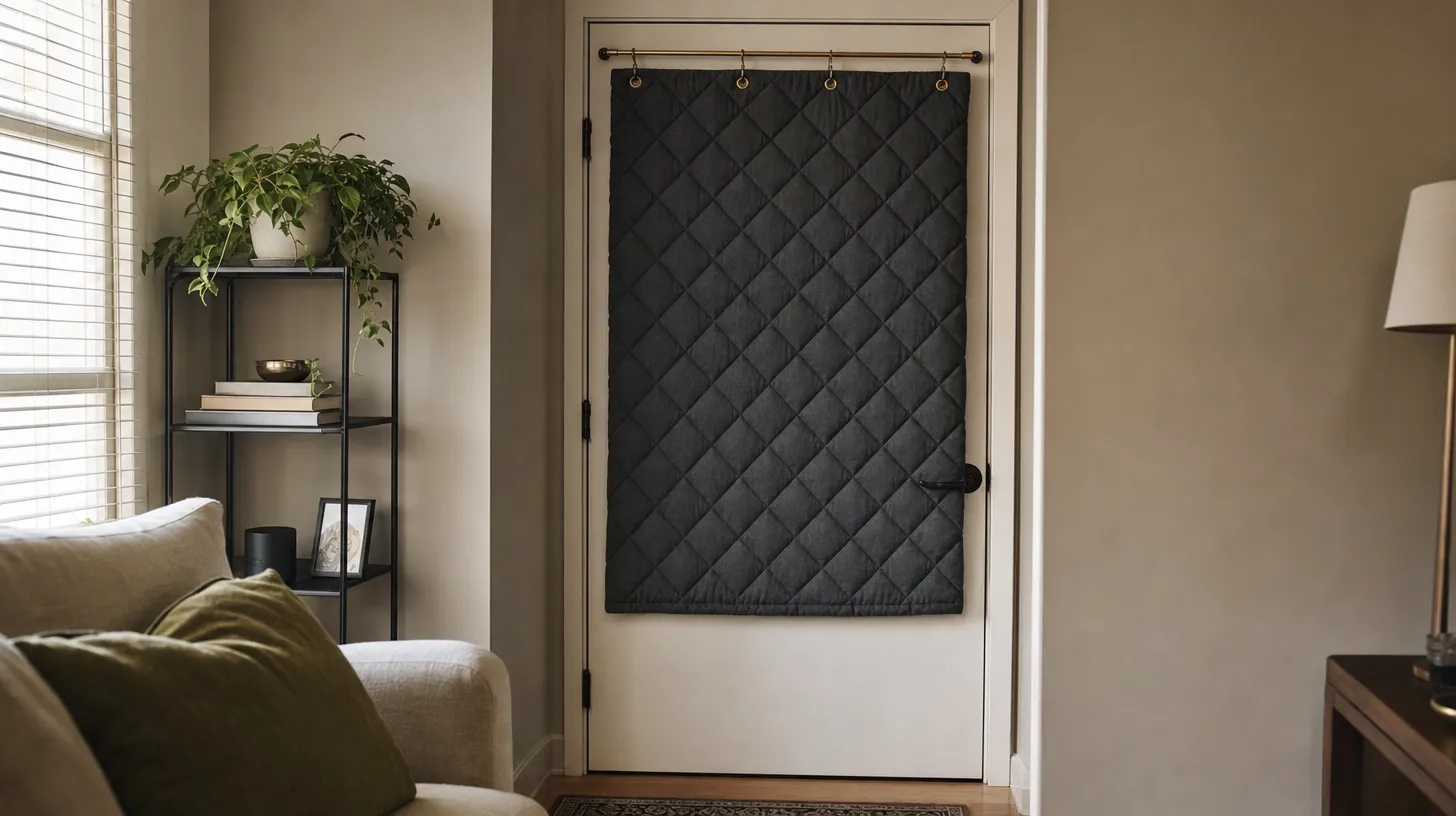
- Heavy curtains hung on the shared wall (yes, on the wall, not just at the window). Dense fabric adds a thin layer of absorption and a little mass without a single hole.
- Thick rugs and moving blankets — mass and absorption you can drape over a tension rod or a mounted dowel.
What to avoid if you want your deposit back: mass-loaded vinyl screwed to studs, construction-adhesive panels, a second layer of drywall, or anything involving Green Glue. Those are effective, but they're renovations, not reversible upgrades. We'll cover them below so you understand the trade-offs — but for most renters they're off the table, and that's fine, because the reversible stuff does most of the useful work.
Seal the Gaps First
Before you spend a cent on panels or mass, do the cheapest high-value thing there is: close the holes. Sound behaves like water — it pours through the smallest gap, and a wall is only as good as its weakest leak. Outlets, switch plates, baseboard gaps, cracks where the wall meets the ceiling, and the seam around a shared-wall doorway all leak far more noise than their size suggests.
Cheap, renter-safe sealing moves:
- Foam gaskets behind outlet and switch plates on the shared wall — a couple of dollars, five minutes, no damage.
- Removable or acoustic caulk along baseboards and along the ceiling line where you can reach. Removable versions peel off later.
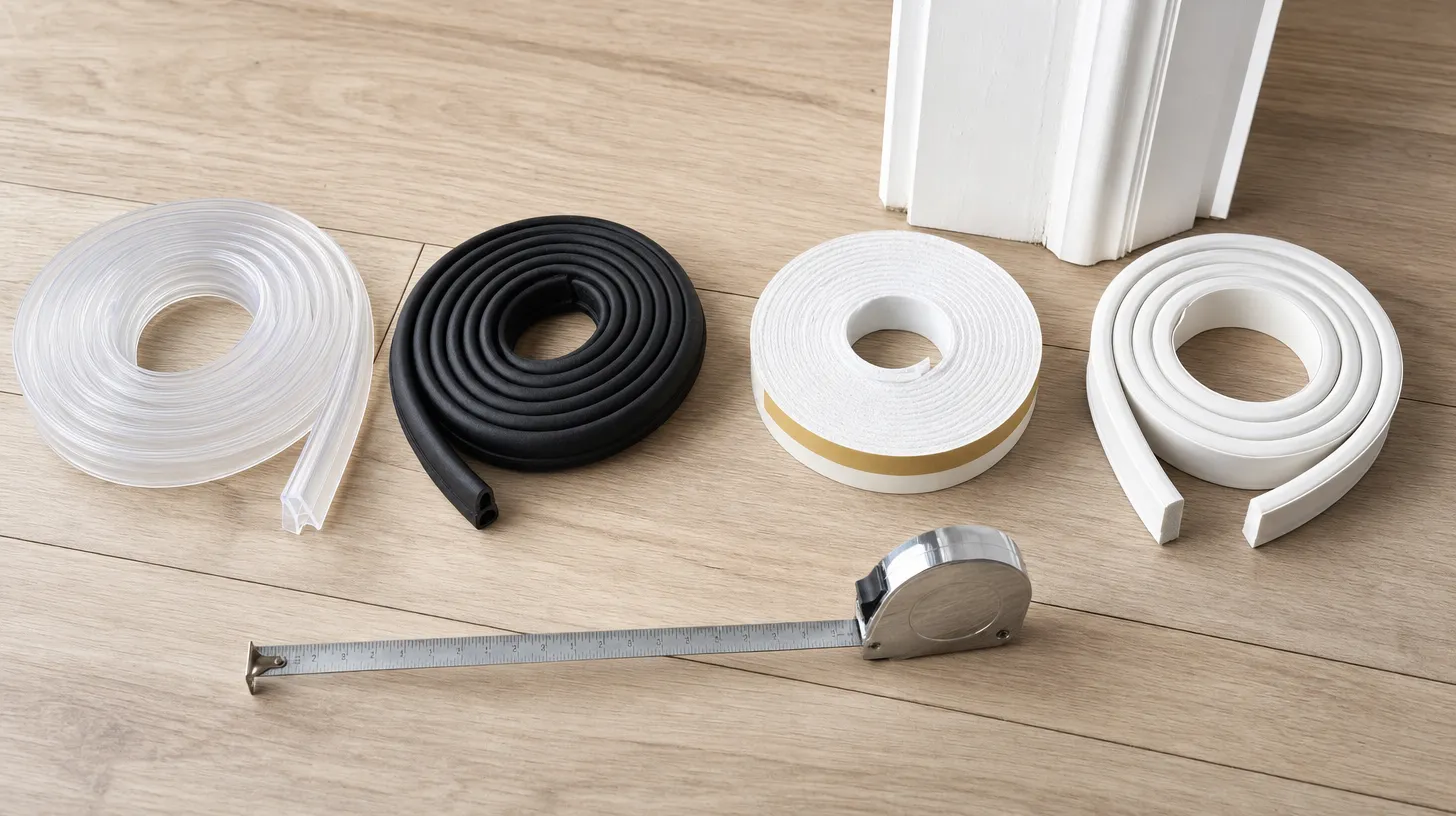
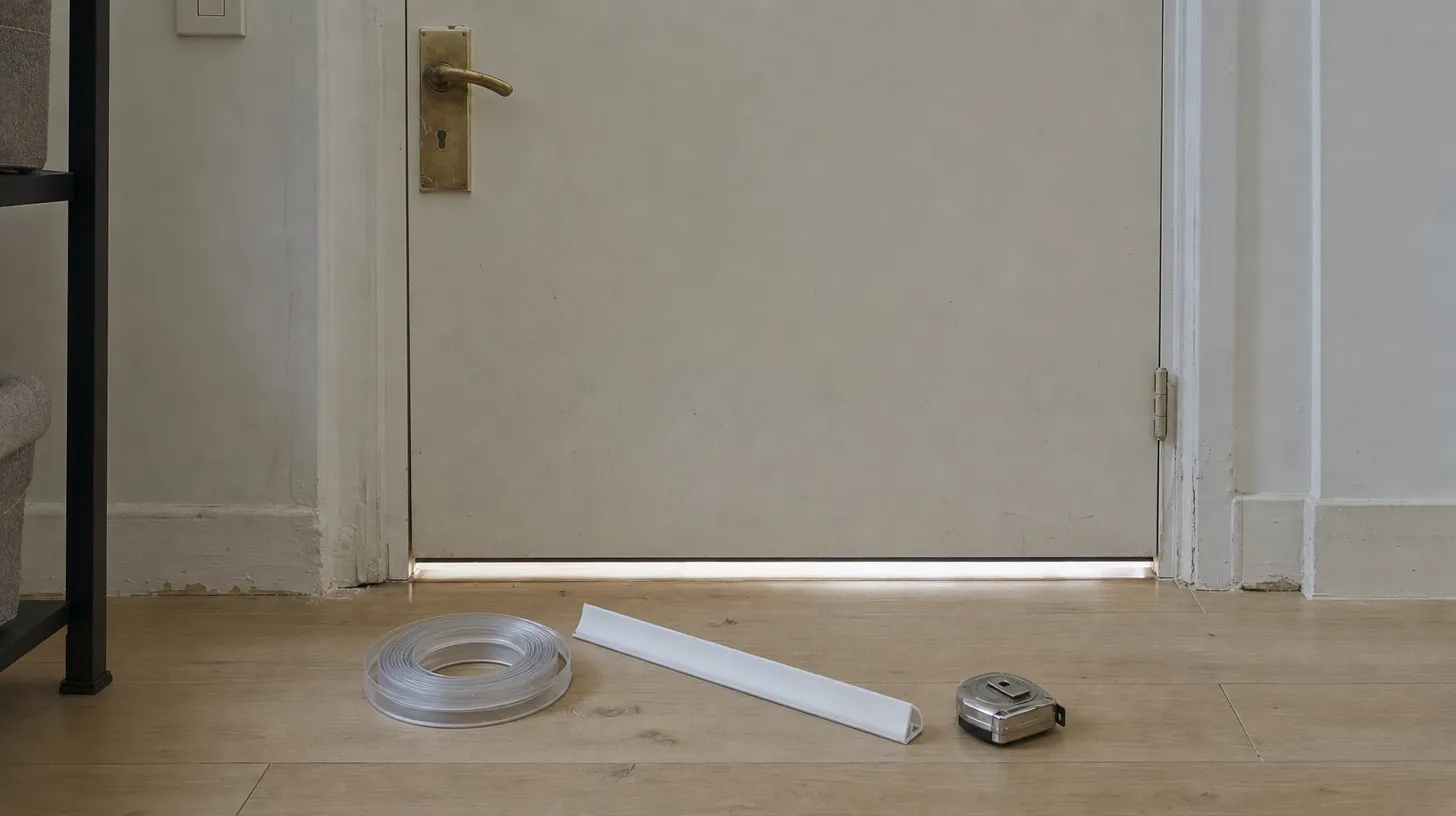
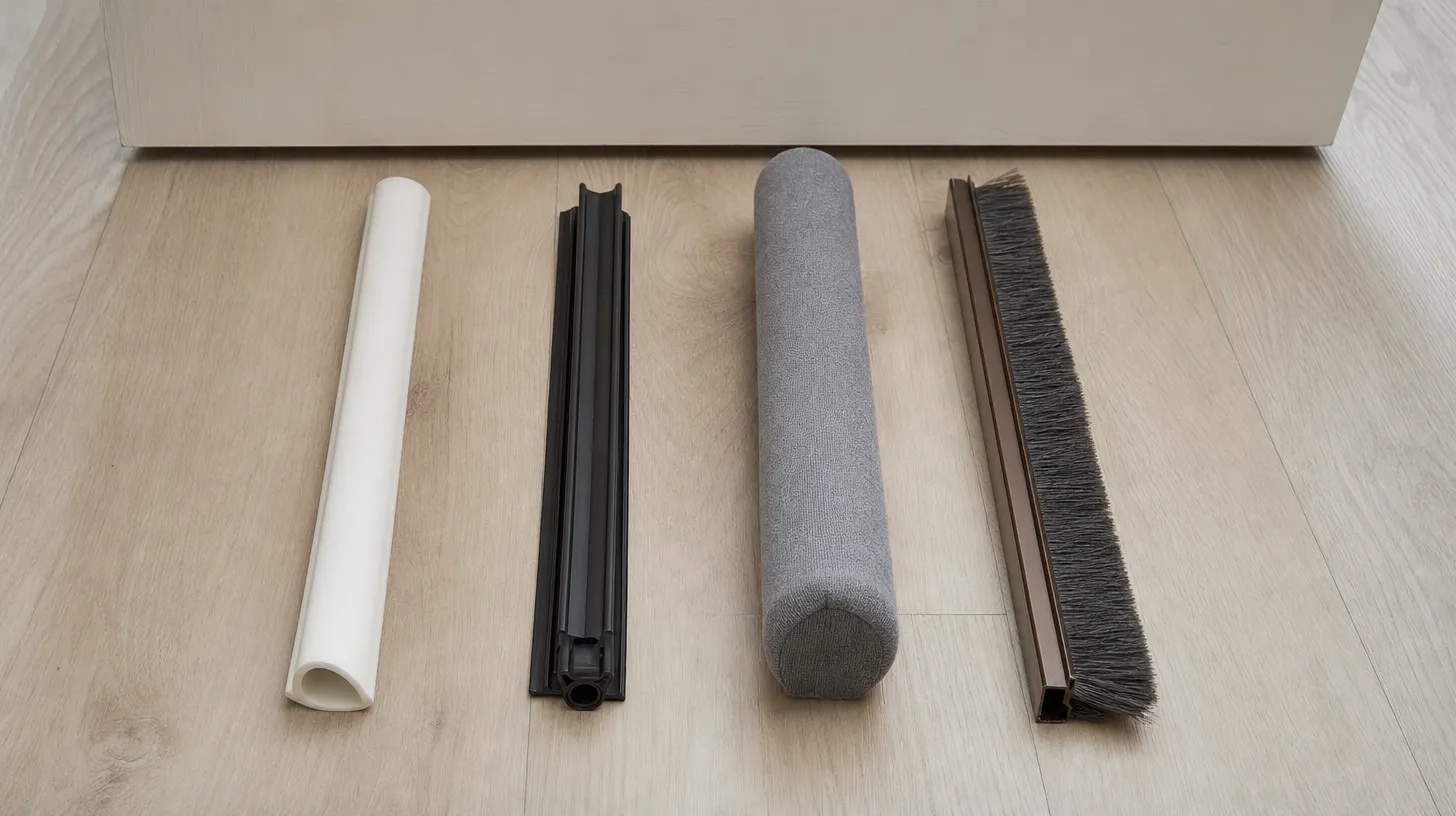
- Weatherstripping and a door sweep if the loud sound comes through a connecting or hallway door.
- Backer rod or foam pushed into obvious cracks and gaps.
This won't transform a paper-thin wall, but sealing air paths is the one blocking-side move that's cheap, reversible, and physically sound. Every serious soundproofing method starts here, because adding mass to a leaky wall is like bailing a boat without plugging the hole first. If you do only one thing from the blocking side of this guide, do this.
Adding Mass: What Actually Blocks Noise
If absorption makes your room sound better, mass is the only thing that actually makes a wall block more. This is real, measurable physics. According to Technicon Acoustics, sound insulation follows the mass law: transmission loss rises by roughly 6 dB for every doubling of the mass of a barrier. Heavier, denser, limper materials resist the vibration that carries sound through a wall.
That single fact explains why renters are at a disadvantage. To meaningfully block a neighbor, you'd need to roughly double the mass of the wall — and you can't tear into a wall you don't own. It also explains why the internet loves hanging mass loaded vinyl on a wall: MLV is a dense, limp sheet designed to add mass cheaply. According to Sound Pro Solutions, the common 1-pound-per-square-foot MLV weighs about a pound per square foot and carries a standalone STC of only around 26 — the real gains show up when it's built into a full wall assembly with drywall and insulation, where a wood-stud wall using MLV can climb into the 40s.
Here's the honest problem for renters. MLV only performs if it's sealed airtight and, ideally, buried under a new layer of drywall. Screwed loosely over your existing wall, it does far less than the marketing implies, and it puts fastener holes all over a surface you have to restore. Mass is the right idea, but the renter-friendly versions of it — heavy curtains, thick rugs, a packed bookshelf — add only a fraction of what a real mass upgrade would. Manage expectations accordingly.
Mass also has a weakness that matters at home: it works best at higher frequencies. Aural Exchange notes that at low frequencies — bass, engine rumble, thumping music — a barrier's stiffness and resonance take over, so added mass does much less. That's why bass is the hardest thing to stop, and we'll come back to it.
What About Soundproof Paint?
It sounds too good to be true, and mostly it is. Still, renters ask about it constantly, so let's be straight about whether soundproof paint works. It's a thick, water-based coating with sound-dampening fillers, rolled on like ordinary paint.
The honest verdict: it does a little, at the margins. Soundproofing guides commonly cite a reduction of roughly 2 to 4 decibels per coat, so three coats might add up to a 6-to-12 dB reduction — but only for higher-pitched noise, and it does little for the bass that bothers most people. According to Engineer Fix, a standard interior wall is rated around STC 33, and acoustic paint might raise that by only 3 to 7 points under the most favorable conditions. And as Acoustical Solutions puts it, acoustic paint works for sound absorption, not sound blocking.
Translation for renters: if your problem is faint, high-pitched background noise, a few coats of dense paint might take the smallest edge off. If your problem is a loud TV, a subwoofer, or footsteps, paint will not save you — and you'd get far more for your money from sealing gaps and hanging curtains. There's also the renter catch: it's a permanent-ish wall change you'd likely have to paint back over on move-out, for a benefit you can barely measure. It's paint. Treat it as a very minor bonus, not a solution, and don't reorganize your whole plan around it.
Budget Fixes That Still Help
You don't need a big budget to make a real dent — you need to spend on the right things. When we rank the cheapest ways to soundproof a wall by actual payoff per dollar, the winners are almost never the products with "soundproof" printed on the box.
Best bang-for-buck, roughly in order:
- Outlet gaskets and removable caulk — a few dollars to seal the biggest air leaks (see above). The highest return of anything here.
- A packed bookshelf against the shared wall — free if you already own the books, and it adds mass while scattering sound (more on this next).
- Thick moving blankets on a tension rod or removable hooks — cheap mass and absorption, easy to take down.
- A dense rug or two on hard floors — cuts echo and reduces the impact noise you send to downstairs neighbors.
- Heavy curtains on the wall, not just the window — a soft, massy layer that installs on a rod with no holes.
- Peel-and-stick acoustic tiles where you want targeted echo control without commitment.
Notice the pattern: the cheapest effective moves are about sealing air gaps and adding soft mass, not buying branded foam. A $10 tube of caulk and a $30 pile of moving blankets will out-perform a $100 box of thin foam wedges for most real apartment noise. Spend where the physics is, not where the marketing is.
The Furniture and Bookshelf Method
The single most underrated renter trick is also free: rearrange what you already own. Putting a large, dense object against the shared wall does two useful things at once — it adds a bit of mass, and it breaks up and scatters sound so less of it reaches you cleanly.
The classic version is soundproofing a shared wall with furniture — specifically a deep, fully loaded bookshelf. Books are dense and irregular, which is close to ideal: mass plus a rough, absorptive surface. For the best effect:
- Use a deep, solid-backed shelf and push it flush against the noisy wall.
- Pack it full — dense with books, no big empty gaps. Density is the whole point.
- Cover the wall floor to ceiling if you can; a half-covered wall leaves a wide-open path.
- For an extra bit, tuck a moving blanket or thin panel behind the shelf, against the wall.
A wardrobe, a padded upholstered headboard, or a deep media unit works on the same principle. None of this will block a determined bass line — remember the mass law, and remember you're adding pounds, not the hundreds of pounds a real wall upgrade would. But against ordinary conversation, TV chatter, and mid-range noise, a wall of full bookshelves is one of the most effective and deposit-safe moves a renter has. It's also, conveniently, just furniture.
Advanced: Decoupling and Damping
For completeness — and so you can spot when a "renter soundproofing" video is quietly showing you a renovation — here's what real wall blocking looks like. The two heavy hitters are decoupling and damping, and they usually work together.
You'll see them discussed as green glue and decoupling. According to Acoustical Surfaces, Green Glue is a visco-elastic damping compound sandwiched between two layers of drywall; it converts sound-vibration energy into a tiny amount of heat, and in a constrained-layer assembly it can improve a wall's STC by roughly 13 to 16 points — with especially useful gains on low frequencies, the very bass that mass alone struggles with. Decoupling is the partner move: mounting the drywall on resilient clips or channels so vibration can't travel straight through the framing.
Together they're genuinely effective. They are also, unambiguously, construction. Both require adding drywall, screwing into framing, and permanently altering the wall — the opposite of renter-friendly. We include them so you understand the ceiling of what's possible and can price it honestly if you ever own the place or get a landlord's blessing. For a renter, the takeaway is simple: the methods that truly stop sound are the ones you're not allowed to install, which is exactly why we lead with absorption, sealing, and mass you can add reversibly.
What to Expect (an Honest Word on Bass)
Let's set expectations honestly, because this is where disappointment lives: bass. That thump-thump through the wall — a subwoofer, a bass guitar, heavy footsteps, a car stereo — is the hardest sound to stop and the one renters can do the least about. (If those footsteps are coming from above rather than beside you, that's a different problem with a different playbook — see our guide to reducing noise from upstairs neighbors.)
There are physics reasons. As Aural Exchange notes, the mass law that governs blocking works best at high frequencies and does much less at low ones, where a wall's stiffness and resonance dominate. Low-frequency sound also carries a lot of energy and travels through the structure of the building itself — the studs, floor, and ceiling — not just the air. Absorption panels do essentially nothing to it, and even serious mass-and-decoupling builds only tame it rather than erase it.
So what can you realistically expect from renter-friendly methods? A meaningfully calmer room: less echo, softer voices and TV, a noticeable drop in mid- and high-frequency noise, and a better night's sleep. What you should not expect is silence, or the disappearance of a neighbor's bass. If low-frequency noise is your core problem, the honest answer is that walls are only part of the fix — a friendly conversation with the neighbor or landlord, a white-noise machine to mask what's left, and realistic expectations will do more than any panel. We'd rather tell you that now than sell you foam that can't deliver.
Treatments That Double as Decor
Here's the good news to end on: the renter-friendly stuff that helps most can also look intentional, so you're not stuck with a room that looks like a recording booth. If you're going to hang something on the wall anyway, you might as well pick decorative acoustic panels that look good and do a little acoustic work at the same time.
Our Best-Looking pick is the Vellorise acoustic wood slat panels in walnut, about $58 (as of July 2026). They're wood-look slats over a felt backing that absorb some reflected sound while reading as deliberate decor rather than acoustic treatment. For renters who want the room to look good first and sound a little better second, they're the easy choice — just stay clear-eyed that, like every panel here, they absorb reflections inside the room and don't block your neighbor.
Other decor-that-works ideas:
- Fabric-wrapped panels (like the ATS Sona) in a color that matches your walls — high absorption that passes for art.
- A large woven tapestry or quilt on the shared wall — soft mass and real absorption disguised as a wall hanging.
- Framed acoustic art or upholstered panels mounted on removable hardware.
- A full, styled bookshelf — the best-looking mass there is, as covered above.
The trick is to stop picturing soundproofing as ugly foam and start thinking of it as soft, dense, textured things that happen to look nice. Done right, a quieter apartment and a better-looking one turn out to be the same project.
Explore the full series
- Does Acoustic Foam Actually Block Sound? The Honest Answer — Why foam absorbs echo but can't block a neighbor.
- The Best Acoustic Panels for Apartment Walls — The panels that actually tame echo in a rental.
- How to Soundproof Apartment Walls Without Damaging Them — Reversible, deposit-safe ways to quiet a wall.
- Mass Loaded Vinyl for Walls: Does It Work in a Rental? — Real blocking mass, and its honest rental limits.
- Does Soundproof Paint Actually Work? — The honest verdict on a thin, oversold coating.
- The Cheapest Ways to Soundproof a Wall That Still Work — Budget fixes ranked by payoff per dollar.
- The Bookshelf Method: Soundproofing a Shared Wall With Furniture — The best free move: dense furniture as mass and scatter.
- Green Glue and Decoupling, Explained (and Why Renters Usually Can't) — The techniques that truly block sound, and the renter catch.
- Decorative Acoustic Panels That Actually Look Good — Panels that read as decor while quietly taming echo.

A fabric-wrapped, 2-inch mineral-wool panel with a Noise Reduction Coefficient of 1.0. It won't stop noise passing through the wall, but it's the most effective option here for killing echo inside your own room.
When a bare-walled apartment sounds harsh and echoey, a few of these transform how the room feels. NRC 1.0 is as absorptive as panels get.
*Price shown on Amazon and subject to change.
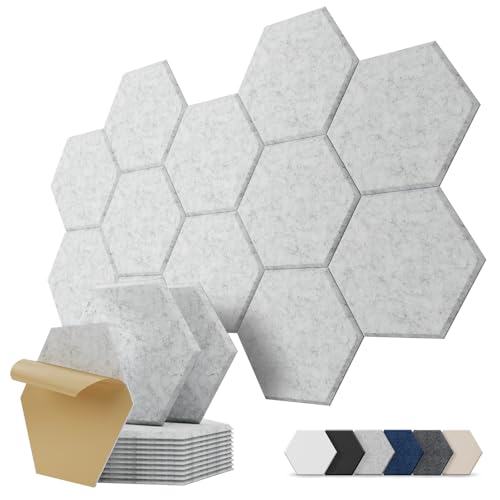
Twelve peel-and-stick hexagon tiles that go up in minutes without tools and come off without wrecking paint. At 0.4 inches thick they handle mid-to-high echo, not bass.
The cheapest, lowest-commitment way to test whether panels help your space before you spend more.
*Price shown on Amazon and subject to change.

Walnut-look slat panels on a felt backing that absorb some reflected sound while reading as intentional decor rather than acoustic treatment.
For renters who want the room to look good first and sound a little better second, these are the easy pick.
*Price shown on Amazon and subject to change.
| Pick | Product | Link | |
|---|---|---|---|
| Best Absorption | ATS Acoustics — ATS Acoustics Sona Fabric Acoustic Panel (24" x 48" x 2", NRC 1.0) | $89.99 | Check → |
| Best Renter-Friendly Start | Kuchoow — Kuchoow Hexagon Self-Adhesive Acoustic Tiles (12-Pack) | $28.99 | Check → |
| Best-Looking | Vellorise — Vellorise Acoustic Wood Slat Wall Panels (4-Pack, Walnut) | $58.49 | Check → |

Lillie Metayer
Lillie Metayer is the founder of a local program that helps apartment-dwellers take action against noise pollution. Involved in environmental activism since high school, Lillie is passionate about raising awareness of the harms of noise exposure and helping people reduce noise in their communities. In her free time, Lillie enjoys playing the violin and spending time outdoors.