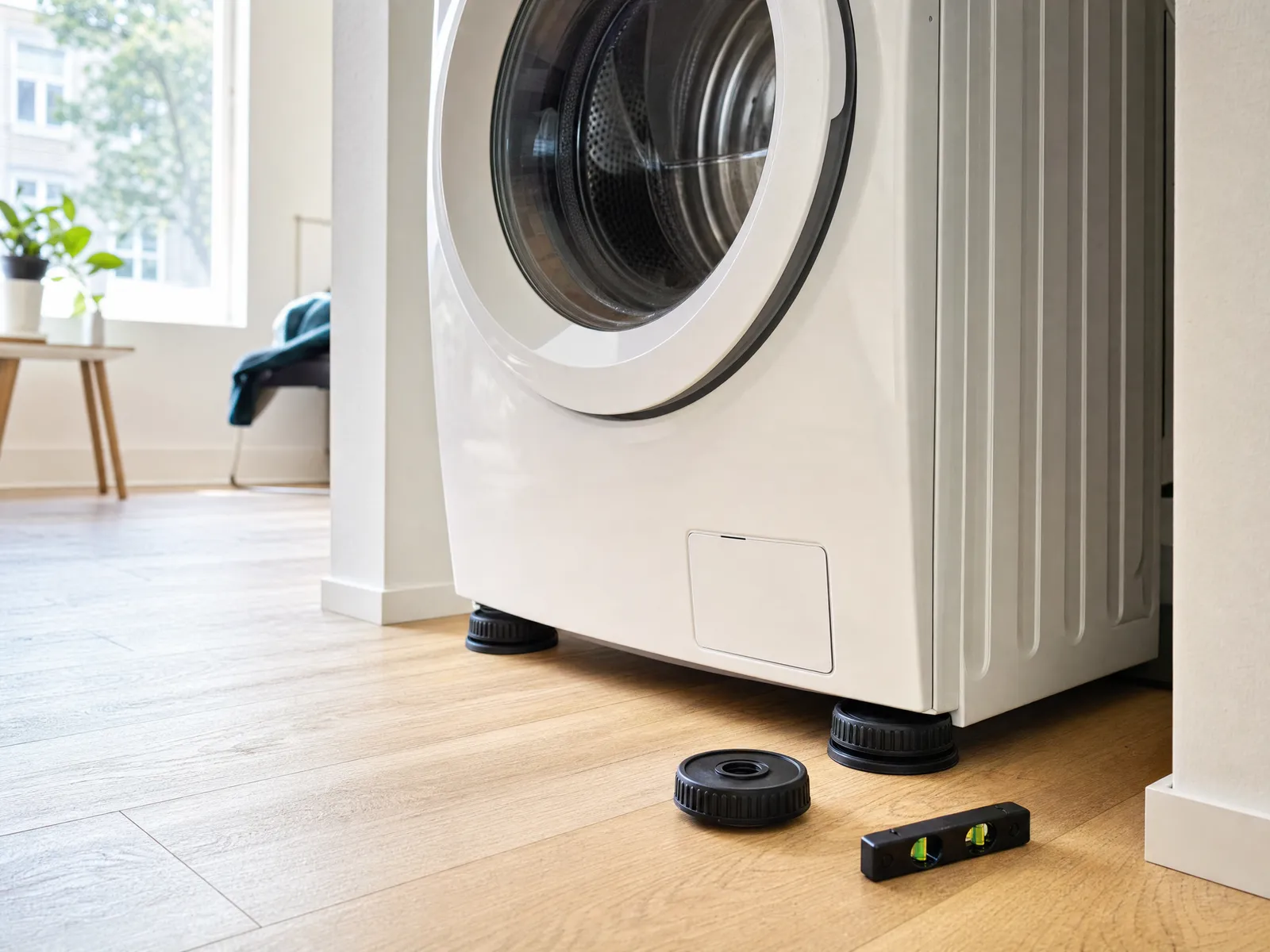
Almost every washing machine vibration problem in an apartment comes down to four small feet, and most of it is free to fix. Check that the transit bolts are out, that all four feet sit level and locked, and that you are not spinning a single wet bath mat on its own. Anti-vibration pads come after those checks, not instead of them.
That tiny contact area is also why this is the best value job on the whole floor: you are not treating 200 square feet of room, you are treating four squares the size of a drinks coaster. For the full order of operations in a rental, start with how to soundproof an apartment floor and treat this page as the appliance chapter.
The short version: run the free diagnostic sequence below first, buy pads second, and if the machine rumbles or bangs in a way that scales with drum speed, call the landlord instead of shopping.
A washing machine makes two noises and your neighbor only hears one
Second Skin Audio splits washer noise in two: airborne sound that spreads into nearby rooms, and vibration that travels through the floor and structure, where energy moves out of the vibrating machine into the floor and then through the floor to the rest of the home.
You hear the first one. The apartment below hears the second one. That distinction decides everything you buy, because the two paths get interrupted in completely different places - airborne sound by mass and sealing, structure-borne vibration at the contact point.
For a washing machine, the contact point is four feet. According to Kinetics Noise Control's guide to the control of vibration, shock and structure-borne noise, "an effective and low cost means of alleviating structure-borne noise problems is to physically separate the solid structures and interpose a resilient material between them."
Appliances are only one of several things arriving downstairs. If the complaint covers more than laundry day, our guide to how to stop your footsteps bothering the downstairs neighbors handles the human half.
Do the free checks first, in this order
Nothing in this list costs money, and it ends the problem more often than a purchase does.
1. Are the transit bolts still in? A machine that bangs violently from its first cycle after delivery or a move is usually this. Whirlpool's installation support page has owners loosen the transport bolts with a 5/8 in (16 mm) wrench and pull them, with their plastic spacers, out of the back of the washer. The same page warns that leaving them in place "can cause significant issues, such as excessive vibration, noise, and even damage to the machine," and that operating the washer with the shipping bolts still installed can void your warranty.
2. Is it level, with all four feet carrying weight? Whirlpool's vibration troubleshooting page is flat about this: "Front and rear feet must be in firm contact with the floor, and the washer must be level to operate correctly." It suggests rocking the washer front to back and side to side to find the foot that is not touching. The same page adds that "jam nuts must be tight against the bottom of the cabinet" - the lock nut is what stops a leveled foot unwinding over a few hundred spin cycles.
3. Is it touching anything? A machine touching the wall behind it, the cabinet beside it or the dryer next to it has a second path into the building and something to rattle against. Pull it forward an inch or two, check the drain hose is not jammed, and run a spin cycle again.
4. Is the load balanced? Whirlpool's instruction is specific: "Avoid washing single items, especially bulky items. Balance a single item, such as a rug or a jean jacket, with a few extra items." A single heavy item that holds water - a bath mat, a hoodie, a duvet cover wound into a rope around everything else - is the classic spin-cycle hammer.
5. Is the drum overloaded? Whirlpool again: "Avoid tightly packing the load. Clothing should move freely within the washer."
6. Is the floor itself springy? Whirlpool's page says to check the floor for flexing or sagging, and not to install the appliance on a raised wooden platform, noting that a vibration you can feel in the floor from across the room can be a sign of a flexing floor. On a concrete slab you have less to worry about. On a suspended timber floor in an older building the floor is effectively part of the machine, and a renter can change very little of that.
What the symptom tells you
Match what you hear against the checks above before spending anything.
- Violent banging from the very first cycle after delivery or a move. Transit bolts, usually. Go to check one.
- Noise only during spin, and worst as the spin ramps up. Load balance or suspension. A US patent for a washer snubber system notes that unbalanced-load vibration excursions "tend to be especially acute during the start of the spin cycle," and can grow as the machine passes through the resonance of its suspension until the tub bangs against the housing. A short loud passage on the way up to speed is normal; a balanced load keeps it short.
- The machine walks across the floor. Feet, floor or grip. Level it first, then look at pads with a grippy face.
- Buzzing or rattling through the whole cycle rather than just the spin. Something is in contact. Check three.
- A deep rumble or roar that rises with drum speed. Read the next section before you buy anything at all.
When it is a fault, tell the landlord instead of buying pads
The reason a washer tolerates an unbalanced load at all is its suspension. PRS Parts describes washing machine dampers as components that absorb and control the motion of the inner drum, acting like miniature shock absorbers that limit how far the drum can bounce inside the housing - top-loaders typically using suspension rods with springs and bushings, front-loaders using shock absorbers mounted horizontally at the base of the tub.
PartSelect's guide to a washer that shakes and moves says that worn suspension components mean unbalanced loads will cause the washer to shake or move, often with a loud banging sound during the spin cycle.
A bearing sounds different again. Fix.com's tub bearing page says that if the tub bearings have failed "you might hear a loud rumble or roar coming out of the washing machine when it is trying to spin." Owners typically report it getting worse as the drum accelerates.
None of that is a pad problem, and none of it is your repair to make. Worn shock absorbers, stretched suspension rods, a failing bearing or a loose counterweight bolt are repair jobs, and on a landlord-supplied machine they are usually the landlord's to sort out - check your lease. Report it in writing, describe the noise and where in the cycle it happens, and say it is audible to the neighbors. Rubber under a failing bearing hides nothing and delays a repair that only gets more expensive.
How anti-vibration pads actually work, and what they cost
A pad is the resilient material in the Kinetics description, cut into four squares and slipped under the feet. The machine still vibrates; the vibration just has a soft, lossy layer to cross before it reaches the structure.
Our pick is the PneumaticPlus rubber and cork anti-vibration pads, $16.50 as of October 2026 for four pads at 4 x 4 x 7/8 in, rated to a 50 PSI maximum load, with alternating rib heights so they still deflect under light loads as well as heavy ones. Rubber bonded to cork is the pairing used under real machinery, and the maker's application list - air compressors, HVAC, stereo equipment, treadmills - tells you what it was built for. Our pillar names the same pads.
If price decides it, the Flux Phenom anti-vibration pads are $7.99 as of October 2026 for four, with a sticky bottom face so each pad stays under its foot - which matters more than it sounds, because a pad that has crept out has stopped working.
You will not find a defensible performance figure on these listings, and there is a reason. According to the Barry Controls isolator selection guide, selecting an isolator properly means deciding how much isolation you want and knowing the operating speed of the machine producing the vibration, so the isolator's natural frequency can be matched to it. Hunker puts most front-load spin speeds between 900 and 1,200 rpm, or 15 to 20 revolutions a second. A four-pack sold for every appliance in the house cannot know which machine you own, which is why we quote no decibel figure for any pad here.
Measure the foot before you order
This is the step that gets the purchase wrong. Appliance feet vary in diameter, and pad listings commonly cap the foot they will accept at about 1.75 in.
The Sumato Stuff VibeGuard pads make that comparison themselves: the maker states a fit guaranteed for all appliance feet up to 2.25 in in diameter, against standard pads that fit feet up to 1.75 in. They are $22.49 as of October 2026, include a bubble level, and the maker says they raise the appliance 3/4 in. Every performance phrase on the listing is the maker's own, so read the grip and absorption language as a claim.
The Linda's Essentials HexiGrip pads are the clearest argument for measuring first, because the listing contradicts itself. One bullet states the pads are for feet under 1.75 in in diameter and names nine Samsung washers as incompatible - WA52DG5500AW, WA44A3205AW, WA52DG5500AV, WA54CG7150AD, WA49B5205AW, WA55CG7500AE, WA47CG3500AV, WA55CG7100AV and WA40A3005AW. A later bullet on the same listing says they fit all standard feet up to 2.5 in. Both cannot be true, and at $29.99 as of October 2026 this is the most expensive set here.
So measure. Put a tape across the widest part of one foot and write the number down before you open a product page.
Then think about height, the other fitment trap. Pads lift the machine. Sumato's own advice is to order two packs for a side-by-side washer and dryer so the pair stays level with each other, and that logic holds whichever brand you buy. If the machine lives under a counter, measure the gap above it before you add three quarters of an inch underneath.
Four pads or one full mat?
These are two different products shelved together.
The Builimeer anti-vibration mat is a foldable rubber tray measuring 68 x 29.5 in at 0.24 in thick, $29.99 as of October 2026, sized to run under a side-by-side washer and dryer. The maker credits it with an upgraded high-elastic shock-absorbing structure that reduces floor resonance and buzzing noise, which is listing language rather than a lab figure, so we treat it as a claim and not a number.
At 0.24 in, treat a mat like this as excellent floor protection with some damping attached, not as a replacement for isolating the feet. The machine's whole weight lands through four small contacts, which a thin sheet spread over the footprint does not address. Pads under the feet, mat under the pair, is the combination we would run.
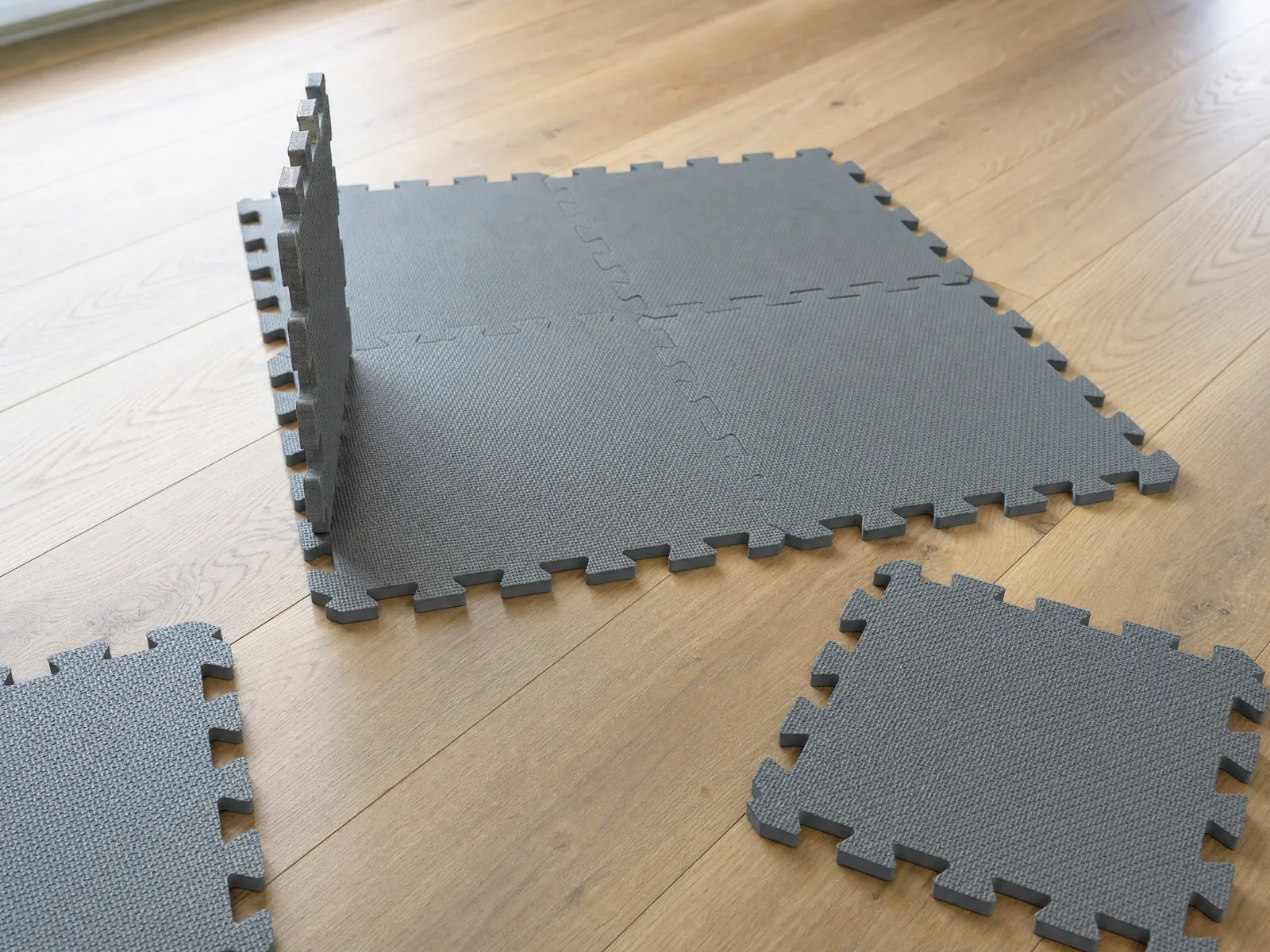
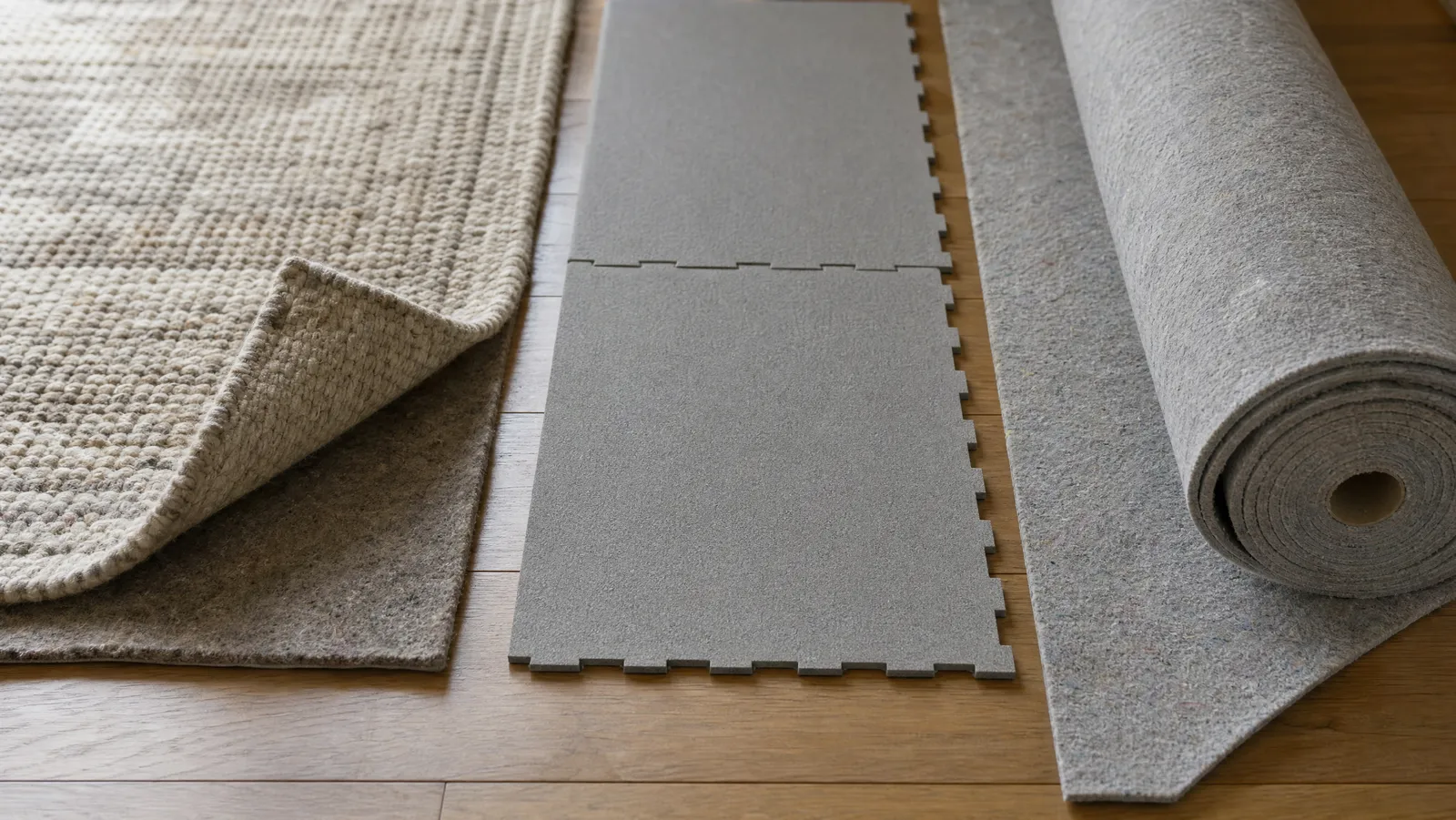
For what else goes on the floor around a laundry alcove, the best soundproof floor mats covers the felt tile category and why the numbers on those boxes describe your own room, not the neighbor's. The other thing people put under a washer is puzzle mats, and our separate piece covers whether interlocking foam tiles reduce impact noise.
What pads will not fix
Nobody in this category publishes a lab isolation figure. We looked, and found marketing language on every listing instead - which is why this page compares thickness, foot diameter, material and price rather than performance.
A pad cannot stiffen a springy floor. If Whirlpool's flexing-floor check was the one that rang true, pads will help at the margin and the floor will still dominate.
A pad cannot fix a fault either. A failing bearing or worn suspension gets louder, not quieter, under rubber.
And a pad does nothing for airborne noise - the drum, the pump draining, the chime through a hollow laundry door. That is a separate job, which is why Second Skin Audio puts door sealing and acoustic treatment after machine isolation rather than alongside it.
The order we would do this in
Bolts out, feet level and locked, nothing touching, load balanced and not packed, floor checked for flex. Only then measure a foot and buy pads, adding a mat if you want the floor protected too. If the noise is a deep rumble that tracks drum speed, or a bang that arrived suddenly on a quiet machine, stop shopping and email the landlord.
That is the same sequence we apply to every impact-noise source in a rental: find the contact point and interrupt it as close to the source as possible. For the rest of the floor - rugs, pads, underlayment and what the neighbor below actually hears - our apartment floor guide is where to go next.
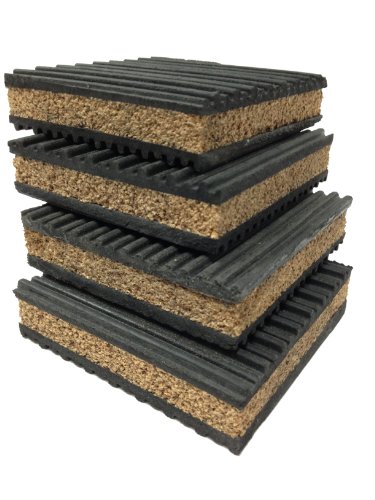
Four rubber and cork pads, each 4 x 4 x 7/8 in and rated to a 50 PSI maximum load, with alternating rib heights so the pad still deflects under both heavy and light loads. The maker lists air compressors, HVAC equipment, stereo gear and treadmills among its applications, and states the material resists aging, compression set, water and oil.
The pick, and the same pad our apartment floor guide names as the best value fix on a rental floor. Rubber bonded to cork is the pairing you find under genuine machinery rather than under laundry marketing, the alternating rib height is a real answer to the fact that a washer loads its four feet unevenly, and at $16.50 as of October 2026 it is the cheapest honest thing you can put between an appliance and a building. Measure your feet first - at 4 in square the pad is generous, but no diameter limit is published.
*Price shown on Amazon and subject to change.

Four rubber pads with a bubble level included, which the maker states are guaranteed to fit all appliance feet up to 2.25 in in diameter, against standard pads that fit feet up to 1.75 in. They raise the appliance 3/4 in, and the maker advises ordering two packs for a side-by-side washer and dryer so both stay the same height. A 30-day trial and a 5 year extended warranty are stated by the maker.
Buy this one if your foot measures over 1.75 in, which on a large modern front loader is common. The 2.25 in fit is the genuine differentiator here and the bundled level is the tool the job actually needs. Everything else on the listing - sound and vibration absorption, a 3D-TrianGrip grip pattern with a stated 5 percent larger grip area than other pads - is the maker describing its own product, so we treat it as a claim rather than a measurement. $22.49 as of October 2026 against a $24.99 list price.
*Price shown on Amazon and subject to change.

Four thick rubber pads with a sticky bottom face that holds each pad in place under its foot. No tools are needed - they slide under each foot - and the maker states a universal fit for most washer and dryer feet including LG, Samsung and Speed Queen models, plus stackable units and pedestals, and says they protect tile, wood, laminate and concrete from marks and scuffs.
The cheapest credible way to break the contact path between a machine and a building, at $7.99 as of October 2026 against a $12.99 list price. The sticky base matters more than it sounds, because a pad that creeps out from under a foot over a few months has stopped working. The trade-off against the Sumato set is that Flux Phenom publishes no maximum foot diameter at all, so a universal fit claim is all you have to go on.
*Price shown on Amazon and subject to change.

A foldable rubber mat measuring 68 x 29.5 in at 0.24 in thick, sized to run under a side-by-side washer and dryer. It is cuttable, reusable, waterproof and stainproof, has a dense anti-slip texture on both faces, and the maker states it leaves no sticky residue on floors. The same mat is sold for treadmills, refrigerators, water dispensers, coffee makers and workbenches.
A different form factor doing a different job. As floor protection under a laundry pair it is the best thing here - waterproof, cuttable to an awkward alcove, and it will take the scuffing and the splashes a rental floor would otherwise absorb. But at 0.24 in it is thin, and the maker's upgraded high-elastic shock-absorbing structure that reduces floor resonance and buzzing noise is listing language rather than a lab result, so we treat it as a claim and not a number. Use it with pads under the feet, not instead of them. $29.99 as of October 2026 against a $35.99 list price.
*Price shown on Amazon and subject to change.

Four square high-density rubber pads with the maker's HexiGrip surface pattern, stated to maximize surface contact, plus a bonus bubble leveling tool. The maker says the rubber will not flatten or crack over time and describes itself as a family-owned American brand.
Included mainly as a fitment warning. The listing gives two different maximum foot diameters - one bullet says feet under 1.75 in and names nine incompatible Samsung washers, a later bullet says it fits all standard feet up to 2.5 in - and both cannot be right. At $29.99 as of October 2026 it is also the most expensive pad set here, with nothing published that the cheaper sets do not also claim. If your foot is the borderline case this set is meant to solve, buy the pads that state one number and stand behind it.
*Price shown on Amazon and subject to change.
| Pick | Product | Link | |
|---|---|---|---|
| Our Pick | PneumaticPlus — PneumaticPlus Rubber/Cork Anti-Vibration Pads (4 pack, 4 x 4 x 7/8 in) | $16.50 | Check → |
| Best for Large or Modern Feet | Sumato Stuff — Sumato Stuff VibeGuard Anti-Vibration Pads (4 pack + level, fits feet to 2.25 in) | $22.49 | Check → |
| Best Budget | Flux Phenom — Flux Phenom Anti-Vibration Pads for Washing Machine (4 pack, rubber feet) | $7.99 | Check → |
| Best Full-Footprint Mat | Builimeer — Builimeer Anti-Vibration Mat for Washing Machine (68 x 29.5 x 0.24 in, foldable rubber) | $29.99 | Check → |
| Also Considered | Linda's Essentials — Linda's Essentials HexiGrip Anti-Vibration Pads (set of 4, square, with level) | $29.99 | Check → |

Lillie Metayer
Lillie Metayer is the founder of a local program that helps apartment-dwellers take action against noise pollution. Involved in environmental activism since high school, Lillie is passionate about raising awareness of the harms of noise exposure and helping people reduce noise in their communities. In her free time, Lillie enjoys playing the violin and spending time outdoors.