Yes — you can make an apartment wall meaningfully quieter without drilling a single hole. But let's be honest about what non-permanent, damage-free soundproofing actually does: it mostly absorbs echo inside your room and adds a little mass, and it will not block a determined neighbor. Knowing that difference is the whole game.
Here is the trap renters fall into. You search for a fix, buy something that promises "soundproofing," stick it on the wall, and nothing changes because you were solving the wrong problem. Absorbing means soaking up the echo and reflections bouncing around inside your room, so your own voice, TV, and calls sound cleaner. Blocking means stopping sound from crossing the wall between you and unit next door. Those are two different jobs, and almost everything you can hang without tools does the first one, not the second.
That is not a reason to give up. A hard-floored, bare-walled apartment is genuinely loud on the inside, and taming that echo makes daily life better. You can also do one honest blocking move — sealing air gaps — without touching your deposit. This guide walks through every reversible method, ranked by how much it actually helps, and stays clear about the ceiling. If your real target is a neighbor's bass and you want the full picture, start with our pillar on soundproofing your apartment walls, then come back here for the damage-free playbook.
Why "Damage-Free" Changes the Whole Approach
When you rent, the wall is not yours to modify, and that single constraint rules out most of what actually blocks sound. Real soundproofing adds dense, permanent mass and airtight decoupling — the stuff that leaves holes, residue, and a repair bill.
So before we get to what works, here is what to skip in a rental, because it either damages the wall or cannot be reversed:
- Screwed-in mass-loaded vinyl (MLV). MLV is one of the best blocking materials there is, but it only works screwed tight to studs. That means anchors and holes — not renter-friendly.
- Construction-adhesive panels. Panels glued on with liquid nails or heavy construction adhesive will pull paint and drywall paper off when you leave.
- A second layer of drywall. The classic "add mass" move, and a renovation you will never get a deposit back from.
- Green Glue between layers. A genuinely effective damping compound, but it lives sandwiched inside a wall assembly you are not allowed to build.
Everything in this guide is chosen for one reason: it comes back off without costing your deposit. That rules out the heavy hitters and leaves us with absorption plus a little reversible mass and sealing. It is a real toolkit — just aim it at the right problem.
Peel-and-Stick Panels and Tiles
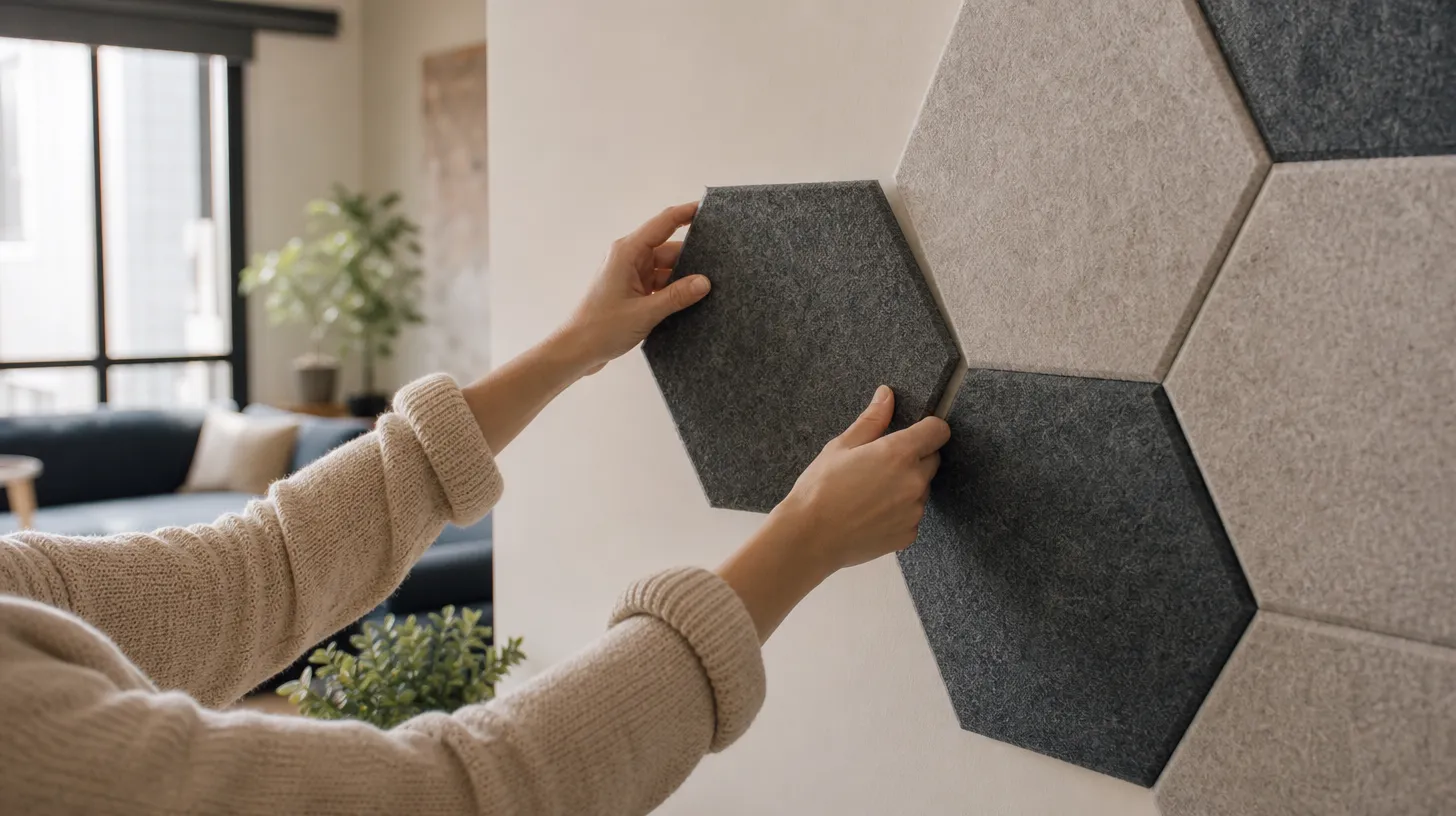
The lowest-risk way to start renter friendly wall soundproofing is peel-and-stick absorption. It goes up in minutes, comes off with care, and it is the safest place to test whether treating the room even helps.
The Kuchoow Hexagon Self-Adhesive Acoustic Tiles are the poster child here. They mount with removable adhesive — no tools, no anchors — and at 0.4 inches thick they handle mid-to-high echo, the harsh reflection you hear on calls and streams. They do nothing for bass, and that is physics, not a defect. A pack runs about $29 (as of July 2026). The honest move is to test a single tile in an inconspicuous corner first, then remove it the gentle way: according to Bob Vila's guide to removing adhesive strips, you warm the spot with a hair dryer for a few seconds, then pull slowly and gently rather than yanking, which is what saves the paint. If that first tile lifts clean, the rest will too. Grab the Kuchoow hexagon tiles if you want the cheapest way to dip a toe in.
When thin tiles are not enough, step up in thickness without stepping up in damage. The ATS Acoustics Sona is a fabric-wrapped, 2-inch mineral-wool panel rated at NRC 1.0. According to AcousPlan, the Noise Reduction Coefficient is a 0-to-1 average of how much sound a material absorbs across the mid frequencies, so a rating near 1.0 means the panel soaks up almost everything that hits it — as absorptive as panels get. Crucially, it is light enough to hang on heavy-duty removable Command strips or a couple of removable hooks instead of screws, so the strongest echo control here stays deposit-safe. It costs about $90 (as of July 2026). If you want to compare it against the full field of absorbers, we ranked them in the best acoustic panels for apartment walls; to just buy the top performer, the ATS Acoustics Sona panel is it. Remember what even NRC 1.0 buys you: a beautifully dead-sounding room, and zero help against the neighbor.
Hang Heavy, Soft Things on Removable Hardware
Soft, heavy, and hung on hooks is the sweet spot for damage free soundproofing. Fabric absorbs reflections, a bit of weight adds a whisper of mass, and nothing gets screwed into the wall.
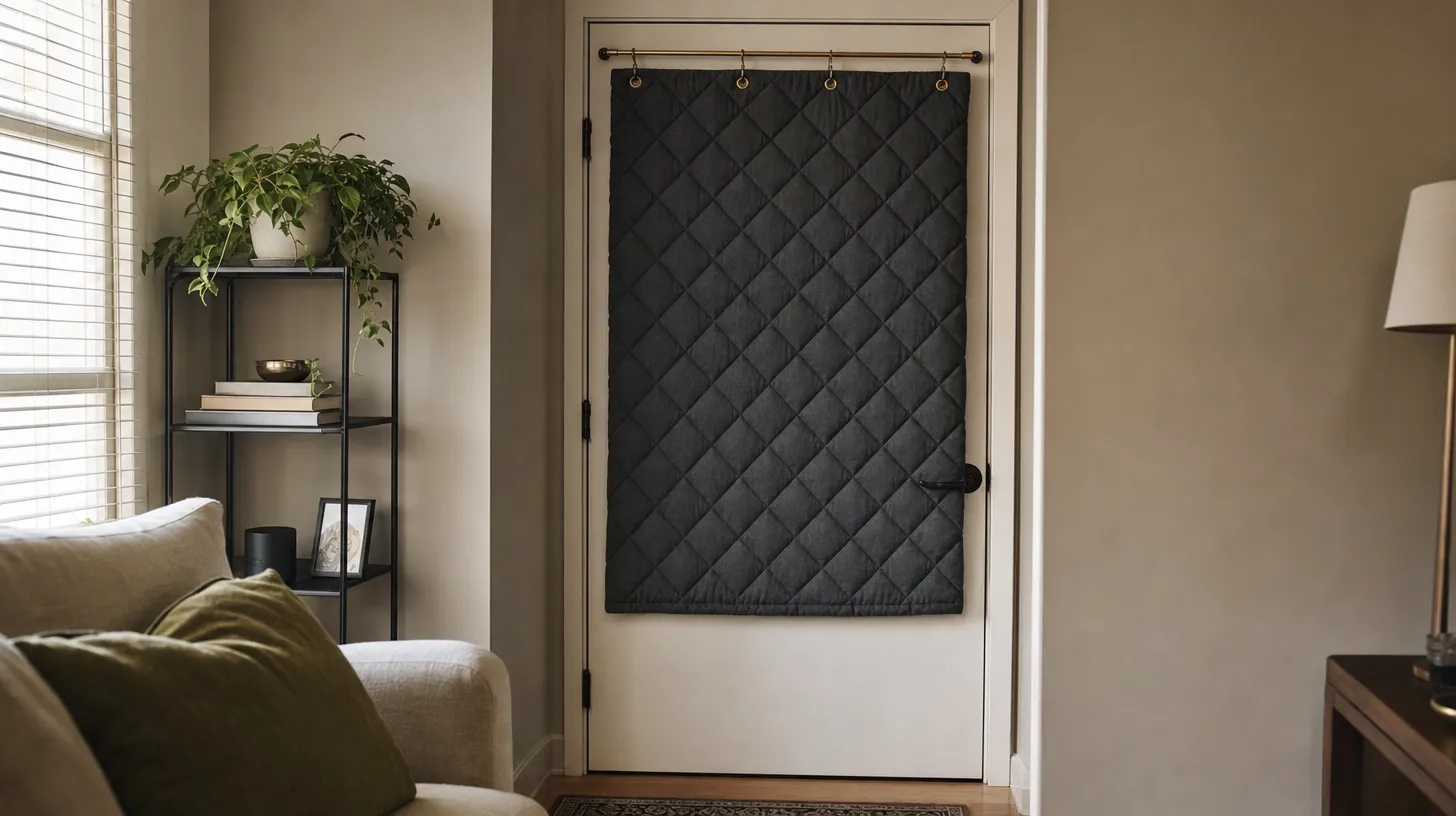
The AMUFON Sound Dampening Moving Blankets are the rare product that is reversible by design. The 2-pack ships with five grommets and five hooks, so a dense recycled-cotton blanket hangs flat on the wall — no anchors, no drywall damage. Each blanket is 48 by 78 inches and about 4.8 pounds, at roughly $63 (as of July 2026) for the pair. Set your expectations correctly, though: according to Second Skin Audio, moving blankets are not dense enough to block sound and instead absorb only a modest amount inside the room — nowhere near what a studio-grade sound blanket does. In other words, this softens echo and reflections; it is not a barrier against a loud TV. Within that limit it is one of the easiest wins going — hang the AMUFON blankets on the shared wall and take them down on move-out.
You are not limited to purpose-built blankets, either. The same principle powers a few things you may already own:
- Heavy curtains hung on the wall, not just the window. A thick, wide curtain on a tension or removable rod covers a large soft area and kills a lot of reflection.
- Tapestries and quilts. The denser and more textured, the better — a thin poster does nothing, a heavy woven wall hanging does real work on echo.
All of it hangs on removable hooks or rods, and all of it comes down without a mark. Just keep the honest frame: these are absorbers. They make your room quieter to be in, not soundproof against the unit next door.
Seal Gaps Without a Trace
This is the one blocking-side move a renter can safely make, and it punches far above its cost. Sound is just air pressure, and it pours through the smallest openings — the gap under a door, the hole a cable runs through, the slot behind an electrical outlet.
The numbers are startling. According to Soundproof Spaces, a gap equal to just 1% of a wall's surface area can cap that wall's sound blocking at around 20 decibels no matter how heavy the wall is, and cracks as small as 1/16 of an inch leak sound. That is why sealing gaps is the highest-value blocking work you can do without adding mass. Reversible ways to do it:
- Acoustic (removable) caulk on trim gaps. Acoustical Solutions notes that acoustic caulk is a non-hardening latex sealant that stays permanently flexible instead of curing rigid, so it seals the crack without cracking open later — and it is far gentler to remove than construction adhesive.
- Foam outlet and switch gaskets. These drop behind the cover plate in seconds and unscrew out just as fast. Second Skin Audio notes that a well-sealed wall typically rates around STC 37–39 versus 28–32 for one that leaks, so closing small penetrations like these is a real gain for zero added mass.
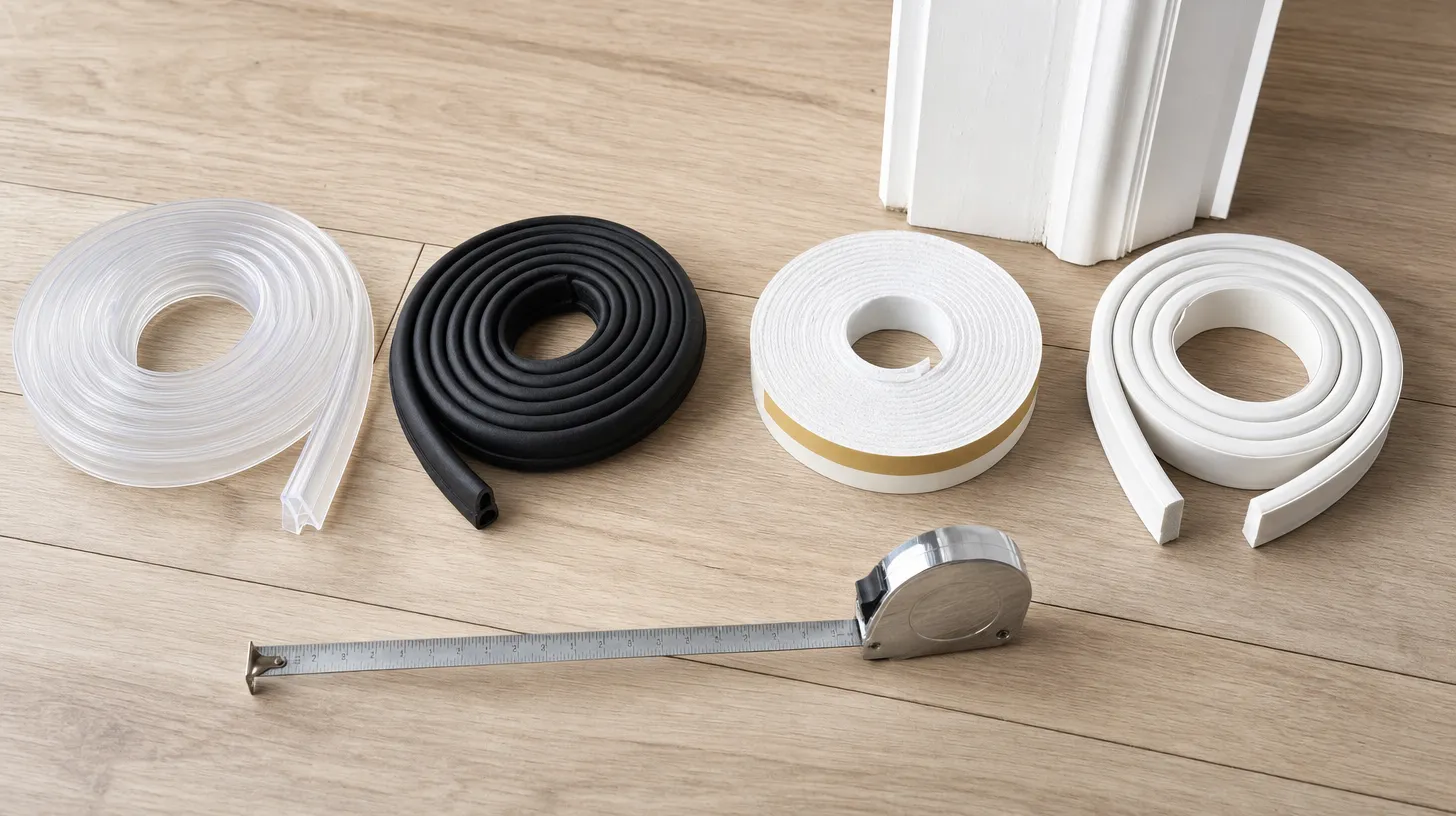
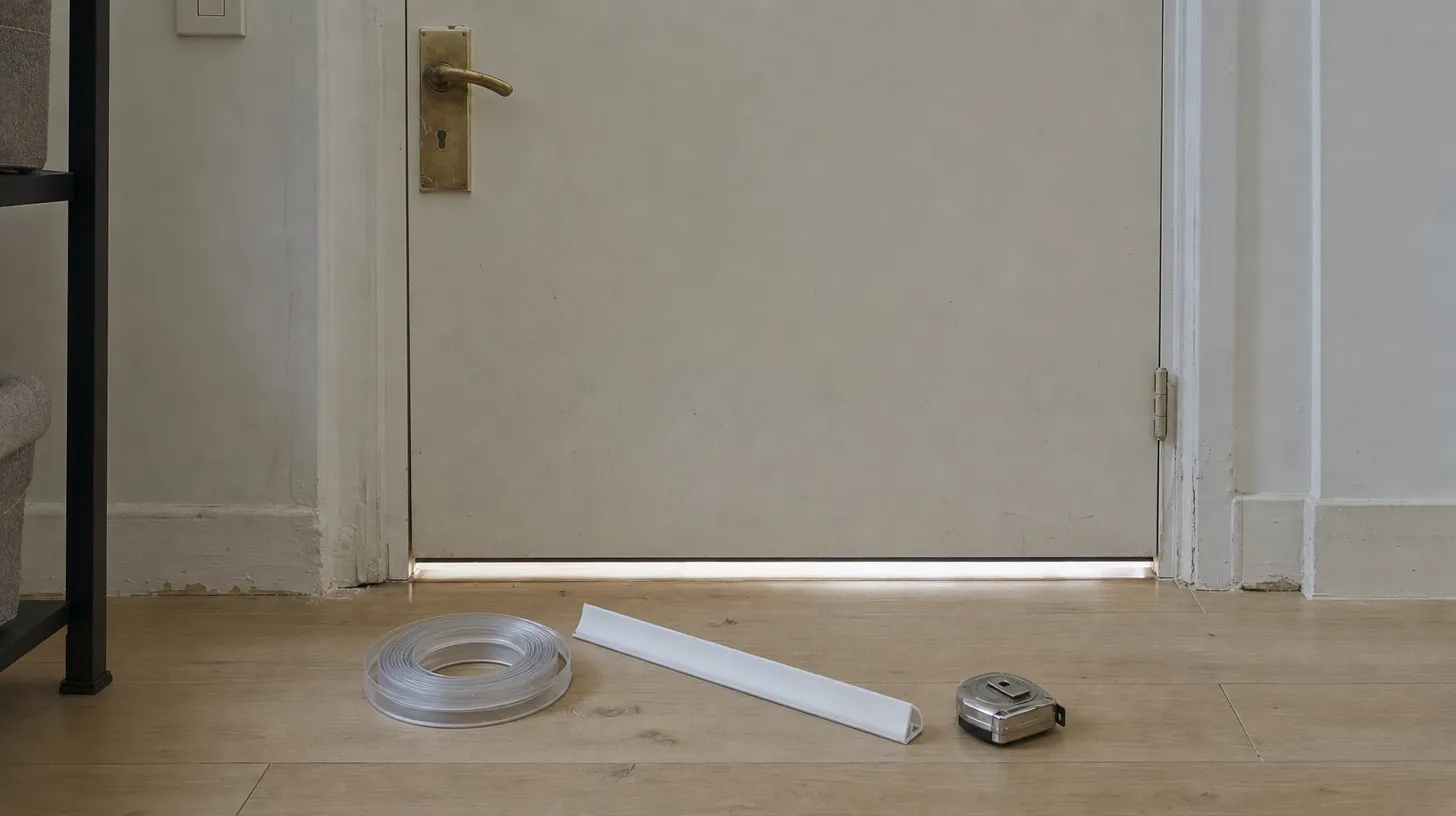
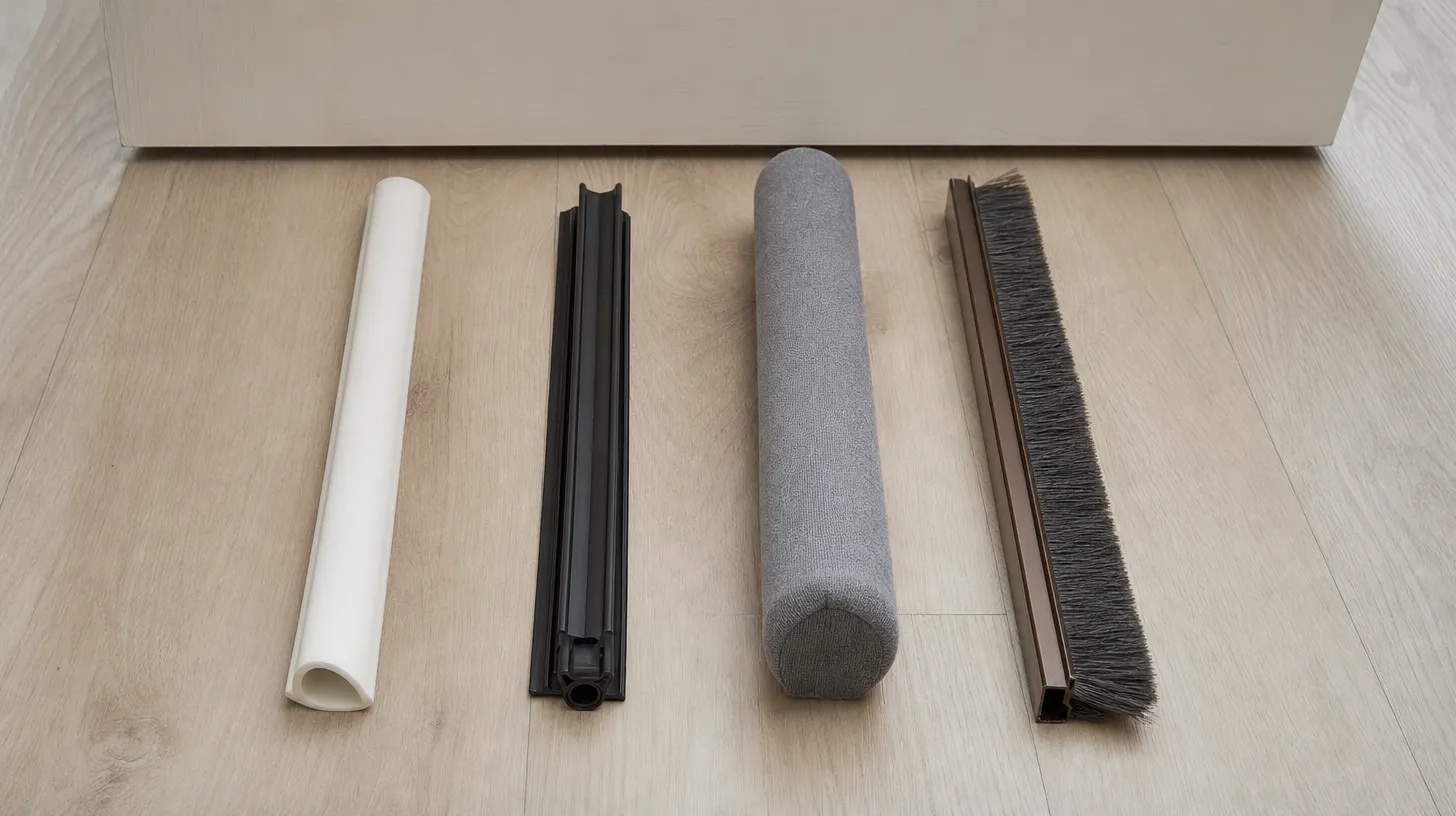
- Weatherstripping and a door sweep. The doorway is usually the biggest leak in the room; peel-and-stick weatherstrip and a slip-on or removable sweep close it with no drilling.
Because sealing is where reversible effort actually blocks sound, it is also where a few dollars goes furthest. If you want to combine it with other low-cost mass tricks, we lay out the order of operations in the cheapest ways to soundproof a wall: seal every gap first, then add whatever reversible mass you can.
Freestanding and Furniture Fixes
Some of the best damage-free help never touches the wall at all — it just stands in front of it. Freestanding mass is the closest a renter gets to "adding a layer" without anchors or adhesive.
A few reliable moves:
- Leaning acoustic panels or a folding room divider placed a few inches off the shared wall. The air gap plus the panel absorbs reflection and interrupts the direct path.
- A rolling garment rack packed with coats parked against the wall — cheap, moveable, and surprisingly soft.
- A tall, deep bookshelf pushed flat against the shared wall and packed solid with books. This bookshelf and furniture method is the one genuine mass trick that leaves the wall untouched: books are dense and irregular, so a full shelf both adds a heavy layer and scatters sound. It will not match a built wall, but it is the most blocking you will get with zero hardware.
Cluster this stuff on whichever wall the noise comes through. None of it needs a screw, and all of it moves out with you.
What Damage-Free Methods Can't Do
Time for the honest ceiling. Every reversible method above either absorbs echo or seals a leak. What none of them do well is stop low-frequency sound — the neighbor's bass, a subwoofer, footsteps overhead — from transmitting through the wall itself. That takes serious mass, and mass is exactly what you cannot permanently add as a renter.
The physics is unforgiving here. According to Technicon Acoustics, the mass law tells us that doubling the mass of a barrier improves its sound blocking by only about six decibels. And because mass-law performance climbs with frequency, it does the least at low frequencies — right where bass lives. A 4.8-pound blanket or a shelf of books is a rounding error against the mass of a wall, so it simply cannot move the needle on transmission the way it moves the needle on echo. That is not pessimism — it is why we keep separating absorbing from blocking on every product.
If a neighbor's noise is genuinely coming through the wall, the honest answer is that you have hit the limit of what damage-free methods can do. The next tier — real mass and airtight seals — lives in the mass and sealing sections of our main wall guide, along with a frank look at when a conversation with your landlord (or your building) beats another purchase.
The Honest Bottom Line
You can absolutely make an apartment wall quieter without losing your deposit — you just have to aim damage-free tools at the job they actually do. Absorb the echo with peel-and-stick tiles, hangable blankets, and heavy fabric. Seal every air gap, because that is the one reversible move that truly blocks. Stack freestanding mass in front of the noisy wall. Do all of that and a loud, echoey rental becomes a noticeably calmer place to live.
What it will not do is silence a determined neighbor, and pretending otherwise just wastes your money. When the noise is transmitting straight through the wall and you have squeezed everything reversible for all it is worth, read how to soundproof apartment walls for the full ladder of options — including the permanent, higher-mass fixes that a renter can only reach with a landlord's blessing. Start with the honest, deposit-safe wins here; escalate only when the wall forces your hand.
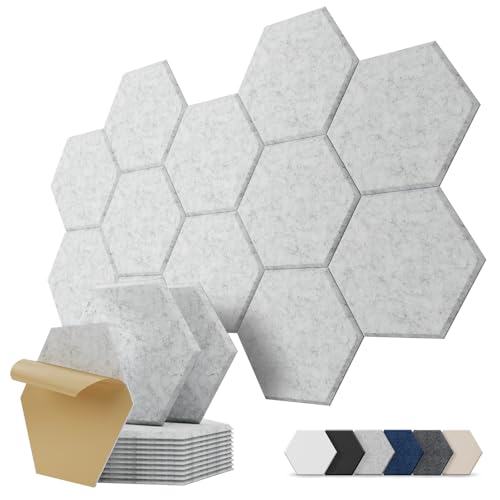
Peel-and-stick hexagon tiles with removable adhesive — the poster child for renter-friendly. They go up without tools and, with gentle heat and a slow pull, lift off without taking paint with them. At 0.4 inches they handle mid-to-high echo, not bass.
Test one tile in a corner first. Within their limits — echo control, zero holes — they're the easiest deposit-safe win here.
*Price shown on Amazon and subject to change.

Two recycled-cotton-filled blankets that ship WITH five grommets and five hooks, so a dense absorber hangs on the wall with no screws and no drywall anchors. Each is 48 x 78 inches and about 4.8 lbs — real absorption and a bit of mass you can take down on move-out.
The rare 'soundproofing' product that's actually reversible by design. It softens echo and reflections; it is not a barrier against a loud TV.
*Price shown on Amazon and subject to change.

A fabric-wrapped, 2-inch mineral-wool panel rated NRC 1.0 — about as absorptive as panels get. It's light enough to hang on heavy-duty Command strips or a couple of removable hooks instead of screws, so the strongest echo control here can still be deposit-safe.
The step up when tiles aren't enough. Mount it on removable hardware and it deadens a room beautifully — while still doing nothing to block sound crossing the wall.
*Price shown on Amazon and subject to change.
| Pick | Product | Link | |
|---|---|---|---|
| Best Damage-Free Starter | Kuchoow — Kuchoow Hexagon Self-Adhesive Acoustic Tiles (12-Pack) | $28.99 | Check → |
| Best Hang-Anywhere Absorber | AMUFON — AMUFON Sound Dampening Moving Blankets (2-Pack, 48" x 78", 5 Hooks) | $63.16 | Check → |
| Best Absorber on Removable Hardware | ATS Acoustics — ATS Acoustics Sona Fabric Acoustic Panel (24" x 48" x 2", NRC 1.0) | $89.99 | Check → |

Lillie Metayer
Lillie Metayer is the founder of a local program that helps apartment-dwellers take action against noise pollution. Involved in environmental activism since high school, Lillie is passionate about raising awareness of the harms of noise exposure and helping people reduce noise in their communities. In her free time, Lillie enjoys playing the violin and spending time outdoors.