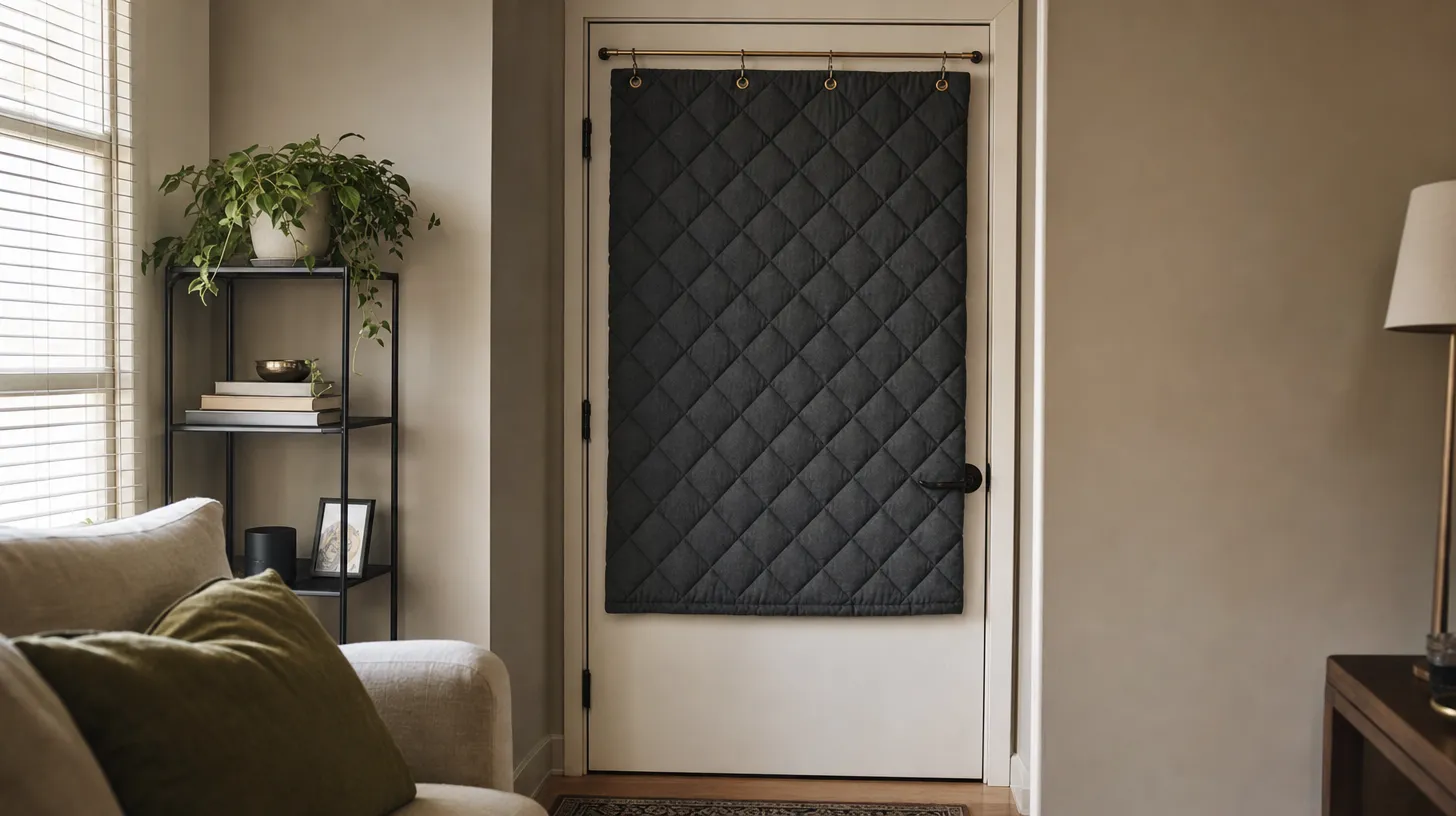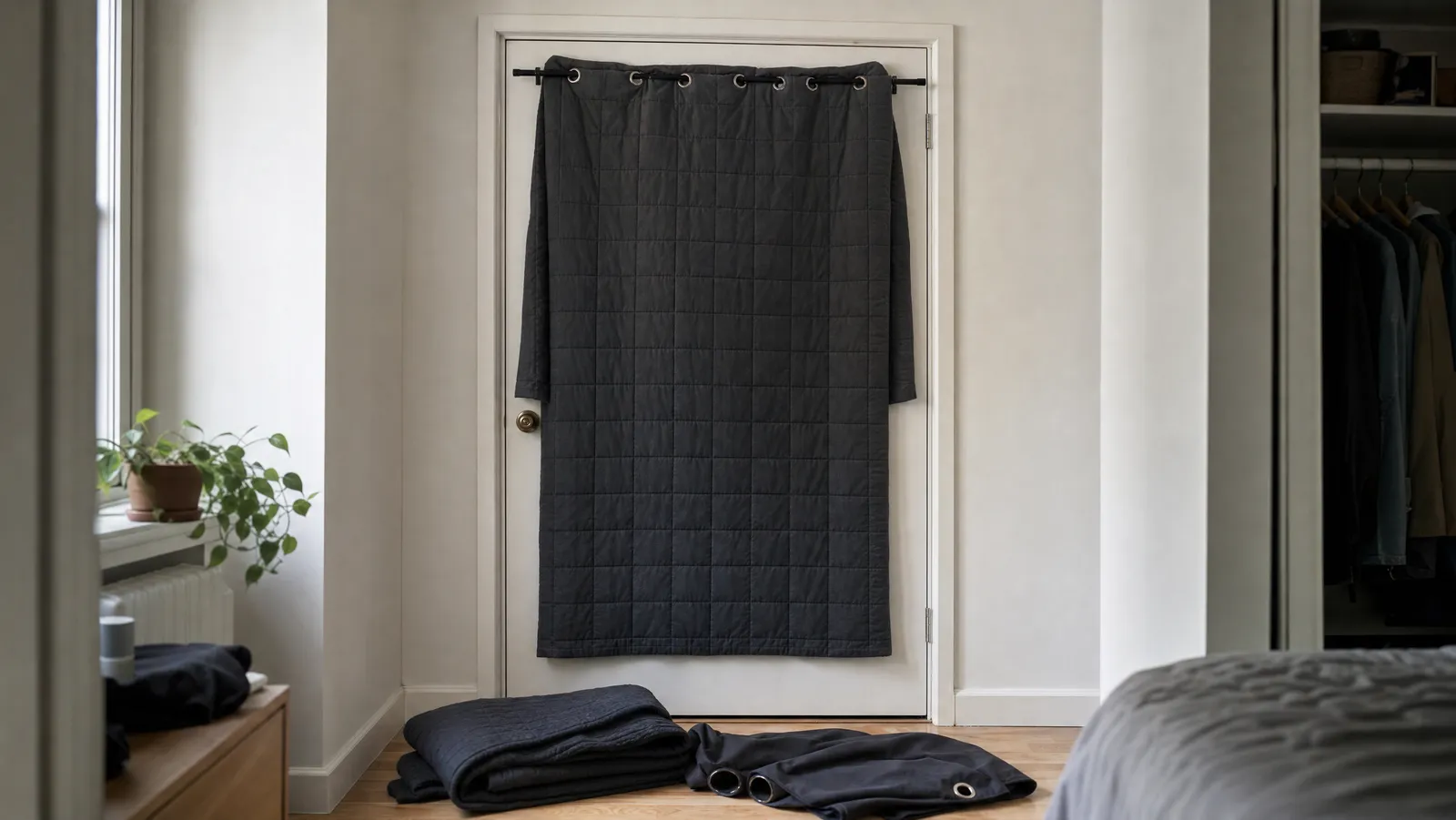
A soundproof curtain for a door is an absorber hung in front of a leak. It takes the hard edge off the room you are standing in, it blocks light, and it does very little to the noise coming through the slab, because cloth cannot add the mass that blocking airborne sound requires. Buy it for comfort, not for transmission.
That is the answer. We earn a commission on purchases made through the links below, which does not change what we recommend.
Here is the finding that organises this page. Of the six products in this slate, exactly one publishes a measured acoustic figure, and that same one states in its own specification block that its use is sound absorption and not sound blocking or soundproofing. Most of the other listings sell the same object with the opposite implication and no number. The order of operations we use to soundproof your apartment door puts cloth near the end for that reason.
Does a soundproof curtain for a door block anything?
Barely, and the two words this category blurs explain why. Absorption is rated as a Noise Reduction Coefficient. According to Intertek, the test behind it is ASTM C423, which "covers the measurement of the sound absorptive properties of a product in a reverberation room," and NRC itself is "the average of the absorption coefficients" at 250, 500, 1000 and 2000 Hz, rounded to the nearest 0.05. A high NRC means a less reflective room on the side the material faces.
Blocking is rated as Sound Transmission Class, derived from transmission loss measured with a source room on one side of the specimen and a receiving room on the other, the method specified in ASTM E90. That is the number that decides whether hallway conversation reaches you as words.
A blanket on a door is doing the first job, in the room you are standing in, while the listing copy implies the second.
The mass law is what a blanket is up against
Blocking airborne sound through a single layer is mostly a question of weight per unit area. In Canadian Building Digest 239, published by the National Research Council of Canada, A.C.C. Warnock sets out the mass law and spells out its consequence: each time the frequency of measurement or the mass per unit area of a single layer wall is doubled, the transmission loss increases by about 6 dB. To gain 12 dB at all frequencies, he adds, the mass per unit area must be increased by a factor of four.
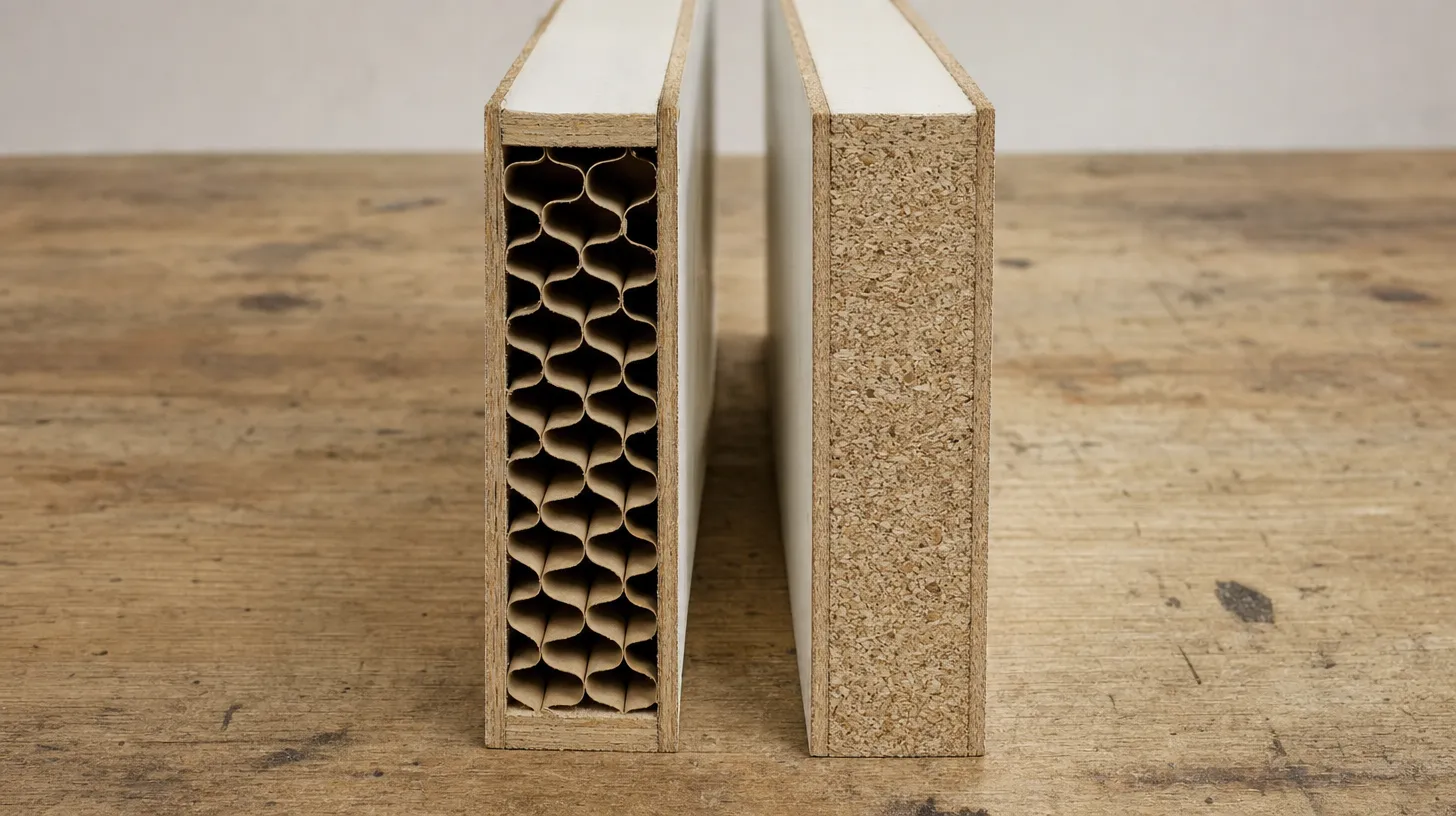
So the only question that matters for a blanket is how much weight per square foot it adds to your door. The Cendura Series data sheet from Forte Opening Solutions, formerly Masonite Architectural, gives the door weight of its hollow-core molded panel slab as 1.3 lbs per square foot at 1-3/8 in thick, over a core of 5-1/2 in kraft paper honeycomb, and lists that door's acoustic rating as not applicable. A 32 by 80 in slab is about 17.8 square feet, so you are standing in front of roughly 23 lbs of door.
Now the cloth. US Cargo Control states 12 lbs for a 96 by 80 in blanket, which is 53 square feet, or about 0.23 lbs per square foot. Saree states 4.8 lbs per 48 by 80 in panel, which is 26.7 square feet, or about 0.18.
The heaviest cloth on this page adds under a fifth of the door's own mass, and doubling that mass is what buys 6 dB. Put 1.3 plus 0.23 through the mass law and the theoretical gain is about 1.4 dB, and loose porous cloth is not even a bonded mass layer. The full calculation is in how to add mass to a door, and the mass-law tool in our free soundproofing calculators will run your own numbers.
The only published number in the slate
The US Cargo Control sound dampening blanket is $76.48 as of October 2026, and it is here less as a recommendation than as the honest reference point for the category. US Cargo Control publishes an NRC of 0.35 for it, then writes in its own specification block that the intended use is sound absorption and not sound blocking or soundproofing. It is 96 by 80 in, woven polyester over 100 percent recycled cotton, 18 grommets, 12 lbs, machine washable and hung to dry.
That one sentence in the specification block is worth more than every soundproof claim in this category combined.
The practical catch is size: at 96 by 80 in it is three times the width of an apartment door, so folding is part of the deal.
What a blanket looks like when the maker publishes everything
For contrast, look at an industrial product. The data sheet for the Acoustical Solutions PrivacyShield AQFA-10, now sold as the AlphaSorb Dual-Sided Absorptive Sound Blanket, describes two layers of one inch quilted fiberglass batting with a vinyl facing at 0.45 lbs per square foot. It publishes an NRC of 0.85 per ASTM C423-07 and an STC of 19 per ASTM E90-75, with transmission loss by octave band running from 6 dB at 125 Hz through 20 dB at 1000 Hz to 32 dB at 4000 Hz. The sheet says the blanket is used "to add sound absorption to interior applications to reduce reverberation and echo" and that it "may also be used to improve sound transmission loss when used in enclosures or to supplement other structures."
Three things follow. The figures exist in this industry, so a consumer blanket with no number is the seller's decision. Twice the per-area mass of anything in our slate still only reaches STC 19, with 6 dB of that at 125 Hz. And on the Kumar measurements below, that performance likely comes from the impermeable vinyl facing rather than from the quilting.
Measured curtains land around 5 dB, and porosity is why
There is a published measurement for close to our use case, because hospitals hang cloth across openings for privacy and then wonder why it is noisy. Sanjay Kumar, Rui Qin Ng and Heow Pueh Lee of the National University of Singapore tested curtain materials in an impedance tube and in an ASTM reverberation room. They report that "the standard hospital polyester curtain displayed relatively poor STL performance of about 5 dB in 400-1600 Hz range," while a PVC-coated polyester fabric reached "about 15 to 22 dB" in the mid-to-high frequencies. Their explanation is the material surface itself: the PVC coating gives "a smooth, impermeable surface from which incoming sound waves may be reflected," whereas "for the standard fabric curtains, the sound wave is partially transmitted through the fabric given its porous nature."
Air passes through woven cloth, and sound goes where air goes. The only specimens in that study that measured like barriers were the PVC-coated and solid PVC ones.
The leak sets the ceiling, not the cloth
There is a second reason a hung panel disappoints, and it is not the panel. In Canadian Building Digest 186, Warnock writes that "sound energy will always seek out the easiest path through or round a partition," and puts a number on how little it takes: "a sound leak amounting to one-tenth of one per cent of a partition area will limit the effective STC to about 30." On doors specifically he notes that "because doors must be operable, the sealing around the edges becomes extremely important."
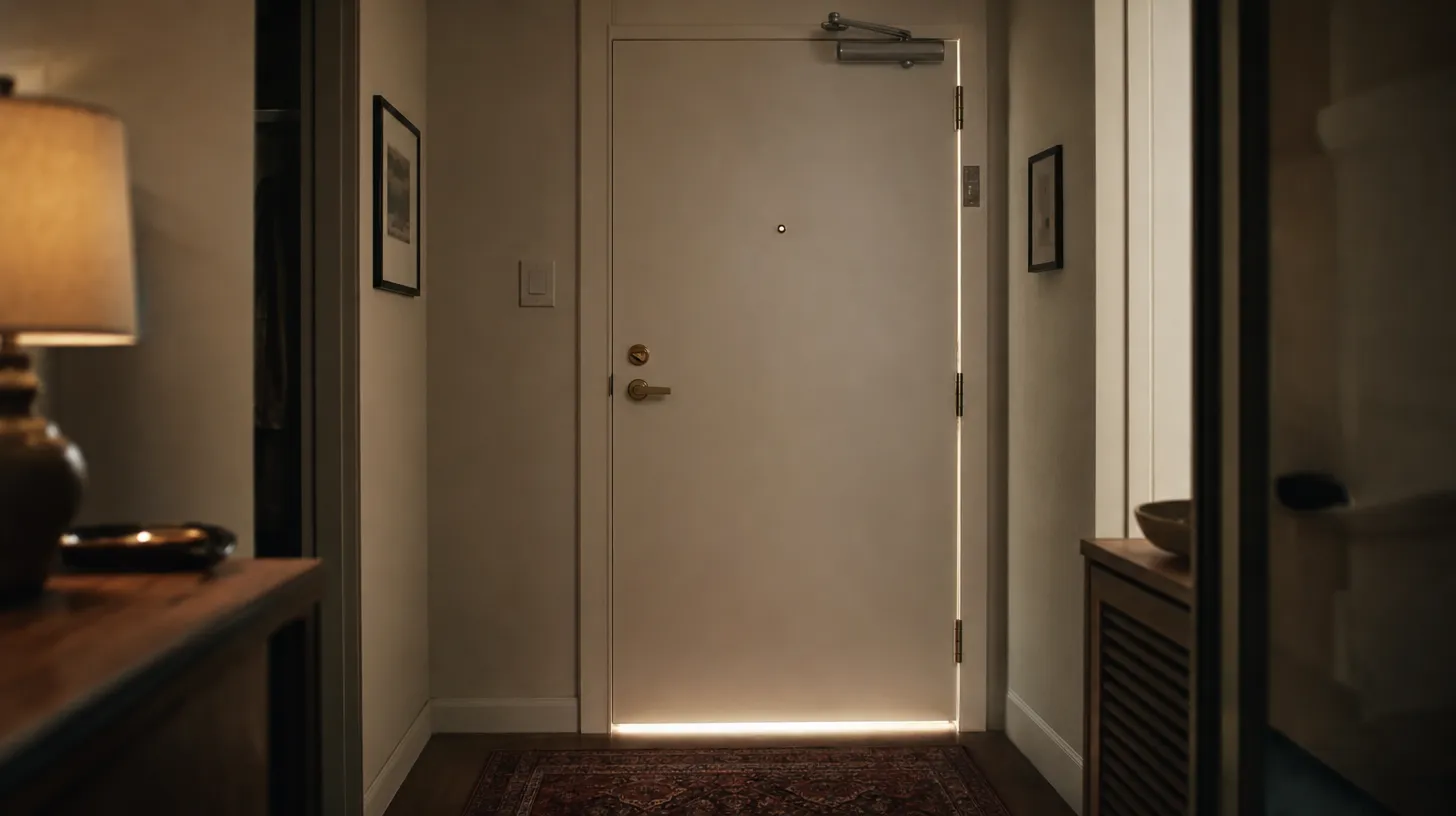
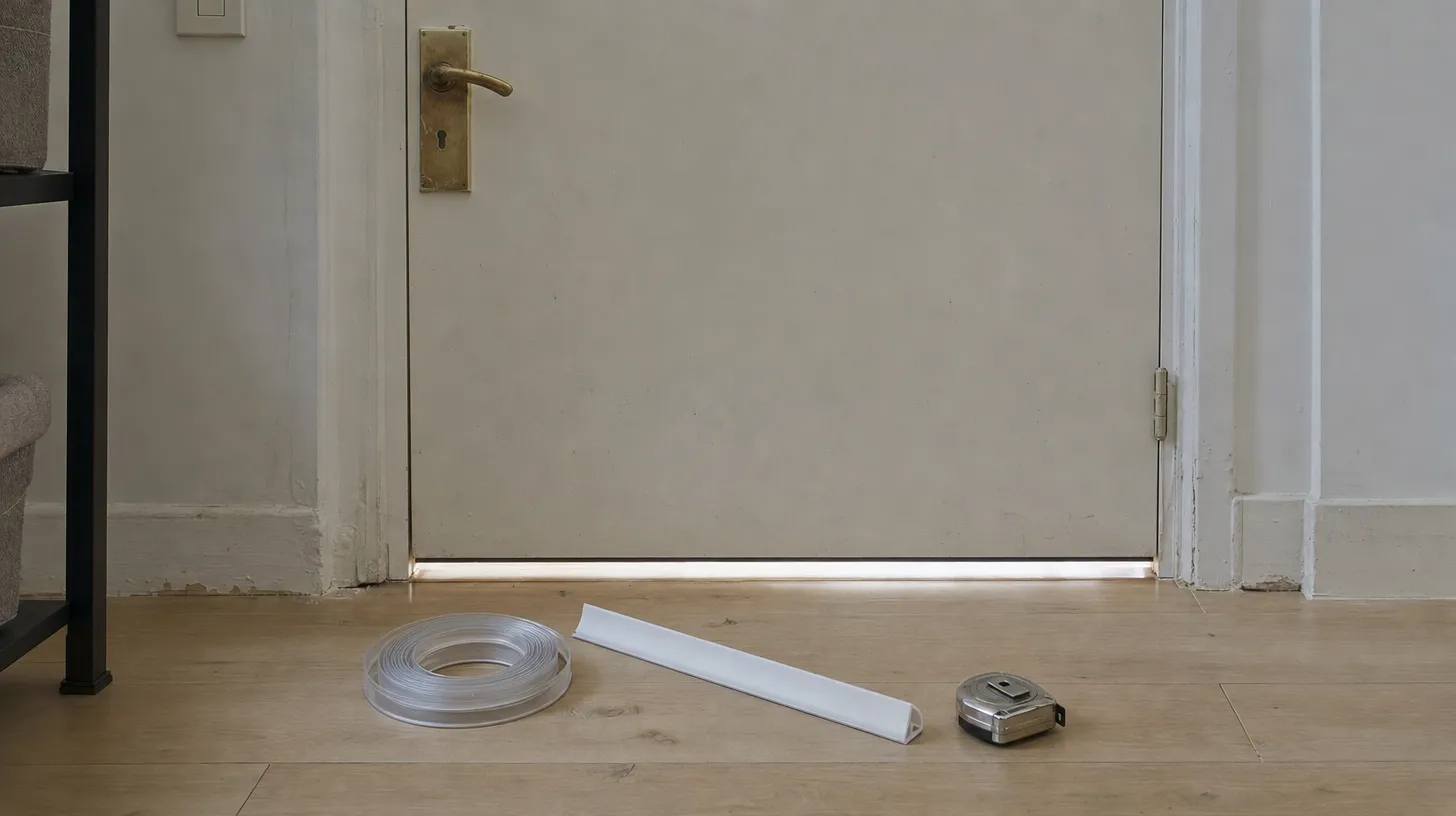
A door perimeter gap is that leak, three edges long, and a blanket on hooks does not close it: the path from the hallway is still open at the top, the sides and especially the undercut. That is why the best door seal kits come first in every version of this project we publish.
Our pick: the Aodyow acoustic moving blanket
The Aodyow acoustic moving blanket at $45.99 as of October 2026 is the one we would actually buy for a door, and the size is the reason. A standard apartment door is about 32 by 80 in, so a 48 by 80 in panel covers the slab with roughly eight inches of overlap down each side, and overlap is where a hung blanket does whatever good it does. Aodyow ships 5 reinforced grommets and 5 hooks with it, which matters more than it sounds: the usual failure here is buying a blanket and then needing a rod, a track or a handful of screws before it can hang, none of which a lease loves.
Read Aodyow's own description and it is absorption language throughout - echo, reverberation, background noise - a fair account of what quilted cloth on a door does. What the maker will not give you is a weight, the one spec that would let you compare it honestly to the panels above.
Best budget: the NICETOWN room divider curtain
The NICETOWN room divider curtain is $19.99 as of October 2026 for a single panel 7 ft tall and 8.3 ft across in triple-weave blackout polyester, with 14 grommets along the top. Twenty dollars is the right amount to spend before you know whether cloth helps your problem, and the 8.3 ft width is the feature: coverage well past the opening blocks the easy path around the edge of a panel.
We will flag this listing's own claim, which says heavy curtains can be more effective than doors for soundproofing because the material absorbs rather than bounces sound. That is wrong in a way worth naming, and the Kumar measurement above settles it: a door is sealed solid mass, a curtain is porous cloth with air behind it, and absorbing sound inside your room is not the job of stopping sound entering it. NICETOWN names this a room divider rather than an acoustic product, which is the more accurate framing.
Heaviest per panel: the Saree two-pack
The Saree sound dampening blankets are $69.99 as of October 2026 for two 48 by 80 in panels, each stated at 850 GSM of recycled cotton filling and 4.8 lbs, with five grommets apiece. Saree is the only maker here publishing a density figure, which is the only reason the comparison above was possible: 4.8 lbs over 26.7 square feet is about 0.18 lbs per square foot, slightly less per unit area than the US Cargo Control blanket despite the heavier-sounding 850 GSM number.
Two door-sized panels also open the one genuinely useful trick here, which is hanging one blanket on each face of the door rather than doubling up on one side. Two panels at 0.18 still only reach about 0.36 lbs per square foot against the door's 1.3, so it is not a transmission fix; what you get is absorption on both sides, which helps the hallway-facing room as well as yours. Saree's claim about filtering street noise and neighbour chatter carries no measurement, so treat the density and dimensions as the specs and the rest as marketing.
Claims a barrier core: the YeakThed door blanket
The YeakThed acoustic sound barrier blanket is the only product here claiming to be a barrier rather than an absorber, and the only one that would change the physics if the claim had a number. YeakThed describes a dense mass-loaded vinyl core sandwiched between polyester felt, 40 by 83 in, metal grommets, no drilling. Mass loaded vinyl is the right material for this job, so a felt-wrapped MLV panel cut to door size is sensible to want. The problem is that no STC figure, no NRC figure and no weight is published for it, a conspicuous gap for a material normally sold by its pounds per square foot. The Acoustical Solutions sheet above shows what a quilted blanket publishes when a maker chooses to.
At $135.00 as of October 2026 that is three times the price of our main pick on an unverified construction claim. The 40 by 83 in size is genuinely door-shaped, and if YeakThed printed a weight we would probably recommend it.
If you also want blackout: the KGORGE felt-lined panels
The KGORGE 4-layer blackout curtains are $84.95 as of October 2026 for two 52 by 84 in panels with a detachable felt liner and a melt-blown overlay in the middle. The detachable liner is the honest reason to choose this over a cheaper panel, since felt is the part doing any absorbing and removing it to wash the curtain is good design. KGORGE's claim that the liner performs 2 to 3 times better in sound absorbing than ordinary curtains has no measurement and no stated baseline, so there is nothing in it you can act on.
If your real problem is the window rather than the door, this is the wrong page for you. Start with heavy curtains for apartments, where this style of panel is the right answer instead of a compromise. For a door, that money buys blackout and dust filtration you may not need.
Where cloth is genuinely the best answer
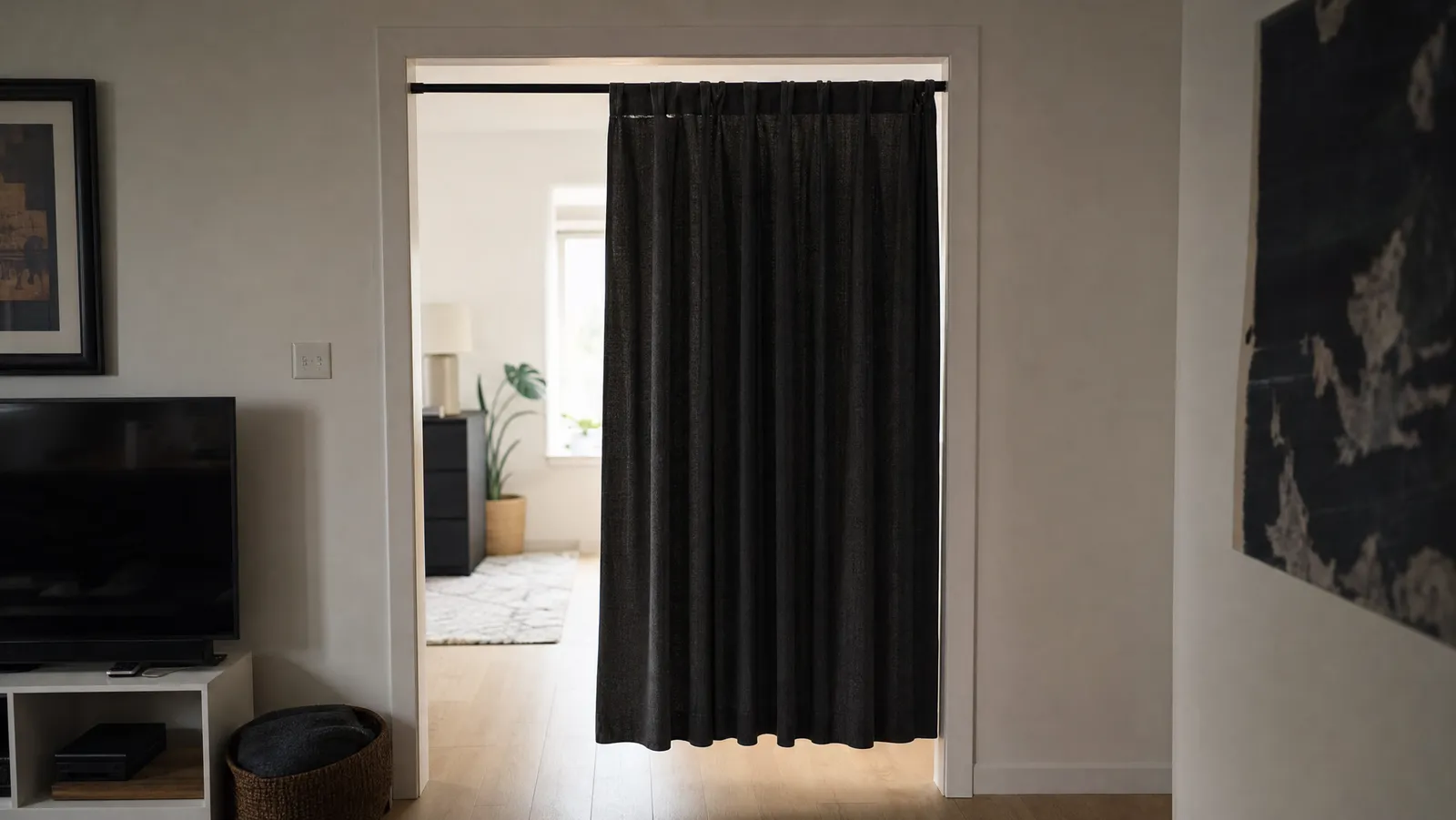
There is one opening where hanging fabric is not a consolation prize: one with nothing in it. An archway, a doorless closet or a divided studio has no slab, no seal and no mass to improve on, so the comparison is cloth against open air. A wide heavy panel overlapping the frame breaks the line of sight, absorbs on both faces and takes the slap out of a bare passage. We treat that case on its own terms in soundproof a doorway with no door, because the shopping list and the expectations are both different.
The other honest wins are the ones the Acoustical Solutions sheet names. Cloth reduces reverberation and echo, the flutter you hear in a bare hallway-facing room. It kills light. It stops a hard door bouncing your own television back at you. Those are real improvements to how a room feels, and none of them is a transmission figure.
Cloth against sealing, by the dollar
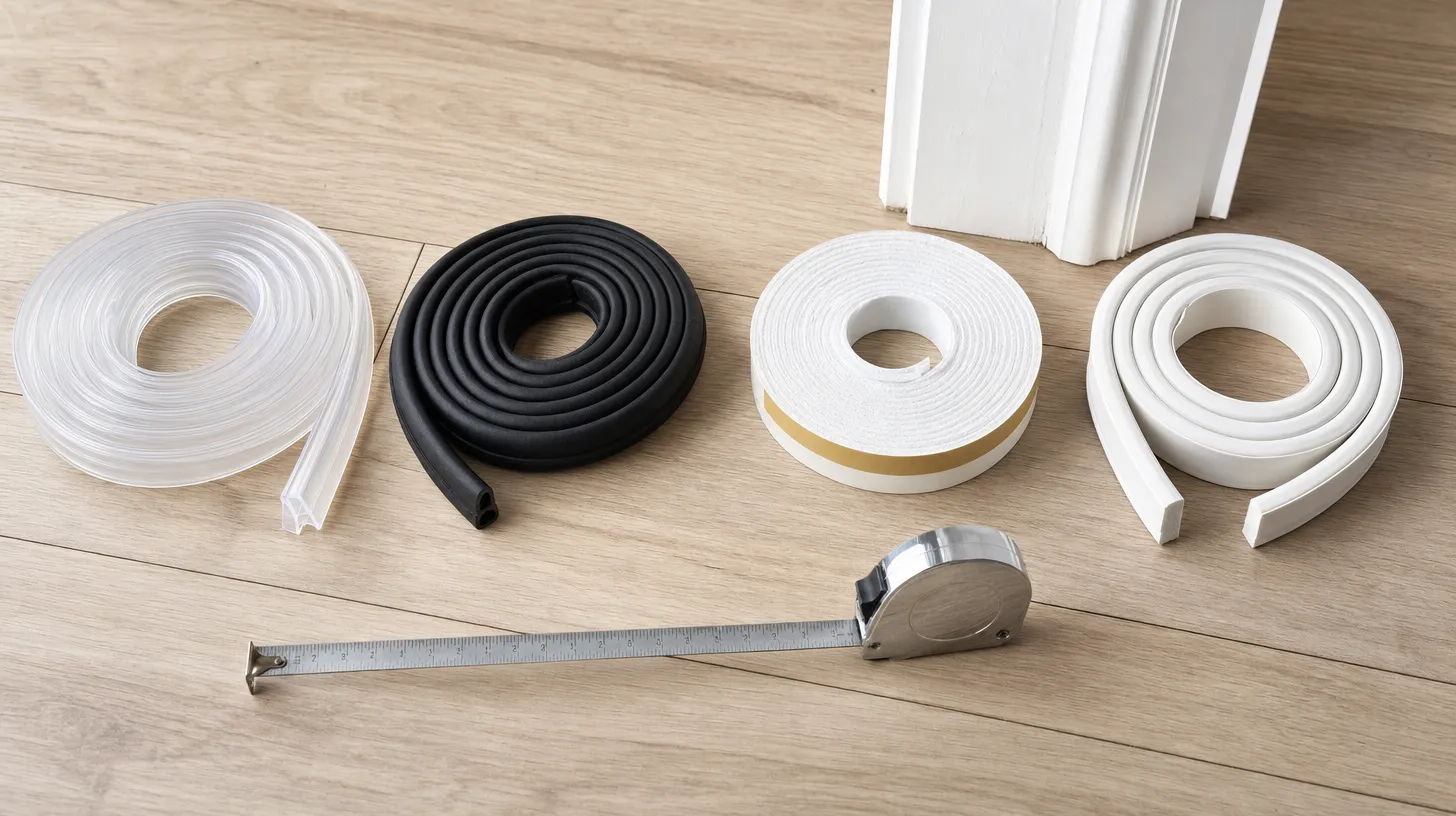
The products here run from $19.99 to $135.00 as of October 2026. Set that against what it costs to soundproof a door the boring way, which is a roll of perimeter seal and a sweep, both of which we price out in our door seal kit roundup.
The cheap path wins on Warnock's leak arithmetic, not on thrift: closing an air gap removes a path no amount of mass can work through, and cloth hung in front of that gap leaves it open. Spend the first twenty dollars on the gap, every time. If there is money left and the room still sounds hard, that is when cloth earns its place.
The bottom line
Seal the door with a strip and a sweep, then buy cloth for comfort rather than for decibels.
If you only want one product, it is the Aodyow blanket, because 48 by 80 in gives you the overlap and the hooks come in the box. To understand the category rather than treat a door, buy the US Cargo Control blanket and read its specification block, the only place in this slate where a maker publishes a measured figure and says what it is not for.
What none of them will do is add mass. A hollow-core slab is 1.3 lbs per square foot by its maker's own data sheet, the heaviest published blanket weight here is 0.23, and 6 dB arrives at double, not at a fifth more. A category this full of the word soundproof, with one measured number in it, is one to shop by specification rather than by adjective. The full order of operations, with what each stage costs, is in our apartment door guide.

A 48 by 80 inch quilted blanket of non-woven fabric over recycled cotton filling, which Aodyow ships with 5 reinforced grommets and 5 hanging hooks so nothing else needs buying. The maker describes it as reducing echo, reverberation and background noise, and lists doors among the surfaces it hangs on. Aodyow publishes no acoustic rating and no weight for it.
The one we would actually buy for a door, and the size is the reason. A standard apartment door is about 32 by 80 inches, so 48 by 80 covers the slab with roughly eight inches of overlap down each side, which is where a hung blanket does whatever good it does. Including the hooks matters more than it sounds, because the usual failure here is buying a blanket and then discovering you need a rod, a track or a fistful of screws before it can hang. What Aodyow will not tell you is the weight, and weight is the only thing that would let you compare this honestly to the heavier panels below. Read the maker's own words carefully and they are absorption words throughout, echo and reverberation and background noise, which is a fair description of what a quilted blanket on a door does.
*Price shown on Amazon and subject to change.

A single very wide panel, 7 ft tall by 8.3 ft across, in NICETOWN's triple-weave blackout polyester with 14 silver grommets along the top. Named as a room divider for doorways and sliding doors rather than as an acoustic product, though the listing title still carries sound-reducing language, and it is washable below 86F. No rating or weight is published.
Twenty dollars for enough fabric to cross a doorway and overlap it generously, which is the right amount to spend before you know whether hanging cloth helps your particular problem. The 8.3 ft width is the feature, because coverage past the opening is what stops the easy flanking path around the edge of a panel. We will flag the listing's own claim, which says heavy curtains can be more effective than doors for soundproofing because the material absorbs rather than bounces sound. That is wrong in a way worth naming. A door is a sealed solid mass and a curtain is porous cloth hung with air behind it, and absorbing sound in your room is not the same job as stopping sound entering it. Buy this to soften a room or screen an opening, not to replace a door.
*Price shown on Amazon and subject to change.
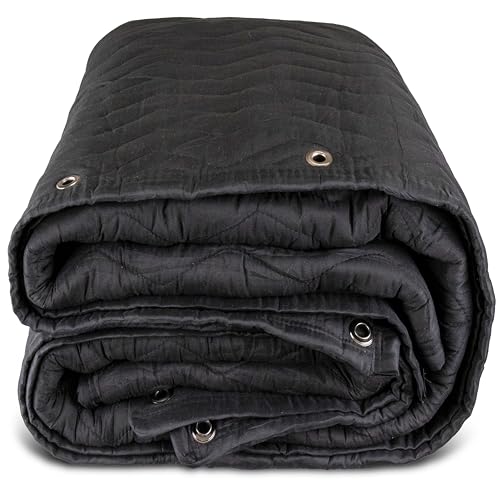
A 96 by 80 inch quilted blanket of woven polyester filled with 100 percent recycled cotton, with 18 grommets and a stated weight of 12 lbs. US Cargo Control publishes an NRC rating of 0.35 and states the intended use plainly as sound absorption, not sound blocking or soundproofing. Machine washable, hang to dry.
The most honest listing in this category and the one we would point anybody at who wants to understand what these products are. US Cargo Control publishes a measured absorption figure, 0.35 NRC, and then writes in its own specification block that the use is sound absorption and NOT sound blocking or soundproofing. Most of the other makers on this page are selling the same kind of object with the opposite implication. The 12 lb figure is also real and useful. Spread over its 53 square feet that is about 0.23 lbs per square foot, which is a fraction of the roughly 1.3 lbs per square foot a bare hollow-core door already weighs, and that arithmetic is the honest answer to whether a blanket meaningfully adds mass to a door. It does not. At 96 by 80 inches it is also far bigger than a door, so you are paying for coverage you will fold over.
*Price shown on Amazon and subject to change.

Two 48 by 80 inch blankets, each stated by Saree at 850 GSM of recycled cotton filling and 4.8 lbs, so 9.6 lbs for the pair. Five grommets per blanket, non-woven outer fabric, double-lock Z stitching. Saree publishes the density and the weight but no acoustic rating.
The pick if you have read the mass argument and want the densest cloth per panel you can get at this price. Saree is the only maker here publishing a GSM figure, and 850 GSM at 4.8 lbs per 26.7 square foot panel works out around 0.18 lbs per square foot, which is slightly less per unit area than the US Cargo Control blanket despite the heavier-sounding number. That comparison is only possible because both makers published something, which is the point. Two door-sized panels for seventy dollars also opens the one genuinely useful trick in this category, which is hanging a blanket on both faces of the door rather than doubling up on one. Saree's claim that it helps filter street noise and neighbour chatter is unquantified listing language, so treat the density and the dimensions as the specs and the noise claims as marketing.
*Price shown on Amazon and subject to change.
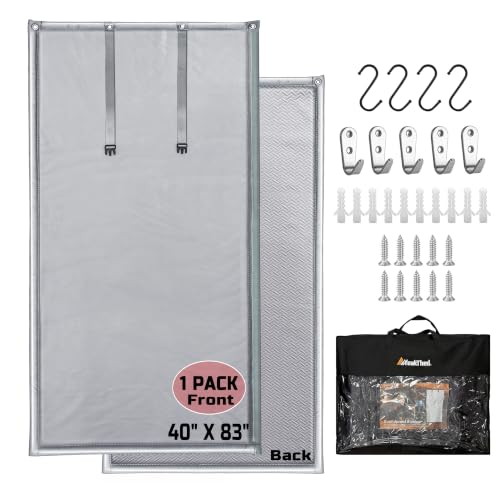
A 40 by 83 inch panel that YeakThed describes as a dense mass-loaded vinyl core sandwiched between polyester felt, with reinforced metal grommets along the top and no drilling required. Sized and sold for doors and windows. No STC, NRC or weight figure is published for it.
The only product here claiming to be a barrier rather than an absorber, and the only one that would change the physics if the claim came with a number. Mass loaded vinyl is the real material for blocking airborne sound, and a felt-wrapped MLV panel cut to door size is a sensible thing to want. The problem is that YeakThed publishes no STC figure, no NRC figure and no weight, which for an MLV product is a conspicuous omission, since MLV is normally sold by its pounds per square foot. For context, the Audimute kit we cover in our seal-kit roundup publishes 20 STC for its MLV barrier layer, so the figures exist in this industry and some makers print them. At $135 as of October 2026 this is three times the price of our main pick on an unverified construction claim. The 40 by 83 inch size is genuinely door-shaped, and if YeakThed published a weight we would probably recommend it.
*Price shown on Amazon and subject to change.

Two 52 by 84 inch panels with a detachable felt liner and a melt-blown fabric overlay in the middle, 104 inches of total width. KGORGE states the felt liner performs 2 to 3 times better in sound absorbing compared with ordinary curtains, and claims 100 percent blackout and dust filtration. No measured acoustic figure is published.
A good blackout curtain with a detachable felt layer, which is a real feature and not the same as an acoustic product. The detachable liner is the honest reason to pick this over a cheaper panel, because felt is the part doing any absorbing and being able to remove it to wash the curtain is sensible design. KGORGE's 2 to 3 times better than ordinary curtains claim has no measurement behind it and no stated baseline, so it tells you nothing you can act on. Our general view on curtains over doors applies in full here. If the window is your actual noise problem rather than the door, start with our guide to heavy curtains for apartments instead, where this style of panel is the right answer rather than a compromise. For a door specifically, that money buys blackout and dust performance you may not need.
*Price shown on Amazon and subject to change.
| Pick | Product | Link | |
|---|---|---|---|
| Our Pick | Aodyow — Aodyow Acoustic Moving Blanket (48 x 80 in, 5 hooks) | $45.99 | Check → |
| Best Budget | NICETOWN — NICETOWN Room Divider Curtain for Doorway (7 ft x 8.3 ft) | $19.99 | Check → |
| The Only Published Number | US Cargo Control — US Cargo Control Sound Dampening Blanket (96 x 80 in, 12 lbs) | $76.48 | Check → |
| Heaviest Per Panel | Saree — Saree Sound Dampening Blankets (2 pack, 48 x 80 in, 850 GSM) | $69.99 | Check → |
| Claims a Barrier Core | YeakThed — YeakThed Acoustic Sound Barrier Blanket for Doors (40 x 83 in) | $135.00 | Check → |
| If You Also Want Blackout | KGORGE — KGORGE 4-Layer Blackout Curtains with Felt Liner (52 x 84 in, 2 panels) | $84.95 | Check → |

Lillie Metayer
Lillie Metayer is the founder of a local program that helps apartment-dwellers take action against noise pollution. Involved in environmental activism since high school, Lillie is passionate about raising awareness of the harms of noise exposure and helping people reduce noise in their communities. In her free time, Lillie enjoys playing the violin and spending time outdoors.