How to stop a door from rattling and slamming comes down to three mechanical adjustments, and not one of them involves soundproofing material. Take the slack out of the latch so the slab cannot move in its frame. Pad the two surfaces the door strikes. Slow the last few degrees of the swing. Two adjustable wrenches and a dollar of felt covers most of it.
That is the answer. The rest of this page is why the soundproofing aisle cannot help you here, and how to work out which of five different noises your door is actually making - because the fix for a rattle will do nothing for a slam.
This is also the least money the site ever asks you to spend on a noise complaint. Everything else in our guide to soundproofing an apartment door asks for real money in exchange for a few decibels. This page asks for an afternoon, and it fixes the noise the household is usually complaining about.
The noise your door makes is not the noise soundproofing blocks
A rattle, a latch click and a slam are impact events. Something hard hits something hard, and the frame and wall radiate the result into both rooms at once. Airborne transmission - a conversation or a television on the other side of the slab, leaking through - is a separate mechanism, and it is the one every product in this category is sold against.
The distinction is not pedantry, it is why your money gets wasted. In Construction Technology Update No. 35, "Controlling the Transmission of Impact Sound through Floors," published by the National Research Council of Canada in December 1999, A.C.C. Warnock opens with exactly this category of noise: "Impact sounds, such as those created by footsteps, the dropping of an object or the moving of furniture, can be a source of great annoyance in residential buildings." A door banging into its frame belongs on that list, not on the airborne one.
Warnock also notes the two are not interchangeable problems. "Although there is some commonality among the factors influencing the attenuation of airborne sound and impact sound," he writes, "the latter is by far the more complicated to measure, rate and control."
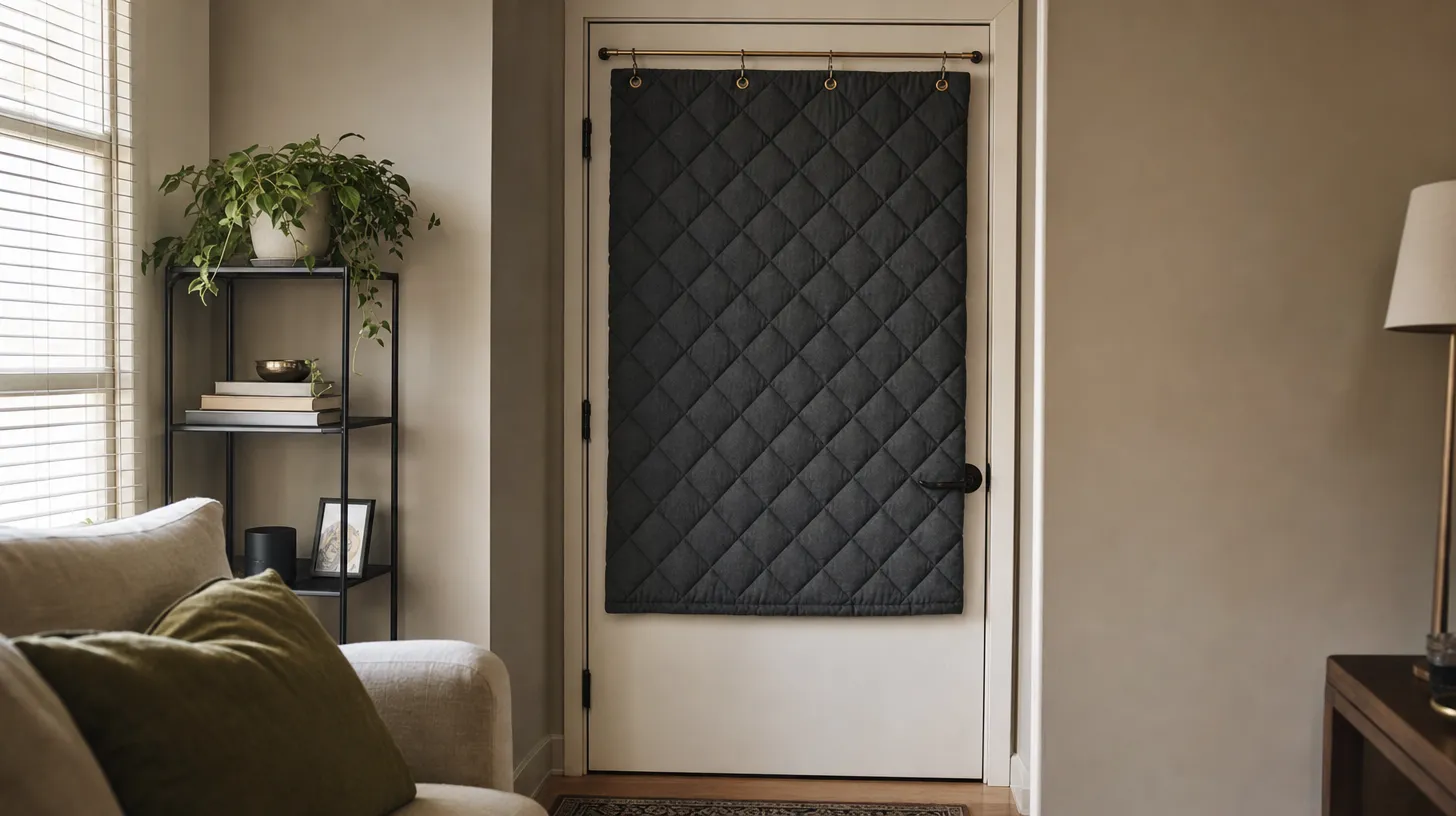
Mass blocks airborne sound and absorption soaks up echo, and neither one does anything about a latch bolt snapping into a steel strike plate. If your complaint is voices through the door rather than the door itself, go run the numbers on our free soundproofing calculators instead.
How to stop a door from rattling and slamming: match the noise to the mechanism
Match the sound to the cause before you buy anything.
- Rattle when closed, or rattle in a draft. The slab is loose in the frame because the latch bolt sits slack in the strike plate.
- A loud click or clack as it catches. The latch bolt snapping into the strike.
- The bang. The slab accelerating into the door stop.
- Squeak or creak on the swing. Dry hinge pins.
- The door closing itself. The frame is out of plumb, or the building has settled.
Strike plate rattle: the slab is loose in its frame
Family Handyman is unambiguous about the cause: "The problem is always caused by a gap between the door stop and the door." The latch holds the door in the opening but not against the stop, so a draft or a passing truck is enough to make it knock.
In order, cheapest and least invasive first.
- Tighten the strike plate and hinge screws. Free, and a common culprit on a door that has been slammed for years.
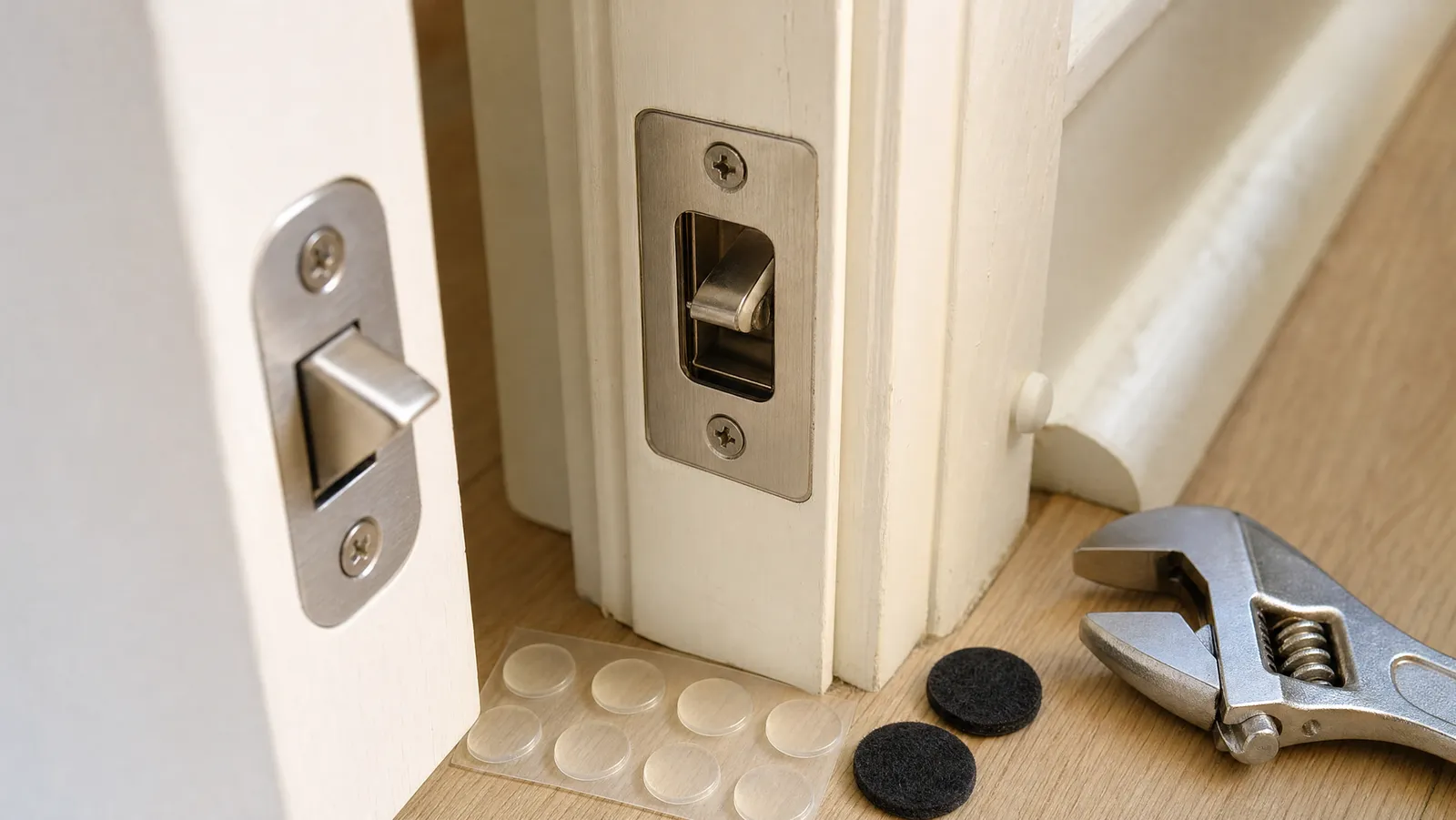
- Bend the tang. "The simplest fix is to bend the little tang on the strike plate toward the door," per Family Handyman. That is the small sprung tab behind the plate, and bending it inward pushes the latched door harder against the stop. The same piece recommends two adjustable wrenches rather than pliers so you do not chew up the plate's finish. Not every strike has a tang.
- Shim the stop. Self-adhesive bumpers take up the remaining gap. Family Handyman suggests the clear self-adhesive dots sold for cabinet hardware, noting that "the clear dots that blend in with the door finish are the least obvious."
- Move the hardware, or ask someone to. Repositioning the strike plate a fraction of an inch toward the stop means new screw holes in the jamb. Family Handyman's harder fix is to "actually shift the door stop so it's tight against the door," scoring the paint or caulk first and re-nailing. Both leave touch-up, so on a rental both are maintenance requests.
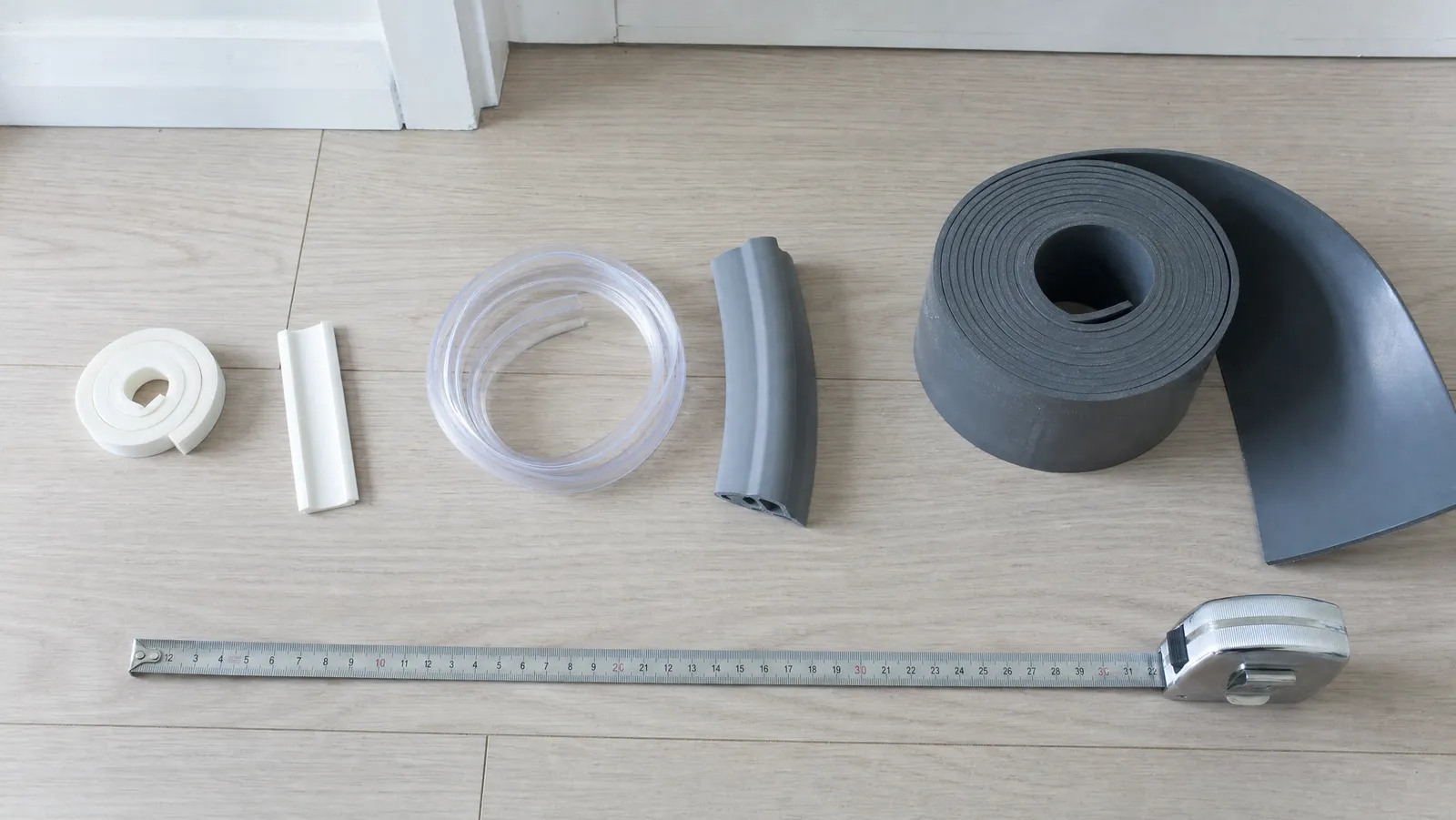
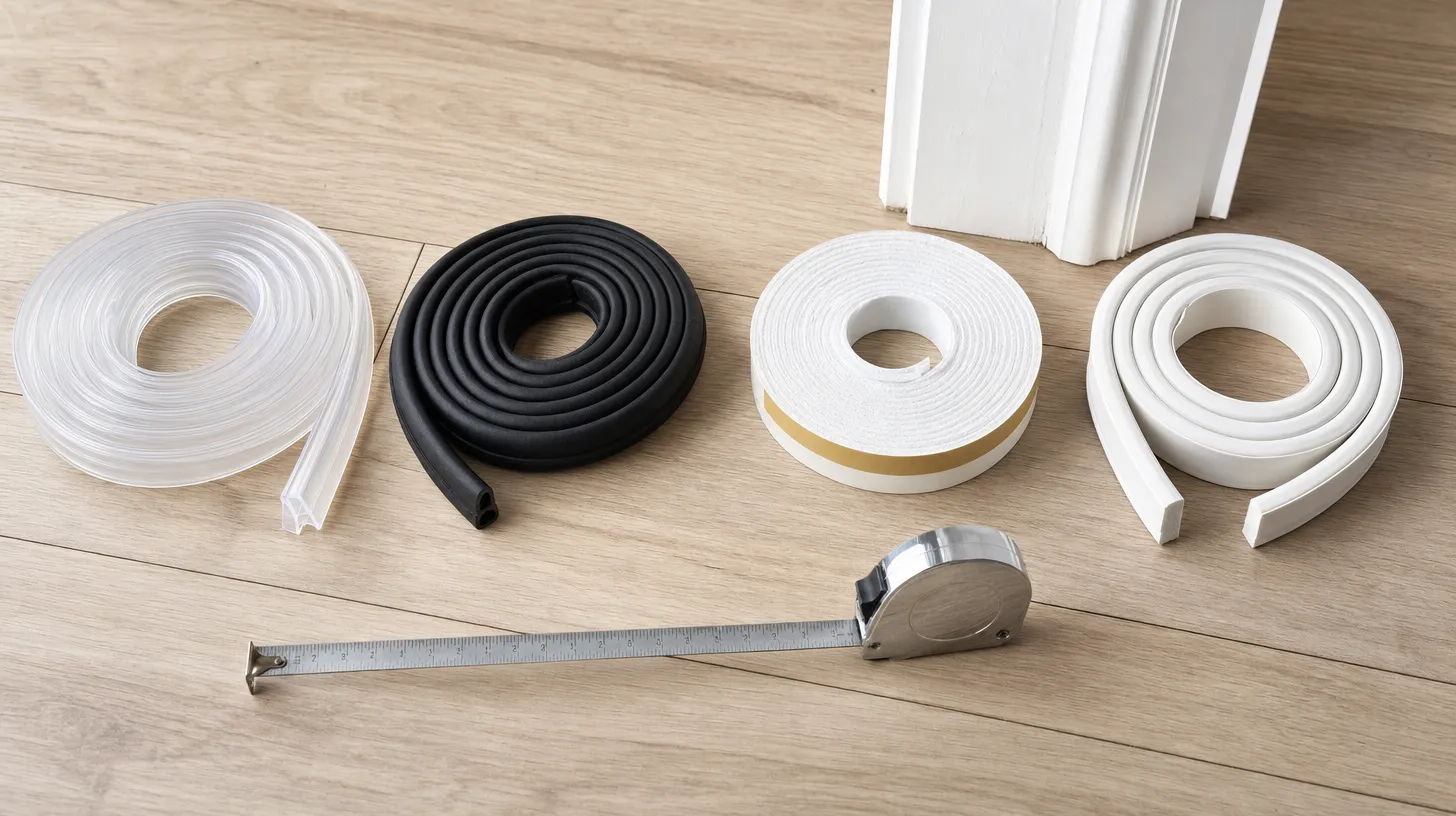
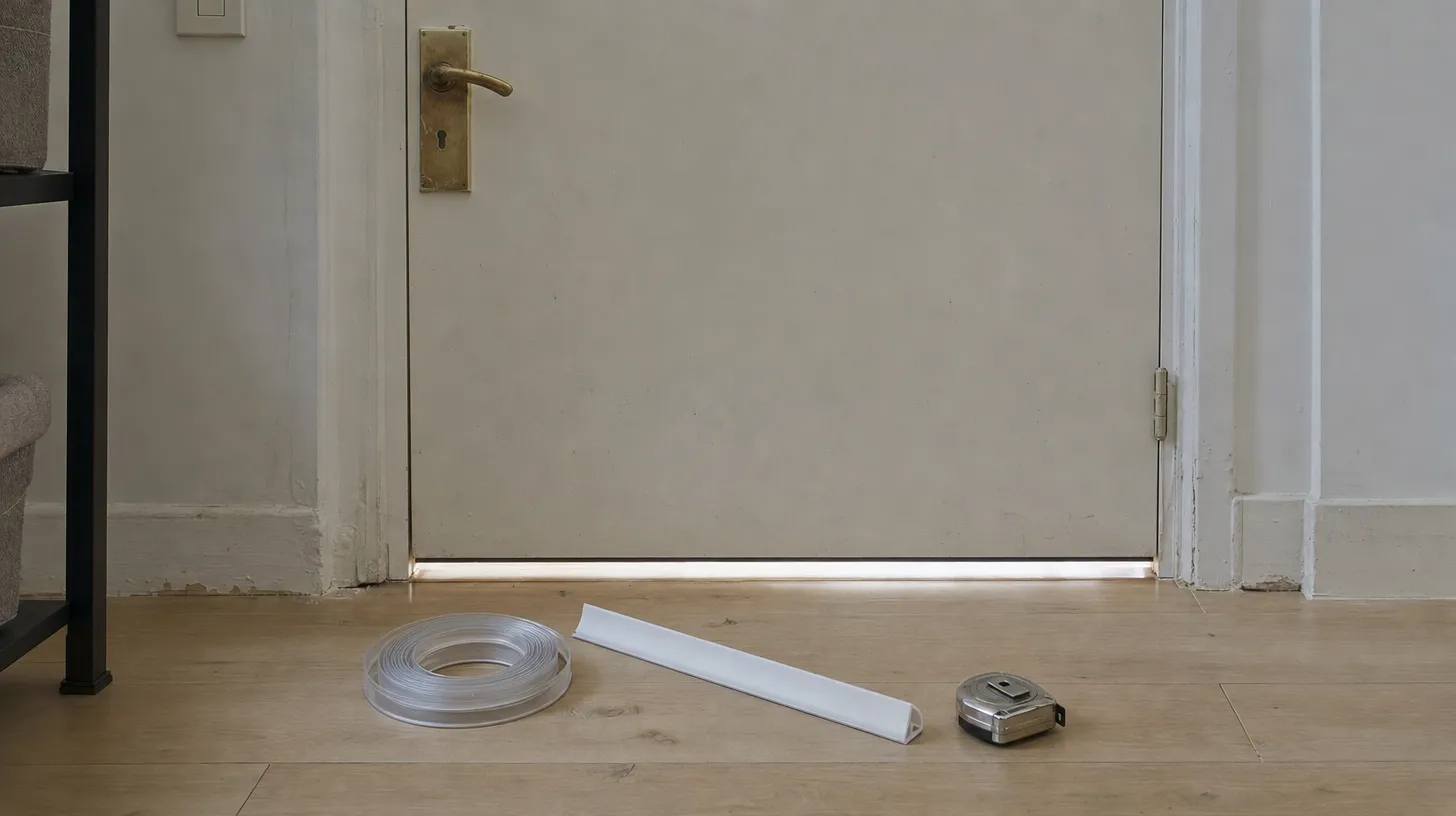
Weatherstrip is the renter answer here, because it does two jobs at once. A compressible gasket on the stop takes up the slack that causes the rattle and closes the air gap that lets airborne sound through, the one real overlap between this page and the rest of the site. Our roundup of the best door seal kits for apartments covers the adhesive-mounted options that come off at move-out.
Door latch noise fix: quieting the click without disabling the latch
Once the slab is tight in the frame, the remaining noise is the bolt itself hitting steel. Two fixes work:
- A thin adhesive bumper on the face of the strike plate, positioned clear of the bolt hole, so the slab meets felt before metal.
- A sliver of felt or self-adhesive foam inside the strike opening so the bolt lands soft. Keep it thin. If the bolt cannot seat fully, you have traded a noise for a lock that does not lock.
A latch is a security component and, on some doors, a life-safety one, so nothing here should stop the bolt from throwing. According to iDigHardware, the code reference site run by Lori Greene, Manager of Codes and Resources at Allegion, NFPA 80 "requires fire doors to be equipped with hardware that has an active latch bolt" "to provide positive latching when the door is closed." A bedroom door is a different matter, but if this is your unit entry door, read the limits below and our guide to quieting your front door first.
Door bumper pads: the cheapest way to kill the slam
The bang is kinetic energy arriving all at once. Felt or silicone bumper pads on the stop spread that arrival over a longer interval and take the edge off the peak.
Use three: one near the top of the stop, one level with the latch, one near the bottom. A single pad at the latch leaves the rest of the slab to make contact. Silicone and rubber generally outlast felt and are less prone to flattening. The ceiling on thickness is whatever still lets the latch engage.
This is the one fix on the page that helps twice: a pad thick enough to quiet the slam is usually thick enough to take out the rattle, which is the same geometry the kits in our door seal kit roundup exploit.
Soft close for an apartment door: closers, hinge-pin closers and the rubber band
If the slam is a person rather than a draft, pads only soften it. To actually slow the door you need a damper.
A hinge-pin closer is the only genuinely renter-safe option, and it has a catch. It replaces one existing hinge pin with a spring-loaded cartridge, so there is no drilling and nothing to patch, and the tension adjusts with a small wrench. The catch is that it makes the door self-closing - useful on a door you want shut, a nuisance on a bedroom door you leave ajar. These are light-duty parts, so check the rated door weight on the packaging.
A proper hydraulic or pneumatic closer does the job better and screws into both the slab and the frame. That is a permanent alteration and a landlord conversation.
If a closer is already fitted and slamming, it is almost certainly out of adjustment. Reeb's instructions for the 5100 closer describe two separate speed valves: the sweep valve, where "turning clockwise slows down the closing speed of the door," and a latch speed valve, where "latch speed is the last 7 to 10 degrees during closing" and "turning the valve clockwise will slow the door." The slam lives in that last 7 to 10 degrees, so the latch valve is the one to touch. Reeb's warning deserves repeating: "It is extremely important not to back the valves all the way out as this will ruin the closer."
For a target, borrow the accessibility numbers. The 2010 ADA Standards for Accessible Design, section 404.2.8.1, require that closers "shall be adjusted so that from an open position of 90 degrees, the time required to move the door to a position of 12 degrees from the latch is 5 seconds minimum." Spring hinges get their own figure in 404.2.8.2: from 70 degrees open, "the door or gate shall move to the closed position in 1.5 seconds minimum." Those rules cover doors on accessible routes rather than your bedroom, but five seconds is a good benchmark for a door that closes quietly.
Then the renter classic, for a door that must stay quiet tonight: loop a rubber band over one knob, cross it over the retracted bolt, and hook it on the other knob. The bolt cannot extend, so the door meets the stop with no click, and nothing is modified. It also does not latch, so this is for an interior door only - never an entry door, never a fire-rated one.
Hinge squeak: pull the pin, do not spray the carpet
A squeak is dry metal on metal, and it is the fastest fix here. The Wikipedia entry on squeaky hinges puts the options plainly: "Suitable lubricants include plumber's grease and silicone spray," while "oil is not so suitable as it can drip off when in excess," and "graphite is also unsuitable as it spreads to other surfaces and makes a mess." For full coverage the same entry notes that "the hinge pin is removed to be covered in the lubricant, and then reinserted."
Tap the pin up from underneath with a nail, lift it out, coat it, drop it back - one hinge at a time, with the door supported. If a squeak survives lubrication, the pin or leaf is likely bent and needs replacing rather than greasing.
When the door swings itself shut
A door that drifts closed on its own is telling you the hinge axis is not plumb - either the jamb was hung that way or the building has settled since. The classic fix is to shim behind one hinge leaf to tilt the slab back, which means unscrewing a hinge from the jamb.
Our view is that a door swinging shut by itself is a maintenance ticket, not a weekend project. It is the frame rather than the door, the cause may be a dropped slab or a racked opening, and if you make it worse you own the repair. Put the request in writing.
Two limits worth knowing before you start
First, fire-rated doors. Many apartment unit entry doors are fire-rated assemblies, and a rated door that is required to be self-closing has to close and latch on its own every time. Describing what NFPA 80 means by a self-closing door, Greene writes that "these doors close and latch each time they are opened; door closers on self-closing doors do not have hold-open mechanisms." Nothing here should defeat either function on such a door: no rubber band over the latch, no wedge, no pad thick enough to stop the bolt seating. The ADA Standards carve fire doors out of the usual 5 pound maximum opening force for interior hinged doors for related reasons, requiring instead that they "have a minimum opening force allowable by the appropriate administrative authority." If your problem is the corridor side of a rated entry door, our front door guide deals with that door specifically.
Second, anything structural. A frame out of plumb, a slab that has dropped onto its sweep, a strike mortise that needs recutting - those are the landlord's, and a written request costs nothing.
What we would actually do
In order, stopping as soon as the noise does:
- Tighten every screw in both hinges and the strike plate. Free.
- Bend the strike plate tang in until the latched door no longer moves when you push it. Free.
- Stick three bumper pads on the stop: top, middle, bottom.
- Add a thin adhesive bumper to the strike plate face for the click, checking the bolt still throws fully.
- Lubricate the hinge pins with silicone or grease, not graphite.
- Fit adhesive weatherstrip if a draft is still driving the rattle.
- Only then consider a hinge-pin closer, and only on a door you are happy to have close itself.
None of that costs much, and it fixes a noise no blanket touches. Once the door stops making its own racket you can judge honestly how much sound is coming through it, which is where The Soundproof Apartment's door guide picks the sequence back up: seal first, mass second, expectations managed throughout.

Lillie Metayer
Lillie Metayer is the founder of a local program that helps apartment-dwellers take action against noise pollution. Involved in environmental activism since high school, Lillie is passionate about raising awareness of the harms of noise exposure and helping people reduce noise in their communities. In her free time, Lillie enjoys playing the violin and spending time outdoors.